Should You Cut Before You Bulk?
Myth or Fact: Do You Need an Ideal Body Fat Percentage to Build Muscle?
- Published


Should You Lose or Gain Weight First? 🤔
This question often comes up due to common beliefs like these:
1️⃣ If we lose weight first, we might be in a better position to gain muscle mass without accumulating as much fat.
2️⃣ If we gain weight first with a high body fat percentage, we’re likely to add even more fat and not achieve the look we want.
There’s even talk that excess body fat can hinder muscle growth by reducing insulin sensitivity, increasing inflammation, and lowering testosterone levels.
🔬 However, in scientific literature, the initial body fat percentage has only been shown to matter when gaining weight in people who don’t engage in strength training. The mechanisms mentioned still require more solid evidence to be fully supported.
🧠 In real life, studies like Ogawa et al. (2024) on 12 young sumo wrestlers show that it's possible to efficiently build muscle mass even with higher body fat percentages, as long as you follow a proper training plan. 🥋
This six-month study reported a gain of 2.1 kg of lean mass and a loss of 0.1 kg of fat mass in wrestlers with an average body fat percentage of 33%, who consumed maintenance calories or a slight surplus of 5.6 kcal/day (±213 kcal).
📚 Similar results have been reported by Stodden & Galitski (2010), Jacobson et al. (2013), Sousa et al. (2020), and Lopez et al. (2022), indicating that having a higher body fat percentage doesn’t diminish your ability to gain muscle effectively. Therefore, it's not essential to go through a weight loss phase before focusing on muscle gain.
Additionally, beginners with a higher body fat percentage can build muscle and lose fat simultaneously (body recomposition) by consuming the calories needed to maintain their body weight relatively stable or with a slight caloric deficit. 🎯
References:
- Ogawa M, Uchizawa A, Tamai S, Momma R, Hoshi D, Kondo E, Sagayama H, Watanabe K. Evaluation of Energy Balance Estimated From Total Energy Expenditure and Body Composition Changes in Junior Sumo Wrestlers: An Observational Study Over Six Months. Cureus. 2024 May 27;16(5):e61158. doi: 10.7759/cureus.61158. PMID: 38933620; PMCID: PMC11200937.
- Stodden DF, Galitski HM. Longitudinal effects of a collegiate strength and conditioning program in American football. J Strength Cond Res. 2010 Sep;24(9):2300-8. doi: 10.1519/JSC.0b013e3181dc4255. PMID: 20703166.
- Jacobson BH, Conchola EG, Glass RG, Thompson BJ. Longitudinal morphological and performance profiles for American, NCAA Division I football players. J Strength Cond Res. 2013 Sep;27(9):2347-54. doi: 10.1519/JSC.0b013e31827fcc7d. PMID: 23238095.
- Sousa LGO et al. Marshall AG, Norman JE, Fuqua JD, Lira VA, Rutledge JC, Bodine SC. The effects of diet composition and chronic obesity on muscle growth and function. J Appl Physiol (1985). 2021 Jan 1;130(1):124-138. doi: 10.1152/japplphysiol.00156.2020. Epub 2020 Nov 19. PMID: 33211595; PMCID: PMC7944928.
- Lopez P, Radaelli R, Taaffe DR, Galvão DA, Newton RU, Nonemacher ER, Wendt VM, Bassanesi RN, Turella DJP, Rech A. Moderators of Resistance Training Effects in Overweight and Obese Adults: A Systematic Review and Meta-analysis. Med Sci Sports Exerc. 2022 Nov 1;54(11):1804-1816. doi: 10.1249/MSS.0000000000002984. Epub 2022 Aug 17. PMID: 35977113.
More posts
 Fat Loss
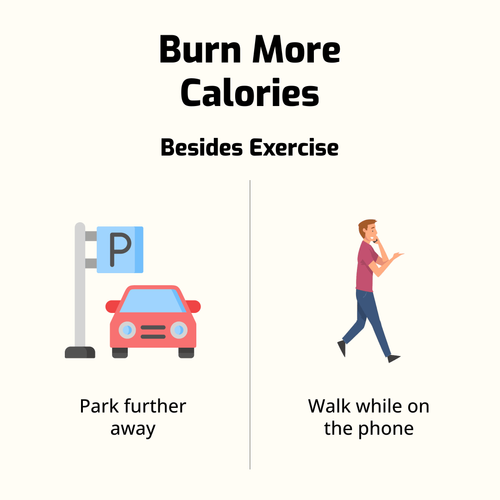
Boost Fat Loss: Simple Ways to Burn More Calories Beyond the Gym
Boost your calorie burn with simple daily habits like walking more, taking the stairs, and increasing NEAT to support fat loss and improve health
Read post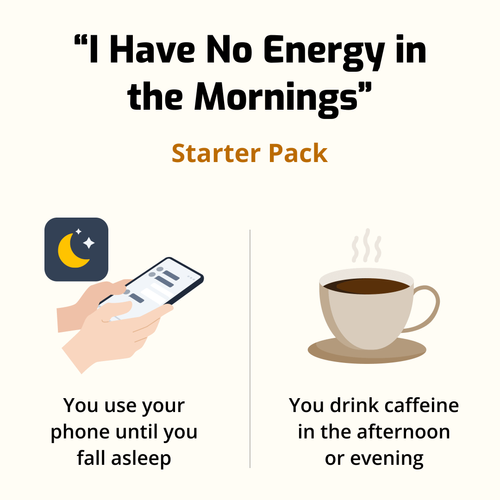 Fat Loss
Habits That Drain Your Morning Energy
Discover habits that affect your morning energy and sleep quality, and how to improve them for a more energized start to your day.
Read post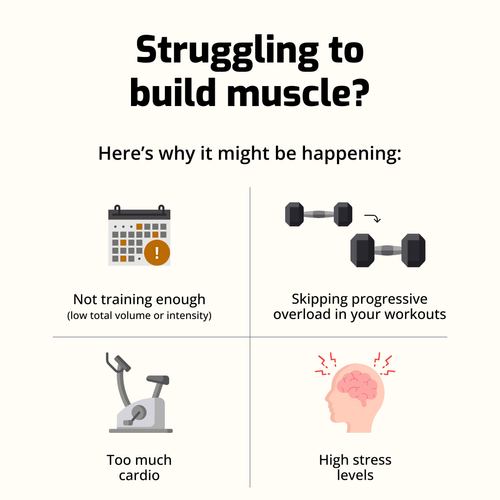 Training
Struggling to Build Muscle? Here’s What Might Be Holding You Back
Struggling to build muscle? Learn how lack of protein, poor training volume, or insufficient sleep could be stopping your progress
Read post