Whey Protein: Concentrate or Isolate?
Discover the differences between whey concentrate and isolate. Choose the best option for your goals based on purity, absorption, calories, and cost.
- Published
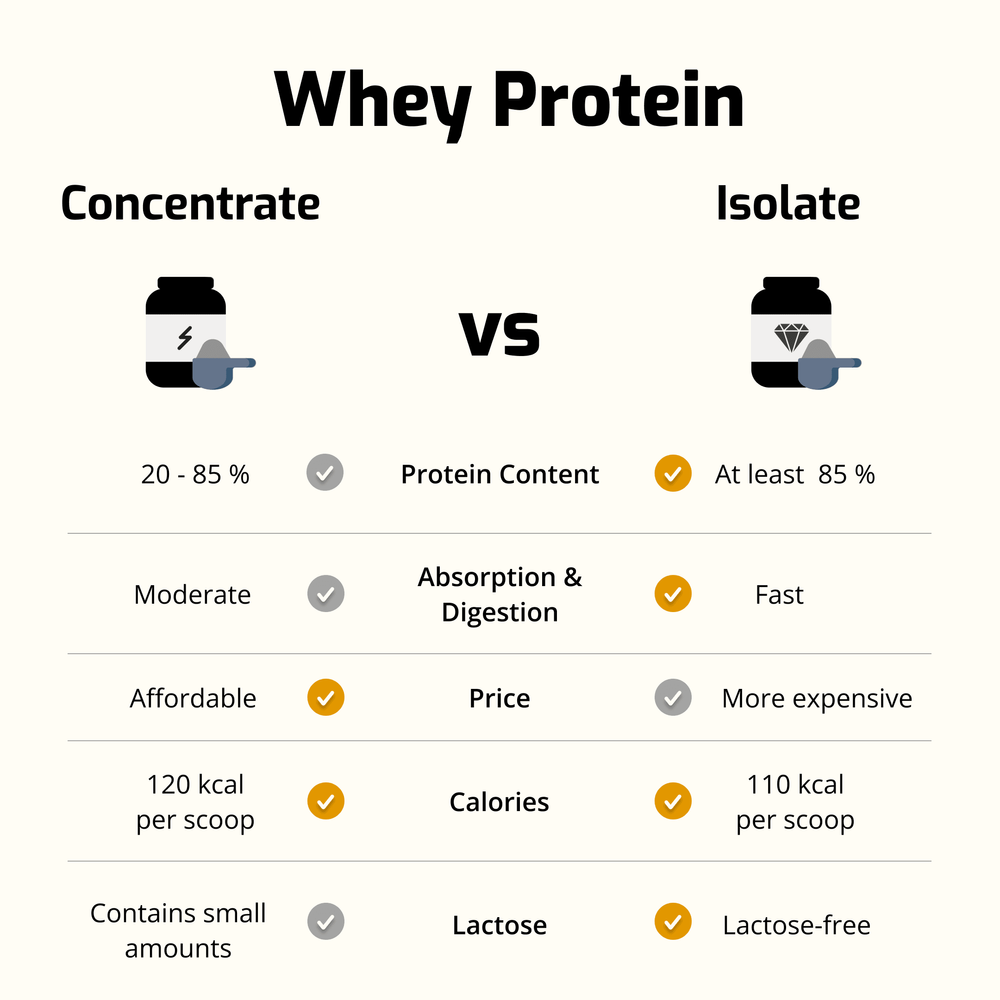
Have you ever wondered why there are so many protein powder options?
Among all the choices, whey proteins — both isolate and concentrate — are the "undisputed leaders" and have become essential tools for increasing protein intake, which plays an important role in muscle growth and weight management.
What’s the difference between them, and how do you choose the best one for your goals? We’ll break it all down so you can make the best decision.
Which Whey Protein Is Right for You?
The choice between isolate and concentrate depends on your goals and priorities:
Choose whey concentrate if:
✅ You prefer a more affordable option.
✅ You’re not lactose intolerant.
✅ You want a more complete nutritional profile.
✅ You enjoy a supplement with more flavor and texture.
Go for whey isolate if:
✅ You’re lactose intolerant.
✅ You want to maximize your intake of pure protein.
✅ You’re following a low-carb or low-calorie diet.
✅ You need faster recovery or maximum absorption.
Want instant access to the nutritional info of your protein powders? With Fitia, just scan the barcode and you’re good to go! Download Fitia for free here.
What Sets These Two Types of Whey Apart?
Whey protein is a key component of dairy proteins (1). It’s a byproduct of cheese-making, where milk is separated into curds (solids) and whey (liquid) by adding an enzyme or acid. The whey contains high-quality proteins, along with lactose, minerals, and water.
The raw whey undergoes filtration to remove impurities and concentrate the proteins. Depending on the filtration process, whey becomes one of two main types (2):
- Whey Protein Concentrate (WPC): Partially filtered, retaining more of the whey components like lactose and fats, with a protein content of 20-80%.
- Whey Protein Isolate (WPI): Undergoes advanced filtration, removing nearly all lactose and fats, resulting in a purer protein with over 90% protein content.
Understanding these differences is essential for choosing the option that best fits your goals and needs. Most of the time, your decision will come down to factors like protein purity, absorption rate, calorie content, and affordability.
That said, while protein supplements like whey can be a great addition to your diet, it’s always better to focus on natural, protein-rich foods like lean meats, eggs, and legumes as your primary source.
General Recommendation:
- Protein Intake: For strength training, aim for 1.6–2.2g of protein per kg of body weight to support muscle growth. Keep in mind that individual needs may vary based on your specific goals.
Sources:
- Ghafoori Z, Tehrani T, Pont L, Benavente F. Separation and characterization of bovine milk proteins by capillary electrophoresis-mass spectrometry. J Sep Sci. 2022 Sep;45(18):3614-3623. doi: 10.1002/jssc.202200423. Epub 2022 Aug 3. PMID: 35866669; PMCID: PMC9805173.
- Cava E, Padua E, Campaci D, Bernardi M, Muthanna FMS, Caprio M, Lombardo M. Investigating the Health Implications of Whey Protein Consumption: A Narrative Review of Risks, Adverse Effects, and Associated Health Issues. Healthcare (Basel). 2024 Jan 18;12(2):246. doi: 10.3390/healthcare12020246. PMID: 38255133; PMCID: PMC10815430.
More posts
 Supplements
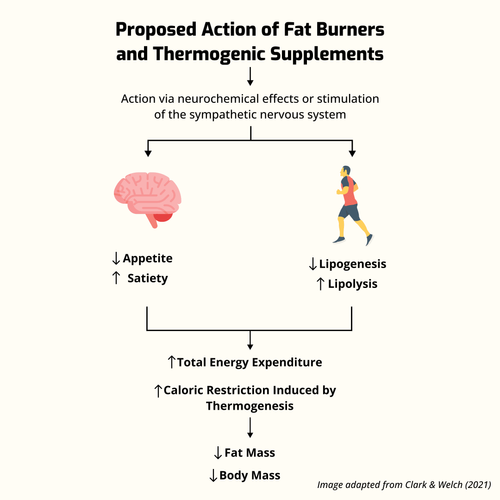
Are Fat Burners Really Effective?
The truth about fat burners: effectiveness and risks
Read post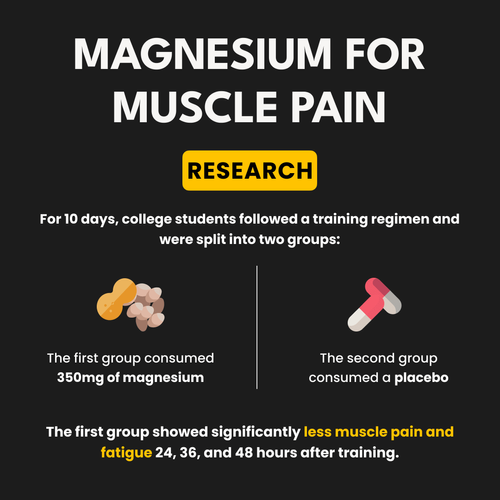 Supplements
Magnesium For Muscle Pain
Magnesium is a great ally for muscle recovery. Check out the best natural sources!
Read post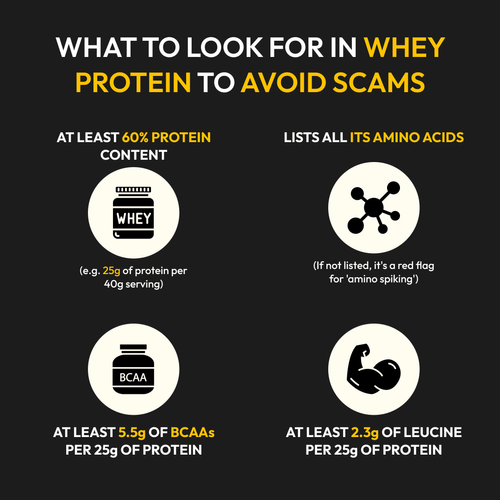 Supplements
What to Look for in Whey Protein to Avoid Scams
4 Essential Features Your Whey Protein Must Have to Ensure High Quality
Read post