Animal-based Protein Sources
Discover the protein content and protein/calorie ratio of top animal-based sources, helping you choose the best options for your dietary needs.
- Published
- Updated
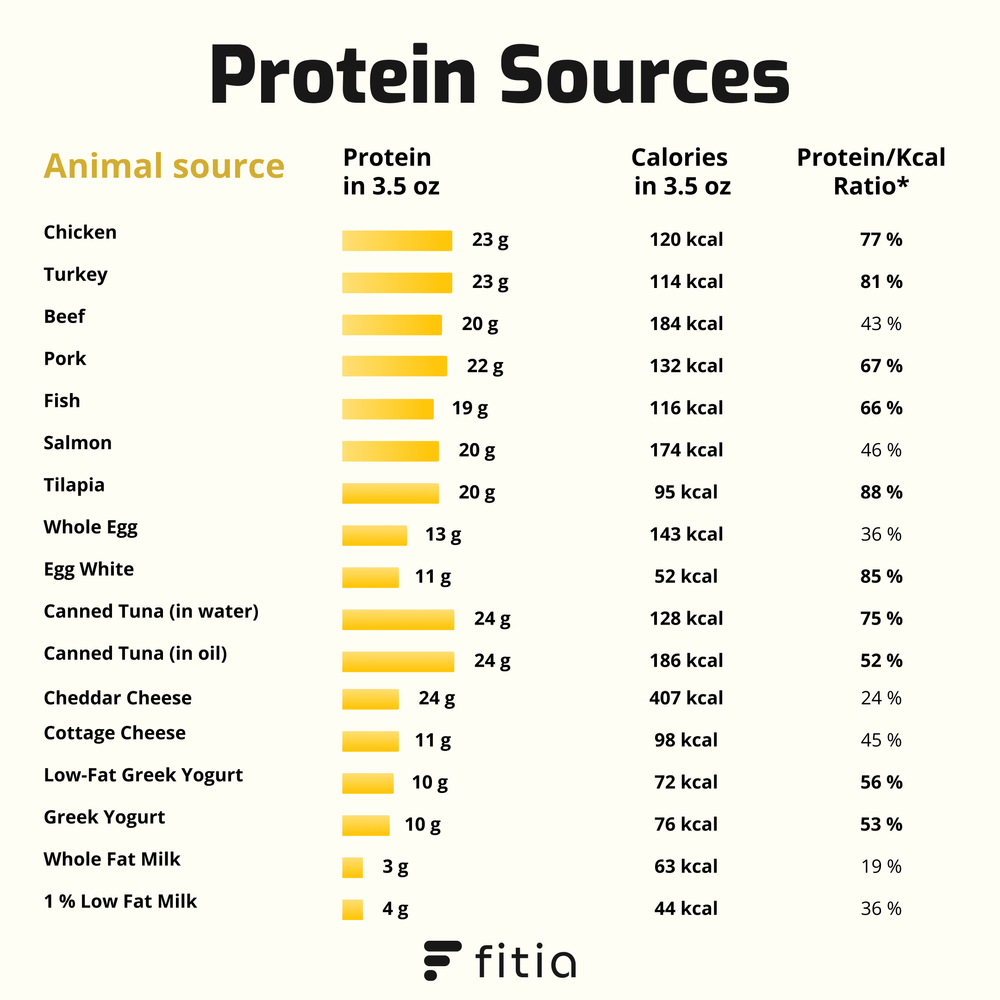
*Protein/kcal Ratio: Indicates the percentage of calories that come from protein. If a food has a high protein/calorie ratio, it means that it primarily provides protein.*
At Fitia, you can meet your protein needs and track your meals to ensure you're hitting your targets.
📝 Protein is a macronutrient that plays a key role in the maintenance and development of muscle tissue, as well as in strengthening the immune system, nutrient transport, and hormonal regulation.
🥩 Protein provides 4 kcal per gram and is the most effective macronutrient for controlling appetite, as it suppresses ghrelin (the “hunger” hormone) levels best.
🔥 It also has the highest thermic effect (20-30%) compared to carbohydrates and fats (0-10%). For every 100 kcal of protein consumed, your body will expend 20-30 kcal to process it.
👉 All animal proteins are considered “complete” proteins because they provide all 9 essential amino acids that our body does not produce. Only some plant proteins are complete, such as soy products, chia, edamame, and quinoa.
🌱. This doesn't mean you can't get complete proteins from a plant-based diet. Diversification is key. For example, grains are low in lysine, while legumes are low in methionine. Consuming both groups throughout the day will provide the necessary amino acids to form complete proteins. For this reason, stay tuned for our upcoming post to discover the best plant-based protein sources
Want to know your calorie and macronutrient requirements? Download Fitia here and achieve your nutritional goals.
🤔 How much protein do we need daily? According to the literature, if you practice sports or strength training, a range of 0.72-1 of protein per pound of body weight per day is optimal (1.6-2.2g/kg) . For aerobic sports, a range of 0.63-0.72 g/lb (1.4-1.6g/kg) is adequate. If you lead a sedentary life, the range is 0.4 - 0.5 g/lb (0.9-1.2g/kg).
More posts
 Foods
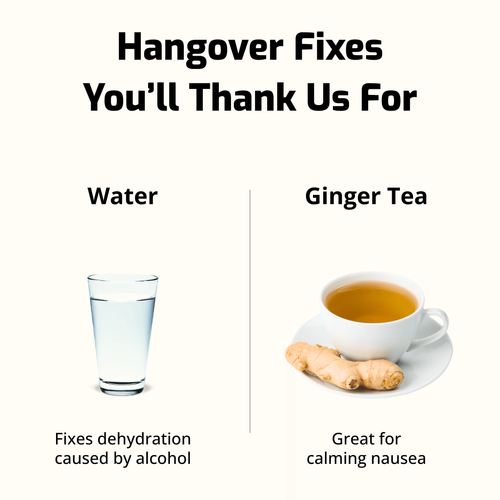
FoodsQuick Hangover Fixes That Actually Work
Learn simple tips to ease hangover symptoms, stay hydrated, and feel better fast with natural remedies and nutrient-packed foods.
Read post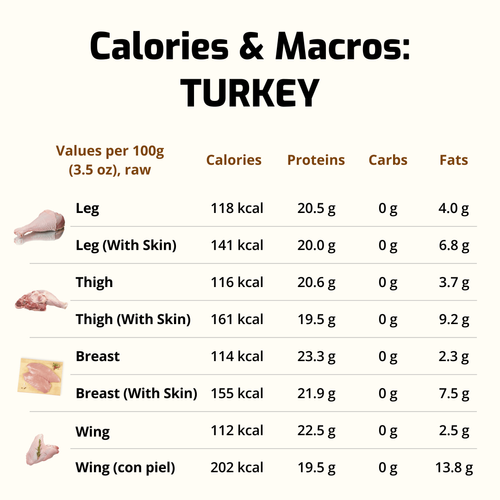 Foods
FoodsCalories and Macros in Turkey Cuts: Which One Fits Your Goals?
Discover the calories and macros in turkey cuts to choose the best option for your fitness goals and meal plans.
Read post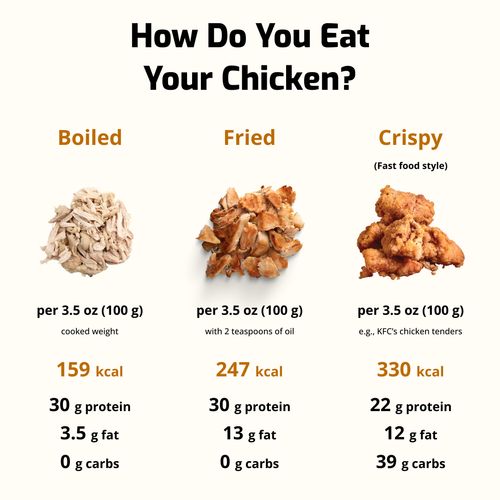 Foods
FoodsBoiled, Fried, or Crispy Chicken: Which Fits Your Macros?
Boiled, fried, or crispy chicken? Discover how each preparation affects calories, protein, fat, and carbs, and choose the best option for your goals.
Read post