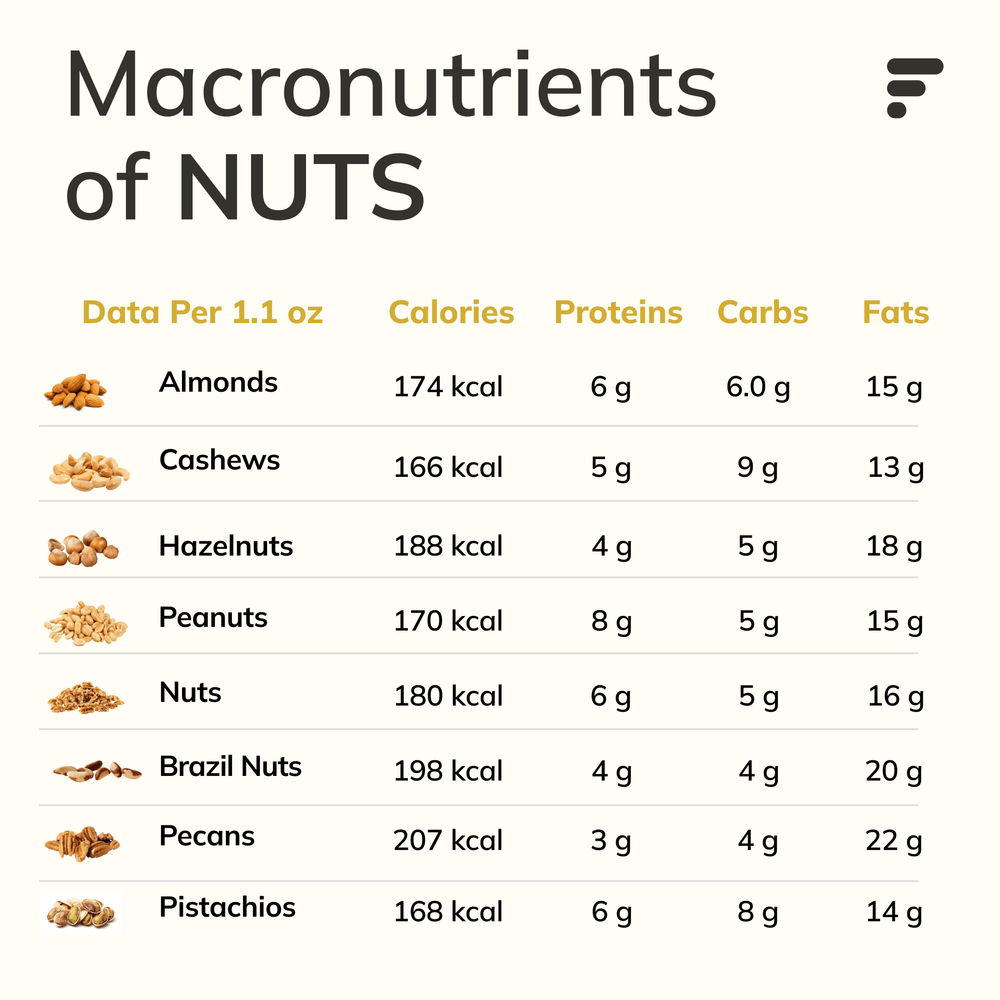
What's your favorite?
In the Fitia app, you can find complete nutritional information for these nuts and thousands more.
👉 In general, nuts provide mostly healthy fats, with some protein and carbohydrates. They're also an excellent source of fiber, antioxidants, vitamins, and minerals.
👉 For instance, almonds and hazelnuts are rich in α-tocopherol (vitamin E); walnuts are high in omega-3 and phenolic compounds; pistachios contain carotenoids; peanuts have phytosterols; and Brazil nuts are packed with selenium. In fact, just one Brazil nut (0.2 oz) can give you over 100% of the daily recommended selenium intake (so don't overdo it).
🫀 Eating nuts regularly has been linked to many health benefits, like reducing cardiovascular risk, lowering cholesterol and triglycerides, and better blood sugar control in people with diabetes.
🥜 Fun fact: peanuts are not actually nuts, but legumes, like lentils and peas. They're an oilseed legume, meaning they're a legume with a high-fat content. This makes their nutritional profile similar to nuts, which is why they're often grouped with them. Now you know why peanuts have a bit more protein than other nuts.
Want to know your calorie and macronutrient requirements? Download Fitia here and achieve your nutritional goals.
Sources:
- de Souza RGM, Schincaglia RM, Pimentel GD, Mota JF. Nuts and Human Health Outcomes: A Systematic Review. Nutrients. 2017 Dec 2;9(12):1311. doi: 10.3390/nu9121311. PMID: 29207471; PMCID: PMC5748761.
More posts
 Foods
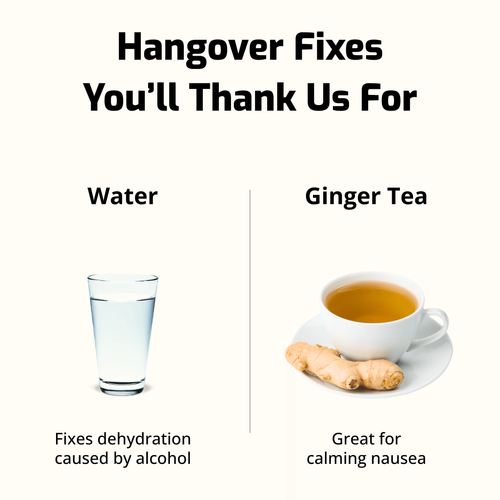
FoodsQuick Hangover Fixes That Actually Work
Learn simple tips to ease hangover symptoms, stay hydrated, and feel better fast with natural remedies and nutrient-packed foods.
Read post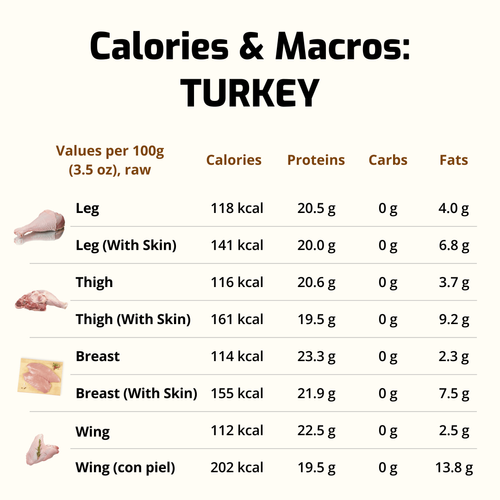 Foods
FoodsCalories and Macros in Turkey Cuts: Which One Fits Your Goals?
Discover the calories and macros in turkey cuts to choose the best option for your fitness goals and meal plans.
Read post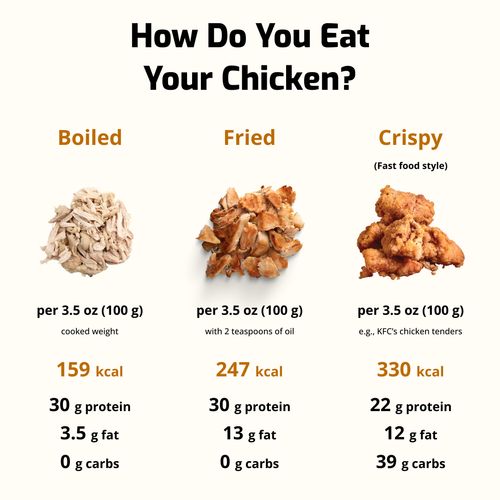 Foods
FoodsBoiled, Fried, or Crispy Chicken: Which Fits Your Macros?
Boiled, fried, or crispy chicken? Discover how each preparation affects calories, protein, fat, and carbs, and choose the best option for your goals.
Read post