Nov 09, 2025
10 Best Calorie Counter Apps of 2025: Reviewed by Registered Dietitians (2026 Update)
TL;DR Calorie tracking in 2026 is faster and smarter thanks to AI, with apps that log meals via photo, voice, or barcode and adjust goals in real time.
After testing dozens of options, the top apps stand out for accuracy, ease of use, integrations, and long-term reliability. Fitia ranks #1 due to its fully verified food database, AI-powered logging, and adaptive meal planning that updates calories and macros automatically.
Table of Content
- Introduction
- How We Chose the Best Calorie Counter Apps (2026 Update)
- The 10 Best Calorie Counter Apps in 2026
- Fitia
- MyFitnessPal
- Cronometer
- Lose It!
- Noom
- Lifesum
- YAZIO
- FatSecret
- Carb Manager
- Nutritionix
- Summary Comparison Table (2026)
- Why Fitia is the #1 Calorie Counter App of 2026
- FAQs
- Final Thoughts
Calorie tracking in 2026 is smarter, faster, and far more accurate than ever before. What once required tedious manual entry now takes seconds, thanks to AI meal logging, verified nutrition databases, and seamless integrations with Apple Health, Health Connect, and modern wearables.
You can now snap a photo, record a voice note, or scan a barcode, and the app recognizes your meal, logs precise macros, and syncs activity automatically. The best calorie counter apps function as intelligent nutrition assistants, adjusting your targets dynamically as your body changes and surfacing actionable insights in real time.
Our team of registered dietitians and nutrition data specialists tested dozens of calorie counter apps across real-world conditions: busy weekday lunches, restaurant dining, and structured meal prep routines. After weeks of evaluation, we identified the 10 best calorie counter apps of 2026, ranked by data integrity, logging speed, feature depth, ecosystem integration, and sustained accuracy.
Whether your goal is losing fat, building muscle, or improving nutrition awareness, these tools make tracking simpler, more intelligent, and more sustainable.
How We Chose the Best Calorie Counter Apps (2026 Update)
To identify the most accurate and sustainable tools, our methodology combined hands-on testing with the professional judgment of registered dietitians and nutrition scientists.
We assessed each app on seven dimensions:
- Database Accuracy & Verification: Preference for professionally verified data over user-submitted entries.
- Ease of Use: Speed of logging, interface clarity, and learning curve for new users.
- Feature Depth vs. Simplicity: Breadth of nutrient tracking balanced with usability.
- Integration Ecosystem: Compatibility with wearables, fitness trackers, and health platforms.
- Value Proposition: Feature-to-price ratio for free vs. premium tiers.
- Support & Community: Access to education, coaching, and user support.
- Specialized Diet Compatibility: Inclusion of options for keto, vegan, fasting, or other dietary patterns.
Each app was used for at least two weeks under realistic daily conditions to evaluate long-term consistency and data reliability.
The 10 Best Calorie Counter Apps in 2026
1. Fitia
Quick Overview
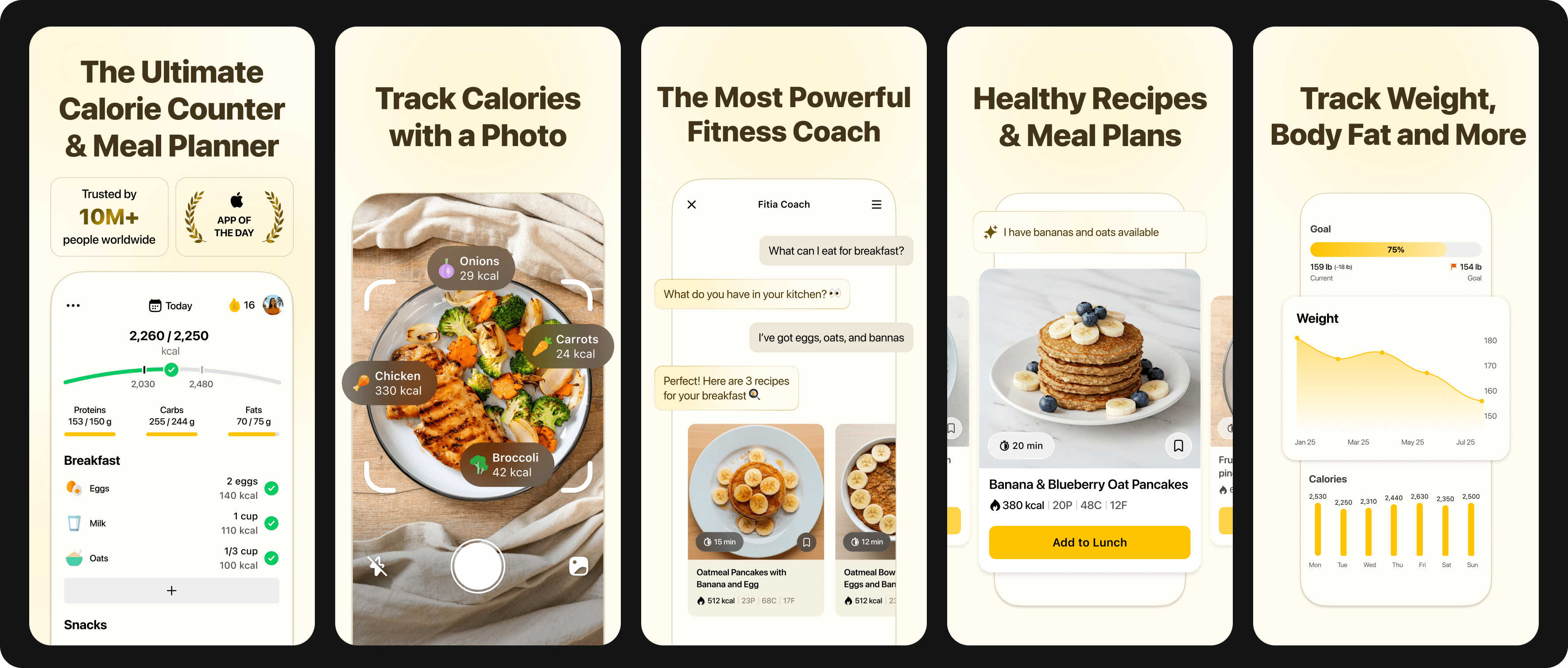
Fitia has earned the trust of over 10 million users and maintains a 4.9-star average rating worldwide. It’s one of the few calorie counter apps where every food entry is verified by dietitians before being added to the database. The result: unmatched accuracy and reliable insights for users across goals.
Best For
Anyone seeking a comprehensive, AI-powered nutrition tool with verified data and adaptable features.
Pros
- 100% verified food database reviewed by professionals.
- Food logging via photo, voice, text.
- AI - Powered Nutrition coach with science-based guidance.
- Detailed micronutrient tracking with daily diet quality score
- Personalized meal plans that adapt calories and macros automatically.
- Smart grocery lists generated from chosen meals.
- Syncs with Apple Health, Health Connect, and fitness wearables.
- Includes customizable intermittent fasting timers.
Cons
- Full range of AI-powered features and coaching capabilities only available with premium subscription.
- May have more features than needed for users seeking only basic calorie counting.
- Available in English and Spanish only.
Pricing
Free version includes food logging, barcode scanning, and calorie tracking. Fitia Premium starts at $19.99 per month or $59.99 per year. The Family Plan is available for $89.99 annually, offering shared access and 75 % savings compared to individual plans (2-6 members).
Dietitian’s Insight
“Fitia’s verified database reduces common logging errors we see in other apps. For clients who value accuracy and time efficiency, it provides a structured, evidence-based approach to daily tracking.”
Kick off your fitness journey with Fitia. Start your free trial today.
2. MyFitnessPal
Quick Overview
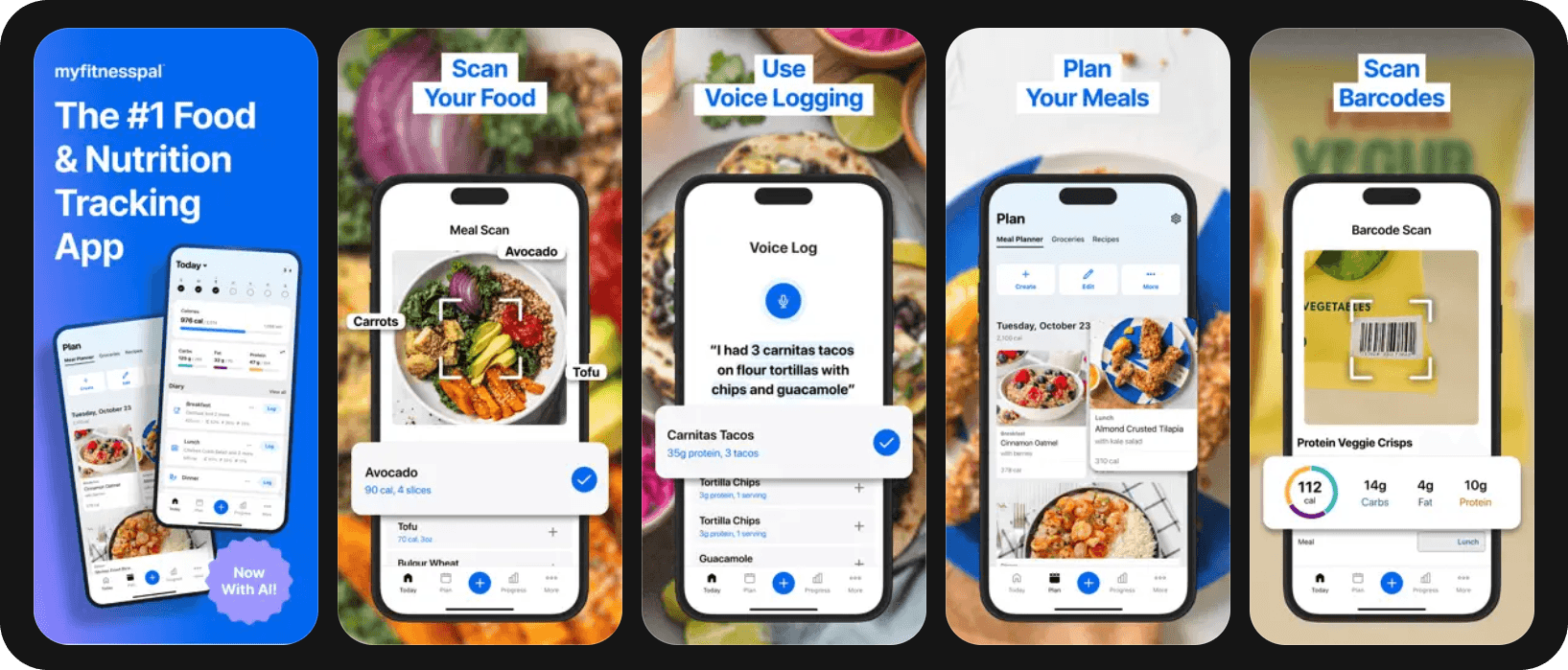
MyFitnessPal is a widely used calorie-tracking app with a reported database of 14 million foods. Newer AI-assisted tools focus more on verification and automation, but MyFitnessPal remains a common choice due to its broad food coverage and active community features.
Best For
Users who already know their nutrition and only need a calorie counter + large database (no coach, no meal plan).
Pros
- Massive food database.
- Syncs with Garmin, Fitbit, and Apple Health
- Community support through active user forums.
Cons
- Many entries rely on user submissions, creating occasional inaccuracies.
- Barcode scanner and ad-free experience locked behind Premium plan.
- Ads can slow the free version.
Pricing
Free core tracking; Premium $79.99/yr or $19.99/mo; Premium+ $99.99/yr (feature bundle, ad-free).
Dietitian’s Insight
“MyFitnessPal’s strength lies in its breadth, not its precision. For casual trackers or restaurant-goers, it remains one of the easiest to use.”
3. Cronometer
Quick Overview
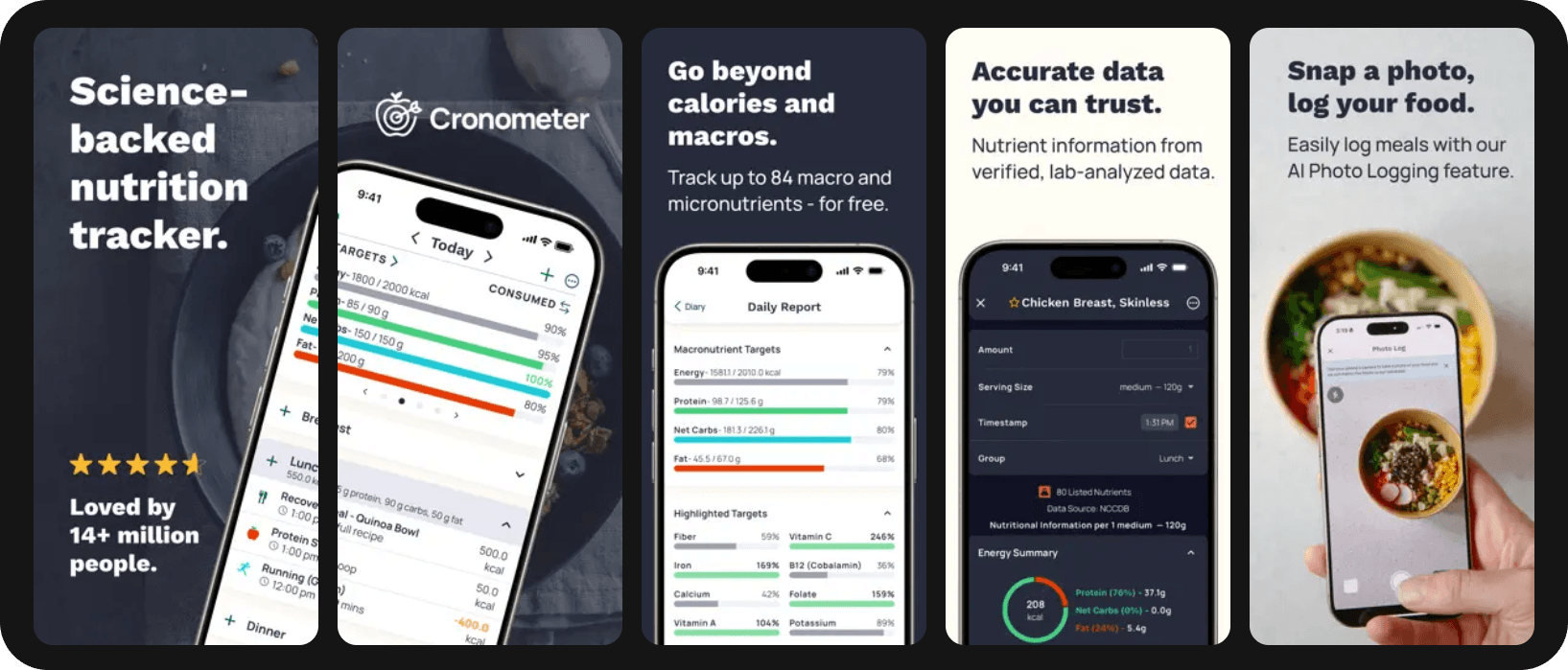
Cronometer tracks up to 84 nutrients and provides detailed macro and micronutrient reporting. Its feature set is closer to professional dietetics tools than typical consumer trackers, making it suitable for clinical use cases and performance monitoring.
Best For
Athletes, clinicians, and data-focused users who prioritize precision over simplicity.
Pros
- Verified, lab-analyzed food database
- No ads in the free version.
- Detailed micronutrient tracking (vitamins, minerals, amino acids).
- Integrates with Fitbit, Polar, and Oura Ring.
Cons
- Interfaces can appear overwhelming for new users.
- Smaller database compared to broader commercial apps.
- Learning curve if you only need simple calorie counting (more data density).
Pricing
Free version available; Gold $10.99/mo or $59.99/yr.
Dietitian’s Insight
“When a case requires nutrient adequacy checks rather than just calorie balance, Cronometer’s nutrient summaries and custom targets are practical for dietetic review.”
4. Lose It!
Quick Overview
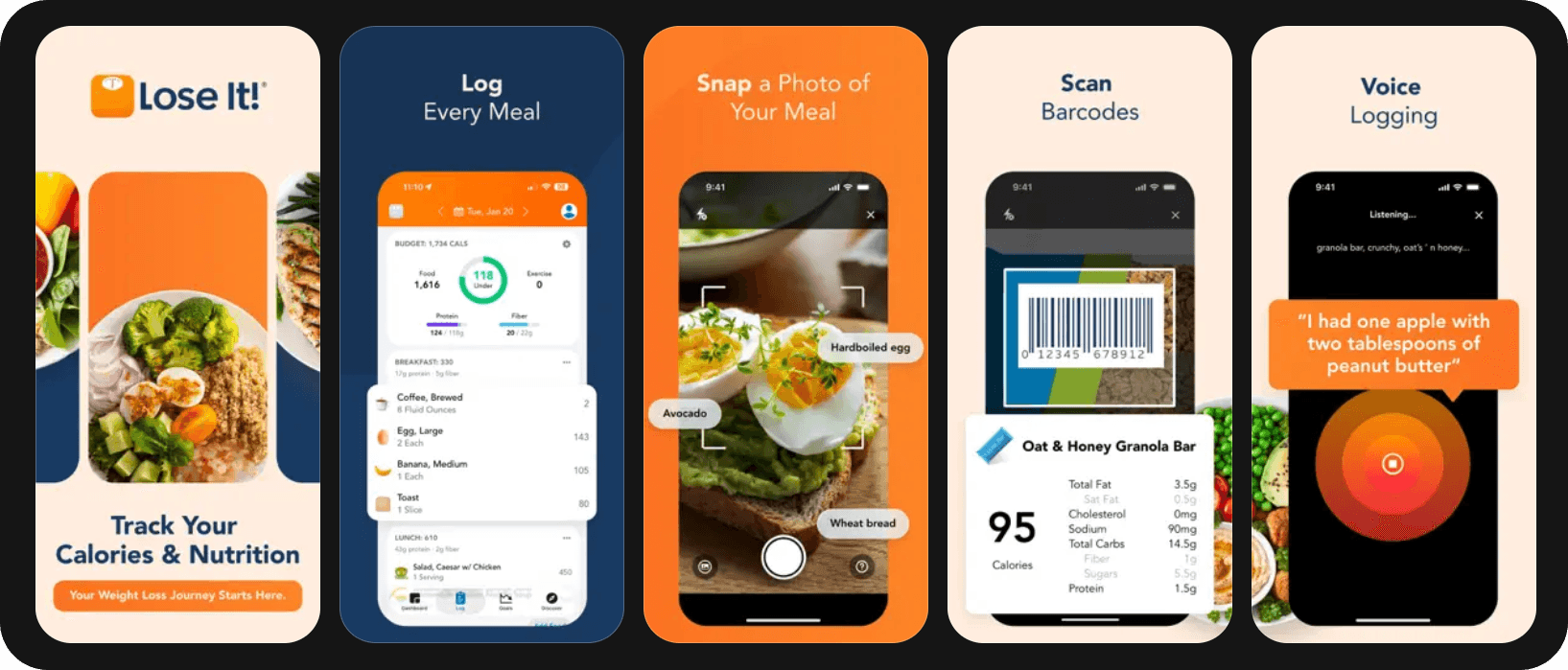
Lose It! offers calorie and macro tracking with a clean, straightforward interface and habit-building tools. It reports a database of approximately 32 million foods and emphasizes ease of use for new trackers.
Best For
Beginners and users focused on weight loss through consistent, visual tracking.
Pros
- Extensive database with strong restaurant coverage.
- “Snap It” photo logging for fast entries.
- Clear progress charts and habit challenges.
- Identifies recurring eating patterns automatically.
Cons
- Premium needed for barcode scanner and advanced reports.
- Lacks deep micronutrient data.
Pricing
Free basic tracking; Premium commonly $39.99/yr.
Dietitian’s Insight
“For clients new to tracking, Lose It!’s streamlined interface reduces friction, though micronutrient depth is limited compared with clinician-focused apps”
5. Noom
Quick Overview
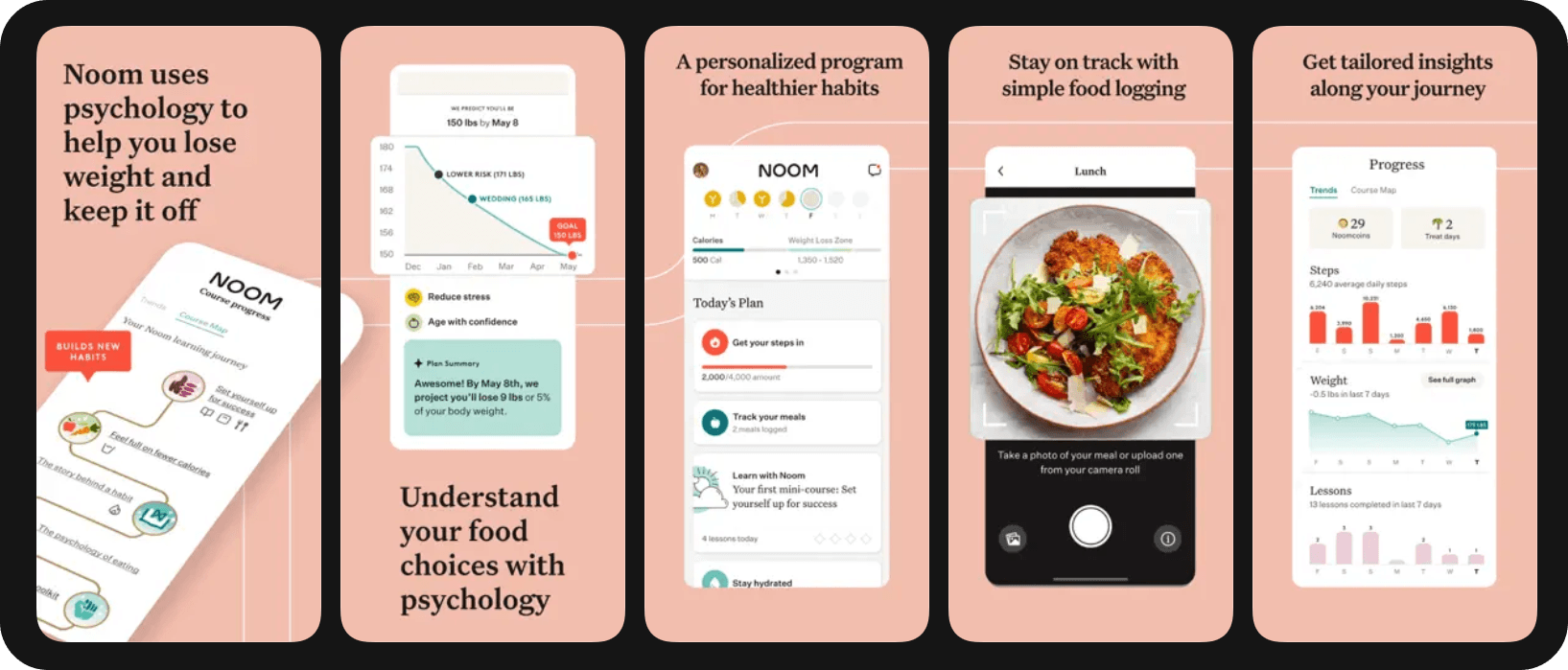
Noom combines calorie and weight tracking with structured lessons and coaching based on behavioral psychology, aiming to support awareness of eating patterns and habit formation.
Best For
Users seeking structured guidance and educational content rather than pure data tracking.
Pros
- Behavioral coaching grounded in cognitive psychology.
- Color-coded food systems simplify healthy choices.
- Personalized calorie budgets based on lifestyle.
- Daily lessons promote mindful eating habits.
Cons
- No fully free version; requires monthly subscription.
- Daily lessons and check-ins can feel time-intensive.
- Relatively high cost compared to other calorie-tracking apps.
- Interface and notifications may feel overwhelming for users seeking simple tracking only.
Pricing
Plans start at $70/month.
Dietitian’s Insight
“Noom’s strength is behavior-change support—structured lessons and coach check-ins can help some users build consistency, though the time commitment isn’t ideal for everyone”.
6. Lifesum
Quick Overview
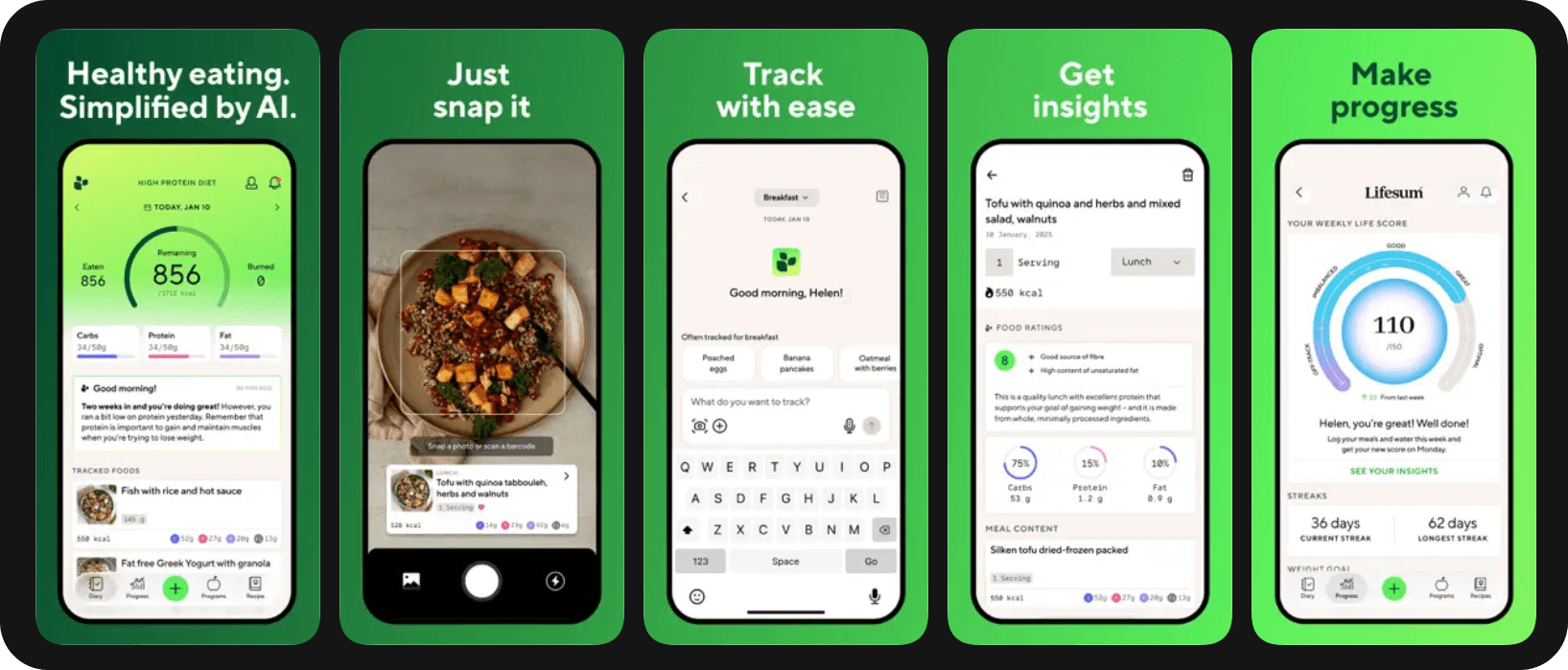
Lifesum offers calorie and macro tracking with a visually oriented interface and a library of structured meal plans covering dietary patterns such as keto, Mediterranean, vegan, and intermittent fasting.
Best For
Visual learners and lifestyle-oriented users who want a guided, intuitive experience.
Pros
- Elegant interface with motivating visuals.
- Variety of structured plans (keto, vegan, Mediterranean, fasting).
- “Life Score” tool summarizes overall nutrition quality.
- Built-in habit tracking for water, produce, and activity.
Cons
- Meal plans are templated; customization options (ingredients, portion sizes) can be restrictive.
- Lacks advanced nutrient exports for dietetic analysis.
- Smaller verified database than major competitors.
- Some users note occasional entry inaccuracies.
Pricing
Free tier available with limited features. Premium plans start at $29.99 for three months or $99.99 annually.
Dietitian’s Insight
“Lifesum makes behavior change feel rewarding. Its design and small nudges help users build sustainable habits rather than short bursts of tracking.”
7. YAZIO
Quick Overview
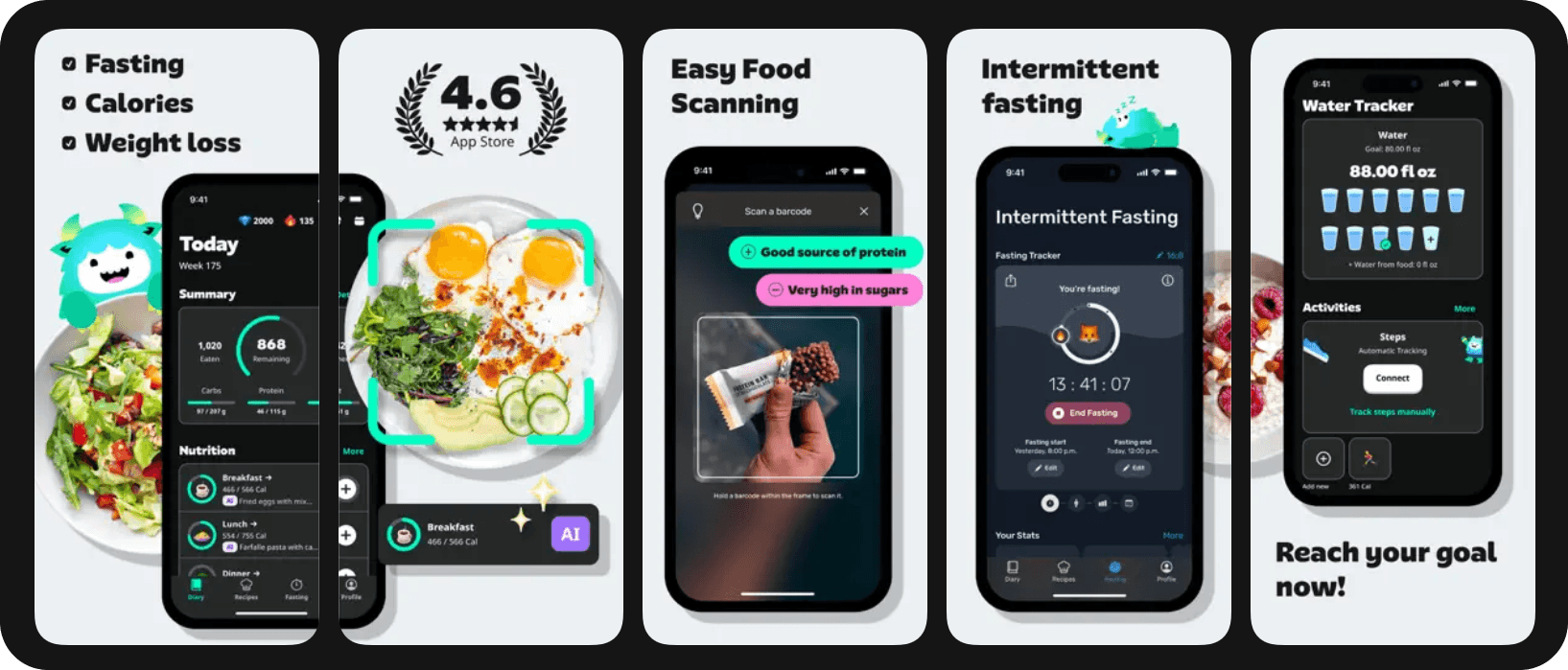
YAZIO combines precision engineering with structured planning, offering specialized support for intermittent fasting and personalized meal organization.
Best For
Users who prefer structured eating windows and a disciplined approach.
Pros
- Supports multiple fasting protocols (16:8, 18:6, alternate day).
- Library of 1,500+ curated recipes.
- Clean, minimal interface with analytics dashboard.
- Auto-adjusts calories/macros based on progress.
Cons
- Database coverage can vary by region; some niche or new items may be missing.
- Many advanced features sit behind PRO.
- Meal plans are templated; customization of ingredients/portions can feel limited.
Pricing
Premium plans start at $11.90; $47.90 annually.
Dietitian’s Insight
“The app’s emphasis on fasting and portion visualization aligns with behavioral coaching strategies, but data depth and customization remain moderate compared with professional platforms”.
8. FatSecret
Quick Overview
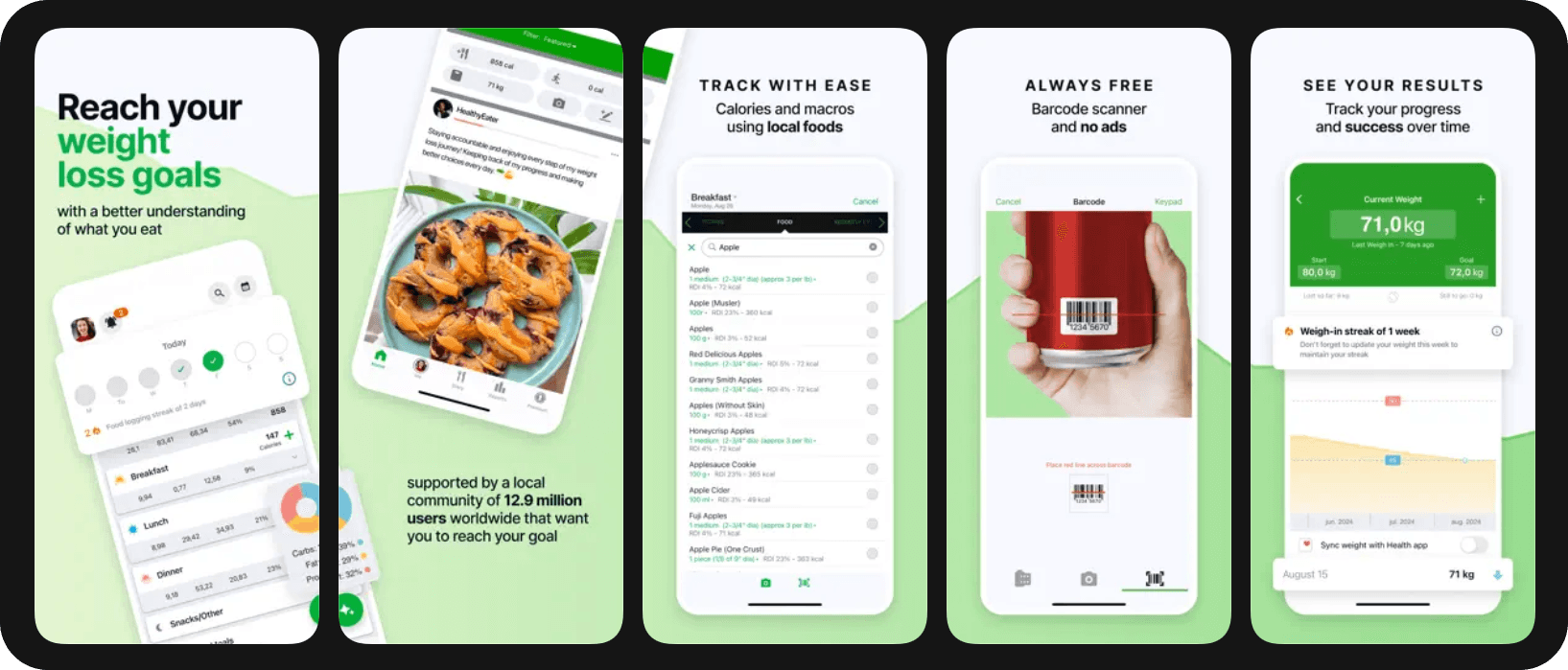
FatSecret is a long-running calorie-tracking app that offers a free tier with barcode scanning, nutrition charts, and community forums.
Best For
Users seeking a free calorie tracker with standard logging and community support.
Pros
- Fully featured free version with no intrusive upsells.
- Barcode scanning and recipe logging included.
- Community challenges and group support.
Cons
- The interface looks dated compared with modern competitors.
- Some advanced functions are limited to web versions.
- Ads in the free tier may distract some users.
- Restaurant coverage is less comprehensive in some regions.
Pricing
Core experience = free; optional premium adds custom meal plans and advanced analytics.
Dietitian’s Insight
“FatSecret offers standard calorie and macro logging at no cost; micronutrient depth and analytics are more limited than clinician-focused trackers.”
9. Carb Manager
Quick Overview
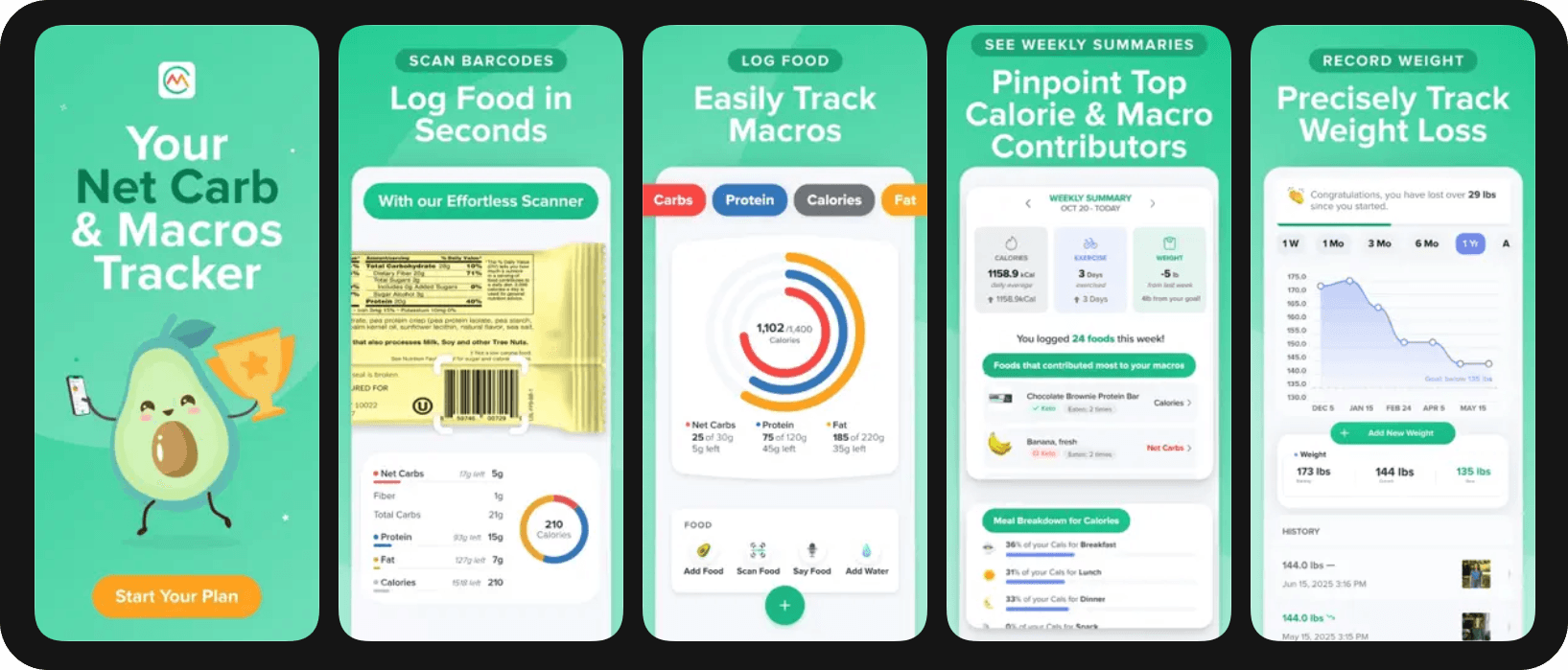
Carb Manager is purpose-built for low-carb and ketogenic eaters. It tracks net carbs, supports ketone monitoring, and includes low-carb recipes with macro targets built in.
Best For
Keto or low-carb dieters needing detailed macronutrient and blood-glucose tracking.
Pros
- Automatic net-carb and fiber subtraction.
- Keto recipe library with meal planning.
- Tracks ketones and glucose (premium).
Cons
- Limited value for non-low-carb users.
- Interface can feel crowded initially.
Pricing
Premium starts at $8.49 per month, with a 3-month plan at $16.49 and an annual plan at $29.99 (discounted rate).
Dietitian’s Insight
“For keto practitioners, Carb Manager’s nutrient precision and recipe integration make adherence easier. Clinical monitoring may require additional tools for micronutrient detail.”
10. Nutritionix
Quick Overview
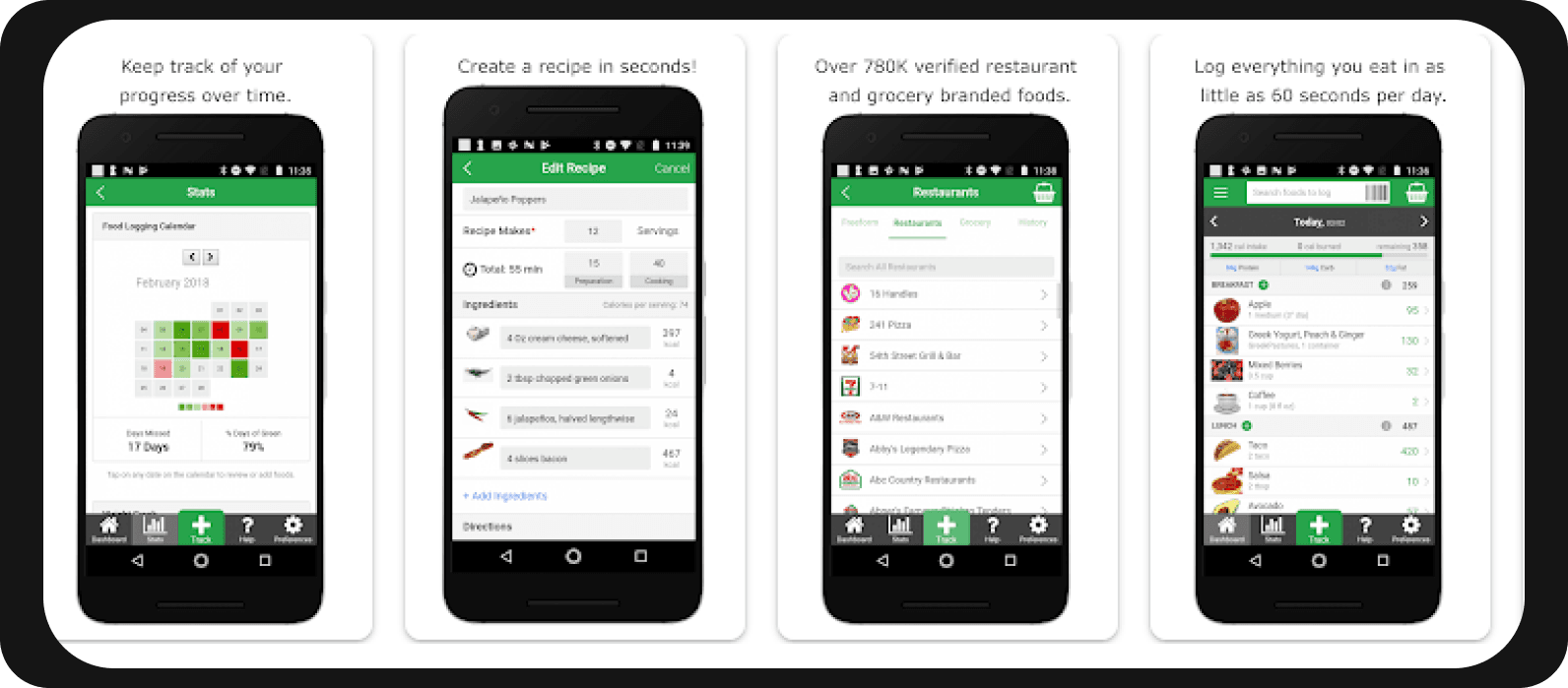
Nutritionix emphasizes restaurant and branded food entries, with coverage reported at 750+ U.S. chains and a large share of common grocery items.
Best For
Users who dine out often or rely heavily on branded/packaged foods.
Pros
- Reported coverage of restaurant chains and broad packaged-food listings.
- Natural-language food logging.
- Free to use with optional exports for professionals.
Cons
- Meal planning tools are basic or absent.
- Limited home-cooked meal tracking.
- Community and coaching features are not included.
Pricing
Free core plan; optional Premium for export and sharing tools, available at $28.99 per year.
Dietitian’s Insight
“Nutritionix is practical for clients who frequently eat restaurant or packaged foods, offering quick access to standardized menu data. Nutrient depth is limited for full dietary assessment.”
Summary Table (2026 Comparison)
App | Price (USD) | Best For | Notable Features |
| Fitia | Free / $19.99 mo / $59.99 yr / Family $89.99 yr | Users seeking a comprehensive, AI-powered nutrition tool with verified data and adaptable features. | 100% verified food database · Photo, voice, or text logging · AI-powered nutrition coach · Personalized adaptive meal plans · Grocery lists · Fasting timers · Apple Health & Health Connect sync |
| MyFitnessPal | Free / $19.99 mo / $79.99 yr / Premium+ $99.99 yr | Users who already know their nutrition and need a large database for logging. | 14 M+ food entries · Community forums · Garmin, Fitbit, and Apple Health sync · Recipe importer |
| Cronometer | Free / $10.99 mo / $59.99 yr | Athletes, clinicians, and data-focused users prioritizing precision and verified nutrient data. | Tracks ~84 nutrients · Verified lab-based database · No ads · Custom targets · Fitbit, Polar & Oura integration |
| Lose It! | Free / $39.99 yr | Beginners focused on weight loss through consistent, visual tracking. | 32 M foods · “Snap It” photo logging · Progress charts · Habit challenges · Pattern insights |
| Noom | $70 mo | Users seeking structured guidance and psychology-based education over data depth. | Behavior-based coaching · Color-coded food system · Daily lessons · Personalized calorie budgets |
| Lifesum | Free / $29.99 (3 mo) / $99.99 yr | Visual learners and lifestyle-oriented users wanting guided meal plans. | Calorie & macro tracking · Multiple diet plans (keto, vegan, Mediterranean) · “Life Score” health metric · Habit tracker |
| YAZIO | Free / $11.90 mo / $47.90 yr | Users who prefer structured fasting schedules and a minimalist interface. | Supports 16:8, 18:6, alternate-day fasting · 1,500+ recipes · Auto calorie/macros adjustments · Analytics dashboard |
| FatSecret | Free / Premium $14.99 mo or $59.99 yr | Users wanting a free calorie tracker with standard tools and community access. | Barcode scanning · Nutrition charts · Community challenges · Basic reports · Free core experience |
| Carb Manager | $8.49 mo / $16.49 (3 mo) / $29.99 yr | Keto or low-carb dieters needing detailed macro, ketone, or glucose tracking. | Net carb tracking · Keto recipes · Glucose & ketone logging (premium) · Meal plans |
| Nutritionix | Free / Premium $28.99 yr | Users who dine out often or log mostly restaurant and packaged foods. | 750+ U.S. restaurant menus · Branded grocery coverage · Natural-language logging · Export tools for professionals |
Why Fitia is the #1 Calorie Counter App of 2026
Through extensive testing, Fitia consistently delivered accuracy without compromise. Its database integrity eliminates conflicting entries common in user-generated platforms, while AI-assisted logging (via photo, voice, or text) reduces tracking time by over 70 %.
Fitia also features adaptive algorithms that auto-adjust calories and macros based on real-time weight and progress data, helping users overcome common plateaus. These traits make Fitia the most data-reliable and time-efficient app of 2026, according to our registered dietitian.
Ready to start with Fitia? Unlock your exclusive Premium discount with code FITIANOW
FAQs
1. What is the most accurate calorie counter app in 2026?
Fitia ranks among the most accurate calorie counter apps, featuring a fully nutritionist-verified database where each entry is reviewed before publication.
2. Which calorie counter uses AI for food logging?
Fitia, YAZIO, and Lose It! employ AI recognition. Fitia leads in precision, identifying meals from photos, voice input, or natural-language text.
3. How long does it take to see results?
Most users notice changes within 2–4 weeks of consistent tracking. Apps with adaptive targets—like Fitia—accelerate measurable progress.
4. What’s the difference between free and premium versions?
Free tiers provide calorie and macro tracking; Premium unlocks features such as barcode scanning, ad-free use, detailed nutrient analytics, and meal planning.
5. How does AI improve nutrition tracking?
AI automates food recognition, validates data consistency, and tailors daily goals. In 2026, leading apps integrate machine learning to detect patterns in your meals and adjust calorie recommendations dynamically.
Final Thoughts
Calorie tracking has transitioned from manual record-keeping to intelligent, adaptive nutrition management. The best apps of 2026 not only log your meals, they interpret them, personalize your goals, and help you sustain healthier habits with minimal friction.
Whether you value data depth, behavioral support, simplicity, or AI-driven precision, each app in this list has proven its merit through evidence-based evaluation and real-world testing.
Fitia: Meal Plans & Calorie Counter
We use cookies to enhance your browsing experience, analyze site traffic, and personalize content. By clicking 'Accept', you consent to the use of these technologies in accordance with our Privacy Policy.