
Mar 10, 2024
Cardio vs Weights in Fat Loss
You want to lose weight. You know that you need to achieve a caloric deficit through diet, but you also know that exercise will help you in this process.
So, you're faced with the question: What type of exercise is best for enhancing fat burning? Should I focus on cardio or strength training?
The short answer: If you can do both, do it, and if you had to choose just one, strength exercise will be more useful to you.
The key, however, is understanding why, so let's dive deeper into that.
In this article, we will explain the role that strength exercise and cardio play in the fat loss process.
Remember that with the Fitia app you can get a diet plan to lose weight according to your personalized requirement and your food preferences. Download it for free here.
Key Points
To achieve fat loss, exercise should be used as a complement to a caloric deficit diet with proper macronutrients distribution.
Cardio and strength training offer different benefits that complement each other in the fat loss process. Evidence shows that a combination of both is more effective for fat loss than doing either one separately.
Generally, cardio (at medium-high intensity) will help you spend more calories per session.
However, strength training helps minimize muscle mass loss during a fat loss period or might even help you build new muscle mass (if you're a beginner). This is more beneficial because it allows you to burn more calories even at rest and prevents metabolic adaptations to the caloric deficit that could eventually lead to a plateau.
Fat Loss
Before diving strictly into the exercise part, let's briefly remind you how fat loss works.
To lose weight, you essentially need a negative energy balance (caloric deficit), meaning you consume fewer calories than you expend:
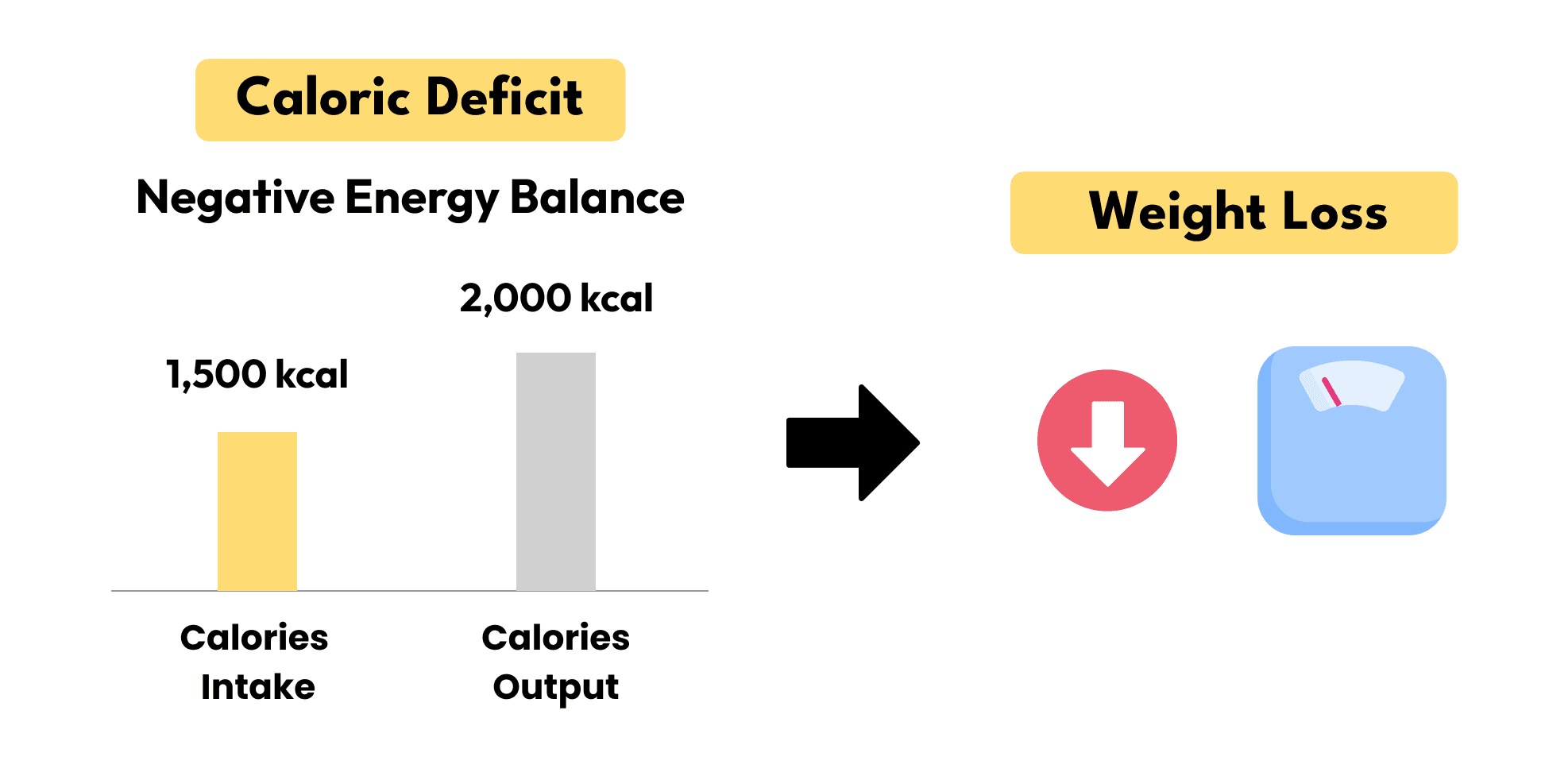
To achieve a deficit you have three options: reduce the amount of calories you consume, increase the amount you burn, or do both simultaneously (the latter being the most optimal).
Moreover, keep in mind that achieving a deficit only through exercise is quite impractical. You would need to significantly increase the amount of exercise you do to achieve a meaningful deficit (1,2).
On the other hand, losing weight is not necessarily the same as losing fat (here, we detail the differences).
Focusing only on weight might lead to muscle mass loss (wich happens when you don't apply the right strategies). Therefore, it is better to focus on losing fat while maintaining your muscle mass. This approach is healthier and typically what people desire aesthetically.
Keep this in mind as it's one of the key differences between the effects of cardio and weight training.
Also, remember that with the Fitia app you can find out your nutrient requirements to achieve an appropriate caloric deficit and create a diet plan to meet your needs. Download it for free here.
👉 You might be interested in: Caloric Deficit: What is it and How to achieve it?
Cardio vs Weights in Fat Loss
1. Cardio generally burns more calories per session
For instance, running at a pace of 9.7 km per hour (6.2 min/km) for 30 minutes burns about 360 calories in a 154 lb (70 kg) person (3).
Meanwhile, for the same person, a 30-minute strength training session would burn about 108 kcal calories if it is at medium intensity and about 216 kcal at high intensity (3).
So far, you might be leaning towards cardio. After all, burning more calories contributes to the caloric deficit we aim to achieve.
However, you must consider that the amount of calories a person burns isn't limited to just one exercise session but occurs throughout the entire day. This leads us to the following points.
2. Strength training helps you maintain (or gain) muscle mass while you are in deficit
When you're in a caloric restriction period, your body begins to tap into existing tissues for the energy it's missing. Naturally, the goal is to use stored fat so you can reduce it.
Indeed, your fat reserves will be the first source of energy, but if you don't manage the process properly, you'll also start breaking down muscle proteins for energy.
This is where strength training becomes essential.
This type of training creates a stimulus in your muscles that cardio does not: it generates mechanical tension (4,5). This, combined with metabolic stress and muscle damage, lead to muscle hypertrophy (growth).
This is why strength training will minimize muscle mass losswhile you are in deficit (6,7).
For instance, in a study 141 participants were put on a diet plan to lose weight. They were divided into three groups, each with a different exercise regimen: cardio, strength, or both.
After six months, it was observed that lean mass decreased more in the group that only did cardio compared to the other two groups (-5% vs -3% in both and -2% in strength alone) (8).
Also, if you are new to strength training or your fat level is quite high, you might even gain muscle mass while in a deficit.
Of course, as long as you don't undergo a very severe calorie restriction (no more than -20% of your maintenance level) and consume enough protein 0.4 oz/lb per day if you train strength 0.72 -1g/lb (1.6-2.2g/kg) (4,9).
For example, another study compared two groups of overweight people (10). The first group was put on a caloric deficit diet alone (80% maintenance calories) and the second group added a strength training plan and adequate protein intake.
At the end of the study, the average fat percentage decreased by 2% in the first group versus 4% in the second group. The first group saw no increase in lean mass, while the second group gain 2 kg of muscle, along with an average strength increase of 29% in the chest, shoulders, and legs (10).
A person in deficit who engades in strength training will be able to maintain more muscle mass than a person in deficit who only does cardio.
3. Strength Exercise Will Make You Burn More Calories Throughout the Day
Strength training will increase your calorie expenditure throughout the day Exercise burns energy while you're doing it (where we already know cardio has a slight advantage), but it also affects your energy expenditure for the rest of the day.
Muscle is a metabolically very active tissue. This means its constantly uses energy to maintain its function and structure (11).
In fact, it is responsible for a significant portion of the energy you expend at rest, that is, your basal metabolic rate (which represents about 60-75% of the energy you spend in one day).
So, your resting energy expenditure will be higher the more muscle you have.
For instance, one study evaluated how basal metabolic rate changes after a group of people began strength training. After 24 weeks, they found that resting energy expenditure increased significantly by an average 7% (from 1,416 kcal to 1,512 kcal) (12).
Now, this difference might not seem huge. However, it will help you prevent metabolic adaptations to the caloric deficit, wich are responsible for many instances of "plateauing."
The Ideal Combination: Cardio + Weights
Now, the truth is both cardiovascular exercise and strength training have proven effective for fat loss.
However, strength training is superior for preserving or building muscle mass.
Therefore, by combining cardio with weights, you will get the benefits of both types of exercises and achieve better results.
As evidence of this, a randomized clinical trial compared the effect of cardio, strength training, and a combination of both on anthropometric parameters such as weight, lean mass, and fat (13).
For this purpose, 119 sedentary adults with overweight or mild obesity were recruited. The subjects were divided into three groups according to the type of exercise and underwent an 8-month training program.
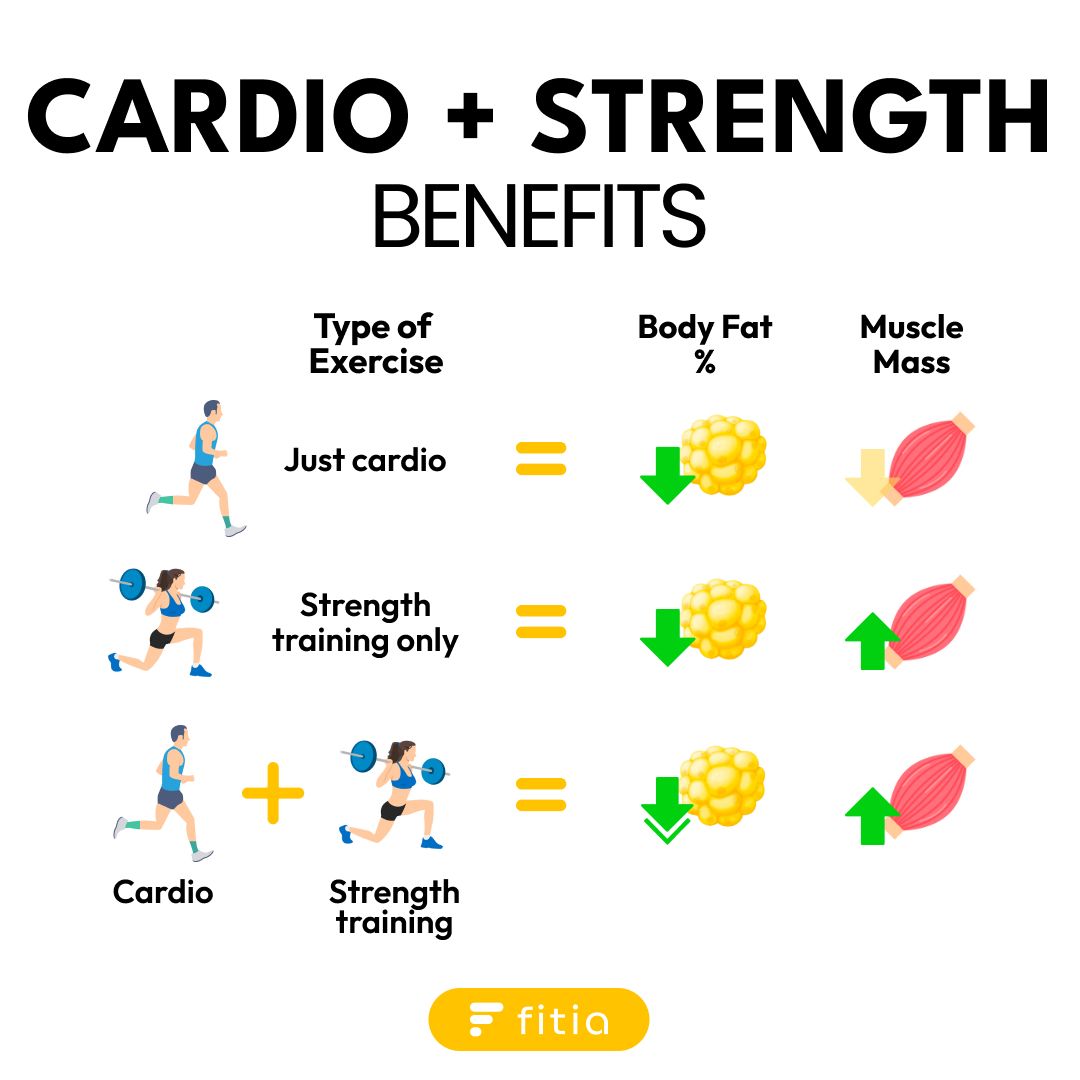
The results showed that the aerobic exercise (cardio) group significantly reduced their fat percentage but slightly decreased their muscle mass.
On the other hand, the strength group also reduced their fat percentage, but unlike the previous group, increased their lean mass level.
Finally, , the group that combined both types of training lost the most body fat reduced more waist inches, and also showed an increase in muscle mass.
So, Cardio or Weights for Fat Loss?
An ideal fat loss plan would include both types of training: cardio and weights.
However, if you can only choose one of the options, strength training will bring you more benefits in a fat loss process, as it helps you maintain more muscle mass and prevents your resting energy expenditure from decreasing.
References
References
- Trexler ET, Smith-Ryan AE, Norton LE. Metabolic adaptation to weight loss: implications for the athlete. J Int Soc Sports Nutr. 2014 Feb 27;11(1):7. doi: 10.1186/1550-2783-11-7. PMID: 24571926; PMCID: PMC3943438.
- Hall KD, Heymsfield SB, Kemnitz JW, Klein S, Schoeller DA, Speakman JR. Energy balance and its components: implications for body weight regulation. Am J Clin Nutr. 2012 Apr;95(4):989-94. doi: 10.3945/ajcn.112.036350. Erratum in: Am J Clin Nutr. 2012 Aug;96(2):448. PMID: 22434603; PMCID: PMC3302369.
- Harvard Medical School. Calories burned in 30 minutes for people of three different weights.
- Schoenfeld, Brad J. Science and development of muscle hypertrophy. Human Kinetics, 2020.
- Helms, Eric, Andy Morgan, and Andrea Valdez. The Muscle & Strength Pyramid: Training. Muscle and Strength Pyramids, LLC., 2018.
- Preserving Healthy Muscle during Weight Loss (2017, Edda Cava, et al)
- Resistance Training Prevents Muscle Loss Induced by Caloric Restriction in Obese Elderly Individuals: A Systematic Review and Meta-Analysis (2018, Amanda V. Sardeli, et al)
- Villareal DT, Aguirre L, Gurney AB, Waters DL, Sinacore DR, Colombo E, Armamento-Villareal R, Qualls C. Aerobic or Resistance Exercise, or Both, in Dieting Obese Older Adults. N Engl J Med. 2017 May 18;376(20):1943-1955. doi: 10.1056/NEJMoa1616338. PMID: 28514618; PMCID: PMC5552187.
- Helms, Eric, Andy Morgan, and Andrea Valdez. The Muscle & Strength Pyramid: Nutrition. Muscle and Strength Pyramids, LLC., 2018..
- Effect of a hypocaloric diet, increased protein intake and resistance training on lean mass gains and fat mass loss in overweight police officers. (Demling RH1, DeSanti L.)
- Wolfe RR. The underappreciated role of muscle in health and disease. Am J Clin Nutr. 2006 Sep;84(3):475-82. doi: 10.1093/ajcn/84.3.475. PMID: 16960159.
- Lemmer JT, Ivey FM, Ryan AS, Martel GF, Hurlbut DE, Metter JE, Fozard JL, Fleg JL, Hurley BF. Effect of strength training on resting metabolic rate and physical activity: age and gender comparisons. Med Sci Sports Exerc. 2001 Apr;33(4):532-41. doi: 10.1097/00005768-200104000-00005. PMID: 11283427.
- Willis LH, Slentz CA, Bateman LA, et al. Effects of aerobic and/or resistance training on body mass and fat mass in overweight or obese adults. J Appl Physiol (1985). 2012;113(12):1831-1837. doi:10.1152/japplphysiol.01370.2011
Fitia: Meal Plans & Calorie Counter
We use cookies to enhance your browsing experience, analyze site traffic, and personalize content. By clicking 'Accept', you consent to the use of these technologies in accordance with our Privacy Policy.