Jun 04, 2024
Does Oats Make You Gain or Lose Weight? What Does Science Say?
On one hand, we hear that oatmeal is great for weight loss, and on the other, that we should avoid it at all costs.
So, what’s the truth? Should you eliminate it or include it in your diet?
In this article, we’ll review the available evidence on the role of oatmeal in the diet, whether your goal is to lose fat or gain muscle.
👉 You might be interested in: 5 Low-Calorie Lunches That Will Fill You Up
Additionally, if your goal is to lose or gain weight, the Fitia app can provide you with a personalized meal plan based on your objectives, personal characteristics, and food preferences. Download Fitia for free here.
Now, let's start with the basics:
Nutritional composition of oats
A 40g serving of raw oats provides:
- Calories: 152 kcal
- Protein: 5 g
- Carbohydrates: 27 g
- Fiber: 4 g
- Fat: 3 g
As you can see, the main macronutrient in oatmeal is carbohydrates. In fact, we can say that it is a good source of carbohydrates and fiber.
Now, you might be thinking that carbohydrates “aren't good for losing weight, but for gaining it.”
Is that true? Let’s take a closer look. Here’s what actually happens:
Oatmeal alone cannot make you gain weight or lose weight (no food can)
There is no single food or nutrient (including carbohydrates) that has the ability to make you gain or lose weight on its own (1).
Let's look at a very interesting example. In one study, the effect of a food very high in carbohydrates (and often feared) on the body weight of participants was evaluated. This food was bread.
In this study, two groups of people followed a plan that included 12 slices of bread per day. The first group consumed regular bread, while the second group consumed low-calorie, high-fiber bread (2)
Base calories for each group were 3,200 kcal, then reduced to 2,350 kcal and 1,975 kcal, respectively. After 8 weeks, the first group lost an average of 6 kg, while the second group lost 8.8 kg. In other words, the group with the greater calorie reduction lost more weight, as expected.
This demonstrates that weight loss was achieved simply by putting the subjects on a calorie deficit plan, even while consuming a high amount of a carbohydrate-rich food like bread.
Therefore, we can conclude that the consumption of carbohydrates per se (or carbohydrate-rich foods like oats) does not directly cause weight gain or loss.
What Really Affects Weight is Modifying the Energy Balance
Energy balance refers to the relationship between the calories burned during the day and the calories consumed in the same period.
The calories consumed throughout the day come from macronutrients, namely carbohydrates, proteins, and fats found in foods.
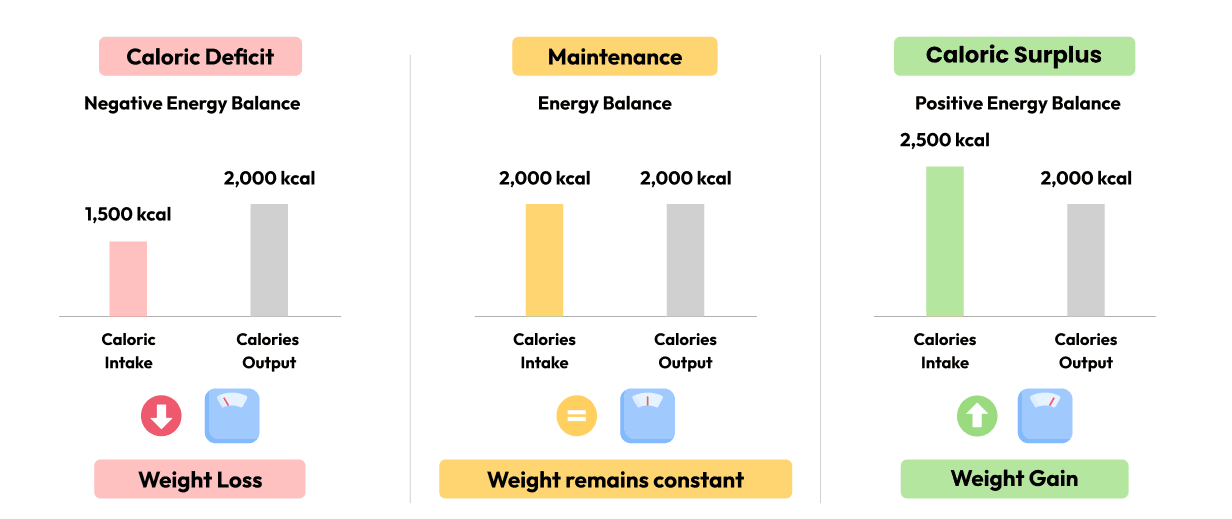
So, we have 3 possible scenarios:
- When you consume the same amount of calories as you burn, your weight remains stable.
- When you consume fewer calories taht you burn (caloric deficit), you lose weight.
- When you consume more calories than you burn (caloric surplus), you gain weight,.
This graph you will help you visualize it better:
Now, the additional calories (in a surplus) or the missing calories (in a deficit) can come from any energy-providing nutrient (carbohydrates, proteins, or fats).
Therefore, you could reduce or increase the intake of different foods to achieve your goal, and it won't be necessary to eliminate or rely on a single food to do so.
In fact, evidence has shown that multiple weight loss methods are effective as long as a caloric deficit is achieved (3, 4).
For example, in a 12-month study, 481 overweight adults attended 22 educational sessions divided into two groups, where they were taught to follow a healthy diet. Both groups reduced their calorie intake by approximately 25%.
The difference was that one group followed a low-carb diet, while the other followed a low-fat diet. At the end of the study, there were no significant differences in weight loss between the groups (3).
The conclusion is that to lose or gain weight, it is possible to be flexible with carbohydrate and fat intake as long as calorie and protein intake is appropriate for the goal (1, 3, 4).
Therefore, one could comfortably be on a caloric deficit or surplus plan and include oatmeal if desired.
Get a personalized eating plan with the Fitia app. Download it for free here
Now, some ways of consuming oatmeal can better suit your goal. Let’s see how:
How to Include Oatmeal in a Weight Loss Plan
You already know that if your main goal is to lose body fat, there's no need to eliminate oatmeal from your diet.
In fact, oatmeal has some characteristics that might help facilitate the process.
For example, it is very high in fiber and creates a significant satiating effect (5).
A single serving of oatmeal will provide you with around 10.5% of your daily requirement if you are a man or 16% if you are a woman.
Additionally, its main fiber is called β-glucan, a type of fermentable fiber with hypoglycemic and hypocholesterolemic properties, meaning it can help control blood sugar and cholesterol levels (6, 7, 8). It is also very beneficial for our gut microbiota.
To Include Oatmeal in Your Weight Loss Plan, We Recommend the Following:
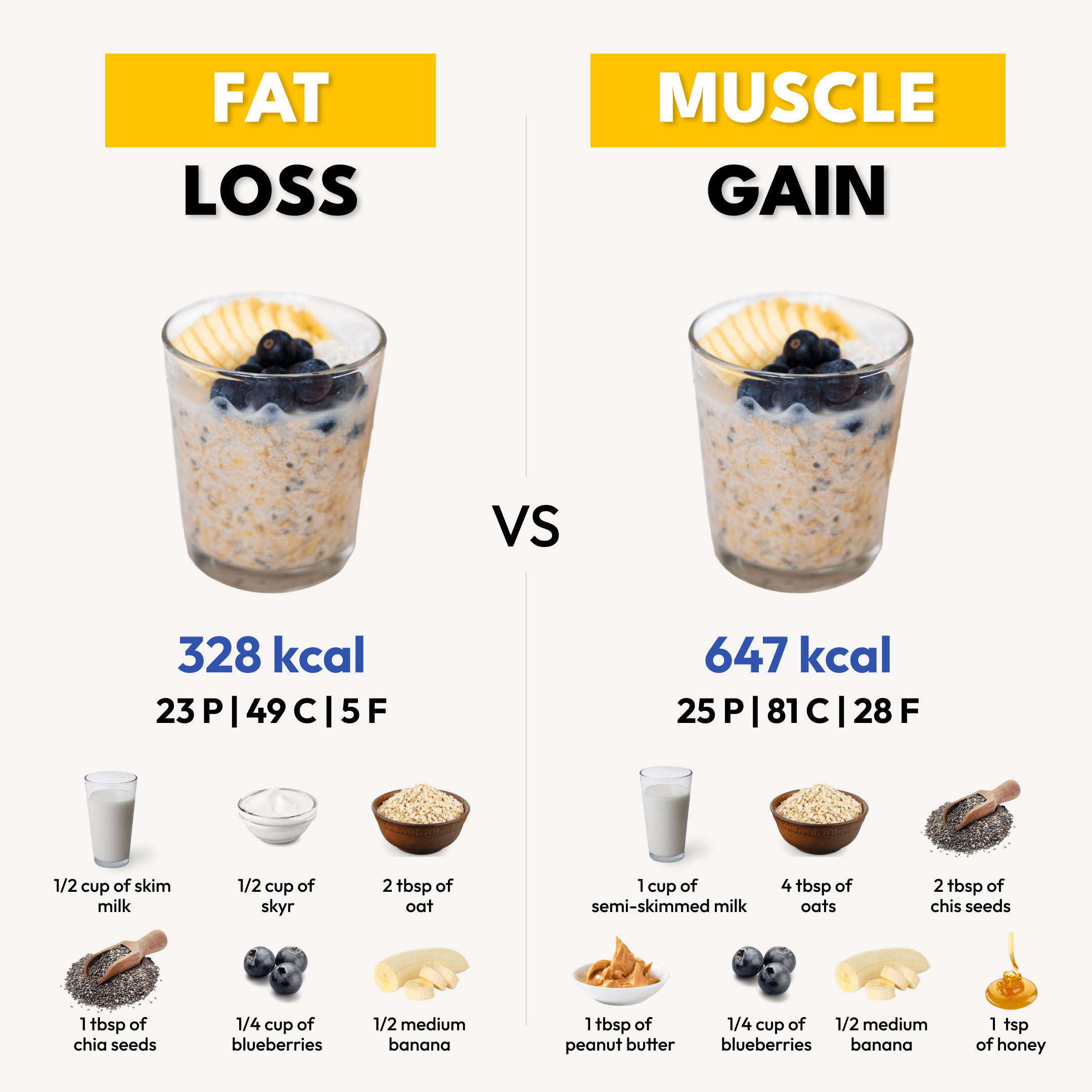
- Pair it with a protein-rich food such as Greek Yogurt, skyr, eggs or egg whites (e.g in pancakes).
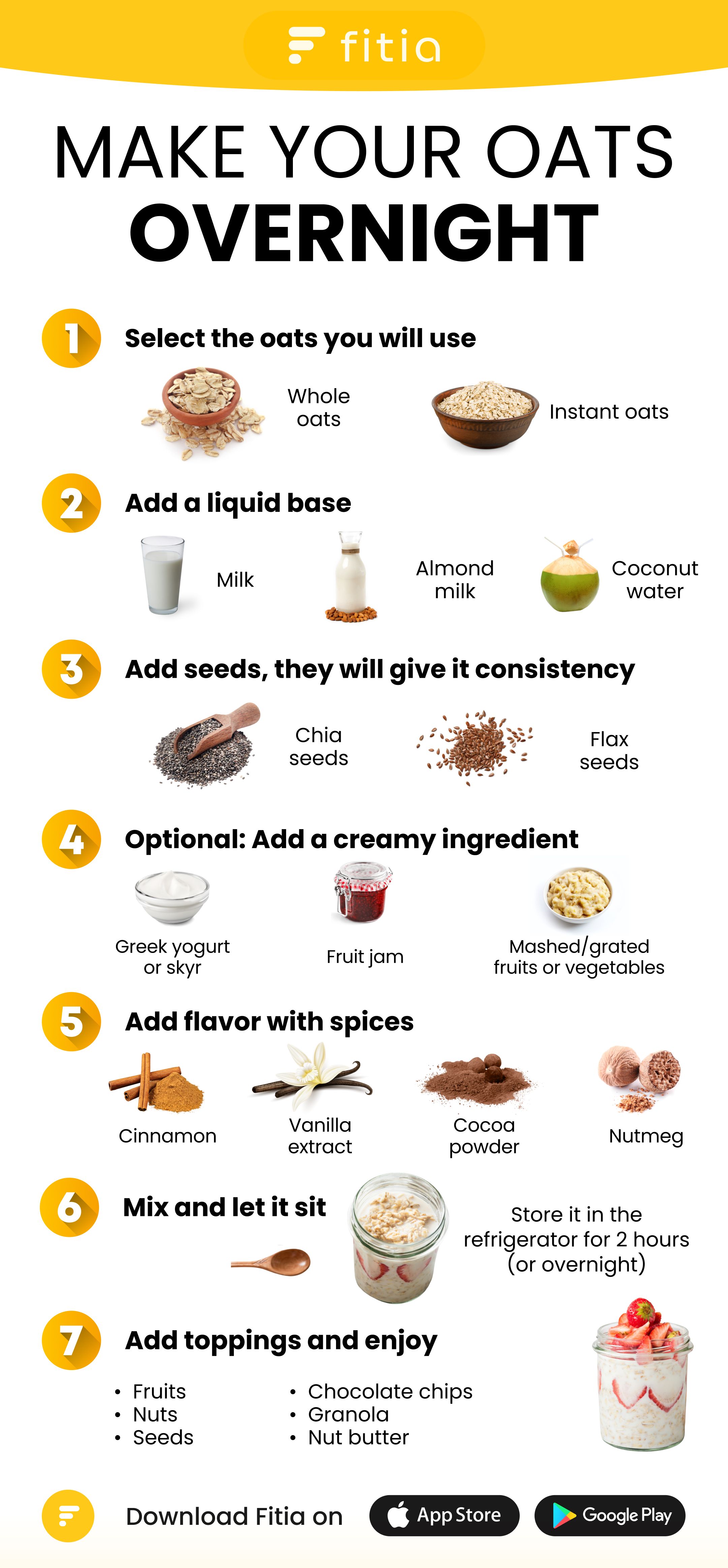
- Add more sources like chis seeds or flaxseed. A great options is to prepare overnight oats, as the seeds will produce more fiber and enhance the satiating effect. Here’s how to make the best overnight oats.
- Avoid adding extra sugars like table sugar, honey, syrups, or similar. If you want to sweeten it, opt for natural sweeteners like stevia.
- Pair it with fruits that have a high water content, such as strawberries, watermelon, melon, papaya, or pineapple.
How to include oatmeal in a weight gain plan.
On the other hand, oatmeal can also be very useful if you're on a weight gain plan.
In this case, you might want to use it in the following ways:
- Pair it with more energy-dense foods like nuts or nut butters (peanut, almond, pecan, pistachio, hazelnut, etc).
- Include oatmeal in fruit smoothies to add more calories to your preparation.
- If you consume it cooked, avoid adding too much water. Concentrate it more to prevent feeling overly full.
- While excess is harmful, you can sweeten it with a touch of honey, syrups, or natural sweeteners like honey, agave syrup, or maple syrup.
👉 You might be interested in: How to gain muscle?
Final message.
In conclusion, no food, including oatmeal, has the power to make you "gain" or "lose" weight on its own.
The only factor that influences this is modifying your calorie intake: increasing calories (caloric surplus) to gain weight or decreasing calories (caloric deficit) to lose weight.
In this regard, you can include oatmeal in both a weight loss plan and a weight gain plan.
Moreover, oatmeal is rich in fiber, vitamins, and minerals, and its consumption will bring health benefits.
References
References
- Howell S, Kones R. "Calories in, calories out" and macronutrient intake: the hope, hype, and science of calories. Am J Physiol Endocrinol Metab. 2017 Nov 1;313(5):E608-E612. doi: 10.1152/ajpendo.00156.2017. Epub 2017 Aug 1. PMID: 28765272.
- Mickelsen O, Makdani DD, Cotton RH, Titcomb ST, Colmey JC, Gatty R. Effects of a high fiber bread diet on weight loss in college-age males. Am J Clin Nutr. 1979 Aug;32(8):1703-9. doi: 10.1093/ajcn/32.8.1703. PMID: 463808.
- Gardner CD, Trepanowski JF, Del Gobbo LC, Hauser ME, Rigdon J, Ioannidis JPA, Desai M, King AC. Effect of Low-Fat vs Low-Carbohydrate Diet on 12-Month Weight Loss in Overweight Adults and the Association With Genotype Pattern or Insulin Secretion: The DIETFITS Randomized Clinical Trial. JAMA. 2018 Feb 20;319(7):667-679. doi: 10.1001/jama.2018.0245. Erratum in: JAMA. 2018 Apr 3;319(13):1386. Erratum in: JAMA. 2018 Apr 24;319(16):1728. PMID: 29466592; PMCID: PMC5839290.
- Freire R. Scientific evidence of diets for weight loss: Different macronutrient composition, intermittent fasting, and popular diets. Nutrition. 2020 Jan;69:110549. doi: 10.1016/j.nut.2019.07.001. Epub 2019 Jul 4. PMID: 31525701.
- Rebello CJ, O'Neil CE, Greenway FL. Dietary fiber and satiety: the effects of oats on satiety. Nutr Rev. 2016 Feb;74(2):131-47. doi: 10.1093/nutrit/nuv063. Epub 2016 Jan 2. PMID: 26724486; PMCID: PMC4757923.
- Bao L, Cai X, Xu M, Li Y. Effect of oat intake on glycaemic control and insulin sensitivity: a meta-analysis of randomised controlled trials. Br J Nutr. 2014 Aug 14;112(3):457-66. doi: 10.1017/S0007114514000889. Epub 2014 Apr 30. PMID: 24787712.
- Llanaj E, Dejanovic GM, Valido E, Bano A, Gamba M, Kastrati L, Minder B, Stojic S, Voortman T, Marques-Vidal P, Stoyanov J, Metzger B, Glisic M, Kern H, Muka T. Effect of oat supplementation interventions on cardiovascular disease risk markers: a systematic review and meta-analysis of randomized controlled trials. Eur J Nutr. 2022 Jun;61(4):1749-1778. doi: 10.1007/s00394-021-02763-1. Epub 2022 Jan 3. PMID: 34977959; PMCID: PMC9106631.
- Jane M, McKay J, Pal S. Effects of daily consumption of psyllium, oat bran and polyGlycopleX on obesity-related disease risk factors: A critical review. Nutrition. 2019 Jan;57:84-91. doi: 10.1016/j.nut.2018.05.036. Epub 2018 Jul 12. PMID: 30153584.
- Paudel D, Dhungana B, Caffe M, Krishnan P. A Review of Health-Beneficial Properties of Oats. Foods. 2021 Oct 26;10(11):2591. doi: 10.3390/foods10112591. PMID: 34828872; PMCID: PMC8625765.
Fitia: Meal Plans & Calorie Counter
We use cookies to enhance your browsing experience, analyze site traffic, and personalize content. By clicking 'Accept', you consent to the use of these technologies in accordance with our Privacy Policy.