
Jan 03, 2025
Flexible Dieting: What Is It and How Can You Apply It?
One of the most common mistakes when starting a diet is imposing a high level of rigidity on yourself from day one. Often, this leads to aggressive restrictions on the amount and variety of foods you can eat.
For this reason, if you're someone who has ever said phrases like, “Starting tomorrow, I won’t eat any carbs” or “No more junk food for me,” it’s likely that your efforts to lose weight were quickly derailed or that you regained the lost pounds—and possibly more—shortly after finishing your meal plan.
If you’ve experienced something similar, there’s no need to feel ashamed or think you lack self-control. In fact, scientific literature has linked highly rigid diets to several negative factors, such as:
- Less weight loss and greater difficulty maintaining the new body weight.
- Increased obsession with food.
- Greater tendency to overeat.
- Higher levels of depression, anxiety, and mood swings.
- More frequent and severe episodes of binge eating.
- More symptoms of eating disorders.
- A poorer body image (1,2,3,4).
For these reasons, the field of nutrition has explored and developed methods to bring greater flexibility to modern diets, aiming to adapt them to individual needs and lifestyles—rather than the other way around.
The concept of "flexible dieting" emerges as a promising solution, and in this article, we’ll explain everything you need to know to understand it and apply it, if you believe it’s the right fit for you.
What is flexible dieting?
The original definition of flexible dieting was introduced in 1999 in the study by Westenhoefer et al. (1). In this research, the authors contrasted rigid dietary restrictions with flexible ones, observing more positive parameters and greater adherence in diets with flexible restrictions.
It's important to note that the flexibility of a diet doesn't lie in the presence or absence of restrictions. On the contrary, following a diet to lose weight inherently involves restricting, to some extent, one’s usual eating habits and delaying immediate gratification—this is not the issue. According to Westenhoefer et al., the challenges of adhering to a diet and its chances of success revolve around the degree of rigidity with which these restrictions are applied.
Later, during the 2000s and the rise of bodybuilding forums on the internet, the term "flexible dieting" began to be used synonymously with IIFYM (If It Fits Your Macros). This approach refers to a method of eating that does not limit the variety of foods consumed during a diet (yes, processed and ultra-processed foods are included), as long as the person does not exceed their daily macronutrient requirements.
To this day, IIFYM is still often regarded as synonymous with flexible dieting, but this couldn’t be further from the truth. Aiming for precise gram numbers for macronutrients with little to no margin for error, obsessing over weighing food, or avoiding eating out to maintain strict control over what is consumed and how it is prepared are common characteristics of IIFYM in practice—and they reflect rigidity, not flexibility.
So, what is flexible dieting? It’s a relative concept, and the point of reference is crucial. What feels flexible for an experienced bodybuilder may not feel the same for a beginner in strength training, and certainly not for someone who doesn’t exercise and just wants to lose a few pounds before their son’s or daughter’s wedding.
In essence, a flexible diet is a meal plan tailored to an individual’s lifestyle and personal circumstances, built around priorities and ranges rather than strict rules (5). It facilitates weight loss, weight maintenance, or muscle gain while helping to sustain results over the long term. Additionally, it tends to be less psychologically stressful and offers better adherence compared to a rigid diet (6).
Would you like to receive a personalized meal plan that considers your favorite food groups? Download Fitia now and achieve your nutrition goals!
How to Apply a Flexible Diet?
Priorities and Ranges
Rigid dieting is often accompanied by polarized thinking—a mindset that adheres to very specific and strict guidelines to achieve success. Consequently, under this perspective, failing to follow even one of these rules may lead to abandoning the entire process, diving headfirst into the sea of failure.
In contrast to this rigid mindset, a more flexible approach based on priorities can be adopted. This allows daily goals to shift from exact numbers to adjustable ranges, depending on the circumstances.
To establish such a priority-based system, the nutritional model developed by Dr. Eric Helms (7) can serve as a valuable reference. Here’s an overview:
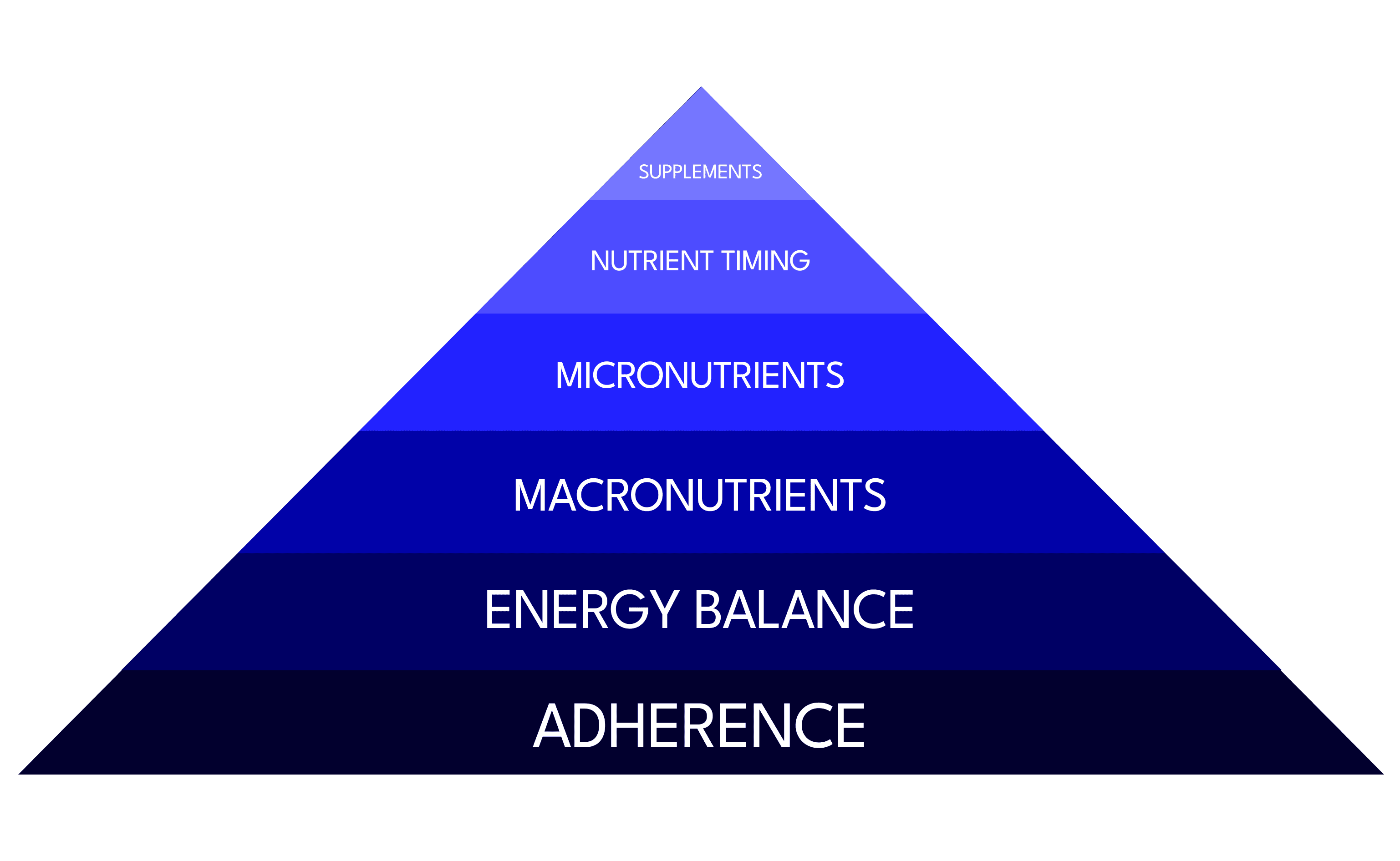
The pyramid model is intentionally designed to emphasize the foundations one should focus on before adding other components and progressing upward.
As shown, the most critical factor is adherence to the diet, followed by energy balance, optimizing macronutrient intake, refining micronutrient consumption, nutrient timing, and, lastly, supplementation.
The first block encapsulates the concept of flexibility (the greater the flexibility, the better the adherence), so there’s no need to delve further into that segment as the article extensively covers it. However, it’s worth reiterating that when choosing a diet or eating pattern—whether ketogenic, carnivore, flexible, intermittent fasting, IIFYM, or others—the most important factor to consider is how well the diet adapts to your lifestyle and how realistic it is to stick to it consistently.
Now, let’s explore the remaining blocks and the strategies that can add a flexible structure to your nutritional plan.
Energy Balance
In nutrition, there are some constants that cannot be altered: if you want to lose weight, you must be in a caloric deficit; if you want to maintain your weight, you need to achieve energy balance; and if you aim to gain weight, you must be in a caloric surplus. Depending on your goals, you should prioritize the corresponding type of energy balance.
However, while this structure may seem rigid, it can be adjusted to be more flexible:
On one hand, you can choose a gradual and consistent pace for weight loss or gain. Typically, an excessive rate of weight loss or gain requires stricter restrictions, which can lead to abandoning the diet or failing to maintain long-term results.
As a general recommendation, if you're looking to reduce body fat, aim to lose between 0.5% and 1% of your body weight per week. On the other hand, if you want to gain muscle mass, beginners and intermediates can target gains of 0.25% to 0.5% of their body weight weekly, while advanced individuals should aim for a rate of 0.25% per week.
Staying within these ranges makes it easier to adhere to the diet, reducing both physical and mental stress.
On the other hand, a diet (especially in the context of weight loss) can be periodized to include intervals of higher caloric intake. This can be achieved through the use of refeed days, diet breaks, and planned caloric deviations.
- Refeed days: These involve taking 1 to 3 days per week (depending on the level of muscle definition) to increase caloric intake to maintenance levels. Typically, the additional calories come from an increase in carbohydrate consumption (7).
- Diet breaks: This refers to taking a break of 1 to 2 weeks with neutral energy balance after 4 to 8 weeks of caloric deficit.
- Planned caloric deviations: If you know in advance that you won’t be able to stick to your diet on a certain day and your caloric intake will increase, you can adjust your caloric intake by redistributing the extra calories across the rest of the week. For instance, if your caloric intake is expected to increase by 15% on Thursday, you can compensate by reducing 5% of your calories on Monday, Tuesday, and Wednesday.
If you're worried that using these strategies might negatively impact your progress, there's no need to be concerned: scientific evidence shows that refeed days and planned caloric deviations do not significantly affect fat loss (8,9). Furthermore, some studies have found that diet breaks can improve weight loss efficiency, although they may extend the time required to reach your final goal (10).
Macronutrients
Up to this point in the article, the recommendations can be applied with varying degrees of precision without losing their flexible approach: those who count calories can use the concepts from the previous section more accurately, while those who don’t count calories can apply the same tools by referencing the amount of food they typically consume and their weight on the scale.
When it comes to the macronutrient block, however, flexibility in the diet revolves around the habit of tracking the daily intake of proteins, fats, and carbohydrates—an activity that can pose a significant barrier for beginners.
For those who don’t usually track their macronutrient intake, we recommend prioritizing the first two blocks of the pyramid model (adherence and energy balance). Alternatively, you can download Fitia here. The app will provide you with a personalized meal plan and show your daily macronutrient requirements. Being aware of these requirements and understanding how the foods you eat impact your values is a great starting point.
For those who already meet their daily macronutrient targets or use Fitia, you’ll find that tracking macros, while seemingly rigid, can also be made flexible to fit the circumstances of your daily life.
Lower Limits of Macronutrients
If you ever find yourself limited in the amount of food you can eat and unable to meet your daily requirements, don’t worry. If you manage to reach the following lower limits, you can rest easy knowing that any negative impact on your nutritional plan has been minimized.
- MIN Protein: 1.6 g/kg
- MIN Fats: 0.5 g/kg
- MIN Carbohydrates: 1 g/kg
- MIN Calories: 22 kcal/kg (weekly average) (11)
In general, if your diet falls below these parameters, it’s highly likely that you’re imposing rigid and unsustainable restrictions on yourself.
Adjusting Macronutrients in Adverse Situations During Maintenance or Caloric Deficit
It’s likely that at some point you’ve found yourself in a situation where calculating the exact nutritional content of your meals isn’t possible, whether due to personal choice or external circumstances. Whatever the reason, there’s no need to worry. You can adjust your macronutrient tracking with the following flexible strategies:
- The Best Option: If meeting your daily requirements is challenging, aim to stay within 5g to 10g above or below each of your macronutrient targets.
- The Second-Best Option: If accurately calculating your meals' nutritional content is too difficult, focus on hitting your protein target within 5g to 10g above or below and your daily caloric intake within 100 to 150 kcals above or below your goal.
- A Good Option: If calculating nutritional content is impossible, try to stay within 100 to 150 kcals above or below your daily caloric intake.
Additionally, if alcohol is consumed, it should not account for more than 15% of your daily caloric intake.
Adjusting Macronutrients in Adverse Situations During a Caloric Surplus
- The Best Option: If meeting your daily requirements is challenging, aim to stay within 20g above or below your carbohydrate and protein targets, and within 10g above or below your fat target.
- The Second-Best Option: If accurately calculating the nutritional content of your meals is too difficult, prioritize staying within 20g above or below your protein target and within 200 kcals above or below your daily caloric intake.
- A Good Option: If calculating nutritional content is impossible, try to stay within a margin of 200 kcals above or below your daily caloric intake.
Micronutrients, Nutrient Timing, and Supplements
To wrap up the remaining blocks of the nutritional pyramid, here are concise recommendations to complement the plans of those who already have the previous segments in order:
- Include one serving of fruits and vegetables for every 1,000 kcal you consume daily.
- Distribute your protein intake evenly throughout the day.
- Aim for 3 to 6 meals per day. If you follow eating patterns like intermittent fasting, ensure you consume at least 3 protein servings distributed proportionally (BCAAs count).
- Add a serving of protein 1 to 2 hours before and after training.
Final Words
In summary, every diet will involve some form of restriction, but the rigidity or flexibility of these restrictions depends on our mindset toward the process.
To increase your chances of success and maintain results in the long term, it's best to avoid an all-or-nothing mentality. Instead, we recommend working with priorities and ranges; this way, you can adapt your nutritional plan when daily life inevitably comes knocking.
Struggling to find a transformative nutrition plan? Download Fitia and optimize your nutrition today!
References
References
- Westenhoefer J, Stunkard AJ, Pudel V. Validation of the flexible and rigid control dimensions of dietary restraint. Int J Eat Disord. 1999 Jul;26(1):53-64. doi: 10.1002/(sici)1098-108x(199907)26:1<53::aid-eat7>3.0.co;2-n. PMID: 10349584.
- Smith CF, Williamson DA, Bray GA, Ryan DH. Flexible vs. Rigid dieting strategies: relationship with adverse behavioral outcomes. Appetite. 1999 Jun;32(3):295-305. doi: 10.1006/appe.1998.0204. PMID: 10336790.
- Stewart TM, Williamson DA, White MA. Rigid vs. flexible dieting: association with eating disorder symptoms in nonobese women. Appetite. 2002 Feb;38(1):39-44. doi: 10.1006/appe.2001.0445. PMID: 11883916.
- Westenhoefer J, Engel D, Holst C, Lorenz J, Peacock M, Stubbs J, Whybrow S, Raats M. Cognitive and weight-related correlates of flexible and rigid restrained eating behaviour. Eat Behav. 2013 Jan;14(1):69-72. doi: 10.1016/j.eatbeh.2012.10.015. Epub 2012 Nov 13. PMID: 23265405.
- Palascha A, van Kleef E, van Trijp HC. How does thinking in Black and White terms relate to eating behavior and weight regain? J Health Psychol. 2015 May;20(5):638-48. doi: 10.1177/1359105315573440. PMID: 25903250.
- Loria-Kohen V, Gómez-Candela C, Fernández-Fernández C, Pérez-Torres A, García-Puig J, Bermejo LM. Evaluation of the usefulness of a low-calorie diet with or without bread in the treatment of overweight/obesity. Clin Nutr. 2012 Aug;31(4):455-61. doi: 10.1016/j.clnu.2011.12.002. Epub 2011 Dec 30. PMID: 22209501.
- Helms, E. (2017). Structuring Flexible Dieting (Video). 1(1). https://massresearchreview.com/
- Campbell BI, Aguilar D, Colenso-Semple LM, Hartke K, Fleming AR, Fox CD, Longstrom JM, Rogers GE, Mathas DB, Wong V, Ford S, Gorman J. Intermittent Energy Restriction Attenuates the Loss of Fat Free Mass in Resistance Trained Individuals. A Randomized Controlled Trial. J Funct Morphol Kinesiol. 2020 Mar 8;5(1):19. doi: 10.3390/jfmk5010019. PMID: 33467235; PMCID: PMC7739314.
- Rita Coelho do Vale, Rik Pieters, Marcel Zeelenberg. The benefits of behaving badly on occasion: Successful regulation by planned hedonic deviations. Journal of Consumer Psychology, 26 (1), 2016, 17-28. https://doi.org/10.1016/j.jcps.2015.05.001.
- Byrne NM, Sainsbury A, King NA, Hills AP, Wood RE. Intermittent energy restriction improves weight loss efficiency in obese men: the MATADOR study. Int J Obes (Lond). 2018 Feb;42(2):129-138. doi: 10.1038/ijo.2017.206. Epub 2017 Aug 17. PMID: 28925405; PMCID: PMC5803575.
- Helms, E.R., Aragon, A.A. & Fitschen, P.J. Evidence-based recommendations for natural bodybuilding contest preparation: nutrition and supplementation. J Int Soc Sports Nutr 11, 20 (2014). https://doi.org/10.1186/1550-2783-11-20
Fitia: Meal Plans & Calorie Counter
We use cookies to enhance your browsing experience, analyze site traffic, and personalize content. By clicking 'Accept', you consent to the use of these technologies in accordance with our Privacy Policy.