
Apr 15, 2024
How to Gain Muscle?
Whatever the reason, gaining muscle mass is a smart move.
Scientific evidence has unquestionably shown that maintaining adequate levels of muscle mass offers numerous health benefits.
In addition to helping you enhance your physical performance and achieve aesthetic changes, increasing muscle mass will provide you with benefits such as (1, 2, 3):
- Improving your insulin sensitivity
- Strengthen your bones
- Enhancing your immune system response,
- Increasing your energy expenditure,
- Improving cognitive function: focus, response speed, etc.,
- Reducing the risk and improving the prognosis in chronic diseases such as type 2 diabetes, coronary heart disease, myocardial infarctions, osteoporosis, etc.
That's why today we'll guide you step-by-step on how to build muscle, debunking myths and using evidence-based methods, so you won't waste time on ineffective strategies.
Additionally, as you will see, nutrition is crucial in the muscle-building process. That's why with Fitia, you can get a personalized nutrition plan tailored to your tastes and lifestyle to help you achieve your goal. Download it for free here.
Now, maximize the development of muscle mass by following these 5 steps.
The 5 basic principles for gaining muscle mass
1. Engage In Strength Training with Progressive Overload

Strength training is essential for muscle growth (hypertrophy). Why?
Because muscle growth occurs in response to a stimulus. During strength training, muscle creation is stimulated through three main mechanisms: mechanical tension, metabolic stress, and induced muscle damage (4,5).
In response, our body begins to adapt by increasing the synthesis of muscle proteins (those that build muscles), leading to muscle growth.
There are various ways to perform a strength exercise, but all involve subjecting the muscle to external resistance (to achieve mechanical tension). This can be achieved, for example, by lifting a barbell or dumbbells, using your own body weight, utilizing gym machines, or employing resistance bands.
Moreover, there are many variables that determine the success of a training session, with the most important being:
- Training volume (sets x reps x load):
A higher training volume is positively associated with greater muscle gains. Aiming for a volume of about 10 to 20 sets per muscle group per week is the general recommendation for goals related to hypertrophy.
- Frequency:
When training with the previously mentioned volume per muscle group (>10 sets/muscle/week), it's ideal to split it into 2 sessions. For example, if you're doing 12 sets of squats per week, it's advisable to spread them across 2 different days.
A practical recommendation is to divide the training according to muscle groups and work each muscle group once or twice a week. This approach helps manage fatigue and ensures each muscle group receives adequate attention and recovery time.
- The load:
The weight lifted during training varies depending on the number of repetitions aimed for.
To achieve muscle growth, the range of repetitions per set is quite broad, typically ranging from about 1 to 20. However, focusing on a mid-range of repetitions (6RM to 12RM) is advisable as it provides high levels of mechanical tension and allows for achieving the recommended training volume.
Therefore, the ideal weight is one that allows you to perform this number of repetitions with relatively high effort, meaning you should approach muscle failure as closely as possible. This approach helps maximize growth by fully stimulating the muscles.
As you engage in strength training more frequently, your muscles will adapt to the workload.
Eventually, there will come a time when the current training volume no longer serves as a sufficient stimulus for muscle growth. Without this stimulus, there will be no further growth. This phenomenon underscores the importance of periodically adjusting your training variables—such as volume, load, and frequency—to continue challenging your muscles and promoting growth.
Exactly, applying the principle of progressive overload is crucial for making your training sessions increasingly challenging as you progress. Here’s how you can adjust the training variables to ensure continuous improvement:
- Increase the number of repetitions and sets: This boosts the volume of work your muscles need to handle, which can drive muscle growth and endurance.
- Increase the weight you use: By lifting heavier weights, you place greater stress on your muscles, which is essential for building strength and muscle mass.
- Decrease the rest time between sets: Reducing rest periods increases the intensity of your workout, which can enhance endurance and metabolic conditioning.
- Improve the technique of your exercises: Focusing on controlled movements and a greater range of motion ensures that you engage the muscles more effectively, which can lead to better muscle development and reduced risk of injury.
- Increase the difficulty of workouts: This can be achieved by adding more complex exercises or increasing the intensity of existing workouts to continually challenge your body.
- Include deloading phases in your training plan: Deloading allows your body to recover while still being engaged, preventing overtraining and setting the stage for further growth.
Finally, to ensure that your training is effective, it’s essential to follow a structured training plan. This way, you can systematically apply progressive overload and track your progress over time. Such a plan will guide you in when and how to adjust these variables, ensuring that you continue to see improvements and meet your fitness goals.
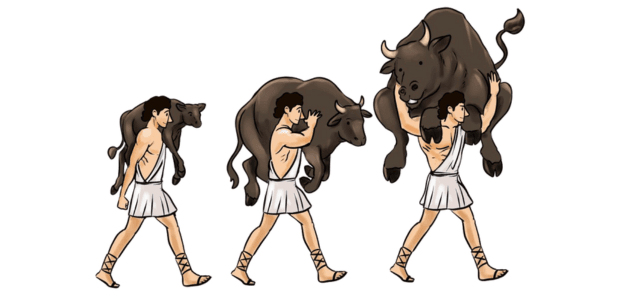
Milo of Croton, a renowned ancient Greek athlete, famously applied the principle of progressive overload in a rather unique way. According to legend, he carried a newborn calf on his shoulders every day. As the calf grew into a full-sized bull, the weight he carried increased gradually, effectively strengthening Milo’s muscular structure over time.
This anecdote is a perfect early example of progressive overload, illustrating how incremental increases in weight can enhance strength and muscle size.
Strength train at least 3 times a week, applying progressive overload and following a training plan so you can monitor your progress.
Pro tip: Perfecting your technique ensures physical integrity and lasting results.
Apps like Gymscore help you build muscle by improving your form and providing detailed feedback on each lift. Proper form is key to unlocking muscle growth, and Gymscore excels at helping you perfect it.
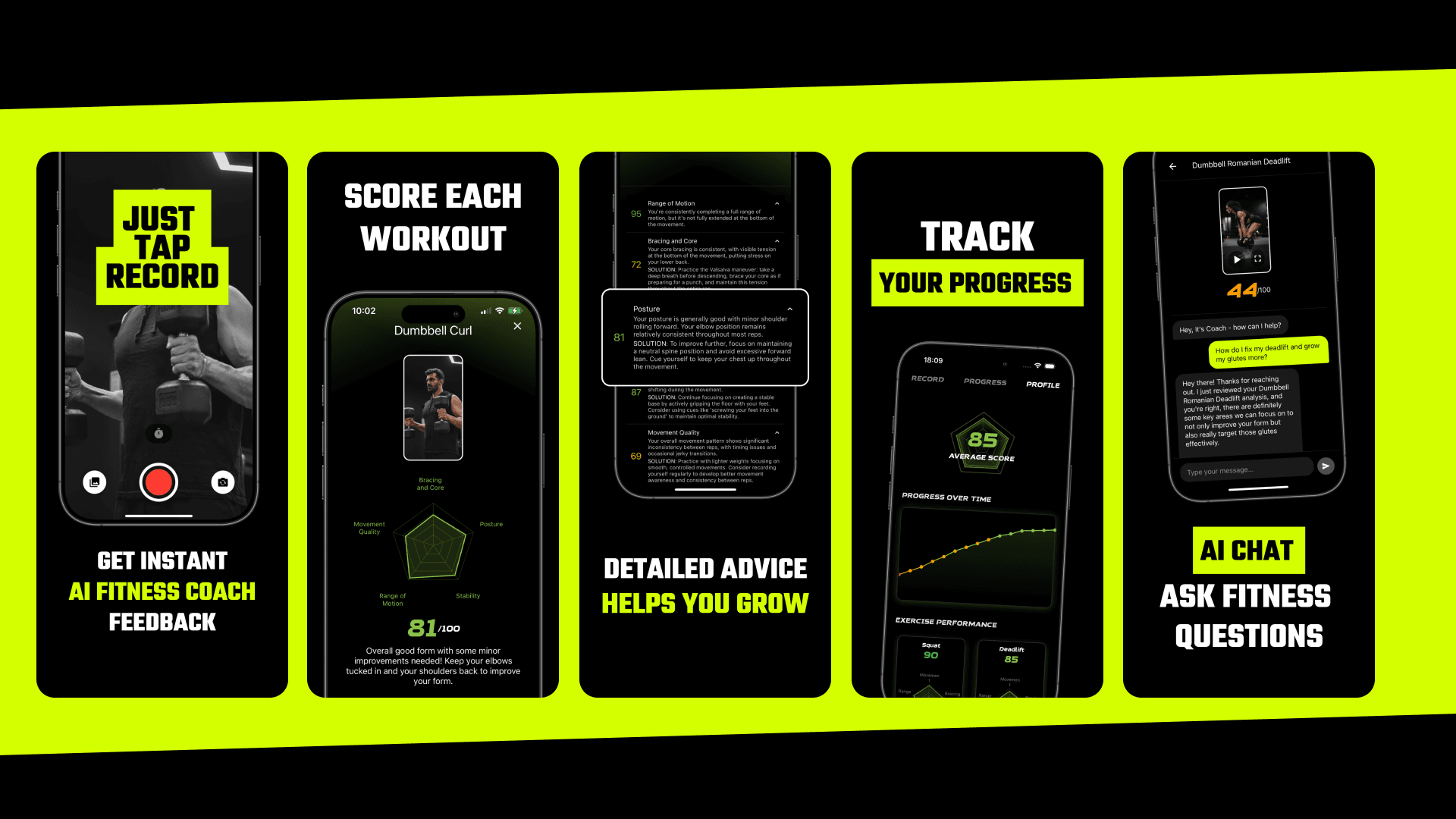
Gymscore is your AI fitness coach, designed to elevate your workouts through advanced form analysis. Whether you're a beginner or a seasoned athlete, Gymscore provides instant, professional-grade feedback by analyzing your exercise technique across five key areas: bracing and core strength, posture and spinal alignment, foot placement and balance, range of motion optimization, and overall movement efficiency.
Simply record your workouts or upload existing videos, and the AI will handle the detailed analysis of your form. The app delivers comprehensive insights, assigns scores (0–100) to objectively track progress, and offers personalized recommendations to help you train safely while maximizing results.
2. Consume between 1.6 - 2.2 grams of Protein per kg of Body Weight Per Day
Muscles are primarily made up of water (75%) and protein (20%) (6).
Therefore, for muscle growth, it's essential to increase muscle protein production.
You've already begun to stimulate the synthesis (creation) of muscle proteins through exercise, but it's important to remember that training also increases the breakdown (destruction) of these proteins (4,7,8).
To achieve muscle growth, it's crucial that the synthesis of muscle proteins exceeds their breakdown.
How do we accomplish this? By ensuring there is an ample supply of amino acids in the bloodstream. A high concentration of amino acids boosts muscle protein synthesis. Combined with the stimulus from exercise, this will help you overcome the level of protein degradation (4,7,8).
Therefore, to maintain a high and stable concentration of amino acids, you need to consume sufficient proteins throughout the day (proteins are composed of amino acids). This involves planning your meals and snacks to include good protein sources, ensuring that you provide your body with the necessary nutrients to support muscle repair and growth continuously.
This strategic nutrition approach, coupled with regular and effective training, lays the foundation for successful muscle building.
Evidence suggests that the optimal protein intake to maximize muscle mass gains is between 1.6 to 2.2 grams of protein per kilogram of body weight per day. This recommendation already takes into account that you are engaging in strength training (6,4,5).
This level of protein intake helps ensure that your body has enough building blocks to support not only the repair and recovery of muscle tissue after workouts but also the synthesis of new muscle fibers, essential for muscle growth.
For example, a person of 80 kg, will need to consume between 128 to 176 g of protein each day.
Some sources of protein that you can consume are:
- Meat chicken, beef, turkey, pork, etc.
- Fish
- Egg
- Milk
- Cheese: cottage cheese, cottage cheese, fresh cheese, mozzarella, romano, gruyere, parmesan, etc.
- Yogurts: skyr, Greek yogurt, etc.
- Legumes: soybeans, chickpeas, lentils, beans, split peas, etc.
- Seeds: hemp seeds, chia seeds, flaxseed, sesame seeds, etc.
- Nuts: Almonds, pecans, walnuts, cashews, peanuts, pistachios, etc.
- Soy derivatives: tofu, tempeh, soy beverage, etc.
- Other vegetable sources: seitan, spirulina, etc.
- Supplements: whey proteins, vegan protein powders (peas, soy, etc.).
Want to know your protein requirement? Get your requirements and a personalized meal plan to reach them in Fitia. Download it for free here.
3. Consume More Calories Than Your Maintenance Level (Create a Caloric Surplus)
Gaining muscle mass is a complex process that requires a significant amount of energy from our body. Some of the reasons include (6):
- Increased synthesis and breakdown of muscle proteins.
- Strength training and its impact on our metabolism.
- Enhanced amino acid synthesis to meet the heightened demand.
- Increased thermic effect of food due to higher protein intake.
- Higher resting energy expenditure due to more muscle mass, which is metabolically more active tissue.
Because of all this, you will need to consume more calories than what's needed to maintain your weight (caloric surplus) (6).
When we create a caloric surplus, the increase in muscle mass will also be accompanied by some fat gain (which is inevitable). However, the amount of fat gained will depend on the size of the surplus. (10,11).
It's crucial to avoid gaining too much fat during this process (4,6,9). Otherwise, it will take more time to lose the fat you've gained, and in the process, you might also lose muscle mass.
To prevent this, make sure that the increase in calories is gradual. Be patient—it's a slow but sure process.
How much should we increase our calorie intake?
There's no one-size-fits-all recommendation for how much to increase your calorie intake. Instead, it should be tailored to the amount of weight you're aiming to gain:
Aim to gain between 0.5 - 1.5% of your body weight per month (9).
If you have a more advanced training level, we recommend staying closer to the lower end of the range, and if you're still a beginner, you might lean towards the upper limit (since you have a greater potential for muscle mass gain compared to those who are more advanced).
For example, if you are a beginner starting at 80 kg, you should aim to gain no more than 1.2 kg in a month (+1.5%).
To achieve this, you should increase your calorie intake by 5% to a maximum of 25%. For example, if your maintenance level is 2000 kcal, your range for bulking would be between 2100 - 2500 kcal.
We advise you to stick to the lower range if you are looking for a "cleaner" volume gain. This way, you ensure that most of the weight gained is muscle and not fat.
Based on these guidelines, it's ideal to monitor your progress and make adjustments (increase or decrease calorie intake) as needed.
Before concluding, , it's necessary to note: It is possible to gain muscle mass by consuming a maintenance level of calories and even, with a slight calorie deficit (fewer calories than you expend).
However, this is not optimal and would only be advisable in certain situations, such as when you have a higher fat percentage and are looking to lose fat and gain muscle simultaneously (body recomposition).
Gaining muscle mass is a process that requires a lot of energy. Therefore, increasing your calorie intake will make the process more optimal. Aim to increase your intake by 5 to 25% (at most) above your maintenance calories to optimize muscle development.
💡 Remember that with Fitia, you can get a personalized meal plan to cover your surplus requirements and gain muscle mass in the right way. Download it for free here.
4. Sleep between 7-9 hours each night

It has been found that sleeping too few hours promotes loss of muscle mass and function. (12,13,14,15). This is because:
Sleep regulates the synthesis and breakdown of muscle proteins.
Studies indicate that fewer hours of sleep are associated with lower rates of protein synthesis and higher rates of muscle protein breakdown (15,16). This is the opposite of what is desired for gaining muscle mass.
For example, in one study, 13 healthy young individuals were evaluated on two different days:
- After a night with no sleep.
- After a night of normal sleep
It was observed that a single night of sleep deprivation reduced muscle protein synthesis by 18% (16).
Sleep regulates the production of hormones related to muscle growth
Lack of sleep increases cortisol levels, also known as the "stress hormone." High concentrations of cortisol are known to affect the mitochondrial function of muscle cells, making us more prone to muscle mass loss and fat infiltration within the muscles (myosteatosis) (17).
Moreover, insufficient sleep also reduces the levels of testosterone, growth hormone, and insulin-like growth factor 1 (IGF-1) (16,18,19). All these hormones play an anabolic role in muscle, meaning they promote its growth.
In the same study mentioned earlier, it was also observed that sleep deprivation increased plasma cortisol by 21% and decreased plasma testosterone by 24% (16).
In another study, it was found that sleeping 2 hours and 45 minutes less per night for a week (from an average of 8 hours and 55 minutes to 4 hours and 48 minutes) resulted in participants having lower testosterone levels compared to when they slept regularly (16.5 nmol/L vs 18.4 nmol/L) (18).
Lack of sleep negatively affects training performance.
It has been shown that not sleeping enough or reducing sleep duration decreases strength and worsens neuromuscular coordination during training (20, 21).
For instance, studies have found that sleeping fewer hours per night reduced maximum endurance, strength, and power in cyclists, soccer players, and judo competitors (20).
This appears to be because lack of sleep affects energy production pathways and increases the perception of effort during exercise (20).
Therefore, if you do not get adequate sleep and the hours you need, your muscle gain process will be affected.
How many hours should we sleep?
The American Academy of Sleep Medicine recommends that adults sleep between 7 and 9 hours each night (22).
5. Eat Enough Carbohydrates and Fats
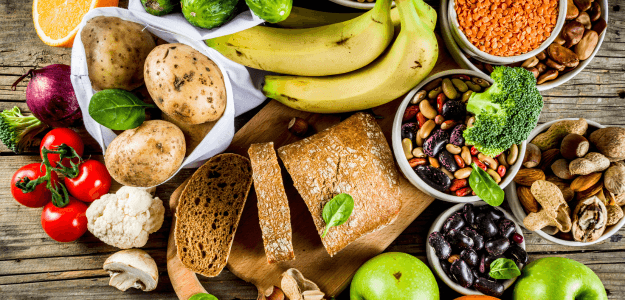
Up to this point, you already know how to set your goals for calories and protein. Since protein isn't 100% of the calories we need to consume, we must distribute the remaining calories between carbohydrates and fats.
Let's start with carbohydrates: Carbohydrates are the main source of energy when we perform strength training (23). Therefore, it's necessary to consume a sufficient amount of carbohydrates to support the energy demands of your training.
On the other hand, consuming an adequate amount of healthy fats is also important for the muscle-building process because fats are responsible for the production of hormones like testosterone (24).
While it's possible to be flexible with the amounts of carbohydrates and fats during a bulking phase, the recommendation would be to maintain a fat intake of between 20-30% of daily calories, and the remainder (including proteins) should come from carbohydrate (9).
In addition to this, it's recommended that the minimum fat intake be 0.5 grams per kg of body weight per day, and carbohydrate intake should be at least 1.5 grams per kg per day (9).
So, for example, if you weigh 70 kg and are in a muscle gain phase, you should not consume less than 35 grams of fats per day and not less than 105 grams of carbohydrates per day (it could be more).
Additional Strategies To Optimize Muscle Gain
There are some extra strategies you might start implementing to make the process as optimal as possible.
However, we recommend you only start applying these once you have the fundamentals in place.
Remember that the basics will have the most impact on your results. If you're just starting out, it's best to focus your attention and effort on building a solid foundation
The following tips have a lesser impact on muscle gain but can be helpful once you reach a more advanced level of training.
Spread your protein intake throughout the day. Don't concentrate it in just one meal.
You may have heard that only about 30 grams of protein can be absorbed per meal and that you shouldn't consume more than that.
In reality, all the protein you consume will be absorbed. However, if you consume a very high amount of protein in a single meal, it's likely that not all of it will be used for muscle protein synthesis (24).
The recommendation would be to have meals that provide between 0.4 - 0.55 grams of protein per kg of weight each time and to have at least 4 meals a day to ensure you meet your total protein requirement (4,25).
Consume protein-rich meals every 4 - 6 hours.
It has been shown that maintaining a steady intake of protein throughout the day can be more effective for muscle protein synthesis.
This is because the anabolic effect (which promotes muscle protein synthesis) of a protein-rich meal lasts between 4 to 6 hours (4,25). Therefore, it's advisable not to go long periods of time without consuming protein sources.
Consume appropriate pre- and post-workout meals.
These meals are crucial for optimizing your performance during training and enhancing recovery afterward.
Pre-workout meals should focus on providing a good balance of carbohydrates and protein. Carbohydrates fuel your muscles, while protein helps prevent muscle breakdown during exercise. Aim to eat your pre-workout meal about 1.5 to 3 hours before exercising to allow your body to digest and start metabolizing the food.
Post-workout meals are essential for recovery. After exercise, your muscles are primed to absorb nutrients, particularly protein, to repair and grow, and carbohydrates to replenish energy stores. A post-workout meal or snack should ideally be consumed within 45 minutes to an hour after training to maximize the benefits of muscle protein synthesis.
- Manage Your Stress Levels
Just like lack of sleep, experiencing chronically high levels of stress deregulates your hormone levels. Cortisol levels increase and this hinders the creation of muscle mass.
References
References
- Wolfe RR. The underappreciated role of muscle in health and disease. Am J Clin Nutr. 2006 Sep;84(3):475-82. doi: 10.1093/ajcn/84.3.475. PMID: 16960159.
- Sui SX, Williams LJ, Holloway-Kew KL, Hyde NK, Pasco JA. Skeletal Muscle Health and Cognitive Function: A Narrative Review. Int J Mol Sci. 2020 Dec 29;22(1):255. doi: 10.3390/ijms22010255. PMID: 33383820; PMCID: PMC7795998.
- Severinsen MCK, Pedersen BK. Muscle-Organ Crosstalk: The Emerging Roles of Myokines. Endocr Rev. 2020 Aug 1;41(4):594–609. doi: 10.1210/endrev/bnaa016. Erratum in: Endocr Rev. 2021 Jan 28;42(1):97-99. PMID: 32393961; PMCID: PMC7288608.
- Schoenfeld, Brad J. Science and development of muscle hypertrophy. Human Kinetics, 2020.
- Helms, Eric, Andy Morgan, and Andrea Valdez. The Muscle & Strength Pyramid: Training. Muscle and Strength Pyramids, LLC., 2018.
- Slater, Gary John et al. “Is an Energy Surplus Required to Maximize Skeletal Muscle Hypertrophy Associated With Resistance Training.” Frontiers in nutrition vol. 6 131. 20 Aug. 2019, doi:10.3389/fnut.2019.00131
- Kumar V, Atherton P, Smith K, Rennie MJ. Human muscle protein synthesis and breakdown during and after exercise. J Appl Physiol (1985). 2009 Jun;106(6):2026-39. doi: 10.1152/japplphysiol.91481.2008. Epub 2009 Jan 22. PMID: 19164770.
- Stokes T, Hector AJ, Morton RW, McGlory C, Phillips SM. Recent Perspectives Regarding the Role of Dietary Protein for the Promotion of Muscle Hypertrophy with Resistance Exercise Training. Nutrients. 2018 Feb 7;10(2):180. doi: 10.3390/nu10020180. PMID: 29414855; PMCID: PMC5852756.
- Helms, Eric, Andrea Valdez, and Andy Morgan. "The Muscle and Strength Pyramid." Nutrition (2018).
- Leaf, Alex, and Jose Antonio. “The Effects of Overfeeding on Body Composition: The Role of Macronutrient Composition - A Narrative Review.” International journal of exercise science vol. 10,8 1275-1296. 1 Dec. 2017
- Helms, E. When Gaining Muscle, the Tortoise Beats the Hare. Mass. 2019 vol 3, 6
- Pourmotabbed A, Ghaedi E, Babaei A, Mohammadi H, Khazaie H, Jalili C, Symonds ME, Moradi S, Miraghajani M. Sleep duration and sarcopenia risk: a systematic review and dose-response meta-analysis. Sleep Breath. 2020 Dec;24(4):1267-1278. doi: 10.1007/s11325-019-01965-6. Epub 2019 Dec 12. PMID: 31832982.
- Knowles OE, Drinkwater EJ, Urwin CS, Lamon S, Aisbett B. Inadequate sleep and muscle strength: Implications for resistance training. J Sci Med Sport. 2018 Sep;21(9):959-968. doi: 10.1016/j.jsams.2018.01.012. Epub 2018 Feb 2. PMID: 29422383.
- Chen Y, Cui Y, Chen S, Wu Z. Relationship between sleep and muscle strength among Chinese university students: a cross-sectional study. J Musculoskelet Neuronal Interact. 2017 Dec 1;17(4):327-333. PMID: 29199194; PMCID: PMC5749041.
- Dattilo M, Antunes HK, Medeiros A, Mônico Neto M, Souza HS, Tufik S, de Mello MT. Sleep and muscle recovery: endocrinological and molecular basis for a new and promising hypothesis. Med Hypotheses. 2011 Aug;77(2):220-2. doi: 10.1016/j.mehy.2011.04.017. Epub 2011 May 7. PMID: 21550729.
- Lamon S, Morabito A, Arentson-Lantz E, Knowles O, Vincent GE, Condo D, Alexander SE, Garnham A, Paddon-Jones D, Aisbett B. The effect of acute sleep deprivation on skeletal muscle protein synthesis and the hormonal environment. Physiol Rep. 2021 Jan;9(1):e14660. doi: 10.14814/phy2.14660. PMID: 33400856; PMCID: PMC7785053.
- Stefanaki C, Pervanidou P, Boschiero D, Chrousos GP. Chronic stress and body composition disorders: implications for health and disease. Hormones (Athens). 2018 Mar;17(1):33-43. doi: 10.1007/s42000-018-0023-7. Epub 2018 Apr 27. PMID: 29858868.
- Leproult R, Van Cauter E. Effect of 1 week of sleep restriction on testosterone levels in young healthy men. JAMA. 2011 Jun 1;305(21):2173-4. doi: 10.1001/jama.2011.710. PMID: 21632481; PMCID: PMC4445839.
- Su L, Zhang SZ, Zhu J, Wu J, Jiao YZ. Effect of partial and total sleep deprivation on serum testosterone in healthy males: a systematic review and meta-analysis. Sleep Med. 2021 Dec;88:267-273. doi: 10.1016/j.sleep.2021.10.031. Epub 2021 Nov 8. PMID: 34801825.
- Fullagar HH, Skorski S, Duffield R, Hammes D, Coutts AJ, Meyer T. Sleep and athletic performance: the effects of sleep loss on exercise performance, and physiological and cognitive responses to exercise. Sports Med. 2015 Feb;45(2):161-86. doi: 10.1007/s40279-014-0260-0. PMID: 25315456.
- Arnal PJ, Lapole T, Erblang M, Guillard M, Bourrilhon C, Léger D, Chennaoui M, Millet GY. Sleep Extension before Sleep Loss: Effects on Performance and Neuromuscular Function. Med Sci Sports Exerc. 2016 Aug;48(8):1595-603. doi: 10.1249/MSS.0000000000000925. PMID: 27015382.
- Watson NF, Badr MS, Belenky G, Bliwise DL, Buxton OM, Buysse D, Dinges DF, Gangwisch J, Grandner MA, Kushida C, Malhotra RK, Martin JL, Patel SR, Quan SF, Tasali E. Recommended Amount of Sleep for a Healthy Adult: A Joint Consensus Statement of the American Academy of Sleep Medicine and Sleep Research Society. Sleep. 2015 Jun 1;38(6):843-4. doi: 10.5665/sleep.4716. PMID: 26039963; PMCID: PMC4434546.
- Knuiman P, Hopman MT, Mensink M. Glycogen availability and skeletal muscle adaptations with endurance and resistance exercise. Nutr Metab (Lond). 2015 Dec 21;12:59. doi: 10.1186/s12986-015-0055-9. PMID: 26697098; PMCID: PMC4687103.
- Zamir A, Ben-Zeev T, Hoffman JR. Manipulation of Dietary Intake on Changes in Circulating Testosterone Concentrations. Nutrients. 2021;13(10):3375. Published 2021 Sep 25. doi:10.3390/nu13103375
- Schoenfeld BJ, Aragon AA. How much protein can the body use in a single meal for muscle-building? Implications for daily protein distribution. J Int Soc Sports Nutr. 2018 Feb 27;15:10. doi: 10.1186/s12970-018-0215-1. PMID: 29497353; PMCID: PMC5828430.
- Aragon AA, Schoenfeld BJ. Nutrient timing revisited: is there a post-exercise anabolic window? J Int Soc Sports Nutr. 2013 Jan 29;10(1):5. doi: 10.1186/1550-2783-10-5. PMID: 23360586; PMCID: PMC3577439.
Fitia: Meal Plans & Calorie Counter
We use cookies to enhance your browsing experience, analyze site traffic, and personalize content. By clicking 'Accept', you consent to the use of these technologies in accordance with our Privacy Policy.