Best App That Calculates Calories from Photos (2026)
Photo calorie apps vary wildly in accuracy. Learn what the research actually says — and why the database behind the scan matters more than the scan itself.
- Published
- 7 min read
- 7 min read
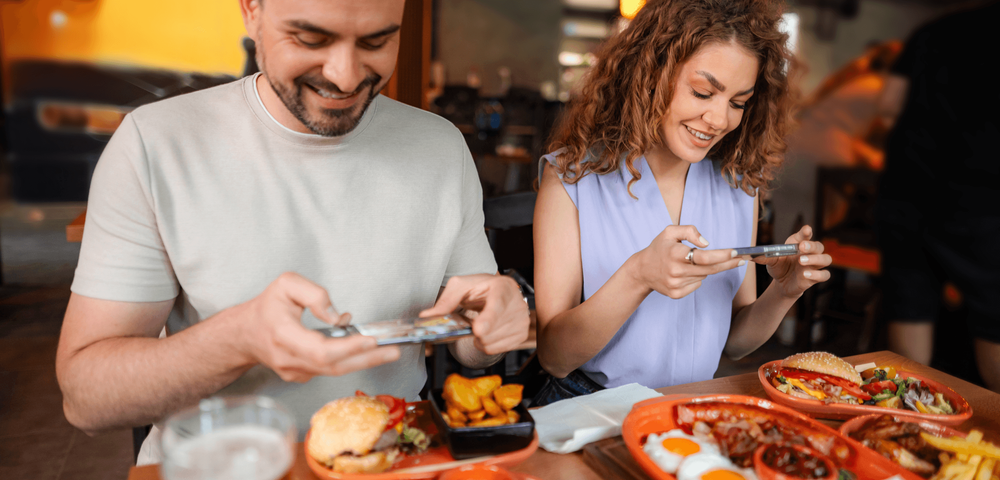
TL;DR Calorie estimation based on images of food varies widely in terms of accuracy. Peer reviewed research reports the highest detection rate to be 63%, while one of the largest commercial programs reported a detection rate of only 9%. Combining AI image recognition with a dietitian-verified food database provides the best results. Fitia uses both: users take a picture of food they consume, then receive a calorie estimate along with verified nutritional information which is incorporated into a personalized meal plan.
Table of contents
- How Photo Calorie Apps Work, and Why Accuracy Varies
- Why the Database Behind the Photo Scan Determines Your Results
- Expert Insight: What a Registered Dietitian Recommends
- Frequently asked questions
- Conclusion
How Photo Calorie Apps Work, and Why Accuracy Varies
Most photo-based calorie tracking applications utilize computer vision and machine learning to identify foods in a photograph and estimate their nutritional content. Users take a picture of a plate, the application identifies the ingredient(s), measures the quantity consumed, and displays an approximate number of calories and macronutrients.
There are two distinct parts of this process that lead to inaccuracies: (i) identifying the specific food being photographed, and (ii) determining the amount of the food item in the photograph.
In a comparative analysis of the performance of seven popular commercial food-image recognition systems published in JMIR Formative Research in 2020 (Van Asbroeck & Matthys), researchers tested 185 standardized food photographs across each platform. Top-1 accuracy — whether the system correctly identified the food item in the photo — ranged from 9 percent to 63 percent depending on the platform. Separately, no platform was able to estimate portion size; that determination still fell to the user.
The authors conclude that there are several important barriers that will need to be addressed prior to developing reliable technology for estimating quantities of food consumed using photo-based platforms in place of traditional methods for assessing diets.
Researchers also conducted a crowdsourcing study in the Interactive Journal of Medical Research (Zhou et al., 2018). Researchers asked participants to estimate the caloric content of different food items based on photographs of those same food items. An average participant made 5 correct guesses per 20 attempts at estimating calories from food photographs. Trained nutrition professionals were slightly better than non-experts. However, even trained nutrition professionals made an average of only 5 correct guesses.
Food items that were energy dense were significantly overestimated. Importantly, including scale reference points in photographs of food items did not improve overall accuracy.
Taken together, these results indicate that inherent limitations exist due to ambiguity when attempting to visually estimate food quantities and therefore, verifying all estimations against a curated dataset is necessary.
Why the Database Behind the Photo Scan Determines Your Results
Photo-scanning represents a viable means of initiating food logging, but it may be difficult to achieve meaningful health benefits unless estimates produced by the scanner are validated through reliable nutritional databases
Scanners utilizing crowdsourced databases with potentially inaccurate entries will generate tracking errors that grow over time. Conversely, scanners linking to a dietitian-verified database will produce estimates that support the achievement of weight loss-related objectives.
Database quality also interacts directly with user behavior. Dietary self-reporting produces the greatest benefit when it occurs consistently, and adherence to self-monitoring declines over time when the process feels burdensome or unreliable (Burke, Wang, and Sevick, 2011).
A verified database reduces one important source of friction: users no longer need to manually verify each entry as well as determine if the caloric content they are entering into the app is correct. The result is a logging experience that is both easier to sustain and more likely to produce data worth acting on.
Expert Insight: What a Registered Dietitian Recommends
Most photo-based calorie counting applications spend a lot of money on the scanning aspect of their application and then treat the database that supports those scans as secondary. The quality of your picture will be meaningless without a well maintained and correctable nutritional data entry for that item — because even if you take a perfect scan of an item, if there are errors in the database entry for that specific item (such as a serving size with an error of 150 calories) the final result will still be incorrect.
When recommending a food logging program to my clients, I consider two key factors; ease of consistent logging, and accuracy of the nutritional information once the food is identified through either photo or bar code scanning.
Fitia stands out because its photo scan links to a dietitian-verified food database, and every logged meal is embedded in a pre-built personalized plan. Clients don't have to decide whether a meal fits their goals, the app already placed that food in a context that does.
This is a fundamentally different product than a standalone photo scanner which may provide a user an estimated nutritional content of the photographed meal but provides no additional guidance.
Ready to track with data you can actually rely on? Download Fitia and start your free trial now.
Frequently Asked Questions
How accurate are apps that calculate calories from photos?
Accuracy varies substantially. Research shows top-1 food identification accuracy ranges from 9% to 63% across commercial platforms (Van Asbroeck & Matthys, 2020). Best results occur with simple, single-ingredient foods in good lighting. Mixed dishes, restaurant meals, and energy-dense foods consistently produce the highest errors. Apps that link photo scans to verified nutritional databases produce more reliable calorie estimates.
Can a photo calorie app replace manual food logging?
For many users, yes — particularly when consistency matters more than precision. Research shows the habit of tracking is more predictive of weight loss outcomes than the precision of any single entry (Burke et al., 2011). Photo logging reduces friction significantly, which tends to improve adherence. A verified database behind the scan closes the accuracy gap.
What makes Fitia's photo calorie feature different?
Fitia connects photo scanning to a dietitian-verified food database rather than a user-submitted one. Each logged meal is automatically embedded in your personalized meal plan, so you see immediately whether it fits your daily calorie and macro targets.
Beyond the numbers, Fitia's built-in nutrition coach evaluates each food in the context of your specific goals — not just whether it fits your calorie budget, but whether it's a good choice for you given your health profile and objectives.
The photo scan, the verified database, and the coaching layer work together as a single system, not as separate tools.
Is a photo calorie app good for weight loss?
Yes, when used consistently. The evidence on dietary self-monitoring is robust: tracking food intake — even approximately — is strongly associated with weight loss outcomes across multiple study designs. Photo logging lowers the barrier to tracking, improving consistency, which drives results.
Conclusion
There's no doubt that photo-based calorie tracking apps can be very helpful – the photo scan itself is just one part of this process. Whether or not you're going to receive accurate information depends on two other things; namely how well the photo scan technology is linked to an appropriate database (in terms of both quality and quantity) as well as what the app does with that data.
Fitia combines AI-powered photo scanning with a dietitian-verified food database and a built-in nutrition coach that evaluates each food in the context of your specific goals. Every meal you log — whether by photo, barcode, or manual entry — is automatically added to your personalized eating plan, so your nutritional picture builds itself as you go. The result is a system that produces reliable, actionable data without requiring you to spend more than a few seconds per meal.
Start tracking with data you can trust. Download Fitia for free — and use code FITIANOW to save on Premium.
About the Author
 | Arantza Echeandía León is a registered dietitian and nutritionist, graduated from Universidad Peruana de Ciencias Aplicadas (UPC), where she ranked in the top 10% of her class. She specializes in sports nutrition and metabolic conditions, with experience supporting athletes and collaborating with multidisciplinary teams to optimize performance and recovery. She holds a Level I ISAK certification in kinanthropometry and currently leads food database optimization and AI-driven nutrition feature integration at Fitia Inc. |
References
- Van Asbroeck, S., & Matthys, C. (2020). Use of Different Food Image Recognition Platforms in Dietary Assessment: Comparison Study. JMIR formative research, 4(12), e15602. https://doi.org/10.2196/15602
- Zhou, J., Bell, D., Nusrat, S., Hingle, M., Surdeanu, M., & Kobourov, S. (2018). Calorie Estimation From Pictures of Food: Crowdsourcing Study. Interactive journal of medical research, 7(2), e17. https://doi.org/10.2196/ijmr.9359
- Burke, L. E., Wang, J., & Sevick, M. A. (2011). Self-monitoring in weight loss: a systematic review of the literature. Journal of the American Dietetic Association, 111(1), 92–102. https://doi.org/10.1016/j.jada.2010.10.008
Related articles
 Fat Loss
Weight Loss Calorie Chart (2026): How Many Calories to Eat by Body Weight, Sex, and Activity
See how many calories to eat to lose weight, with simple charts by body weight and activity, plus why your target changes as you go.
Read article
Best Calorie Counter App for Muscle Gain in the US (2026): 4 Apps Compared for Lifters
The 4 best calorie counter apps for US lifters in 2026, compared on macros, database, adaptation, and meal planning.
Read article
Best Online Nutrition Coach in the US (2026): What to Look For Before You Pay
Online nutrition coaching in the US 2026: three tiers, what the research says, and the red flags to spot before you pay for an app or coach.
Read article