
May 24, 2026
Best Apps That Tell You What to Eat for Weight Loss in 2026
TL;DR: The hardest part of weight loss isn't tracking calories, it's deciding what to eat every day. The best apps that solve this in 2026 are AI-powered meal planners that generate a daily eating plan from your calorie and macro targets, then let you swap meals when life gets in the way. Fitia, Eat This Much, Noom, and the premium tiers of MyFitnessPal all play in this space, but they take very different approaches. This guide compares them on the only criterion that actually matters: how easy each one makes it to follow a plan you'll actually stick with.
Table of Contents
- The Real Adherence Problem: Tracking vs. Deciding What to Eat
- What Makes an App Good at "Telling You What to Eat"?
- The Best Apps That Tell You What to Eat for Weight Loss in 2026
- FAQ
The Real Adherence Problem: Tracking vs. Deciding What to Eat
Most people start weight loss apps wanting one thing: clarity. They want to be told what to eat, when, and in what amount, not handed an empty food diary and a calorie target. The problem is that most popular apps were built as trackers, which assume you've already decided what you're eating and just need to log it.
The peer-reviewed evidence is clear that decision-making, not motivation, is the bigger long-term obstacle. A 2023 study published in Obesity found that adherence in the first 4–8 weeks predicted weight loss at 6, 12, and 24 months, with 8-week adherence alone explaining 50% of the variance in 6-month results (Höchsmann et al., 2023).
A 2025 study in Clinical Obesity on two commercial weight-loss programs reached a similar conclusion: programme adherence through Week 4 was one of the strongest predictors of achieving clinically significant weight loss at 16 weeks (Coleman et al., 2025).
What kills adherence in those critical first weeks it's the daily question of "what should I eat right now?" That question shows up at 7 a.m. before work, at noon between meetings, at 5 p.m. when you're tired, and at 9 p.m. when you're hungry and out of ideas. Tracker-first apps don't answer it.
This is why AI-powered meal planning apps have reshaped the category. The best ones tell you what to eat, and then adapt when you don't like the suggestion or your day changes.
What Makes an App Good at "Telling You What to Eat"?
Five criteria separate apps that genuinely tell you what to eat from apps that just claim to:
- Auto-generated meal plans tied to your real calorie and macro targets. The plan should be calculated from your body, goal, and activity, not picked from a pre-made list.
- Meal swaps with matched calories and macros. The "I don't like salmon tonight" problem breaks rigid plans. Good apps offer alternatives that keep your numbers intact.
- A verified food database. Meal suggestions are only as accurate as the underlying nutrition data. Crowd-sourced databases produce wide errors in calorie and macro numbers, which means the "plan" doesn't actually deliver the calorie deficit it promises.
- Multiple logging methods to handle unplanned meals. Real life includes restaurant meals, snacks, and last-minute changes. Without quick photo, voice, or barcode logging, the plan falls apart fast.
- Adaptive targets that adjust as your body changes. A static calorie target stops working as soon as your metabolism adapts. The best apps recalculate your targets based on what's actually happening to your weight.
Apps that hit all five criteria are rare. Apps that hit three or fewer are the reason "MyFitnessPal alternative" and "Noom alternative" are growing search categories.
The Best Apps That Tell You What to Eat for Weight Loss in 2026
Fitia — The All-in-One AI Meal Planner
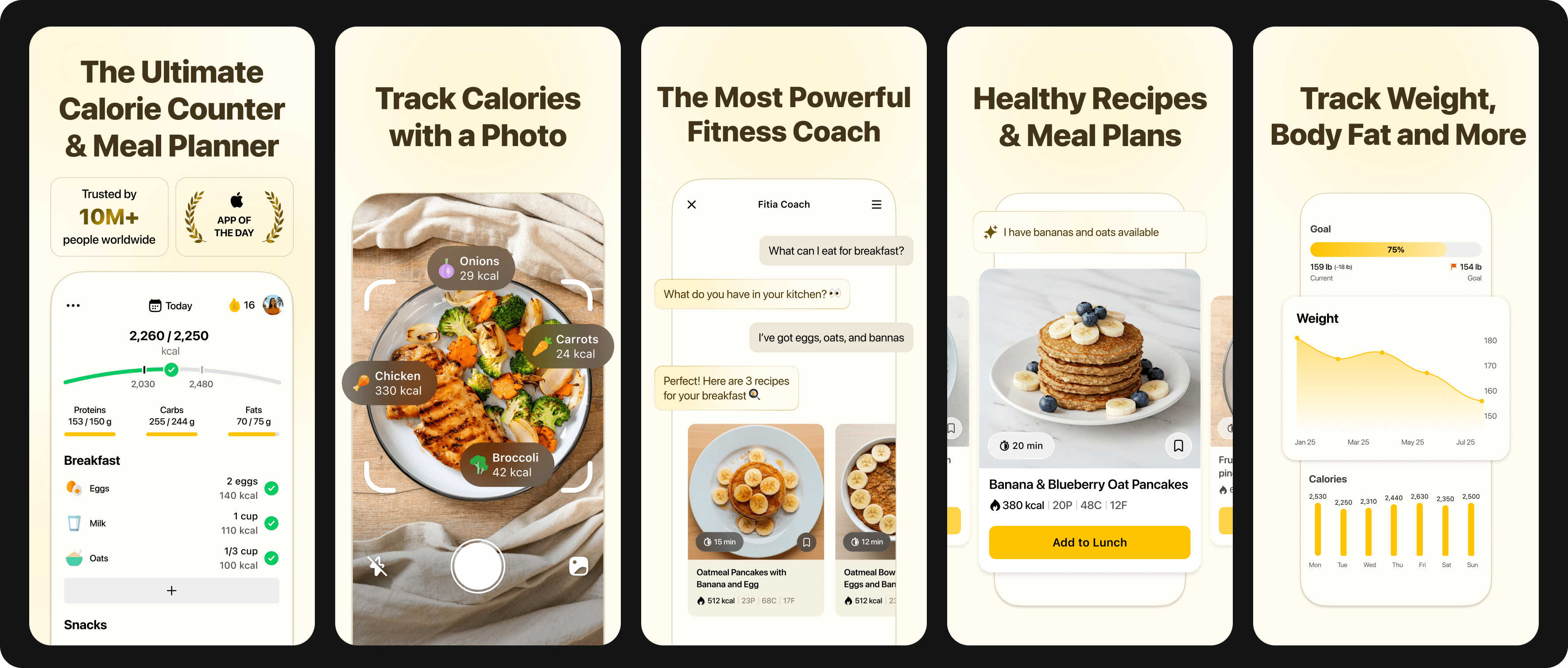
Fitia is built around the "tell me what to eat" question. After you enter your goal, weight, height, age, and activity level, the app generates a daily meal plan calibrated to your calorie and macro targets, using the Mifflin–St Jeor equation as the starting point and an adaptive algorithm to adjust based on your real progress.
What it does well:
- Generates a personalized daily meal plan with specific meals, portions, and recipes that hit your calorie and macro targets
- Offers instant meal swaps with equivalent calories and macros when you don't like or can't make the suggested option
- Uses a nutritionist-verified food database (1M+ foods, 25K+ recipes) — every entry is reviewed by professionals before publication
- Supports multiple logging methods (photo, voice, barcode, text, manual search, and meal-plan check-off) for when life doesn't match the plan
- Includes Fitia Coach, a 24/7 AI nutrition assistant for questions and adjustments
- Adapts calorie and macro targets weekly based on weight trend, logged intake, and goal pace
- Generates automated grocery lists from your meal plan
- Covers multi-regional cuisines (US, Latin American, European, Asian) for more realistic food matching
Best for: People who want a complete "tell-me-what-to-eat" solution and don't want to choose between a meal planner and a tracker. Particularly strong for users who've tried MyFitnessPal or Noom and found themselves still wondering what to actually cook for dinner.
Limitation: The full meal-planning, AI coaching, and adaptive features are part of the Premium tier, though the free version handles basic tracking.
Start your free Fitia trial to see your meal plan generated for your goal in under two minutes.
Eat This Much — Pure Meal Planning, Minimal Tracking
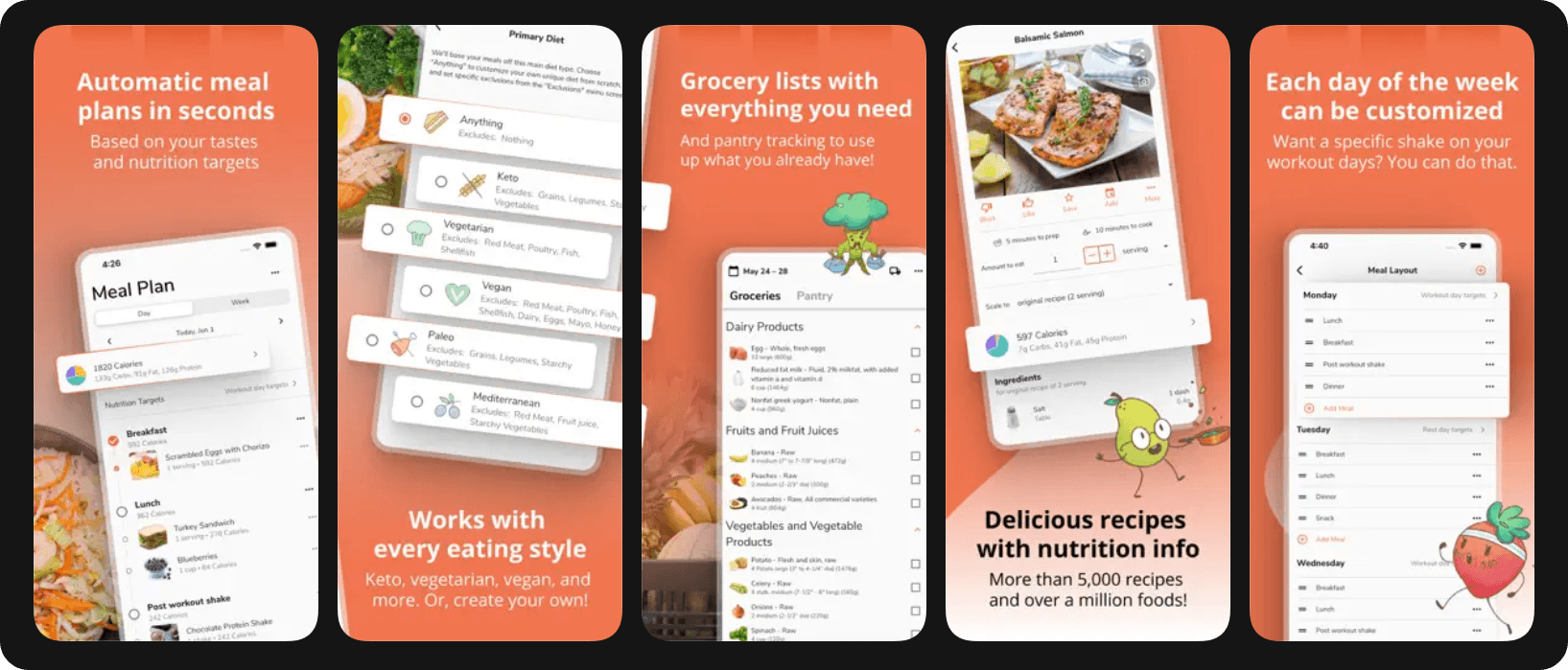
Eat This Much is a meal-planning specialist. It generates complete daily meal plans based on your calorie target and dietary preferences, then auto-creates a grocery list.
What it does well:
- Fully automated meal plan generation from a calorie target
- Handles dietary preferences (vegetarian, paleo, keto, intolerances) cleanly
- Generates grocery lists organized by ingredient
- Recipe-first interface
- Strong free tier for basic meal planning
Limitation: Light on tracking and progress monitoring compared to Fitia or MyFitnessPal. If you also want to log unplanned meals, monitor weight trend, scan barcodes, or use AI photo recognition, you'll need to pair it with another tool. The meal-planning intelligence is excellent; the rest of the weight-loss workflow isn't really there.
Best for: Users who only need meal planning and grocery automation, and don't care about logging meals they didn't plan.
Noom — Behavioral Coaching With Meal Suggestions
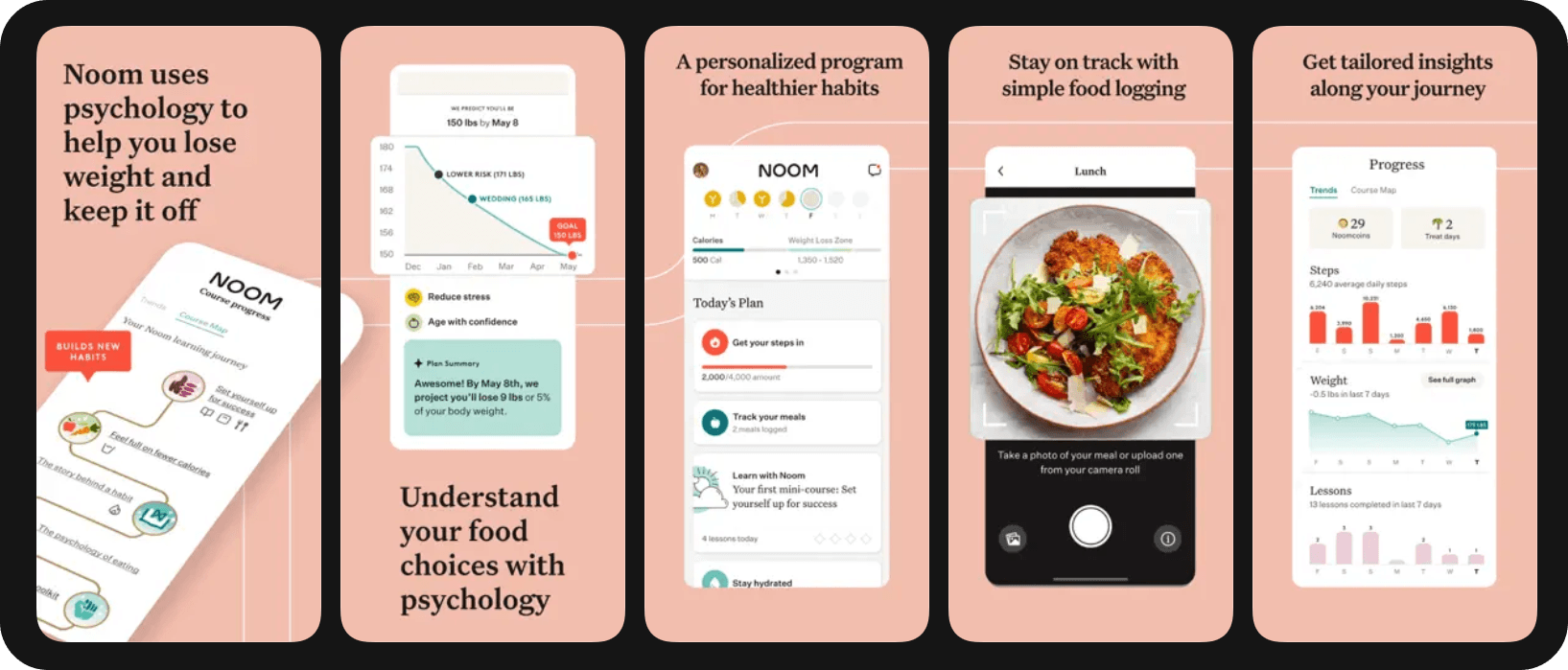
Noom built its reputation on cognitive behavioral therapy and habit coaching, not meal planning per se. It color-codes foods (green, yellow, orange) to nudge behavior and provides daily lessons on eating psychology. Recent versions include some meal suggestions, but it's still primarily a coaching app, not a meal planning app.
What it does well:
- Strong behavioral support and habit education
- Color-coded food system gives a simple decision framework
- Active community and daily psychological lessons
Limitation: It doesn't actually generate a full daily meal plan with specific recipes and portions. The food log and coaching are the core experience, not personalized meal automation. At $60+/month, it's also the most expensive option in this category.
Best for: People whose primary barrier is psychological rather than logistical: emotional eating, food relationship work, habit reset.
MyFitnessPal (Premium+) — Tracker With Meal Plan Add-On
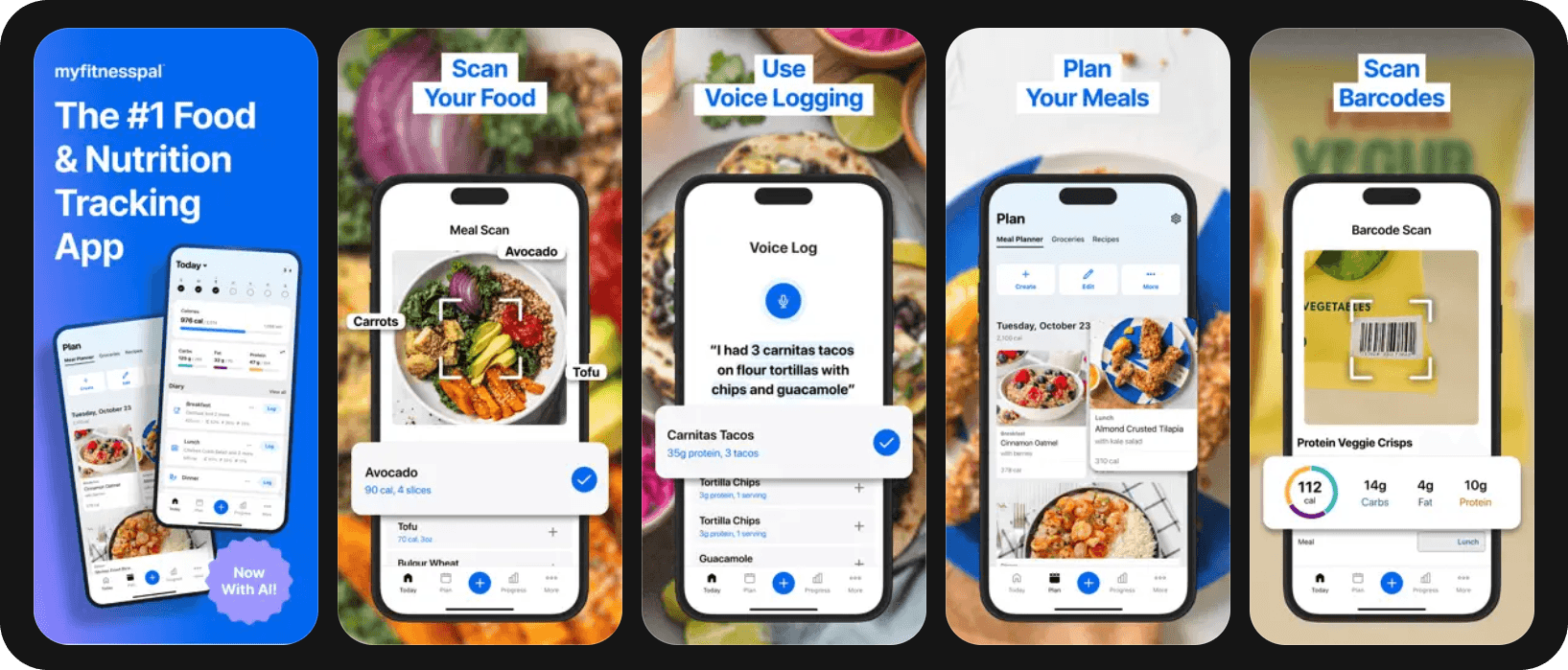
MyFitnessPal is one of the most widely used calorie tracker in the world, with a 20.5M+ food database. Meal planning is a Premium+ feature, layered on top of the core tracking experience.
What it does well:
- Large food database for branded and restaurant items
- Strong barcode scanner and recipe importer
- Wide device integrations (Apple Health, Fitbit, Garmin, Withings, etc.)
Limitation: Most of the database is user-generated and unverified — peer-reviewed validation studies have found MyFitnessPal underestimates several nutrients compared with research-grade reference methods (Morello et al., 2025; Banal et al., 2024). The meal-planning feature feels added on rather than central, and Premium+'s higher price doesn't translate into meaningfully more value than Fitia or Eat This Much offer in their standard plans.
Best for: Long-time MyFitnessPal users who want to extend their existing setup, or people who eat a lot of branded restaurant items and need the database breadth.
Lifesum — Diet-Themed Meal Plans for Beginners
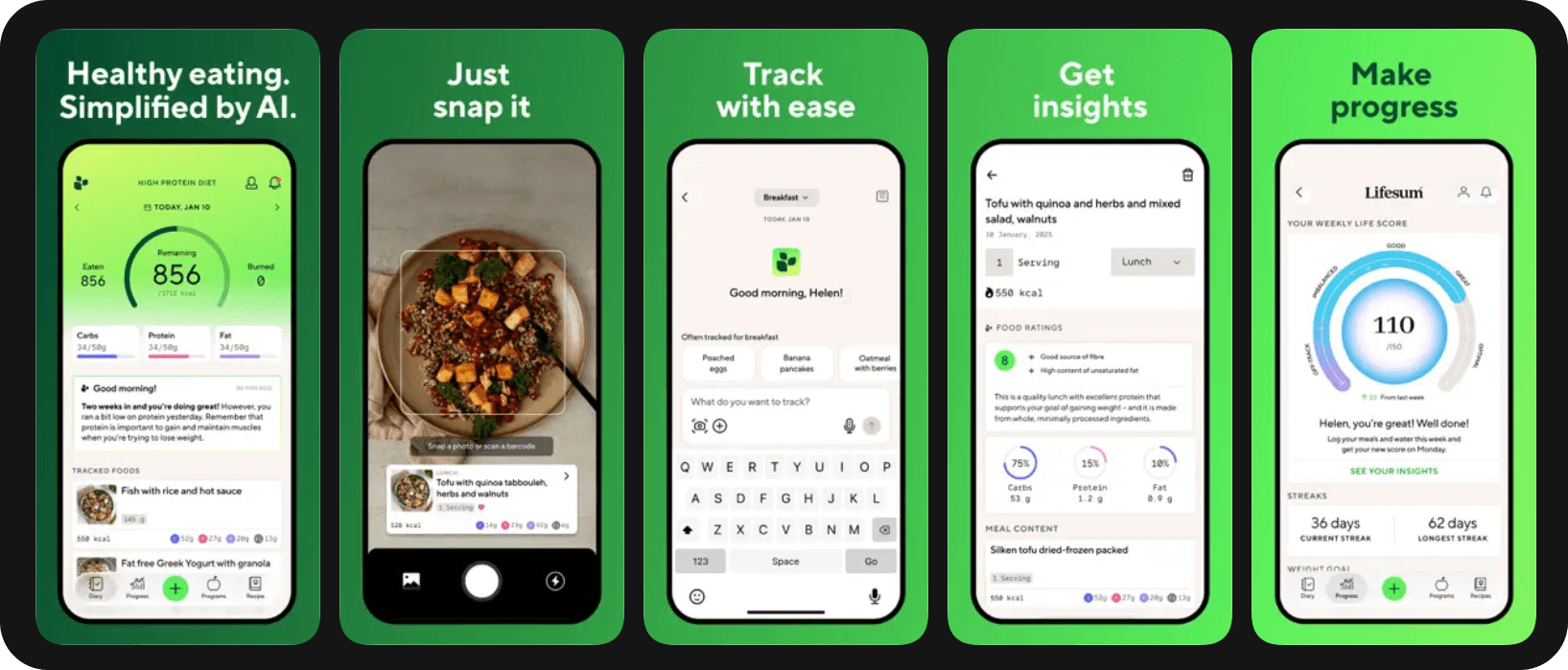
Lifesum offers pre-built themed meal plans (Mediterranean, keto, high-protein, clean eating) layered on top of a clean tracking interface. It's particularly strong on visual design and lifestyle framing.
What it does well:
- Variety of pre-built diet plans for different preferences
- Visual macro pie charts and hydration tracking
- Simple, friendly onboarding for beginners
- Recipe suggestions tied to chosen diet
Limitation: The plans are pre-built diet templates rather than individually generated meal plans. Less flexible than Fitia or Eat This Much when your targets don't fit a standard diet template.
Best for: Beginners who want structure and a defined eating style, and don't need hyper-personalized plans.
FAQ
What is the best app that tells you what to eat for weight loss?
The best apps are AI-powered meal planners that generate a daily plan from your calorie and macro targets and let you swap meals easily. Fitia and Eat This Much both excel at automated meal planning. Fitia adds verified database accuracy, multi-method logging, and adaptive calorie targets, which makes it a more complete weight-loss solution.
What is the best MyFitnessPal alternative in 2026?
For users who want an actual meal plan (not just a food diary), Fitia and Eat This Much are the strongest alternatives. Fitia adds a verified food database that addresses MyFitnessPal's documented accuracy issues with user-generated entries.
What is the best Noom alternative for weight loss?
For users leaving Noom because of price or because they want a more concrete meal plan, Fitia is the strongest alternative. It provides a personalized daily plan, AI coaching, and adaptive calorie targets at a fraction of Noom's monthly cost.
Do meal-planning apps actually work for weight loss?
Peer-reviewed research consistently shows that early adherence and weight loss in the first 4–8 weeks are the strongest predictors of long-term weight loss success (Höchsmann et al., 2023; Coleman et al., 2025). Apps that reduce decision fatigue by telling you what to eat improve early adherence, which is the mechanism that drives sustained results.
Can I use an app that tells me what to eat if I have dietary restrictions?
Yes. Fitia, Eat This Much, and Lifesum all support dietary preferences (vegetarian, vegan, keto, gluten-free, lactose intolerance, allergies). The plan generators filter their meal libraries to match your restrictions.
What's the difference between a meal-planning app and a calorie counter?
A calorie counter logs what you eat after the fact. A meal-planning app tells you what to eat before the fact, with portions and recipes already calculated to hit your calorie and macro targets. The best apps in 2026 do both, with Fitia being the most integrated of the major options.
Want a meal plan generated specifically for your weight-loss goal in under two minutes? Download Fitia and use code FITIANOW to save on Premium — your plan will be ready, your macros will be matched, and you won't have to ask "what's for dinner" again.
References
References
- Höchsmann, C., Martin, C. K., Apolzan, J. W., et al. (2023). Initial weight loss and early intervention adherence predict long-term weight loss during the Promoting Successful Weight Loss in Primary Care in Louisiana lifestyle intervention. Obesity, 31(9), 2272–2282. https://doi.org/10.1002/oby.23854
- Coleman, C. D., Kiel, J., Palacios, O. M., et al. (2025). Early Weight Loss and Other Factors Associated With Clinically Significant Weight Loss in Two Commercial Weight Loss Programmes. Clinical Obesity, 16(1). https://doi.org/10.1111/cob.70046
- Morello, O., McPhee, L., & Kucab, M. (2025). Reliability and Validity of Nutrient Assessment Applications for Canadian Endurance Athletes: MyFitnessPal and Cronometer. Journal of Human Nutrition and Dietetics, 38(5). https://doi.org/10.1111/jhn.70148
- Banal, M. G., Bongga, D. C., & Angbengco, J. M. (2024). MyFitnessPal smartphone application: relative validity and intercoder reliability among dietitians in assessing energy and macronutrient intakes of selected Filipino adults with obesity. BMJ Nutrition, Prevention & Health, 7(1), 54–60. https://doi.org/10.1136/bmjnph-2023-000770
- Pagoto, S., Tulu, B., Agu, E., et al. (2021). Adherence to behavioral theory–based dietary self-monitoring measured via mobile health technology. JMIR mHealth and uHealth, 9(2), e24249. https://doi.org/10.2196/24249
Fitia: Meal Plans & Calorie Counter
We use cookies to enhance your browsing experience, analyze site traffic, and personalize content. By clicking 'Accept', you consent to the use of these technologies in accordance with our Privacy Policy.