Jan 24, 2026
Best Calorie Counter Apps (RD Criteria): What to Look For in 2026
Table of Contents
- Quick Overview: Best Calorie Counter Apps
- Quick Comparison: Best Calorie Counter Apps
- Why Look for the Right Calorie Counter App
- How We Evaluated These Calorie Counter Apps
- The Best Calorie Counter Apps 2026
- Fitia — Best All-in-One Calorie Tracking & Meal Planning
- MyFitnessPal — Best for Largest Food Database
- Lose It! — Best for Simple Tracking & Community Features
- Cronometer — Best for Micronutrient Tracking
- Noom — Best for Psychology-Focused Coaching
- How to Choose the Right Calorie Counter App
- Final Thoughts
- FAQs
Scrolling through app stores reveals hundreds of calorie counters promising effortless weight loss, but most rely on crowdsourced databases riddled with errors. A user-submitted chicken breast might list 165 calories or 284 calories for the same portion size, and there's no way to know which entry is correct. When your deficit tracking depends on accurate data, these inconsistencies sabotage progress before you've finished your first week.
Health-conscious users face decision paralysis when choosing between apps that look similar on the surface but differ dramatically in quality. Feature lists overlap—barcode scanning, macro tracking, recipe builders—yet database verification standards, logging speed, and personalization algorithms separate genuinely useful tools from glorified spreadsheets.
We evaluated these apps using registered dietitian criteria, testing database accuracy against USDA standards, comparing logging methods across photo, voice, and text inputs, and assessing how personalization algorithms adapt to real progress data. The focus stayed on evidence-based features supporting weight loss and muscle gain rather than marketing claims about "revolutionary" technology.
Quick Overview: Best Calorie Counter Apps
1. Fitia – Best all-in-one calorie tracking and meal planning solution, powered by AI logging and coaching. Features a verified food database reviewed by nutrition professionals, eliminating crowdsourced inaccuracies, with photo, voice, text, and barcode logging for fast, accurate tracking.
2. MyFitnessPal – Best for large food database with extensive barcode coverage. Over 20 million foods provide broad coverage, though crowdsourced entries introduce accuracy variability.
3. Lose It! – Best for simple weight loss with community features. Challenges and community support keep users engaged through accountability mechanisms.
4. Cronometer – Best for comprehensive micronutrient tracking. Detailed vitamin and mineral data appeals to users monitoring specific nutritional deficiencies.
5. Noom – Best for psychology-focused weight loss coaching. Combines calorie tracking with behavioral change curriculum and human coaching support.
Quick Comparison: Best Calorie Counter Apps
| Tool | Best For | Free Plan/Trial | Key Differentiator | Database Quality |
|---|---|---|---|---|
| Fitia | AI-powered calorie tracking and meal planning with verified accuracy | Yes + 3-day trial | 100% professionally verified database | Nutrition professional review for every entry |
| MyFitnessPal | Largest database | Yes | 20M+ foods | Crowdsourced with variability |
| Lose It! | Simple tracking | Yes | Social challenges | Mixed crowdsourced |
| Cronometer | Micronutrient detail | Yes | Complete nutrient profiles | Verified sources |
| Noom | Psychology coaching | 14-day trial | Behavioral curriculum | Basic tracking |
Why Look for the Right Calorie Counter App?
Database accuracy drives results
Unverified, crowdsourced databases often list the same food with wildly different calories. Verified databases review entries before publishing, removing uncertainty that can derail fat loss or muscle gain.
Low-friction logging keeps you consistent
Photo and voice logging let you record meals in seconds, making long-term tracking far more sustainable.
Smart personalization improves outcomes
Basic apps use static calorie formulas. Better apps adapt targets based on real progress and generate meal plans automatically, removing decision fatigue.
Feature access affects usability
Some apps lock essential tools behind paywalls. Pricing, family plans, and free trials matter when choosing something you’ll actually stick with.
Integrations reduce manual work
Syncing with Apple Health or Health Connect imports steps and workouts automatically, improving accuracy and saving time.
How We Evaluated These Calorie Counter Apps
Database quality
Entries were compared against USDA data and food labels. Verified databases were consistent, while crowdsourced entries varied widely. Accuracy mattered more than sheer database size.
Logging speed and flexibility
Meals were logged using text, voice, and photos. Faster, more reliable methods scored higher, especially for mixed or common meals.
Tracking depth
Calorie and macro calculations had to closely match label values. Apps offering only calorie totals ranked lower than those supporting macro and micro level tracking.
Adaptive personalization
Apps were evaluated on whether they adjusted calorie targets based on weight trends and supported personalized meal planning.
Pricing transparency
Free features, premium value, family plans, and trial access were compared to assess long-term affordability and ease of testing.
The Best Calorie Counter Apps 2026
1. Fitia – Best all-in-one calorie tracking and meal planning solution
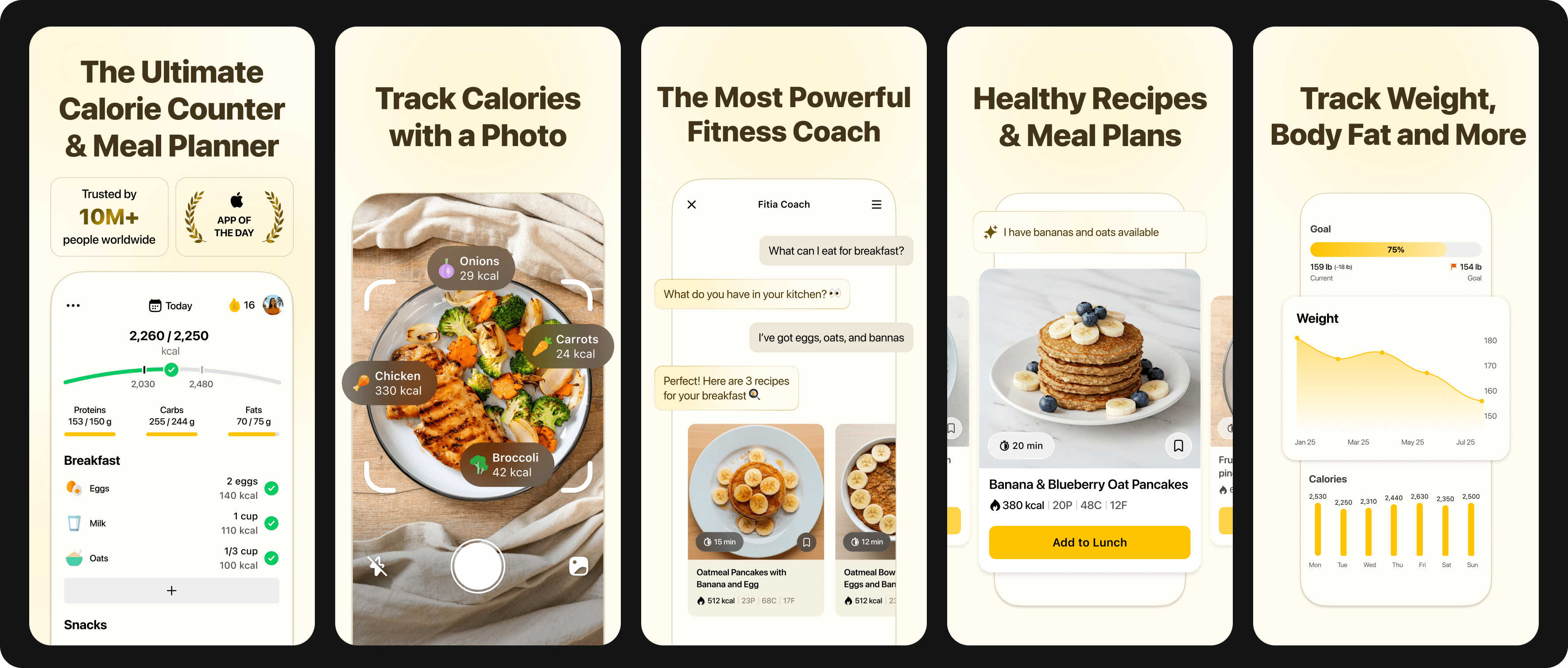
Fitia built its entire food database from scratch with nutrition professional validation for every entry, creating the only calorie counter where crowdsourced inaccuracies don't sabotage your tracking. The AI trains on this verified data to deliver the fastest accurate logging experience, recognizing foods from photos, voice, or text without the errors that plague competitors relying on user-generated content
Best For
Fitia is ideal for users who prioritize database accuracy over crowdsourced volume, want meal planning to reduce decision fatigue, or need shared tracking with family-level savings. Its verified database is especially helpful for people tracking Latin American and Spanish foods, or anyone frustrated by inconsistent results caused by unreliable food entries.
Pros
- Professional verification: Every food entry reviewed by nutrition professionals eliminates crowdsourced inaccuracies that undermine tracking reliability
- Deeper nutrition insights: Tracks 12 vitamins, 9 minerals, and key nutrients like fiber and added sugars. Missing micronutrient data is estimated using official sources like the USDA.
- AI-trained accuracy: Algorithms trained on verified database and real user data deliver fastest accurate logging across photo, voice, and text inputs
- Automatic meal plans: Complete menus based on 150+ scientific studies eliminate decision fatigue while hitting calorie and macro targets
- Cultural food databases: Country-specific products account for regional nutrition variations, showing accurate local values rather than generic estimates
- Family plan savings: $89.99 annually for 2-6 users offers 75% savings versus individual subscriptions
- Strong user ratings: 4.9/5.0 stars with 10 million+ users worldwide demonstrates consistent satisfaction
- Friction-reducing logging: Photo and voice options speed tracking significantly compared to manual text entry
Cons
- Language limitations: Available in English and Spanish only, restricting accessibility for speakers of other languages
- Premium required: Full AI features and coaching capabilities need subscription
Accurate tracking starts with a verified food database. Download Fitia and use code FITIANOW to save on premium.
2. MyFitnessPal – Best for Largest Food Database
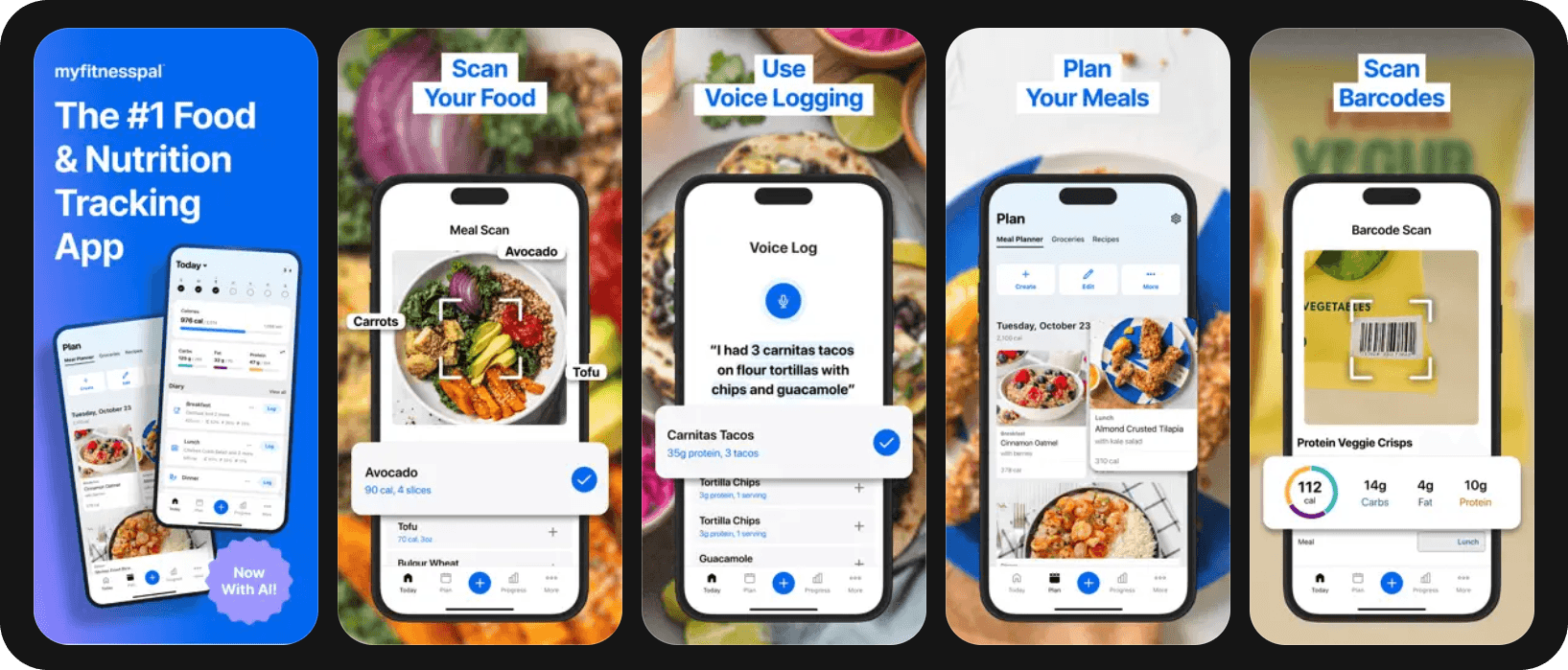
MyFitnessPal's 20 million+ food database provides the broadest coverage of any calorie counter, with extensive barcode scanning that recognizes most packaged products. The crowdsourced approach means you'll likely find obscure foods and restaurant items that smaller databases miss. However, letting anyone add entries without verification creates accuracy variability that requires checking multiple entries for the same food.
Best For
Users who prioritize database breadth over verified accuracy and need to track diverse or unusual foods.
Pros
- Massive database: 20M+ foods cover obscure items and restaurant menus other apps miss
- Free tier: Basic tracking available without subscription, though macro details require premium
Cons
- Accuracy variability: Crowdsourced entries show 15-30% variance for identical foods without professional verification
- Premium pressure: Essential features like meal planning and detailed macros locked behind $80/year subscription
3. Lose It! – Best for simple weight loss with community features.
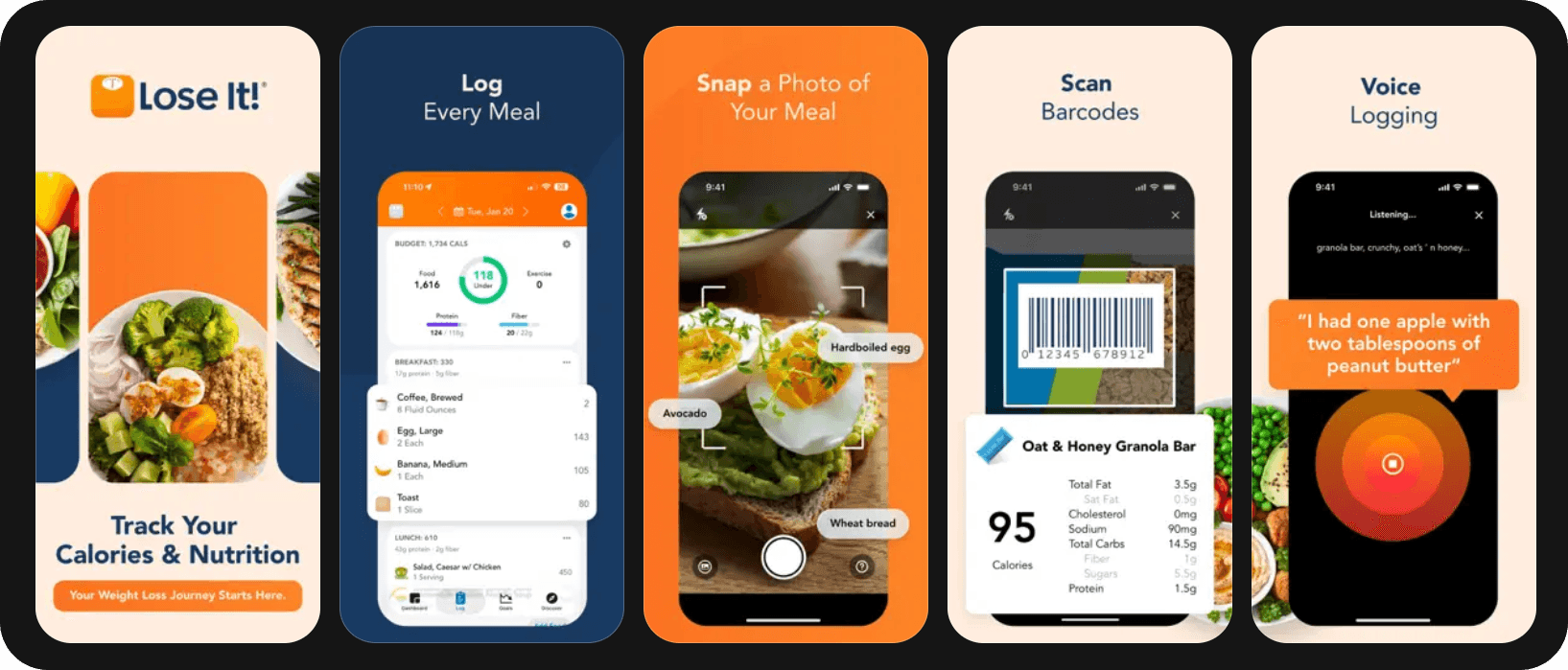
Lose It! adds social challenges and community features that gamify weight loss through accountability mechanisms. The app creates competitions between friends or groups, adding motivation beyond solo tracking. Barcode scanning and photo logging work reasonably well for common foods, though accuracy depends on crowdsourced database quality.
Best For
Users motivated by social accountability and competitive challenges rather than solo tracking.
Pros
- Social features: Challenges and community support increase engagement through friendly competition
- Clean interface: Intuitive design makes basic tracking straightforward
Cons
- Crowdsourced database: Mixed accuracy from user-generated entries without professional verification
- Premium features: Most engaging gamification elements require $40/year subscription
4. Cronometer – Best for Micronutrient Tracking
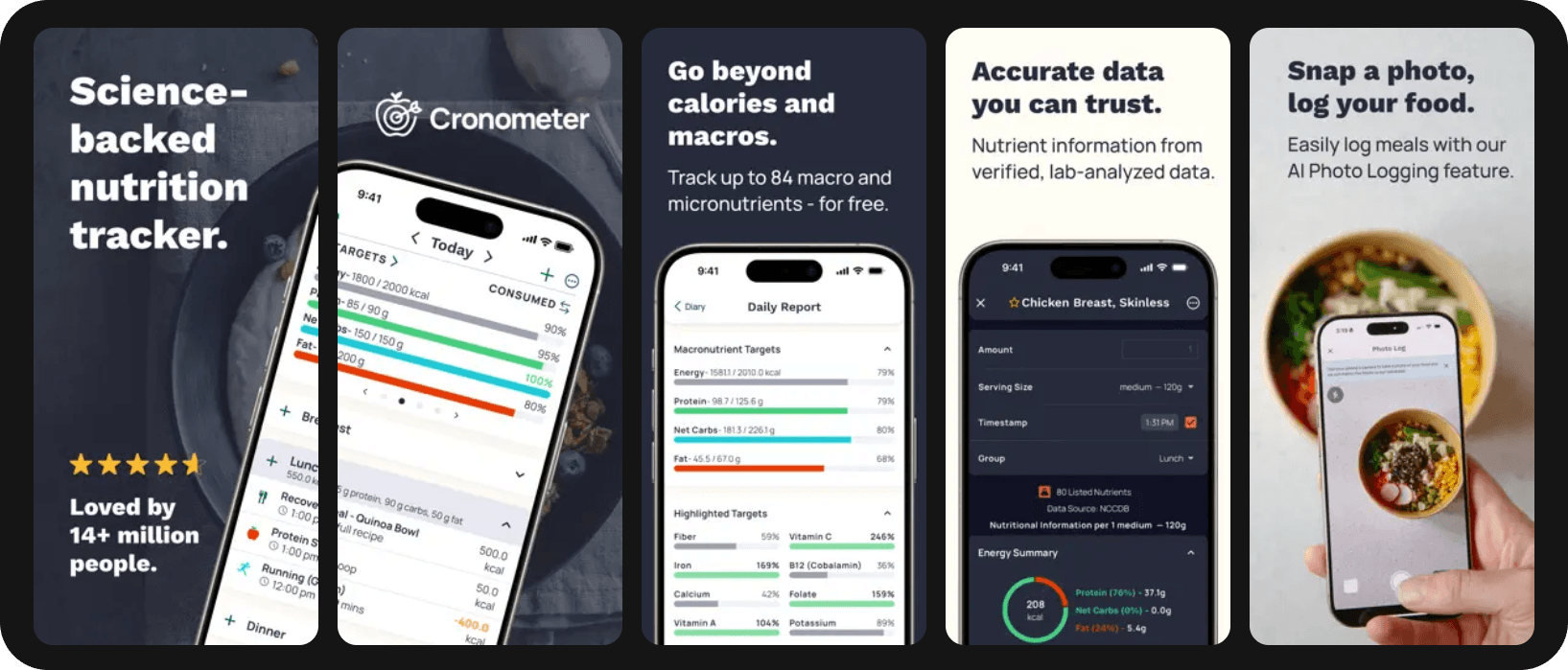
Cronometer provides detailed vitamin and mineral tracking beyond basic macros, appealing to users monitoring specific nutritional deficiencies or following therapeutic diets. The database pulls from verified sources like USDA, offering better accuracy than purely crowdsourced competitors. However, the interface feels more clinical than consumer-friendly, with a learning curve for casual users.
Best For
Users needing comprehensive micronutrient data for medical conditions or specific dietary protocols.
Pros
- Verified sources: Database pulls from USDA and other validated sources for better accuracy
- Complete nutrient profiles: Tracks vitamins, minerals, and amino acids beyond basic macros
Cons
- Clinical interface: Less intuitive design compared to consumer-focused apps
5. Noom – Best for Psychology-Focused Coaching
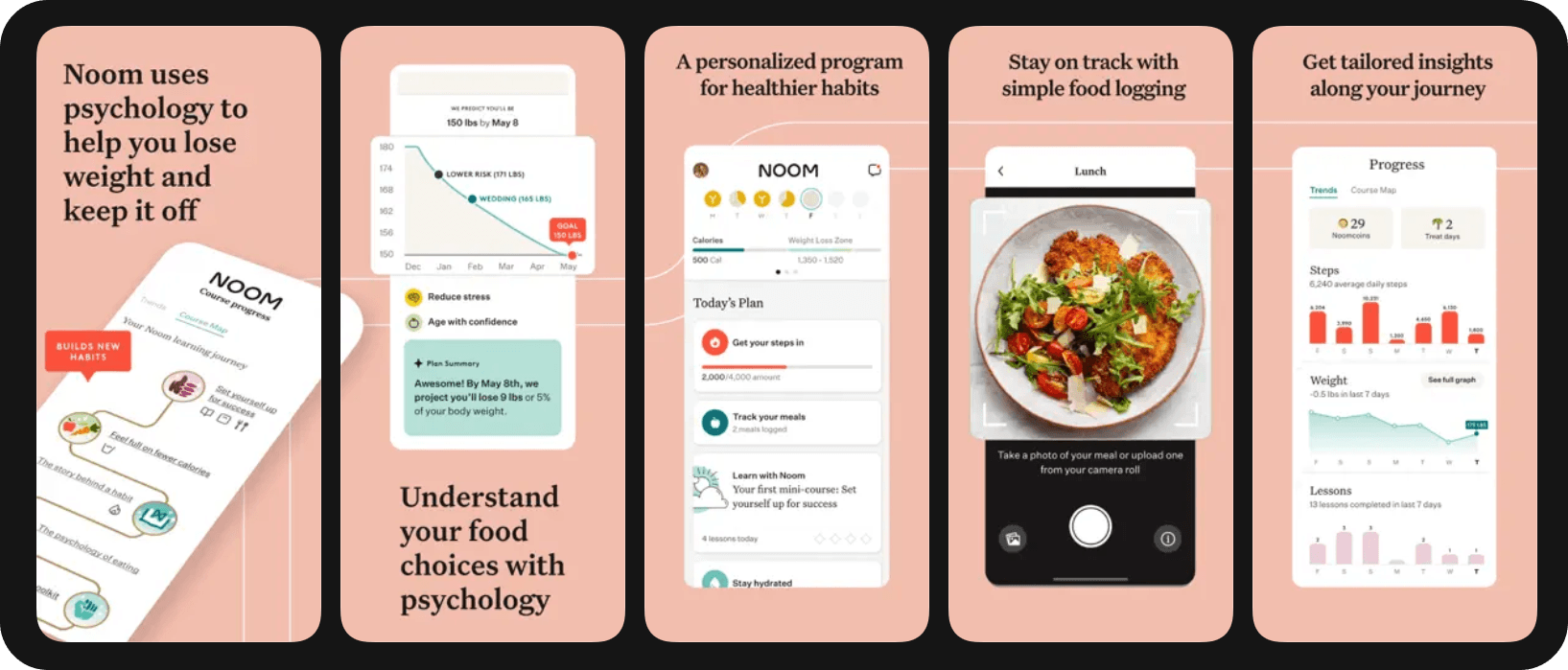
Noom combines calorie tracking with behavioral change curriculum and human coaching support, treating weight loss as a psychological challenge rather than just math. The app provides daily lessons on habit formation, emotional eating, and sustainable behavior change. However, the $59/month cost positions it as coaching first and tracking tool second, with basic calorie counting features compared to dedicated nutrition apps.
Best For
Users wanting psychology-focused coaching alongside tracking rather than just a calorie counter.
Pros
- Behavioral curriculum: Daily lessons address psychological aspects of weight loss beyond calorie math
- Human coaching: Real coaches provide accountability and personalized guidance
Cons
- High cost: $59/month makes it the most expensive option for what amounts to basic tracking functionality
- Basic tracking: Calorie counting features lag behind dedicated nutrition apps
How to Choose the Right Calorie Counter App
Match features to your specific goals
Weight loss requires accurate calorie deficit tracking with meal planning that eliminates decision fatigue when hunger strikes. Muscle gain needs surplus calculations and protein optimization to ensure you're eating enough to build tissue without excessive fat gain. General wellness benefits from comprehensive nutrient tracking if you're monitoring specific vitamins or minerals, while cultural food tracking demands regional database accuracy that accounts for how the same brand varies across countries.
Consider logging preferences and friction tolerance
Photo logging suits visual learners and speeds entry when you're eating the same meals repeatedly. Voice logging works for hands-free tracking convenience while cooking or immediately after eating, before you forget portion sizes. Text entry remains adequate for users comfortable with manual input who eat simple, easily described meals. Barcode scanning becomes essential for packaged food convenience, though accuracy depends entirely on database quality.
Evaluate database quality versus size
Verified databases prevent tracking errors from crowdsourcing, where one user's "medium chicken breast" differs from another's by 100+ calories. Large databases help only if professionally reviewed—20 million unverified entries create more problems than 1 million verified ones. Regional food coverage matters for accurate cultural tracking, particularly when brands sell different formulations across countries with identical packaging.
Assess personalization and adaptation needs
Static calorie targets miss individual metabolic variations and fail to adjust as your body adapts to deficits. Adaptive algorithms optimize results based on progress data, recognizing when weight loss stalls and recalculating targets accordingly. Meal planning eliminates decision fatigue for busy users who struggle with "what to eat" paralysis, while AI coaching provides accountability without human nutritionist costs.
Final Thoughts: Choosing the Right Calorie Counter App
Database accuracy determines whether your tracking efforts translate to actual progress or just busy work with flawed data. Verified databases eliminate crowdsourced errors that create 15-30% variance in identical foods, ensuring your deficit or surplus calculations reflect reality. Professional review standards provide the foundation that advanced features depend on: AI meal planning and adaptive algorithms only work when trained on accurate data.
Fitia combines verification with modern logging speed through AI trained on a professionally validated 1M+ food database. Photo, voice, and text logging deliver convenience without sacrificing precision, while meal planning based on 150+ studies eliminates decision fatigue that derails consistent tracking. The family plan at $89.99 annually makes professional-grade tools accessible at $15 per person, with strong cultural food support that serves Latin American and Spanish markets better than most competitors.
Try Fitia free for 3 days to test whether verified data and AI meal planning justify the premium over basic trackers relying on crowdsourced databases.
FAQs on the Best Calorie Counter Apps
Are verified databases worth premium subscription costs?
Crowdsourced errors undermine deficit and surplus tracking accuracy by introducing 15-30% variance in identical foods, wasting effort on flawed data. Professional verification prevents the frustration of plateaus caused by tracking inaccuracies rather than actual eating patterns.
Do I need AI meal planning or just tracking?
Basic tracking works if meal planning doesn't cause paralysis and you consistently know what to eat. Decision fatigue significantly reduces long-term adherence rates when hunger strikes and you're staring at a calorie target without a plan. Fitia's automatic plans eliminate "what to eat" friction by generating complete menus with shopping lists rather than leaving you to figure out how to hit your numbers.
Which app provides best database accuracy for weight loss?
Fitia verifies every food with nutrition professionals, eliminating crowdsourced inaccuracies that sabotage deficit tracking. Verified data ensures accurate calorie deficit calculations that translate to predictable weight loss rather than plateaus caused by database errors. Cultural food support provides regional accuracy that competitors using generic values miss, particularly for Latin American and Spanish markets.
Are family plans worth it for household nutrition?
Fitia's family plan saves 75% versus individual subscriptions at $89.99 annually for 2-6 users. Shared nutrition goals improve household accountability when everyone tracks together rather than solo efforts. The per-person cost drops to $15 annually with six users, making professional-grade tools accessible at less than one month of basic streaming subscriptions.
Can calorie counter apps replace nutrition coaching?
Fitia AI Coach explains progress and suggests improvements based on your data rather than generic advice. Professional review remains recommended for complex medical conditions or therapeutic diets requiring specialized expertise beyond app capabilities.
Fitia: Meal Plans & Calorie Counter
We use cookies to enhance your browsing experience, analyze site traffic, and personalize content. By clicking 'Accept', you consent to the use of these technologies in accordance with our Privacy Policy.