May 12, 2026
The Best Calorie Counter Apps That Suggest Recipes in 2026
TL;DR: Most calorie counter apps record what you ate. A handful actually tell you what to eat next. If you keep quitting food trackers because you open the app to an empty diary, you need one that also plans. The best calorie counter with recipe suggestions in 2026 is Fitia, which builds a personalized meal plan at setup with recipes calibrated to your calorie and macro targets. Below, the six apps that genuinely combine tracking with recipe ideas.
Table of Contents
- Why most calorie counters don't suggest recipes
- The 6 best calorie counter apps with recipe suggestions
- Fitia — Best overall for calorie tracking and recipe generation
- Eat This Much — Best for fully automated meal plans
- MyFitnessPal — Best for a large database plus meal planning
- Yazio — Best for intermittent fasting plus meal plans
- Lifesum — Best for themed diet plans
- Noom — Best for behavioral structure
- Summary comparison
- What to look for in a calorie tracker with recipe suggestions
- FAQ
Why most calorie counters don't suggest recipes
Most calorie counter apps were built to solve a record-keeping problem. They give you a food database, a barcode scanner, and a daily log. That works well if you already know what to eat. It doesn't help when you open the app at 7 p.m. with no plan for dinner.
The gap between a regular food tracking app and a planning app is bigger than it sounds. A regular tracking app assumes you have a meal plan and helps you track it. A planning app assumes you don't and generates one for you, with recipes that hit your calorie and macro targets. Most popular apps (Cronometer, Lose It!, MacroFactor) are pure trackers. A smaller group either has a built-in meal planner or generates recipes based on your remaining calories. That's the category we're covering here.
A note on what counts as a "recipe suggestion." There are three levels: a recipe database you can browse manually, AI-generated recipe prompts based on your remaining macros, and a full meal-plan generator that builds your week of meals around your targets. The third is what most people actually want. Few apps deliver it.
The 6 best calorie counter apps with recipe suggestions
1. Fitia — Best overall for calorie tracking + recipe generation
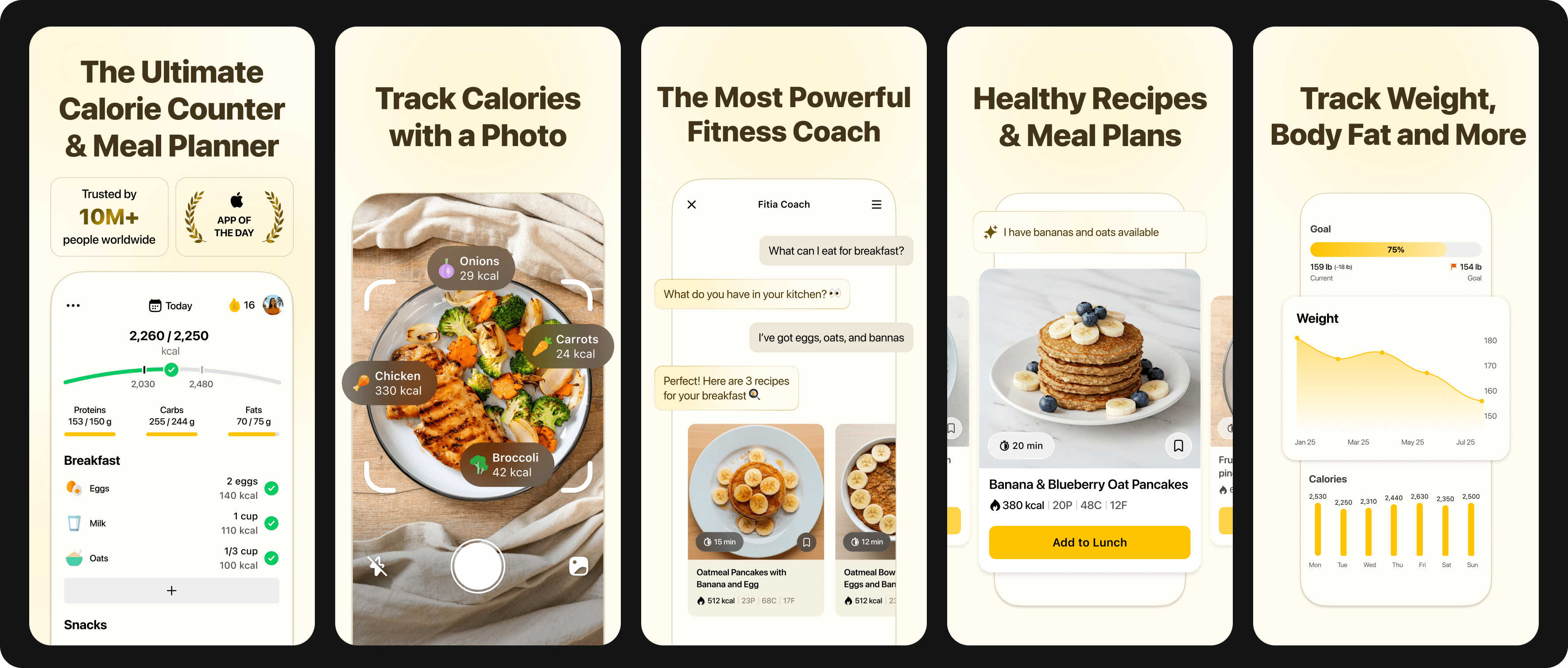
Fitia is the closest thing to a true calorie counter and meal planner in one app. At setup, it builds a personalized weekly meal plan with full recipes calibrated to your calorie and macro targets, your food preferences, and your goal (fat loss, recomposition, muscle gain, maintenance). You don't start with an empty diary. You start with a ready-made plan you can follow, swap, or adjust.
What makes it actually useful day to day is the responsiveness. Swap a recipe and the macros recalculate automatically. Tell it you ate something off-plan and the rest of your day adjusts. Smart shopping lists convert your weekly plan into a grocery run. The food database is verified by nutrition professionals (10M+ entries), which means the recipes are built on accurate underlying data instead of crowdsourced guesswork.
Fitia is the right pick if you've abandoned other calorie trackers because you didn't know what to cook, or if you want one app handling both "tell me what to eat" and "track what I ate" instead of bouncing between a meal planner and a food log.
Prefer to log only? You can still use Fitia as a pure tracker and pull in recipe suggestions when you want them — search the recipe database, generate one from scratch with AI, or browse curated options, all without committing to a full weekly plan. The free tier covers basic tracking; Premium unlocks the meal-planning engine, AI logging by photo, text, and voice, and the recipe library.
Pricing: Free version available. Premium: $19.99/month or $59.99/year. The Family Plan is available for $89.99 annually, offering shared access and 75 % savings compared to individual plans (2-6 members).
2. Eat This Much — Best for fully automated meal plans
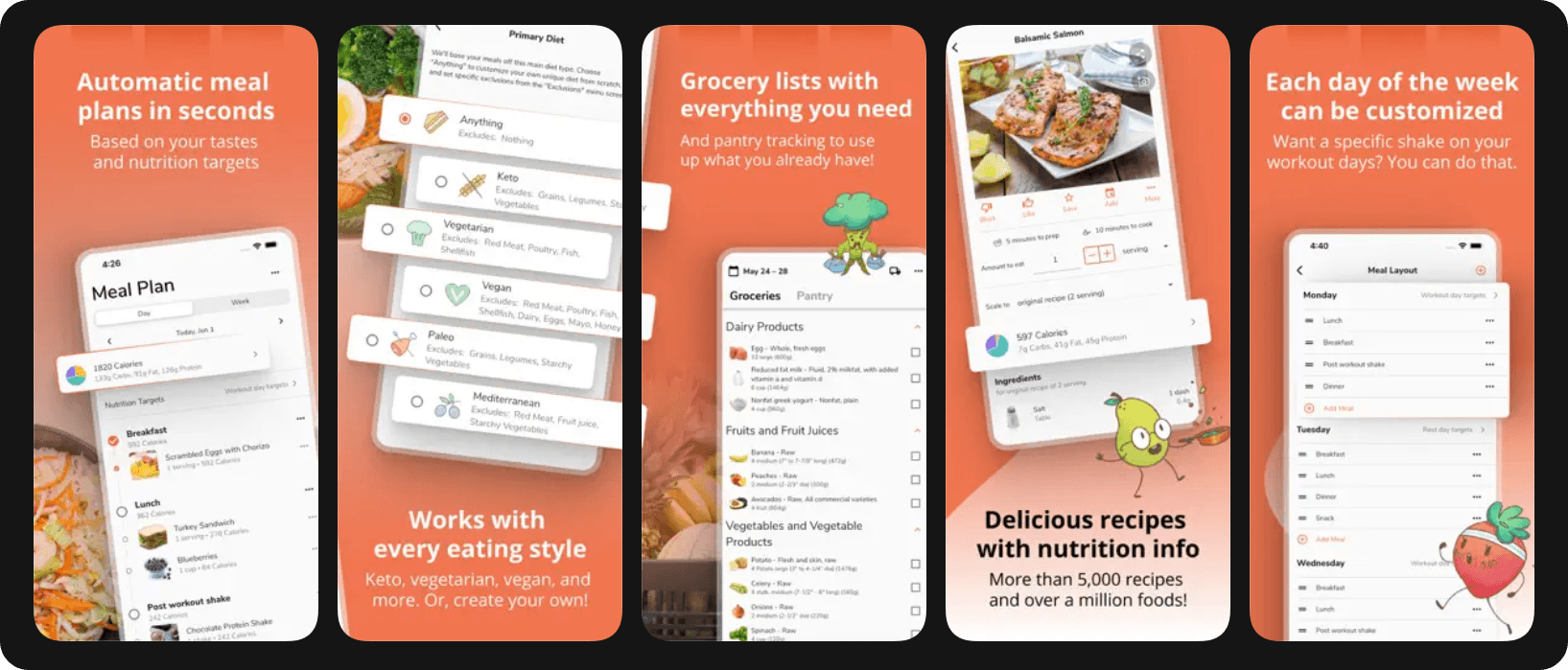
Eat This Much takes the meal-plan-first approach to its logical extreme. You enter your calorie target, your dietary preferences (vegan, keto, paleo, gluten-free, etc.), and how many meals per day you want, and the app generates an entire week of meals automatically. Calorie tracking is layered on top of the plan rather than the other way around.
The strength of Eat This Much is also its limitation: it's a planner that happens to track, not a tracker that happens to plan. Logging unplanned meals or restaurant food feels clunky compared to Fitia or MyFitnessPal. But if your main pain point is "tell me exactly what to eat for the next seven days at this calorie target," it does that in a great way.
Best for people who want maximum automation and minimum decision-making. Less ideal if you eat out frequently or want flexible day-to-day logging.
Pricing: Free version (basic plans). Premium: $14.99/month or $60/year.
3. MyFitnessPal — Best for users who want a large database plus meal planning
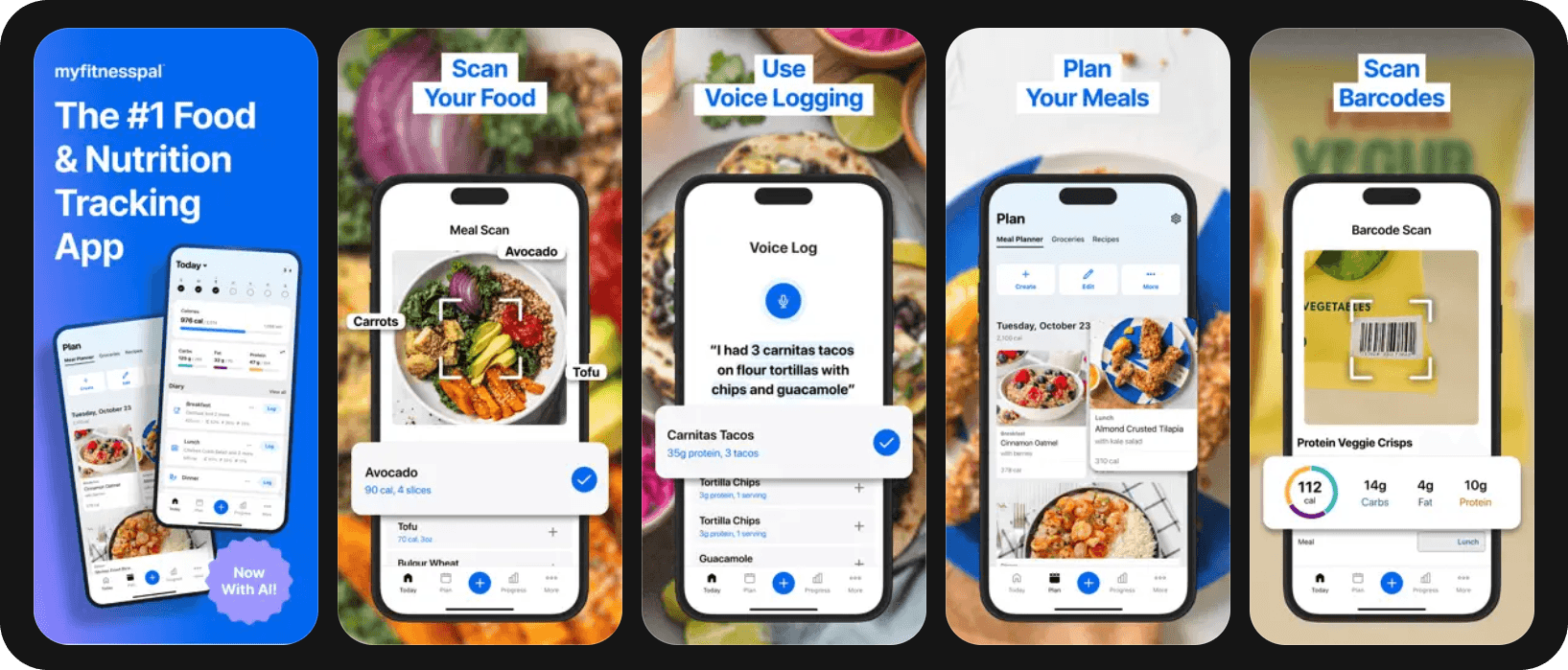
MyFitnessPal added a structured meal planner to its Premium+ tier in late 2025, which moves it from "pure tracking app" into the recipe-suggestion category. The planner generates weekly meals based on your goals, food preferences, time available for cooking, and household size, then produces a grocery list.
The trade-off is the underlying database. MyFitnessPal's 18M+ food database is mostly user-submitted, which means accuracy varies entry to entry. The meal planner itself works well, but you're building on a less reliable foundation than Fitia's verified database. Still, if you're already on MyFitnessPal and don't want to switch apps, the Premium+ meal planner is a decent upgrade.
Best for users already on MyFitnessPal who want meal planning added to their existing tracking flow.
Pricing: Free with ads. Premium: $19.99/month or $79.99/year. Premium+ (meal planner included): $24.99/month or $99.99/year.
4. Yazio — Best for intermittent fasting plus meal plans
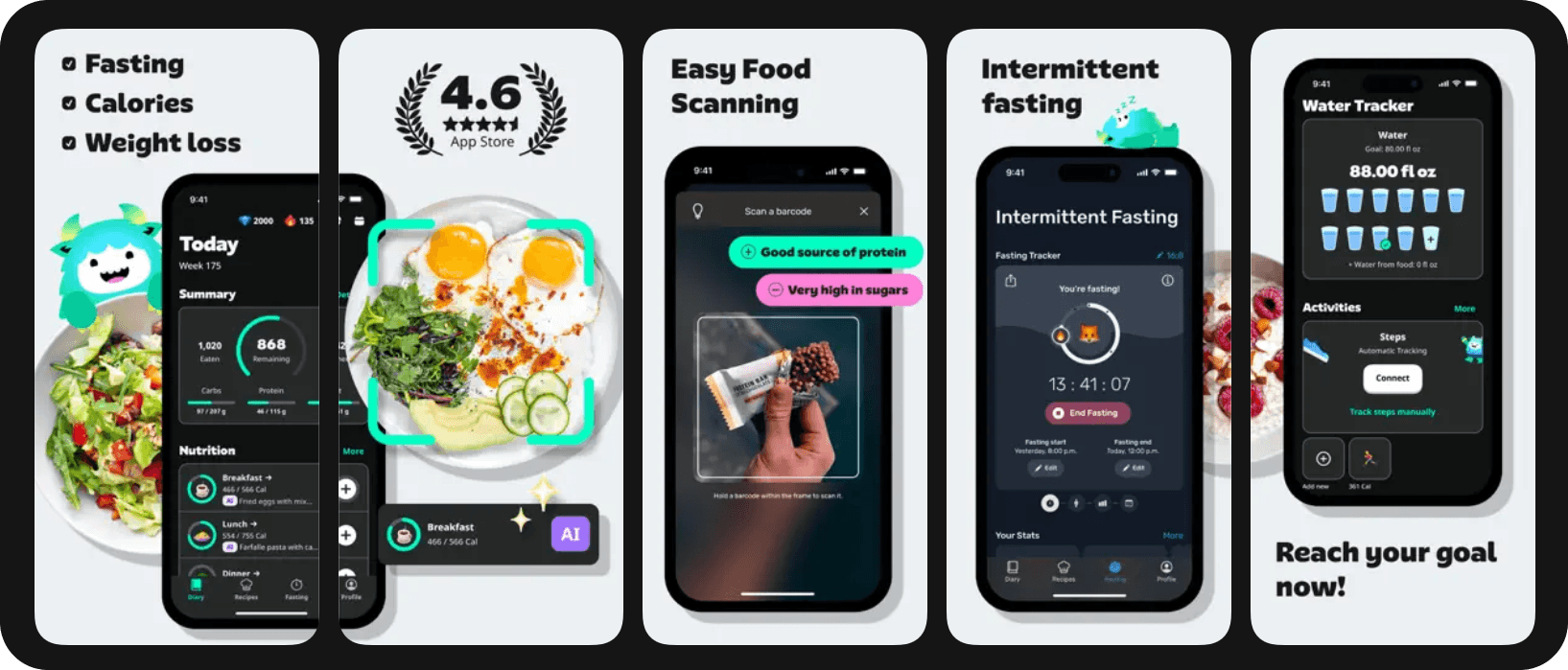
Yazio combines calorie tracking with a curated 1,500+ recipe library and template-based meal plans, all integrated with intermittent fasting timers (16:8, 18:6, 20:4, OMAD). The meal plans are less personalized than other apps on this list, but the recipes are calibrated to a daily calorie budget.
The free tier locks meal plans, AI photo logging, recipes, and detailed nutrient breakdowns behind PRO, and shows frequent ads. So in practice you're either paying for it or working with a stripped-down version.
Best for intermittent fasting practitioners who want recipes and meal plans aligned with their eating windows.
Pricing: Free version available (limited). PRO: ~$47.90/year.
5. Lifesum — Best for themed diet plans
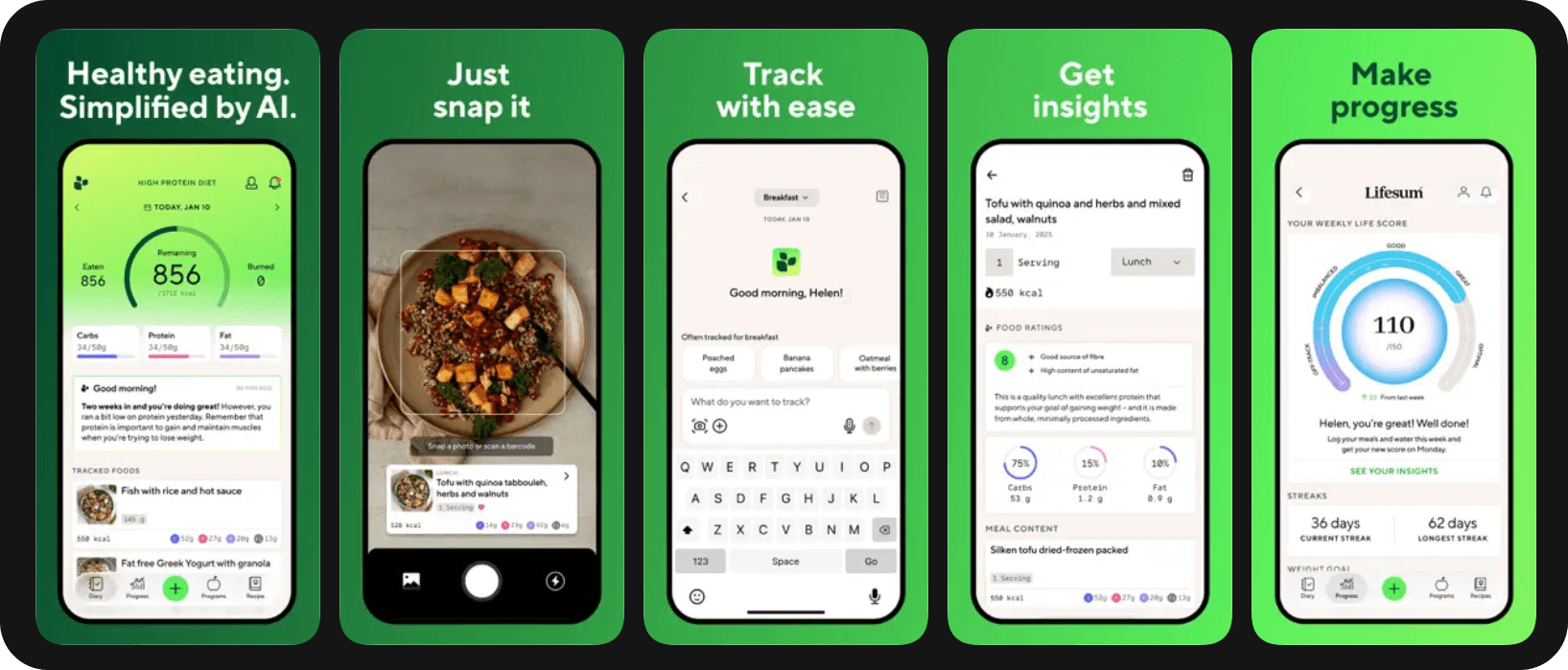
Lifesum's recipe suggestions come through themed diet plans (Keto, Mediterranean, High Protein, Vegan, Clean Eating, Intermittent Fasting). Pick a theme that fits your goals and Lifesum generates a meal plan around it, with recipes pre-loaded into your daily log. The "Life Score" gives you a single quality metric to optimize, which works well for people who like gamified nudges.
Best for users who want a visually polished experience and structured diet themes rather than full personalization.
Pricing: Free version available. Premium: $18.49/month or $99.99/year.
6. Noom — Best for behavioral structure (not custom recipes)
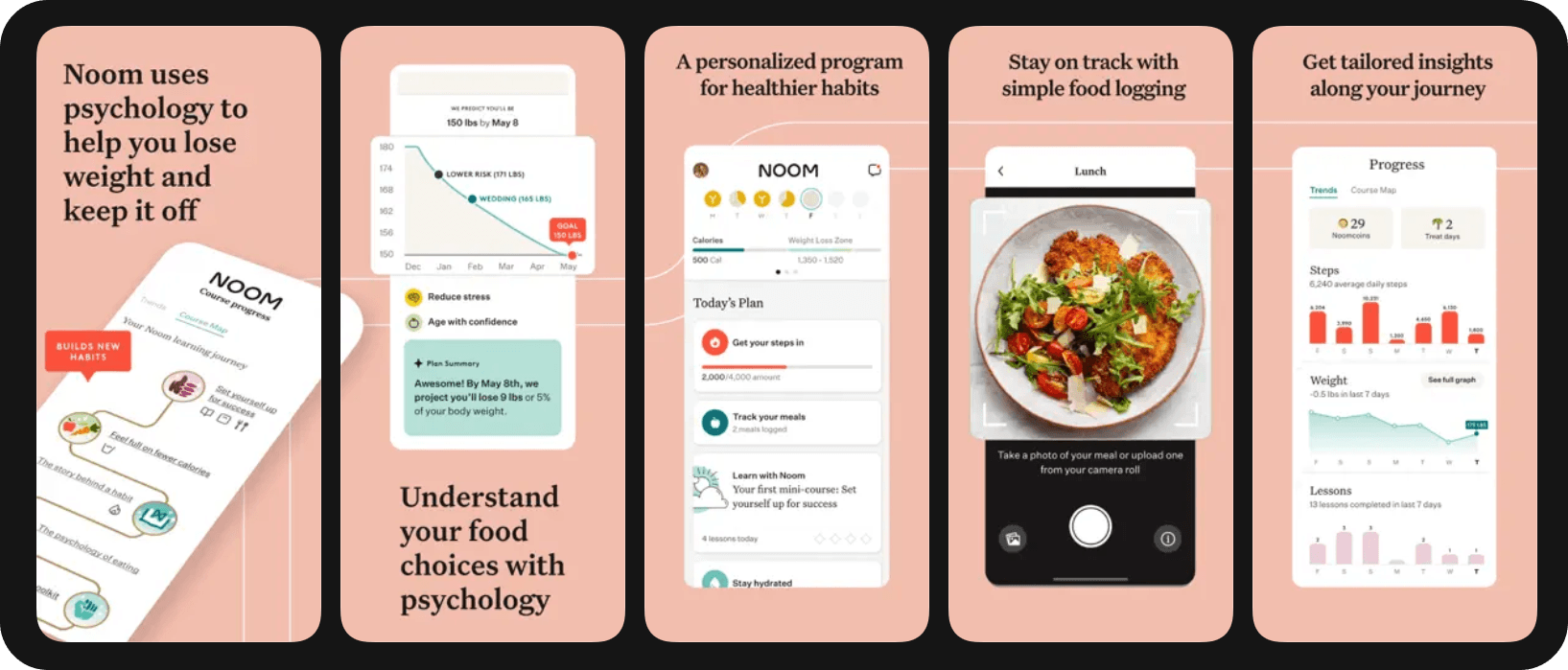
Noom is the outlier on this list. It doesn't generate calorie-calibrated meal plans the way the others do, but it provides structured eating guidance through a behavioral framework — food categorized by calorie density (green/yellow/orange), daily nudges, and a curated recipe library you can browse. The "what to eat" guidance is more about teaching food choice patterns than handing you a meal plan.
Best for users who want behavior change support more than a recipe engine.
Pricing: Noom pricing starts at $17.42/month for Noom Weight with a 12-month plan. GLP-1 and telehealth programs range from $69 to $149 to get started, with some plans including medication and others excluding medication costs.
Summary comparison
| App | Recipe approach | Free tier | Premium price | Best for |
|---|---|---|---|---|
| Fitia | Personalized AI-generated weekly meal plans with full recipes | Yes | $59.99/year | The complete calorie tracking and recipe suggestion package |
| Eat This Much | Fully automated meal plans from calorie targets | Yes (limited) | $60/year | Maximum automation, minimum decision-making |
| MyFitnessPal | Premium+ meal planner with weekly recipes | Yes (with ads) | $99.99/year (Premium+) | Users already in the MyFitnessPal ecosystem |
| Yazio | Template meal plans + recipe library | Yes (limited) | ~$47.90/year | Intermittent fasting + meal plans |
| Lifesum | Themed diet plans (keto, Mediterranean, etc.) | Yes | $99.99/year | Visual learners and structured diet themes |
| Noom | Curated recipe library + behavioral guidance | Trial only | ~$149/year | Behavioral support over algorithmic plans |
Recipe suggestions on day one or on demand. Download Fitia now — personalized meal plans, a full recipe library, and verified calorie tracking in one app.
What to look for in a calorie tracker with recipe suggestions
Four questions worth asking before you pick:
Does the app generate a plan upfront, or start you with an empty diary? An app that gives you a meal plan on day one removes the "what do I eat?" friction immediately. Empty-diary apps require you to already know your diet.
Are the recipes calibrated to your specific calorie target, or are they generic? A 1,600-calorie day needs different recipes than a 2,200-calorie day. Generic recipes don't help; calibrated ones do.
Can you swap meals without breaking the math? Real life is full of preference changes and schedule shifts. The best apps let you substitute recipes and auto-recalculate your remaining macros.
Does the app use your food preferences, not just your calorie number? Personalization on ingredients and cuisines is the difference between a meal plan you actually follow and one you abandon in week two.
FAQ
Does Fitia work for vegetarian, vegan, or other dietary restrictions?
Yes. At setup you pick a diet style (smart, high protein, low carb, keto, low fat) and you can flag allergies and food dislikes. Fitia builds the meal plan around those rules, so vegan, vegetarian, gluten-free, and similar restrictions are handled automatically without you filtering recipes yourself. The recipes that surface are already calibrated to your calories, your macros, and what you'll actually eat.
Can I edit the meal plan, or am I locked into what Fitia suggests?
You can edit everything. Swap any meal for a different recipe, adjust portions, change the number of meals per day, and the macros recalculate automatically. If you eat something off-plan, log it as you normally would and the rest of your day adjusts. The plan is a starting point, not a contract.
What if I cook for my partner or family with different goals?
Fitia's Meal Plan Sync handles this. You can share the same meals across household members and the app scales portions automatically so each person hits their own calorie and macro targets. Useful when you and your partner are eating the same dinner but one of you is cutting and the other is bulking. The Family Plan covers up to 6 people at $89.99/year.
What if I mostly eat out instead of cooking?
Fitia is more useful if you cook at least a few meals a week, since the meal plans and shopping lists assume you're prepping food. That said, the calorie tracker handles restaurant logging well — verified branded and restaurant entries are in the database, and AI logging by photo or voice works for plated meals. If you eat out 6 nights a week, you'll mostly use Fitia as a tracker with occasional recipes on demand rather than as a full meal planner.
Fitia: Meal Plans & Calorie Counter
We use cookies to enhance your browsing experience, analyze site traffic, and personalize content. By clicking 'Accept', you consent to the use of these technologies in accordance with our Privacy Policy.