5 Best Cronometer Alternatives in 2026
Cronometer nails nutrient data but stops there. Here are 5 alternatives that track micros and add adaptive targets and meal plans.
- Published
- Updated
- 7 min read
- 7 min read

TL;DR: If you lift or train seriously, micronutrient tracking is the floor, not the reason to pick an app. Cronometer nails the nutrient data but stops there. The six alternatives here, Fitia, MyNetDiary, MacroFactor, Yazio and Carb Manager, all track micros seriously while adding what actually moves training: adaptive targets, macro-matched meal plans, and faster logging.
Table of Contents
- Why look for an alternative to Cronometer in 2026
- The 5 best Cronometer alternatives in 2026
- Fitia
- MyNetDiary
- MacroFactor
- Yazio
- Carb Manager
- Summary table
- Why Fitia is the most complete Cronometer alternative in 2026
- FAQs
Why look for an alternative to Cronometer in 2026
Cronometer's reputation is well earned. It tracks up to 84 nutrients from a verified database and for anyone managing a deficiency, it has been a reference standard for years.
But that level of nutrient tracking is no longer rare. Several apps now cover serious vitamin and mineral tracking from verified or staff-checked databases. Once detailed micronutrient data is something you can get in a lot of places, it stops being the reason to choose an app and becomes the baseline you expect from any of them.
Which moves the real question. If you lift or train seriously, nutrient depth is the floor, not the goal. What actually changes your week is everything an app does on top of the data: targets that adapt as your weight trends, a plan that tells you what to eat to hit your macros, logging fast enough that you still do it on a busy day, recipes built around your goal instead of a generic database you have to search by hand.
So the apps below all clear one bar, they genuinely track vitamins and minerals, not just calories and macros. The interesting part is what each one adds beyond that: adaptive expenditure, meal planning, AI logging, fasting tools, or price. Below are the six worth knowing.
The 6 best Cronometer alternatives in 2026
1. Fitia
Quick Overview
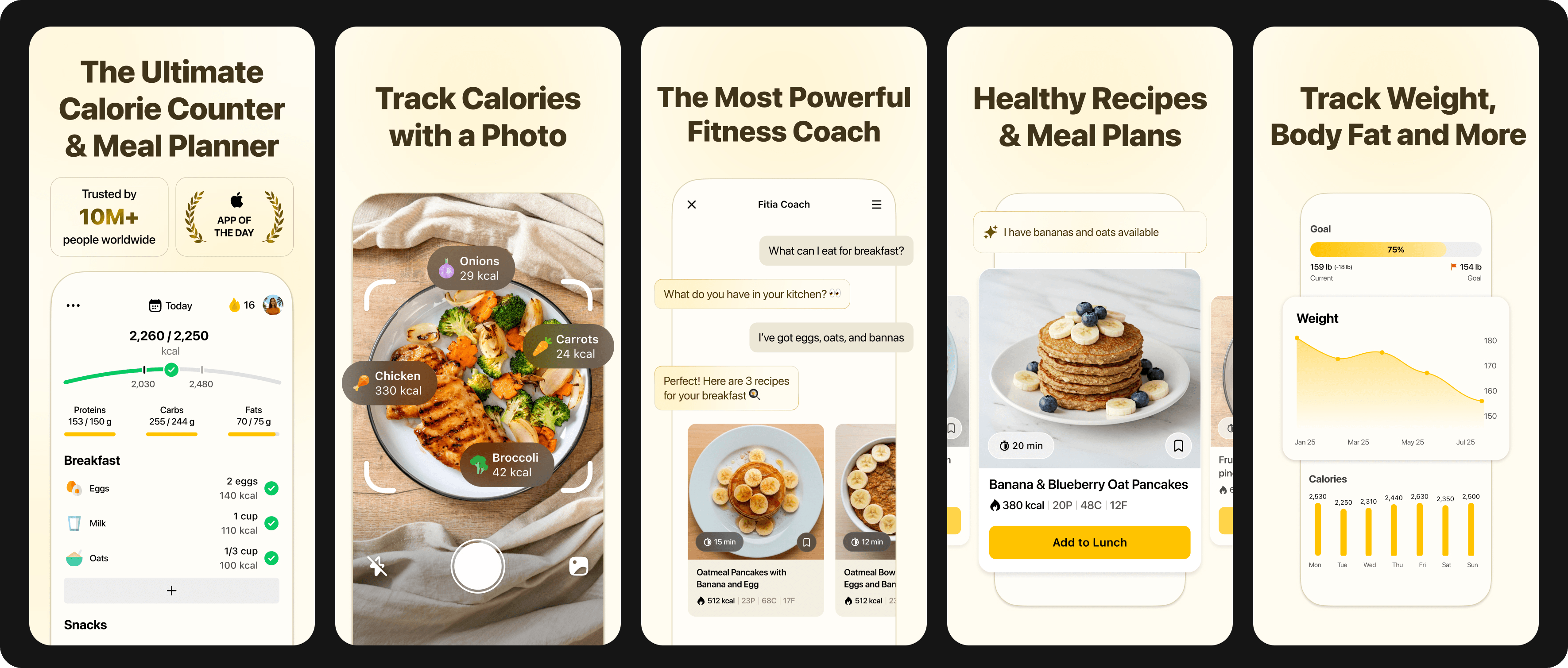
Fitia pairs a fully verified, nutritionist-reviewed food database with AI logging across photo, voice, text, and barcode, so you get Cronometer-style data integrity without Cronometer-style logging time.
Best For
People who want verified micronutrient data combined with fast modern logging, especially international users whose local foods are missing from USDA-centric databases, and home cooks who would rather photograph a plate than search a database.
Pros
- Verified database reviewed by nutrition professionals.
- Tracks 25+ vitamins and minerals, plus fiber and added sugars. Covering the nutrients that drive most daily decisions, iron, calcium, magnesium, B12, vitamin D, potassium, zinc, presented so you can act on them rather than scan a dense table.
- AI logging + Database search: Photo, voice, barcode, and text input, with photo logging that can identify ingredients and estimate portions in seconds.
- Meal planning built on 150+ scientific studies. Weekly plans, swappable macro-matched recipes, and auto-generated shopping lists, the part that turns tracking into action, which Cronometer does not do.
- Wearable integration.
- Cultural food accuracy. Strong Latin American, Spanish, Caribbean, and Mediterranean coverage.
- 24/7 AI nutrition coach. Answers plain-language questions like "what should I eat to close my iron gap today?"
Cons
- Premium required for meal planning and AI logging
- Available in English and Spanish only.
Pricing
Free version available. Premium: $19.99/month or $59.99/year. Family Plan: $89.99/year for up to 6 members, the best per-person value in the category.
2. MyNetDiary
Quick Overview
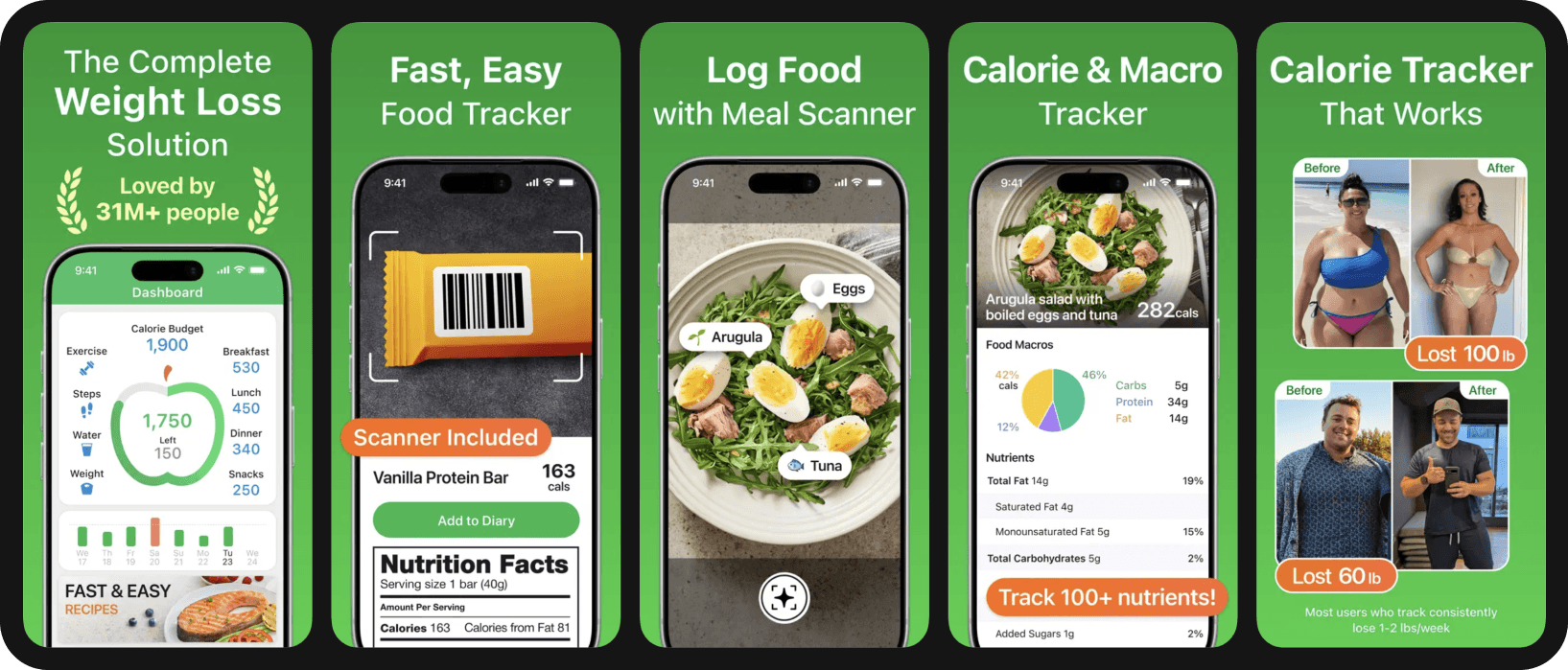
MyNetDiary tracks up to 108 nutrients from a staff-verified database.
Best For
Users who want maximum nutrient depth and verified accuracy but found Cronometer's logging slow or its free tier ad-heavy.
Pros
- 108 nutrients tracked.
- Staff-verified database.
- AutoPilot adaptive calories. Adjusts your calorie budget from your actual weight trend.
- AI logging. Premium Plus adds AI photo Meal Scan, voice logging, restaurant menu scan, and an AI coach.
Cons
- No automated meal-plan generator.
- The deepest features and AI tools are paywalled.
Pricing
Free tier. Premium: about $8.99/month or $59.99/year. Premium Plus (adds the AI suite): about $14.99/month.
3. MacroFactor
Quick Overview
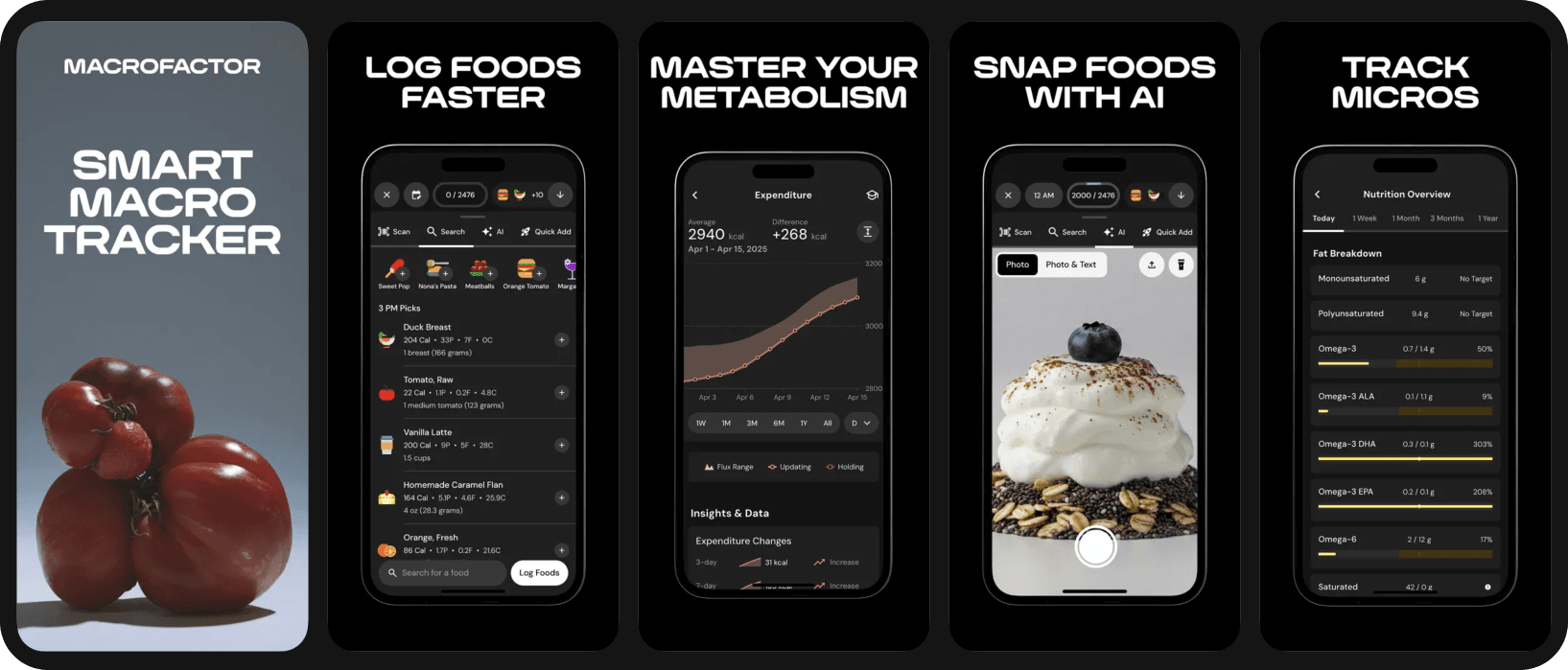
MacroFactor's adaptive expenditure algorithm recalculates your energy expenditure weekly from real weight-trend data.
Best For
Strength athletes, physique-focused users, and data-driven trackers running deliberate cuts or bulks who also want solid micronutrient visibility from a verified database.
Pros
- Adaptive expenditure algorithm. Calorie targets update from actual weight changes.
- Verified food database. NCC-derived rather than user-submitted.
- Fast, low-tap logging.
Cons
- No free tier. You commit to a subscription after a 7-day trial.
- Data-heavy interface. The opinionated, numbers-first design has a learning curve casual trackers can find off-putting, and there is no automated meal planning.
Pricing
$11.99/mo or $71.99/yr. No free tier.
4. Yazio
Quick Overview
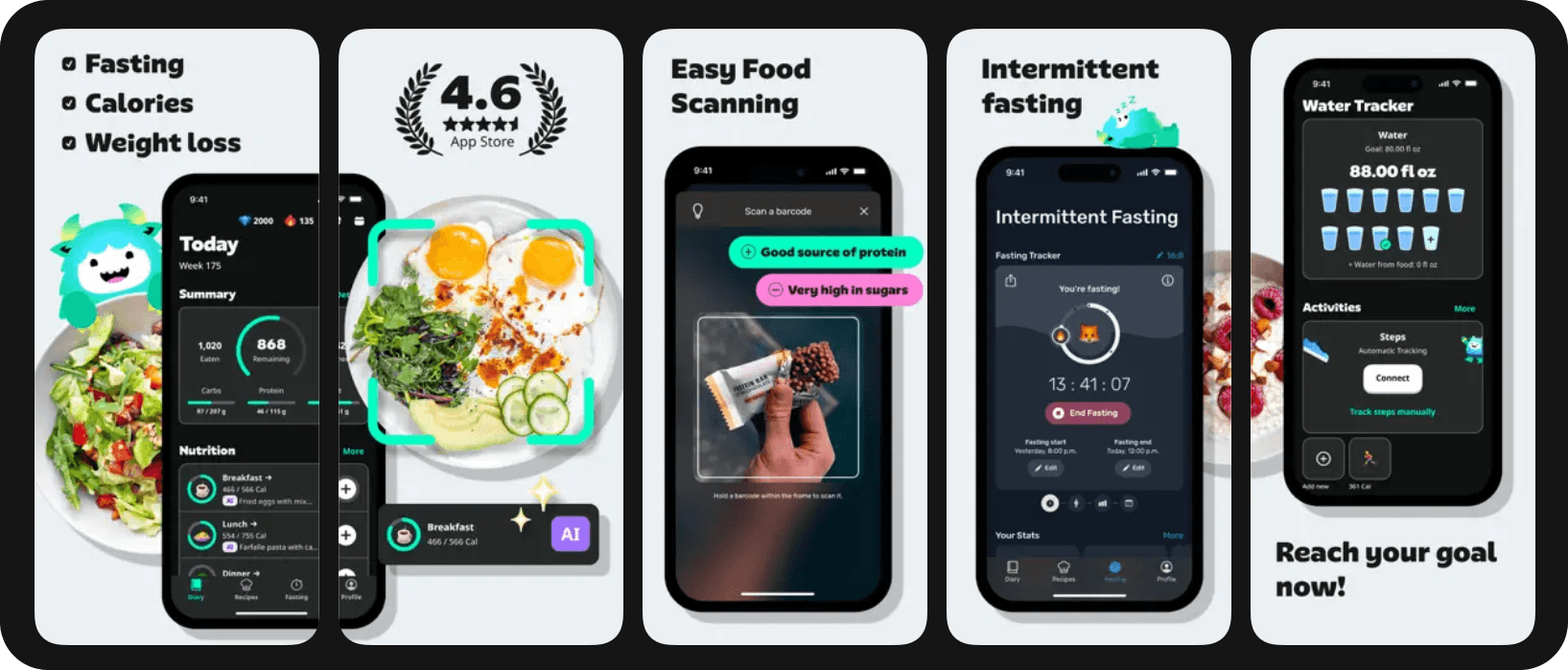
Yazio combines calorie, macro, and micronutrient tracking with AI photo recognition, intermittent fasting plans, and a large recipe library.
Best For
Anyone who wants fasting and nutrition tracking in one app.
Pros
- Strong European food database. Handles packaged goods that USDA-centric apps mishandle.
- Calorie, macro, and micronutrient tracking in PRO. Covers the key vitamins and minerals alongside macros.
- Native fasting plans. 16:8, 5:2, OMAD and more, integrated with calorie tracking.
- AI photo recognition and a 3,000+ recipe library.
Cons
- Shallower nutrient depth than the specialists. Covers the main vitamins and minerals but does not go deep on amino acids or fatty acid subtypes.
- Best features are paywalled. Recipes, fasting tools, AI logging, and full nutrient tracking require PRO; barcode access has moved in and out of the free tier and is inconsistent in 2026.
Pricing
Free version available (limited). PRO: roughly $47.90/year.
5. Carb Manager
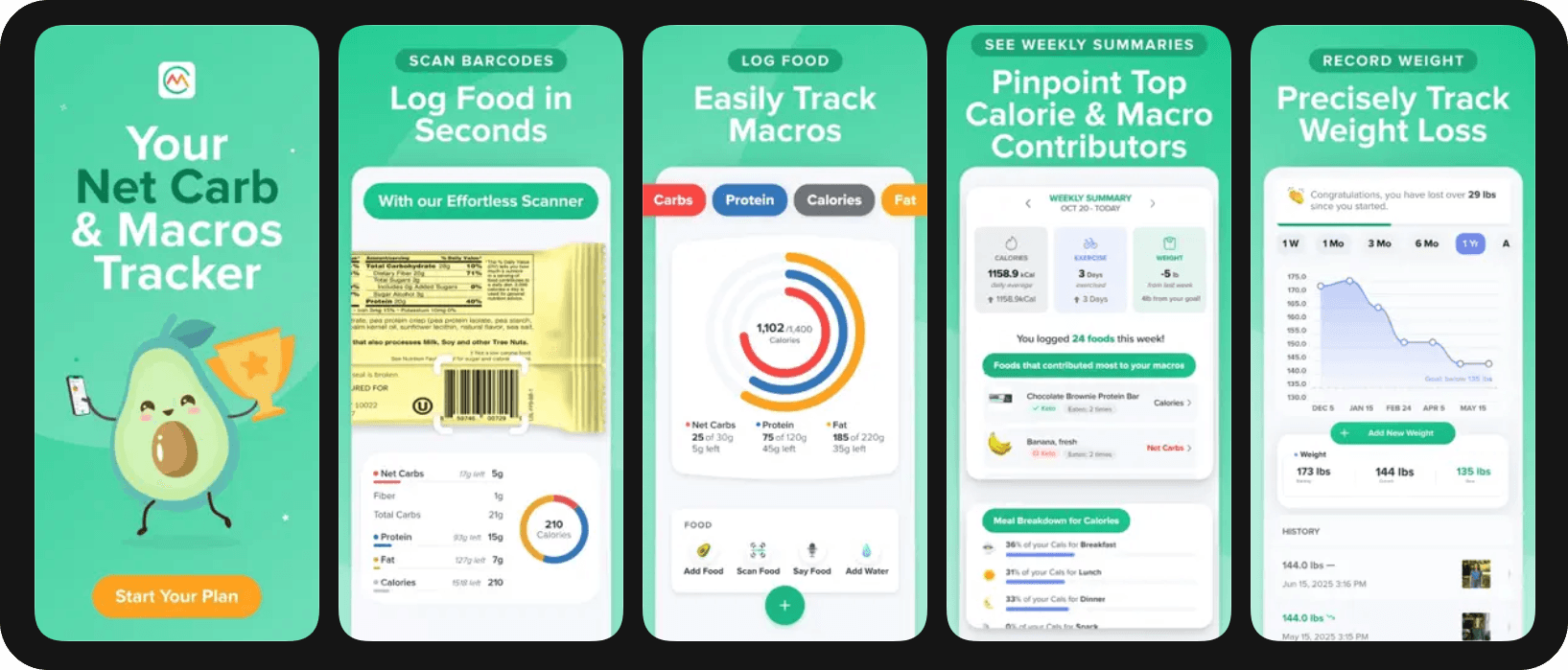
Quick Overview
Carb Manager is the specialist for low-carb, keto, paleo, and carnivore eaters. It separates net carbs, total carbs, and sugar alcohols, integrates ketone and glucose tracking, and still tracks a solid set of micronutrients underneath the carb focus.
Best For
Anyone on a keto, low-carb, paleo, or carnivore protocol, and people with type 2 diabetes or insulin resistance who want net carbs front and center without losing micronutrient visibility.
Pros
- 22 micronutrients tracked with RDA proximity.
- Net carb tracking. Fiber and sugar alcohols handled separately from total carbs.
- Ketone and blood glucose integration. Useful for users on a clinical or performance protocol.
- Large keto-specific recipe library and strong barcode coverage for keto-marketed products.
Cons
- Carb-centric interface. Less useful if you are not doing low-carb; the layout emphasizes carb data mainstream users don't need.
- Micronutrient tracking and custom targets require Premium.
Pricing
Free tier available. Premium: roughly $39.99/year for full access including micronutrient tracking.
Summary table
| App | Starting Price | Nutrients Tracked | Best For |
|---|---|---|---|
| Fitia | Free; Premium $59.99/yr | 25+ (verified) + meal planning | Verified data plus fast AI logging and meal plans |
| MyNetDiary | Free; Premium ~$59.99/yr | 108 (staff-verified) | Solid nutrient depth |
| MacroFactor | $71.99/yr (no free tier) | 50+ (verified) | Adaptive expenditure |
| Yazio | Free; PRO ~$47.90/yr | Key vitamins/minerals (PRO) | European foods plus fasting |
| Carb Manager | Free; Premium ~$39.99/yr | 22 micronutrients | Keto and low-carb with nutrient visibility |
Why Fitia is the most complete Cronometer alternative in 2026
Each app above clears the bar that matters for this list: it genuinely tracks vitamins and minerals, not just calories. The real question is which one you will still be using long term.
For two decades the micronutrient category forced a trade-off: precision (Cronometer's depth and verified accuracy) or usability (faster, lighter apps that accepted database errors). Verified data meant slow manual entry; fast logging meant trusting crowd-sourced numbers.
Fitia's approach is to keep the verified data and remove the friction. The database is nutritionist-reviewed before publication, the logging is photo, voice, text, and barcode plus manual search if you still prefer it, the nutrients that drive daily decisions are surfaced so you can act on them, and the cultural coverage treats Latin American, Spanish, and Mediterranean food as first-class rather than edge cases. On top of that, it turns the data into a weekly meal plan with macro-matched swaps and a shopping list, built into the app rather than sold as a separate paywalled add-on like the others.
If you liked Cronometer's accuracy but found it dense and unintuitive day to day, Fitia is the most direct upgrade path: the same verified data, in an app you'll actually keep using. Start free today.
About the Author
 | Fabrizio Baca Olcese is a nutritionist from Universidad Peruana de Ciencias Aplicadas (UPC) and a NASM-certified personal trainer, with five years of experience in nutrition, product development, and user growth at the intersection of health and technology. As Fitia's first hire and part of the founding team, he has helped scale the company to over 10 million monthly active users across 17 countries. At Fitia, he works as Senior Business Development, leading user acquisition and B2B partnerships while combining his nutrition background with his drive to make healthy living more accessible. |
Related articles
 Fat Loss
Weight Loss Calorie Chart (2026): How Many Calories to Eat by Body Weight, Sex, and Activity
See how many calories to eat to lose weight, with simple charts by body weight and activity, plus why your target changes as you go.
Read article
Best Calorie Counter App for Muscle Gain in the US (2026): 4 Apps Compared for Lifters
The 4 best calorie counter apps for US lifters in 2026, compared on macros, database, adaptation, and meal planning.
Read article
Best Online Nutrition Coach in the US (2026): What to Look For Before You Pay
Online nutrition coaching in the US 2026: three tiers, what the research says, and the red flags to spot before you pay for an app or coach.
Read article