Jun 06, 2026
Best Dieting App in the US 2026: 5 Apps Compared
TL;DR: Most "best dieting app" guides compare features. That's the wrong starting point in 2026, because dieting itself has split into several different approaches: behavior-change coaching, AI-powered logging, food and macro tracking, structured meal plans, and micronutrient-driven eating. The right app depends on which kind of dieter you are. This guide maps five of the most relevant dieting apps in the US (Fitia, WeightWatchers, MyFitnessPal, Cal AI, and Cronometer) to the diet styles they actually serve.
Table of Contents
- Dieting in 2026 looks different than it did five years ago
- US Diet Apps You Should Check Out in 2026
- Fitia: calorie tracker + meal planner
- WeightWatchers: behavior coaching + GLP-1 access
- MyFitnessPal: calorie tracker + device integrations
- Cal AI: AI photo logger + low-friction entry
- Cronometer: micronutrient tracker + verified data
- So which app fits you?
Dieting in 2026 looks different than it did five years ago
Three things have reshaped how US adults diet:
- GLP-1 weight loss medications went mainstream. Semaglutide, tirzepatide, and others are now used by millions of US adults. Once these medications are discontinued, weight regain is common, which means the apps people use need to support both the active medication phase and the much harder maintenance phase that follows.
- AI logging removed most of the friction from calorie tracking. Photo, voice, and text logging are now standard across the major apps. A new category of AI-photo-first apps reshaped expectations for how fast logging should feel.
- Behavior-change programs proved they can produce real-world maintenance results. Behavior-change apps have generated meaningful real-world maintenance data. Long-term users hold substantial weight loss over multi-year periods, contradicting the old "just gamified habits" dismissal.
All of these factors lead to a definition of "dieting" in 2026 that covers everything from chatting with a coach about habits, to snapping a photo of your dinner for an AI to calorie-count, to running a precise 1.6 g/kg protein floor, to managing a GLP-1 medication alongside daily logging.
US Diet Apps You Should Check Out in 2026
Fitia: calorie tracker + meal planner
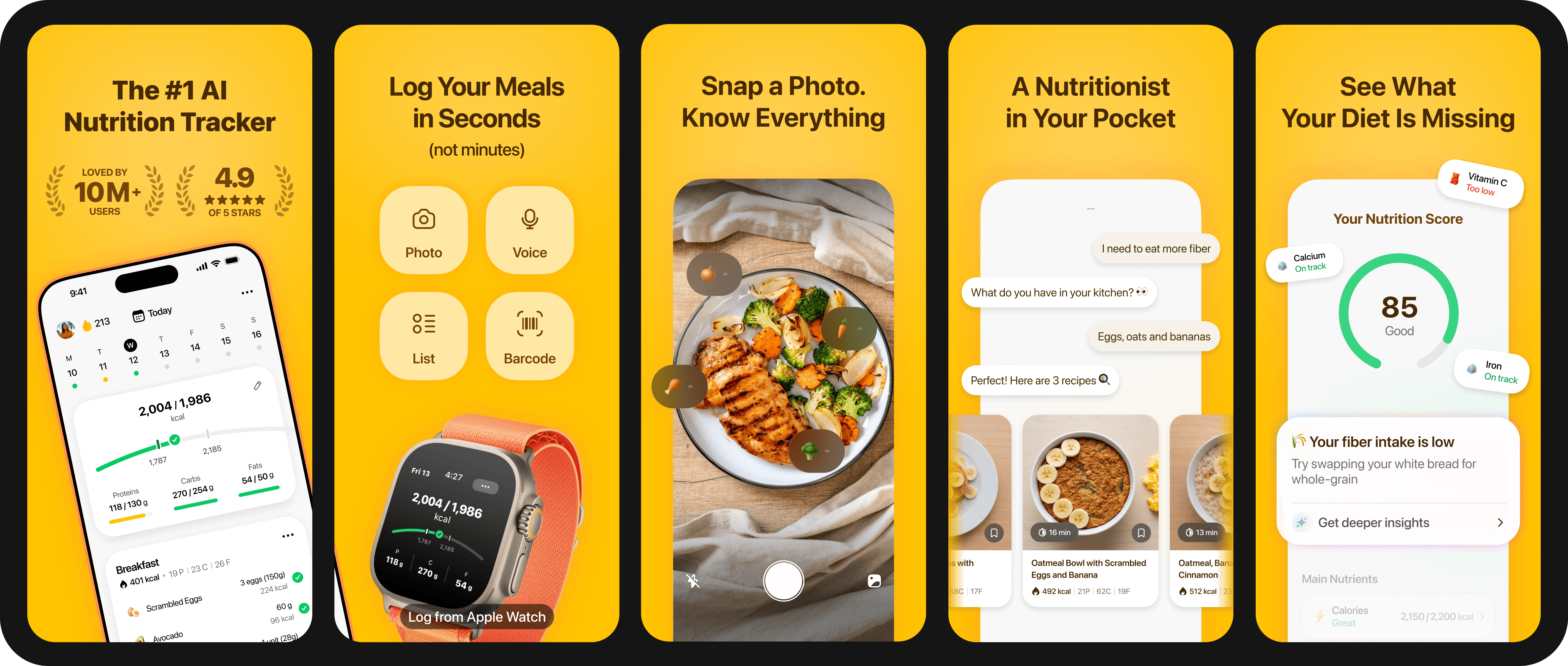
Fitia is the only app on this list that ships a verified food database, AI-assisted logging, and an automatic meal plan generator in one Premium bracket, without splitting features across higher pricing tiers (as MyFitnessPal does). Onboarding starts with your metrics and asks for your goal (Fat Loss, Muscle Gain, or Maintenance) and pace, then generates a weekly meal plan tuned to your targets using foods and recipes commonly available in the US.
- Best for: Structured-plan dieters who want the app to decide what they eat, users who want a verified database with US foods and brands, anyone tired of piecing together a deficit from scattered advice, GLP-1 users who want a meal structure that supports a reduced appetite without skipping protein.
- Watch out for: Meal planning and AI logging sit behind the Premium tier.
WeightWatchers: behavior coaching + GLP-1 access
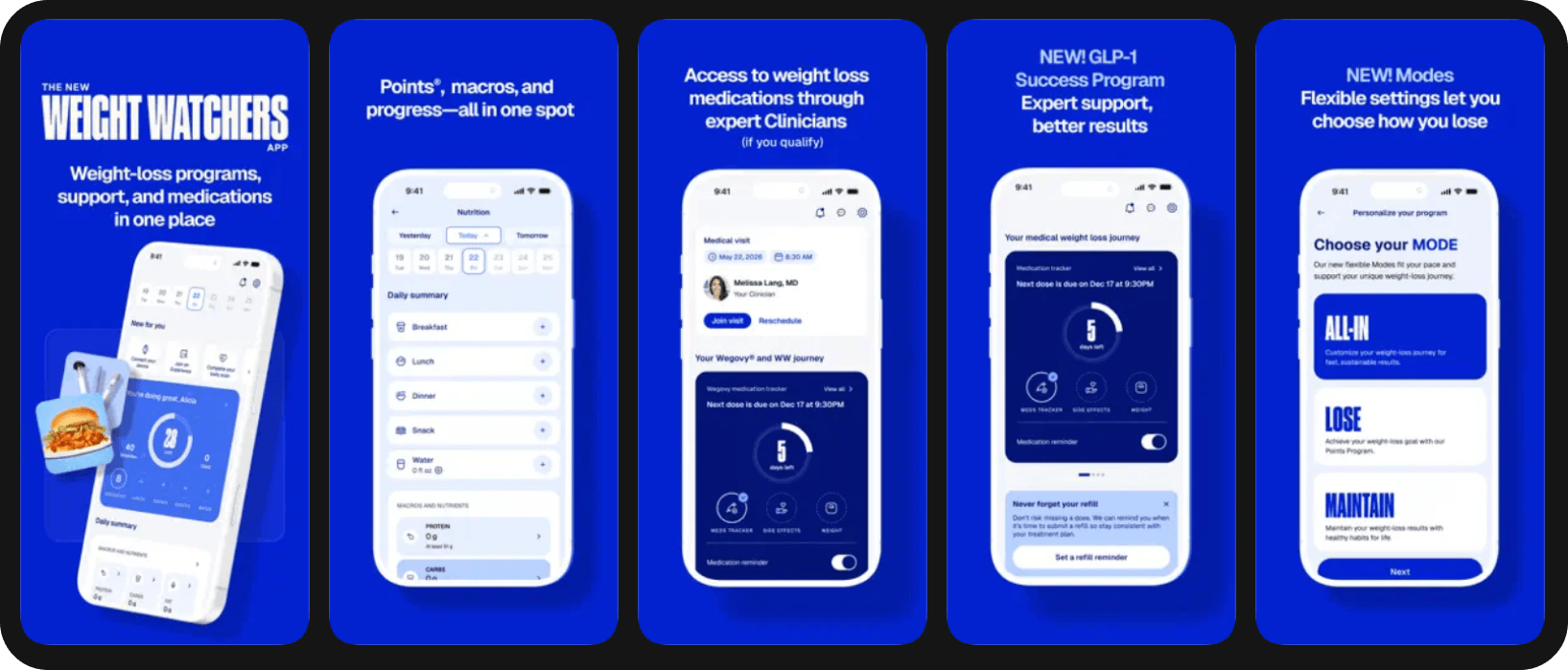
The original behavior-change weight loss program, modernized for digital. WW combines a points-based food system with habit coaching, group support, and optional GLP-1 medication access through its Clinic offering.
- Best for: Adults who have tried calorie counting before and quit, anyone who knows their issue is more about habits than knowledge, people who want a coach feel without an in-person dietitian's price tag, GLP-1 users wanting medication plus behavior support in one program.
- Watch out for: Subscription-only at a higher price point than pure trackers, may not protect lean mass as well as higher-protein programs.
MyFitnessPal: calorie tracker + device integrations
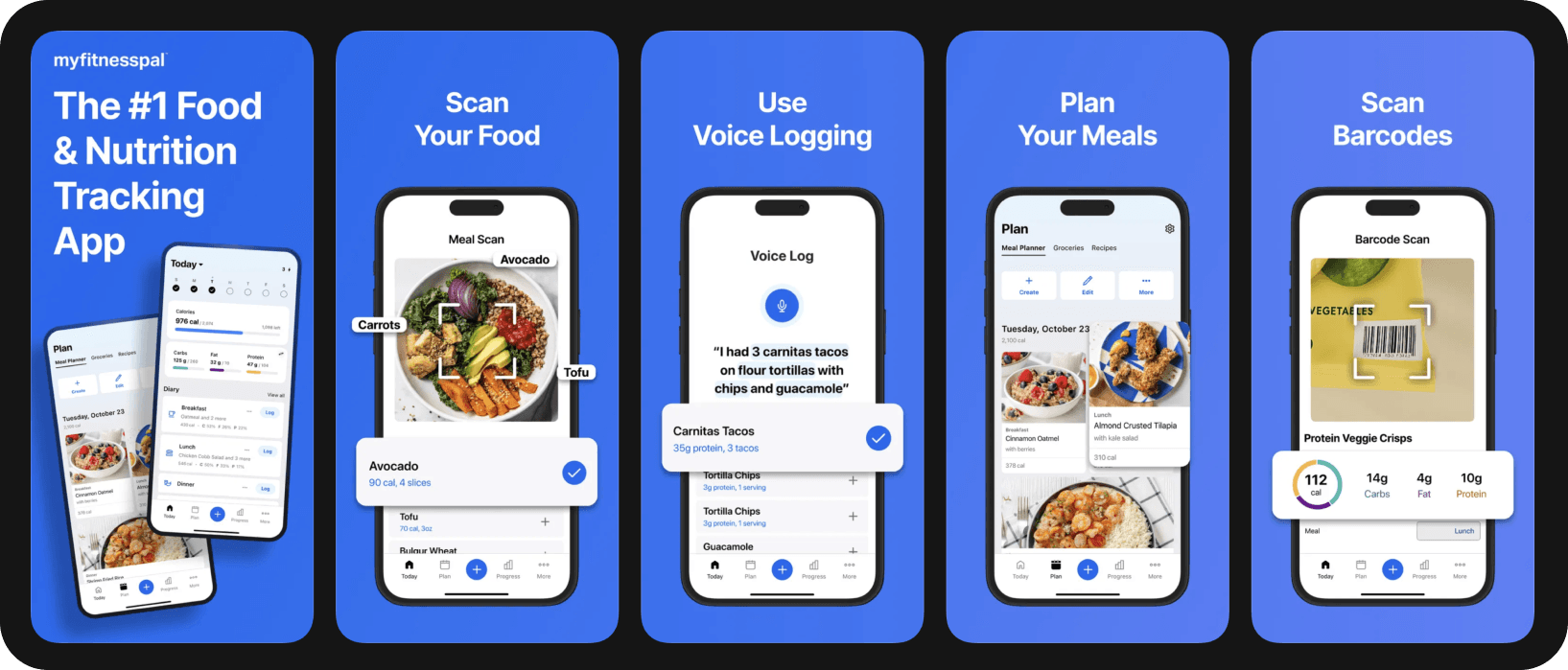
The most recognizable name in food tracking, with one of the largest databases and broad device integrations. In recent years, MyFitnessPal has restructured its tiers, moving some previously free features to Premium and offering meal planning in its top Premium+ tier, a change that's prompted mixed reactions from long-time users. The large database means you're unlikely to miss a packaged food or restaurant item, though the crowdsourced nature does come with accuracy trade-offs that peer-reviewed studies have documented.
- Best for: Users already paying for Premium who use the device ecosystem (Strava, Peloton, Under Armour integrations), people whose food fits the brand-name and chain-restaurant items the database covers well.
- Watch out for: Crowdsourced database accuracy, increasingly aggressive paywall.
Cal AI: AI photo logger + low-friction entry
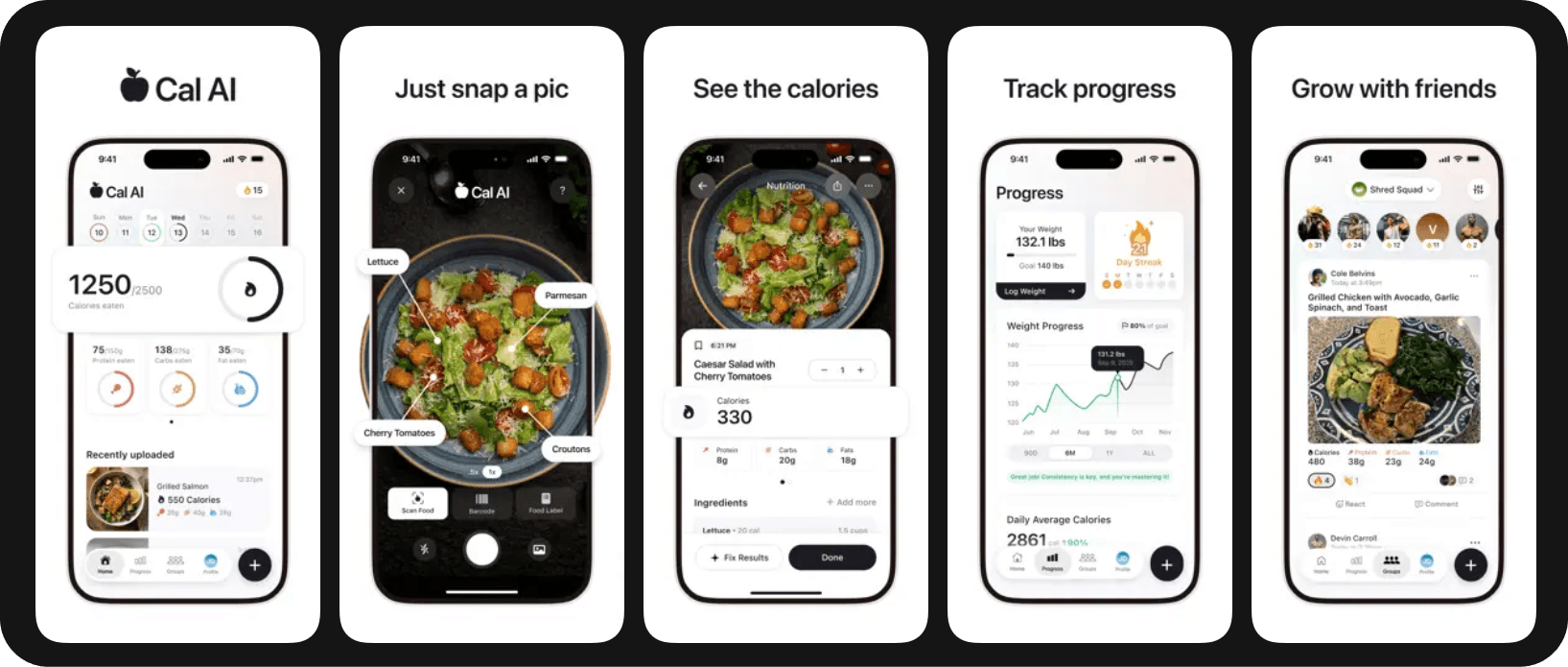
The AI-photo-first calorie tracker that surged in 2024–2025 and got acquired by MyFitnessPal in March 2026. Snap a photo of your meal, the AI identifies items and portions, and the calorie estimate appears in seconds. Post-acquisition, Cal AI continues as a standalone app while its tech powers MyFitnessPal's photo logging.
- Best for: Casual trackers who quit traditional apps because logging felt like work, beginners who want a low-friction entry point to calorie awareness, users who eat home-cooked meals that don't have barcodes.
- Watch out for: Photo accuracy varies by meal type (mixed dishes, sauces, hidden ingredients are harder), less depth than purpose-built macro trackers, ongoing changes to the product following the MFP acquisition.
Cronometer: micronutrient tracker
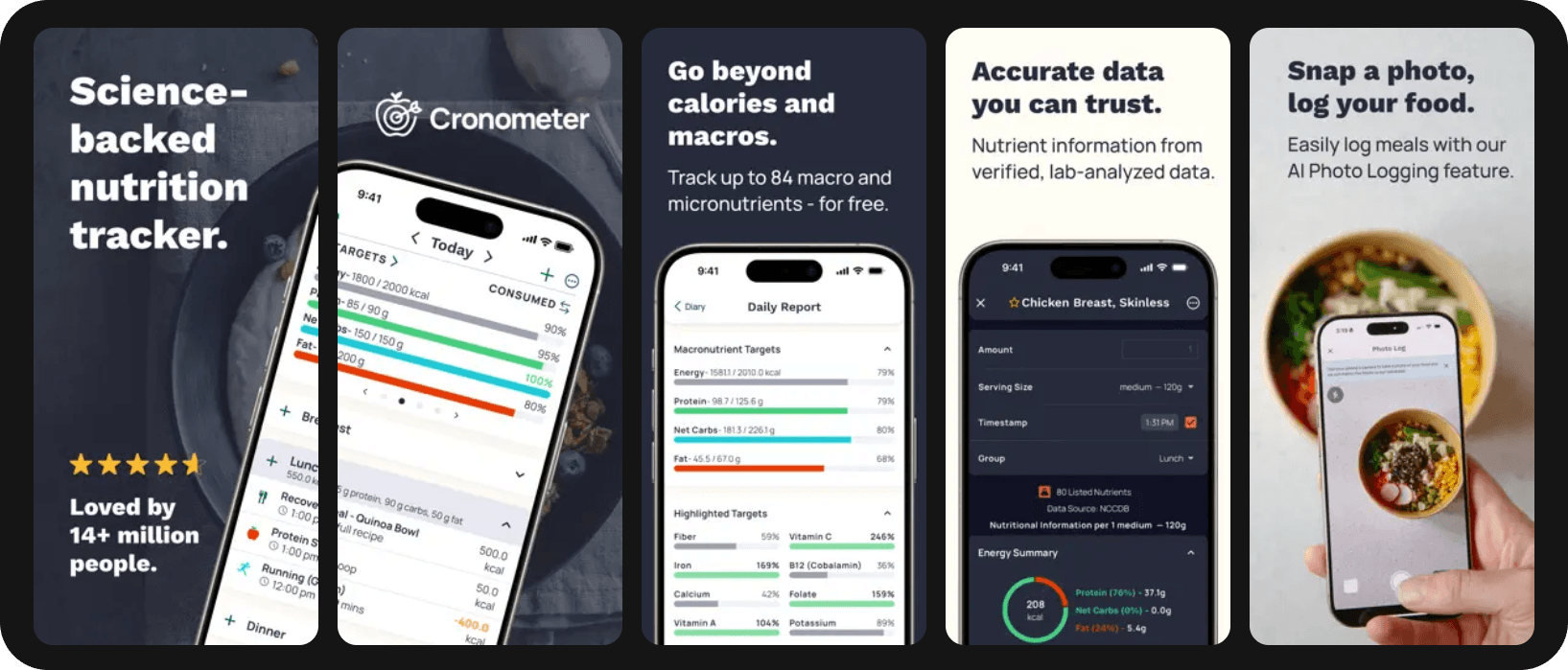
Cronometer's defining strength is data quality and micronutrient depth. Its database pulls from verified sources (USDA, NCCDB) rather than user submissions, and it tracks 84+ nutrients.
- Best for: Adults managing a specific nutrient (iron, B12, sodium, vitamin D), restrictive diets (vegan, keto, low-FODMAP), athletes recovering from REDs (Relative Energy Deficiency in Sport), users whose doctor flagged a specific dietary concern.
- Watch out for: Interface feels more clinical than consumer-friendly, smaller packaged-food database than competitors, no integrated meal planning.
So which app fits you?
In the US in 2026, the best dieting app depends on what kind of dieter you are. The "feature comparison" approach to picking an app misses the bigger question: what's actually breaking down in your dieting attempts? If it's hunger, you need a verified database with a real protein floor. If it's psychology, you need behavior coaching. If it's decision fatigue, you need a meal plan. If it's logging friction, you need AI-assisted entry. If it's GLP-1 maintenance, you need medical supervision plus structure and protein.
Match the app to your barrier and your odds go up. Pick the most famous app and your odds go up by less.
Try it free → Start Fitia's free trial and see what an auto-generated meal plan plus a verified database feels like.
Fitia: Meal Plans & Calorie Counter
We use cookies to enhance your browsing experience, analyze site traffic, and personalize content. By clicking 'Accept', you consent to the use of these technologies in accordance with our Privacy Policy.