Best Dieting Apps in 2026
The best dieting apps in 2026 do both: tracking what you eat and telling you what to eat next.
- Published
- 9 min read
- 9 min read
TL;DR: The best dieting apps in 2026 don't force you to choose between tracking what you eat and being told what to eat. They do both. Fitia combines meal plans, in-depth tracking, and a 24/7 AI coach in one app. Yazio leans meal-plan-first with fasting and themed diets. Noom layers behavioral coaching onto its tracker. MacroFactor focuses on precision macro management for users who already know their food. MyFitnessPal has the legacy database but is struggling to keep up.
Table of contents
- The two types of "dieting app" (and why they're converging)
- Regular tracking apps only record what you ate
- Meal planning apps tell you what to eat
- How dieting apps have adapted to a wider audience
- What makes a dieting app effective in the long term
- Coaching combined with apps outperforms apps alone
- Logging frequency predicts weight loss
- Meal planning supports dietary adherence
- An RD on why convergent apps are winning in 2026
- The best dieting apps in 2026
- Fitia
- Yazio
- Noom
- MacroFactor
- MyFitnessPal
- Conclusion
The two types of "dieting app" (and why they're converging)
The phrase "dieting app" covers two very different products, and most roundup articles treat them as interchangeable. They are not.
Regular tracking apps only record what you ate
A traditional calorie counter app is a digital food diary. You decide what to eat, then log it. The app calculates calories and macros and shows you how you're tracking against your goals. These apps worked very well in the past when calorie counting was more of a niche activity and the barrier to entry was higher, since most users back then knew what their diet should look like and were likely using the apps for bodybuilding or professional sports.
Meal planning apps tell you what to eat
A meal planner app is a digital diet planner. You provide your goals and preferences, and the app generates a specific meal plan with recipes calibrated to your target intake. You follow the plan (adjusting as needed) rather than deciding from scratch every day. This model has also been around for a long time, but it was usually more casual and limited in plan personalization and nutrition insights.
👉 You may also like: The Best App That Tells You What to Eat to Lose Weight — a deeper look at meal plan generation for weight loss.
How dieting apps have adapted to a wider audience
Today there's a clear shift underway. Some traditional calorie trackers have started adding meal planning features, while planners have deepened the personalization and macro and micronutrient insights they offer their users. Some apps, like Fitia, were built to do both from the start.
This has happened because more and more people are trying calorie counting and want to know how much protein or how many vitamins they're consuming daily. These people, however, may run into difficulties if they don't pick the right app. A traditional tracking app presents you with a blank diary and a calorie target. It records your progress, but it doesn't help you decide what to do next. A meal planner can fill that gap, but it may not be enough once you go deeper into the demands of your nutrition and health (or if you're already there).
Most people searching for a "dieting app" should probably look for one that combines both. They want help deciding what to eat, and they want the tools to go deeper into their nutrition as they move from beginner into intermediate and advanced stages.
What makes a dieting app effective in the long term
The evidence on app-based weight loss points consistently to two factors: consistency of use, and the support system around the user. The apps performing best in 2026 are the ones that build both layers into a single product instead of forcing users to choose between them.
Coaching combined with apps outperforms apps alone
A 2022 systematic review and meta-analysis in JMIR mHealth (Antoun et al., 2022) of 34 randomized controlled trials found that smartphone apps combined with behavioral support produced significantly greater weight loss than passive tracking, with the combination of a mobile app, tracker, and behavioral intervention reaching 3.77 kg of weight loss at six months. The review's headline finding was that the human coaching layer (not the app's features in isolation) drove the strongest results.
The structure around the user matters as much as the tracking features themselves. In Antoun's review, that structure came from a human coach. In modern dieting apps, the equivalent layer is the meal planning and adaptive guidance that sits on top of the tracker, lowering the daily decision burden for users who would otherwise stall.
Logging frequency predicts weight loss
A 2020 study in BMJ Open Diabetes Research & Care (Painter et al., 2020) analyzed 2,037 participants in the Livongo digital diabetes prevention program over 12 months and found that each submitted food log was associated with an additional 0.23 kg of weight loss. Highly engaged participants lost 6.6% of starting body weight; 25% of them lost 10% or more.
The takeaway is that how often you log is a stronger predictor of outcomes than whether you started. Apps that lower the friction around what to eat next, how to log a restaurant meal, or how to adjust your macros make daily logging sustainable, which is why "convergent" apps (calorie tracking + meal planning, sometimes with an additional coaching layer like AI coach) tend to hold users longer than pure trackers.
👉 This may interest you: How to Choose a Food Diary App That Lasts Past Week Three — what separates the apps people stick with from the ones they abandon.
Meal planning supports dietary adherence
A 2019 cross-sectional study in IJERPH (Hanson et al., 2019) of first-year college students found that meal-planning behaviors were independently associated with greater dietary variety and lower BMI, even after controlling for cooking frequency.
The mechanism (pre-committing to what you'll eat removes a daily decision-making burden) transfers to any dietary goal where adherence is the bottleneck. This is more evidence that apps which bundle meal planning into the tracking experience close the gap that old school apps leave open.
An RD on why convergent apps are winning in 2026
The most underappreciated shift in nutrition app marketing is the move away from "tracking what you eat vs. helping you decide what to eat" as separate categories. For years, apps positioned themselves as one or the other. The apps producing the strongest results in 2026 are the ones doing both.
For people with nutrition backgrounds or established eating habits, a pure tracking app still works. But for the majority of clients who come to me after abandoning calorie counters, the issue is structural: they downloaded a tracking-only app, opened it, saw an empty food diary, didn't know what to enter, and deleted it.
For these people the fix is not more discipline, but an integral plan that meets them at both ends of the experience: telling them what to eat at the start, and giving them the tracking depth to explore their nutrition as they get more advanced.
The practical guidance I can give you if you belong to the second group of people is to look for an app that handles both layers in one place. If you only need a meal planning app today, that's fine, but is better to pick one that lets you grow into more in-depth tracking when your goals change. The category is moving in that direction, and the users seeing the best long-term results are the ones already on convergent platforms.
The best dieting apps in 2026
Fitia
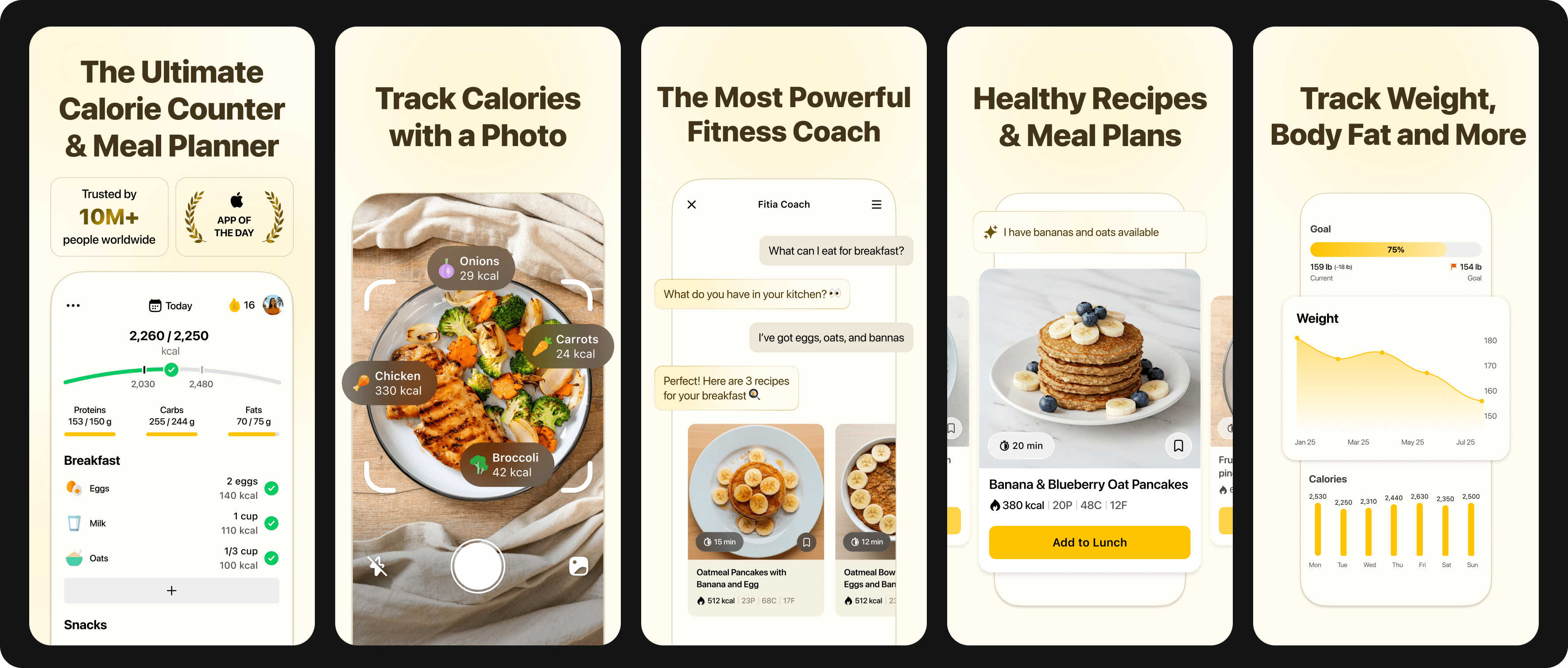
Fitia handles both layers in one place. After onboarding, it generates a personalized weekly meal plan calibrated to your calorie and macro targets, so you don't start with a blank diary. The plan recalibrates as your weight changes, and the same app handles in-depth macro tracking (including micronutrients), AI logging, and a verified 10M+ food database when your goals get more advanced. It also includes a 24/7 AI Coach that can help with any nutrition-related question.
👉 Curious how AI nutrition coaches actually stack up against human dietitians? Read Can an AI Nutrition Coach Replace a Dietitian?
Yazio
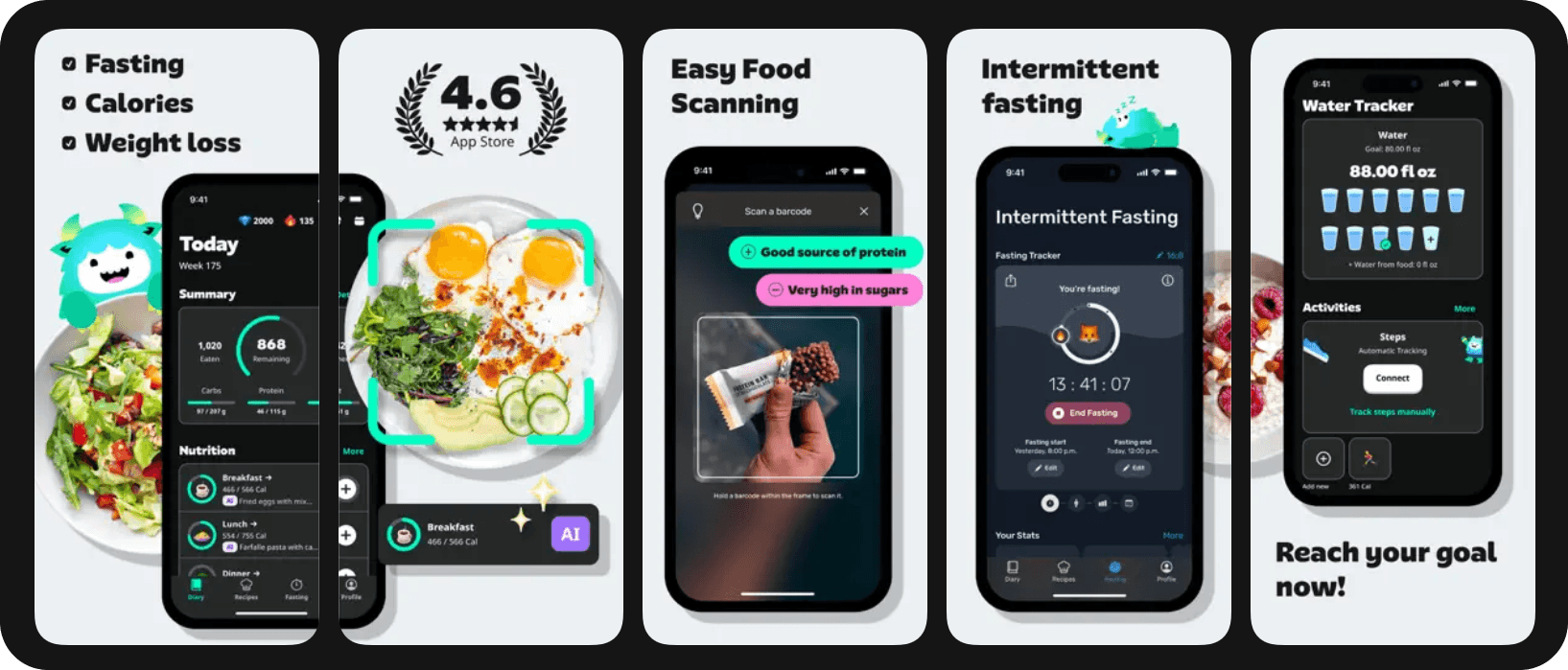
Yazio leans into the meal planning side, with a curated recipe library, themed diet plans (Mediterranean, keto, high-protein, vegan), and built-in intermittent fasting timers paired with a calorie tracker. The tracking layer covers the basics without going as deep as the precision-focused apps. Best for users whose entry point is fasting or themed diets rather than detailed macro work.
Noom
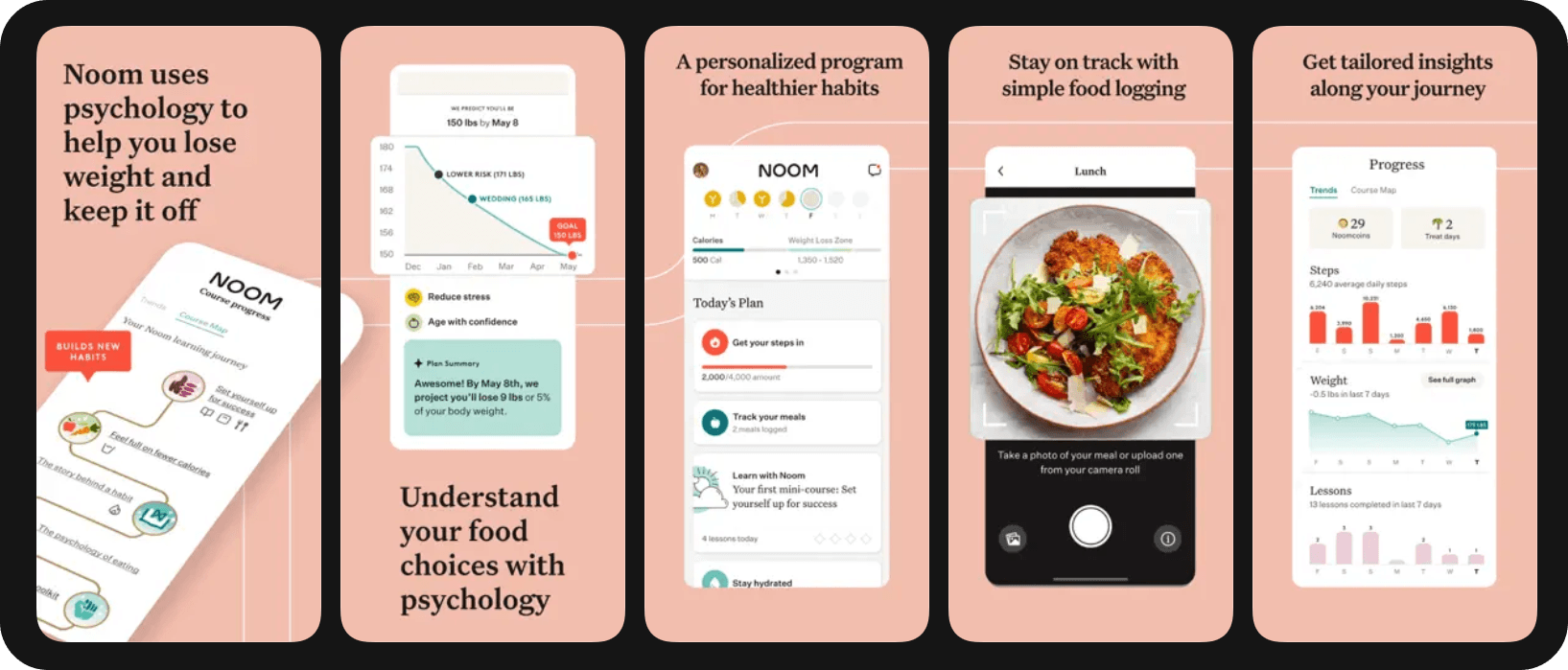
Noom approaches dieting through a behavioral and psychological lens, with daily psychology-based lessons, 1-on-1 coach chat, and a color-coded food system (green/yellow/orange). Premium users also get the Welli Meal Planner, an AI feature added in 2025 that suggests recipes based on dietary preferences and cooking time. The trade-off is price: Noom sits at the high end of the category, well above the other apps on this list.
MacroFactor
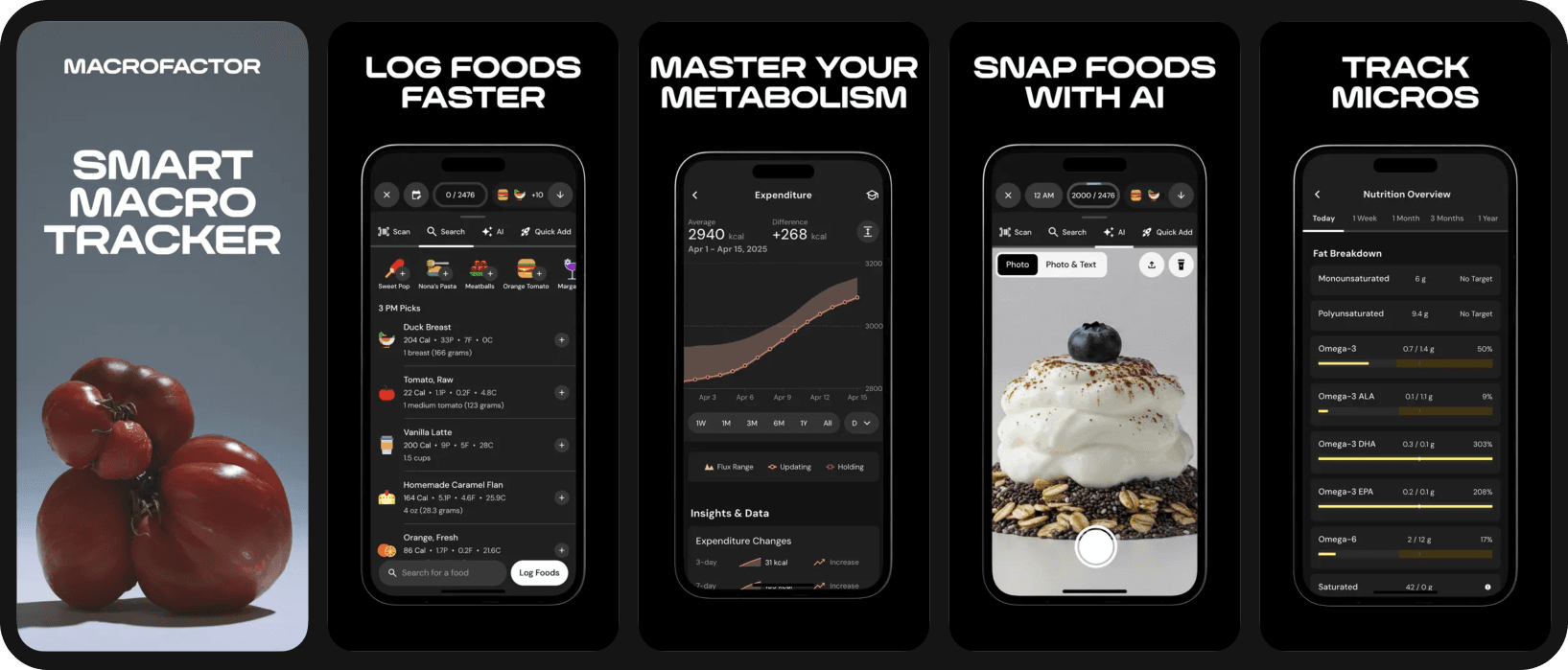
MacroFactor won't tell you what to eat, but it does have an adaptive algorithm that calculates and adjusts your macro targets based on your actual weight trends over time. Best for users with an already established nutrition sense who need help managing their macros.
MyFitnessPal
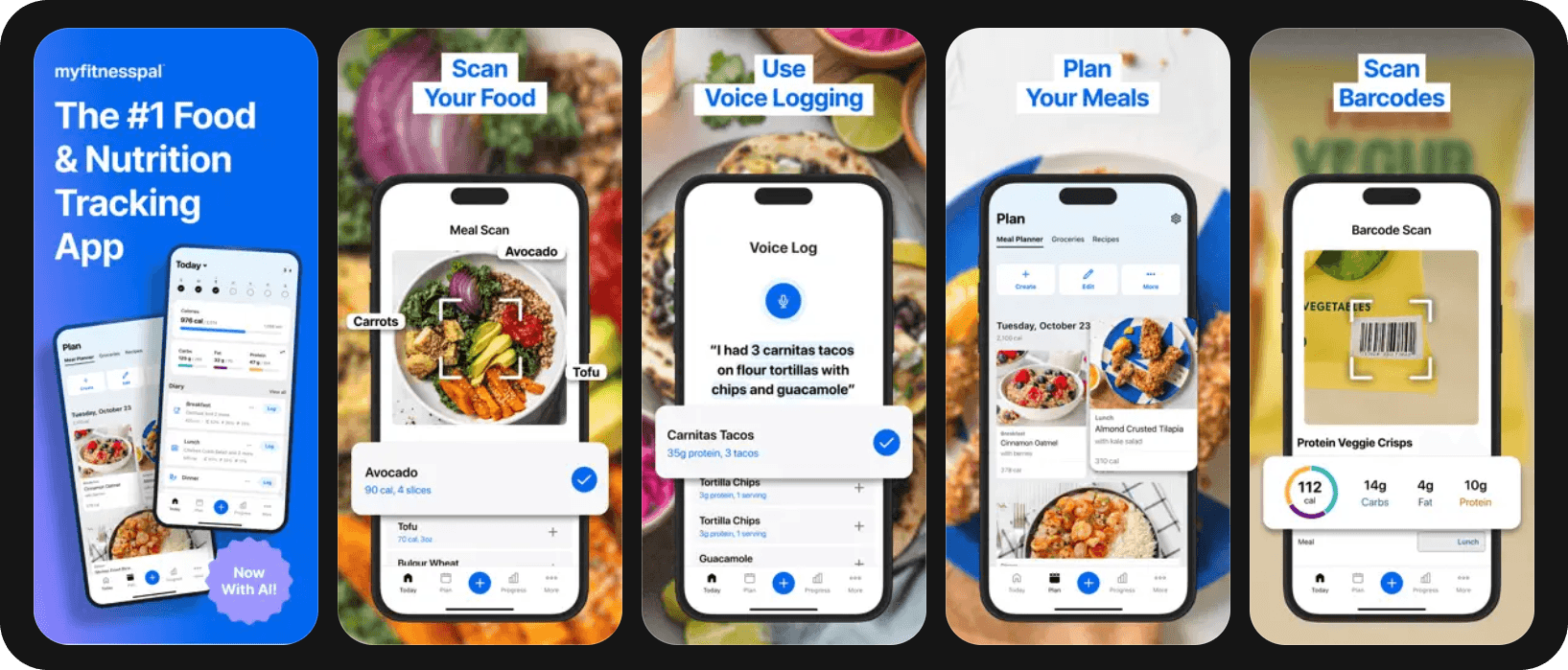
MyFitnessPal currently sits in a strange place. It has one of the largest food databases in the category and years of experience in the market, but it's fallen behind on innovation. The recent AI rollout was meant to close that gap, but it drew pushback from users over how abruptly it was implemented. Meal planning was added to the Premium+ tier, which is good, but it also means full access costs more than already effective convergent trackers, without adding much beyond what those alternatives already offer.
Conclusion
The best dieting app in 2026 is the one that meets you where you are and grows with you. For most people starting a diet, that means a convergent app: one that tells you what to eat at the start and gives you the tracking depth to explore your nutrition as your goals get more demanding. Pure tracking apps still serve users with established dietary structures, and pure planning apps work for casual starts, but the category is moving toward apps that do both. The framing has shifted from "which type of app do I need" to "which app will still serve me a year from now." Pick the one that won't make you switch.
About the Author
 | Marcela Perez-Albela R. is a registered dietitian and nutritionist from Universidad Peruana de Ciencias Aplicadas (UPC), with more than half a decade of experience in nutrition and public health, including clinical work through SERUMS with the Peruvian Air Force. At Fitia, she works as Operations Analyst, combining her nutrition background with her drive to make healthy living more accessible. She believes small, consistent changes in how people eat can make a real difference in their lives. |
References
- Antoun, J., Itani, H., Alarab, N., & Elsehmawy, A. (2022). The Effectiveness of Combining Nonmobile Interventions With the Use of Smartphone Apps With Various Features for Weight Loss: Systematic Review and Meta-analysis. JMIR mHealth and uHealth, 10(4), e35479. https://doi.org/10.2196/35479
- Painter, S. L., Lu, W., Schneider, J., James, R., & Shah, B. (2020). Drivers of weight loss in a CDC-recognized digital diabetes prevention program. BMJ open diabetes research & care, 8(1), e001132. https://doi.org/10.1136/bmjdrc-2019-001132
- Hanson, A. J., Kattelmann, K. K., McCormack, L. A., Zhou, W., Brown, O. N., Horacek, T. M., Shelnutt, K. P., Kidd, T., Opoku-Acheampong, A., Franzen-Castle, L. D., Olfert, M. D., & Colby, S. E. (2019). Cooking and Meal Planning as Predictors of Fruit and Vegetable Intake and BMI in First-Year College Students. International journal of environmental research and public health, 16(14), 2462. https://doi.org/10.3390/ijerph16142462
Related articles
 Fat Loss
Weight Loss Calorie Chart (2026): How Many Calories to Eat by Body Weight, Sex, and Activity
See how many calories to eat to lose weight, with simple charts by body weight and activity, plus why your target changes as you go.
Read article Fat Loss
Best Personalized Meal Planning App for Weight Loss in the US (2026): Comparing Apps That Plan Around Your Likes, Dislikes & Food Preferences
Compare Fitia, Eat This Much, Lifesum & Mealime on how deeply each one plans meals around your likes, dislikes, and dietary patterns for weight loss.
Read article Fat Loss
Best Calorie Deficit App to Diet Without Feeling Hungry in the US (2026): Satiety-Focused Reviews & Feature Comparison
Compare the best calorie deficit apps in the US for 2026. See which satiety features actually keep you full so you can stick to a deficit for months.
Read article