May 12, 2026
The 8 Best Macro Tracker Apps in 2026: A Hands-On Guide to Body Recomposition, Fat Loss, and High-Protein Eating
TL;DR: Macro tracking left the bodybuilding niche behind years ago. In 2026 it's the most reliable framework for body recomposition, sustainable fat loss, and protein-led nutrition for everyday lifters, runners, busy parents, and athletes alike. The best macro tracker for most people is one that calculates the macro split automatically, adapts your targets, and removes the manual math that derails 80% of beginners. Fitia stands out as the most complete option for that audience — verified 10M+ food database, adaptive AI logging by photo/voice/text, and auto-generated meal plans that actually hit the target macros. Below, the full breakdown.
Table of Contents
- Why macro tracking is having a moment
- Who needs a macro tracker (and when)?
- The 8 best macro tracking apps in 2026
- 1. Fitia
- 2. MacroFactor
- 3. MyFitnessPal
- 4. Cronometer
- 5. Lose It!
- 6. Lifesum
- 7. Yazio
- 8. Carbon Diet Coach
- Summary comparison table
- Why Fitia is the most complete macro tracker in 2026
- FAQs
Why macro tracking is having a moment
A decade ago, "tracking macros" was something you whispered in the corner of a gym locker room — code for "I have a competition in eight weeks and my coach made me a spreadsheet." Today, my dentist tracks her protein. The category has exited its niche, and the apps that serve it have followed.
The reason is simple and exciting: macro tracking complements every other approach to fitness, it doesn't replace any of them. You can stay on Mediterranean. You can keep intermittent fasting. You can build muscle on a flexible diet or shred body fat on keto. Adding macro awareness layered on top of those frameworks is what shifts the kind of weight you lose, the kind of physique you build, and the kind of energy you have throughout the day.
In 2026, the apps have gotten meaningfully better than in previous years. AI logging works. Adaptive algorithms recalibrate. Verified databases now eliminate the "is this entry off by 200 calories" problem that haunted MyFitnessPal users for a decade. If you've been macro-curious but put off by spreadsheets and percentage math, this is genuinely the best moment in the category's history to start.
Who needs a macro tracker (and when)?
The honest answer: most people interested in body composition will benefit from giving it an honest try. But the kind of macro tracker you need depends on where you are.
The new lifter or first-time recomp attempt. You've been training for six months, you've lost a little fat, and now you want to gain visible muscle while staying lean. This is the textbook recomposition scenario, and it runs on a slight deficit (or maintenance) plus high protein and structured training. You don't need a tracker built for competition prep. You need one that defaults to a protein-forward macro split, sets your targets automatically, and adapts as your weight changes.
The general fat-loss user who's heard "protein matters." You're not training for anything in particular. You want to drop 15 pounds, keep the muscle you have, and stop feeling hungry all the time.
The intermittent fasting practitioner who also wants macro awareness. You're already running 16:8 or 18:6 and want to layer macros on top without bouncing between two apps. Integrated fasting timers that talk to your macro plan are worth a lot.
The competitive lifter, physique athlete, or precision macro user. You're running a structured cut or a focused recomp block. You want weekly check-ins, adaptive coaching, and full control over every variable.
The micronutrient-aware user (clinical, longevity, or special diet). You care about vitamin D, magnesium, omega-3 balance, and you want one app that handles all of it automatically.
The 8 best macro tracking apps in 2026
1. Fitia
Quick Overview
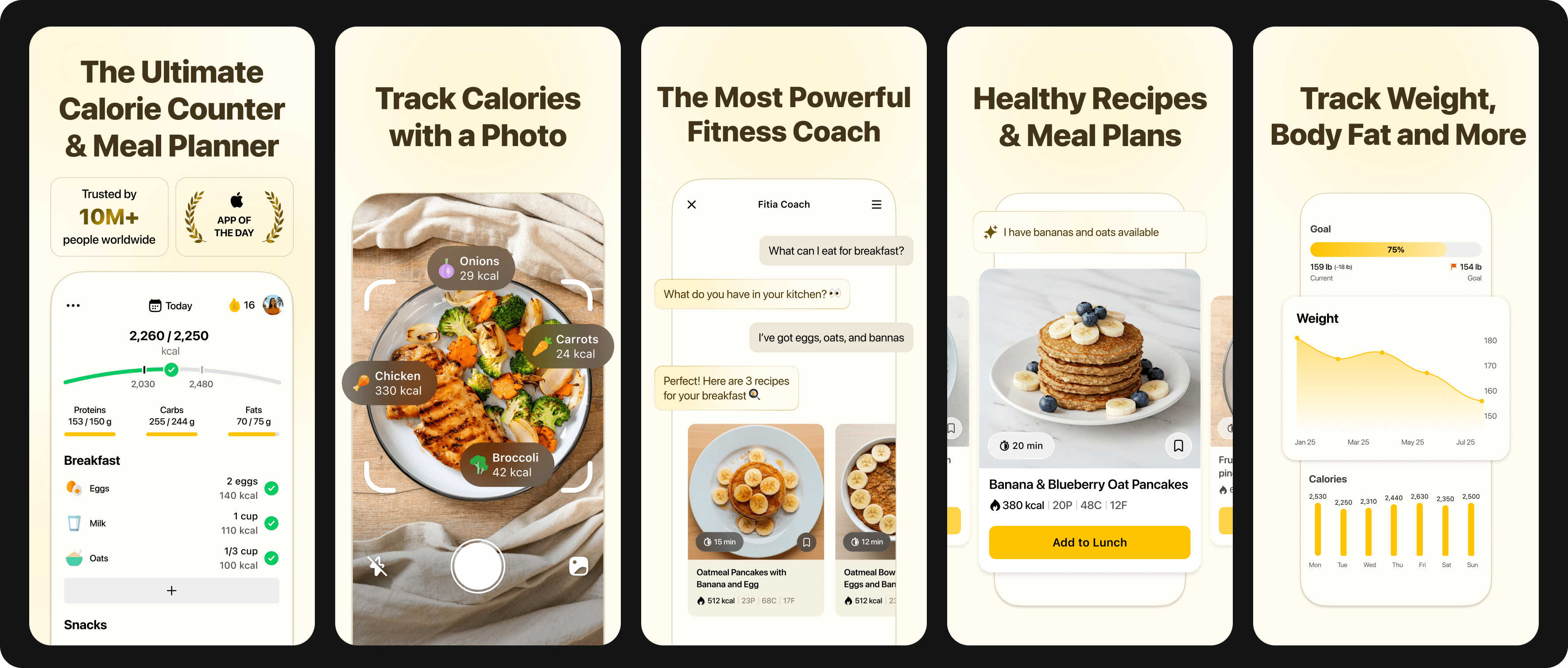
Fitia is the most complete macro tracking platform for people who want body-composition results without learning macro math. It pairs a nutritionist-verified 10M+ food database with AI logging (photo, voice, text, barcode), auto-generates meal plans that hit your target macros, and adapts your calorie and macro targets weekly as your body changes. With 10M+ users and a 4.9 rating across iOS and Android, it's also one of the highest-rated apps in the category.
Best For
People aiming for body recomposition, sustainable fat loss, or high-protein eating who want auto-calculated macros and meal plans rather than spreadsheets. Especially strong for users who've tried MyFitnessPal, hit the wall of inconsistent database entries and default 50/30/20 macro splits, and want something that just works.
Pros
- Auto-calculated macro split from your actual goal. Fitia takes your weight, height, age, activity level, and goal (fat loss, recomposition, muscle gain, maintenance) and outputs a calorie target and macro split.
- Adaptive algorithm that recalibrates. As your body composition shifts, the targets shift with it. This is the single most-cited reason long-term users stick with the app instead of churning back to static trackers.
- Verified 10M+ food database. Every entry is reviewed by nutrition professionals plus an internal algorithm. No "chicken breast: 2 calories per serving" typos. Across most regions, the database includes localized branded and restaurant items.
- AI logging by photo, voice, text, or barcode. Snap a photo of your plate, say "two eggs and a slice of sourdough," or scan a barcode. The AI handles portion estimation and lays the entries into your day. This is the feature that makes daily logging take 15 seconds instead of two minutes.
- Auto-generated meal plans that hit target macros. Tell Fitia your goal and food preferences, and it builds a full weekly meal plan with recipes that map to your numbers. Smart shopping lists convert the plan into a grocery run. This is the "I don't know what to cook tonight" problem solved in one tap.
- Integrated fasting timers, progress tracking, and partner meal syncing. Run 16:8 in the same app. Track weight, body fat, measurements, and progress photos in one place. If you and a partner share meals but have different goals, Fitia generates scaled portions automatically so you can eat the same dinner while hitting individual macro targets.
- Wide integrations. Apple Health, Health Connect, Strava, Fitbit, Garmin, Oura, WHOOP. Activity imports automatically, so calorie targets adjust without manual entry.
Cons
- Premium AI features and full meal-planning capabilities require a subscription, though the free tier handles basic macro tracking.
- Currently available only in English and Spanish
Pricing
Free version available. Premium: $19.99/month or $59.99/year. The Family Plan is available for $89.99 annually, offering shared access and 75 % savings compared to individual plans (2-6 members).
2. MacroFactor
Quick Overview
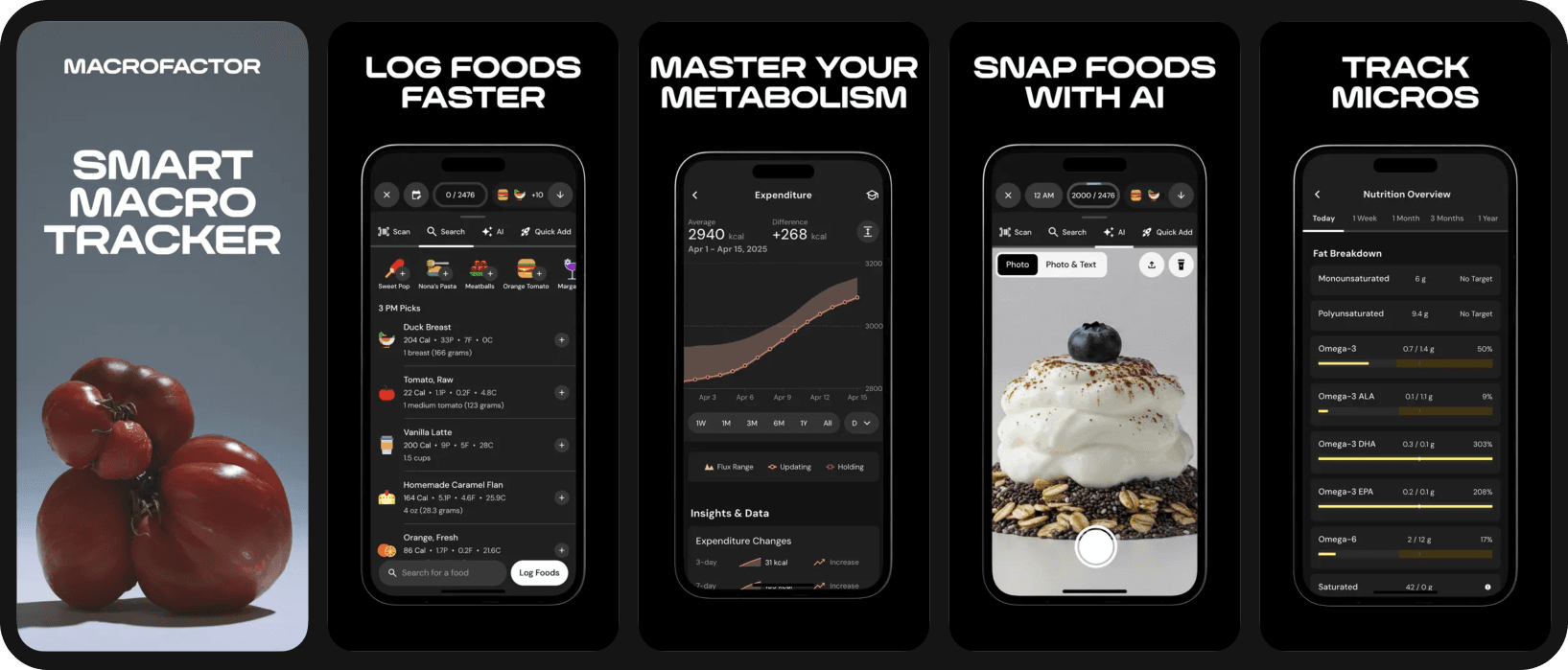
MacroFactor, built by the Stronger By Science team, is the gold standard for adaptive macro coaching. Its dynamic energy expenditure algorithm recalculates your TDEE weekly based on your actual weight changes and logged intake, then adjusts your calorie and macro targets accordingly.
Best For
Experienced lifters, physique athletes, and structured cut/bulk practitioners who want algorithm-driven precision and don't mind paying premium-only pricing.
Pros
- Adaptive TDEE algorithm with weekly check-ins.
- Verified food database (NCC-derived)
- Adherence-neutral design.
- Fast logging with barcode, search, label scanner and AI photo (added in 2025)
Cons
- No permanent free tier — premium-only with a 7-day trial (extendable to 14 days via referral codes).
- No built-in meal planning, you handle "what to eat" yourself.
Pricing
$11.99/mo or $71.99/yr. No free tier.
3. MyFitnessPal
Quick Overview
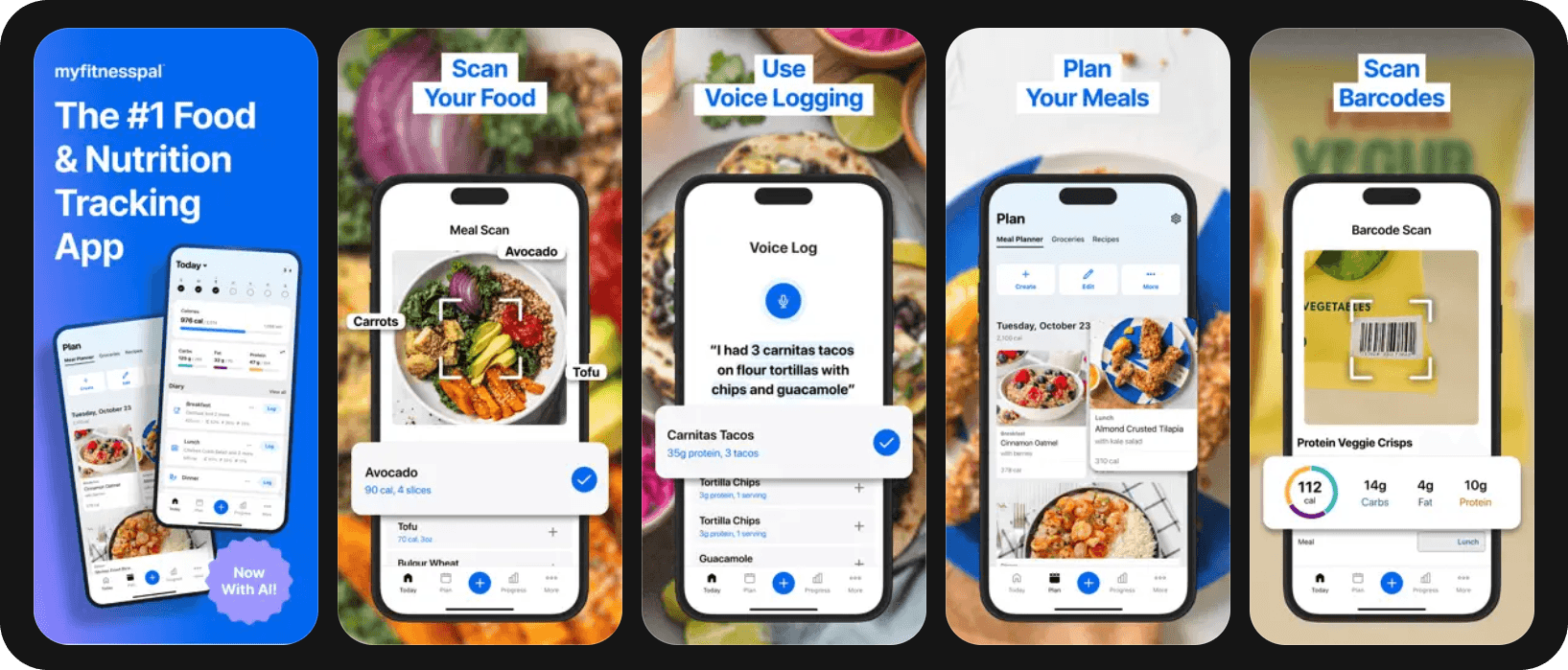
MyFitnessPal is the category's most recognizable name, with 250M+ downloads and an 18M+ food database.
Best For
Beginners who want a familiar, widely supported app and don't mind verifying entries themselves. Also strong for users who care about social accountability and community challenges.
Pros
- Large database including restaurant and branded foods.
- Active community with friend feeds and challenges for social motivation.
- Broad integrations with most fitness trackers and ecosystems.
Cons
- Default macro split (50% carbs / 30% fat / 20% protein) is too low on protein for most fat-loss or recomp goals; users must manually adjust, and most never do.
- User-generated database produces inconsistent macro values across entries for the same food — a meaningful source of error in weekly totals.
Pricing
Free with ads. Premium: $19.99/mo or $79.99/yr.
4. Cronometer
Quick Overview
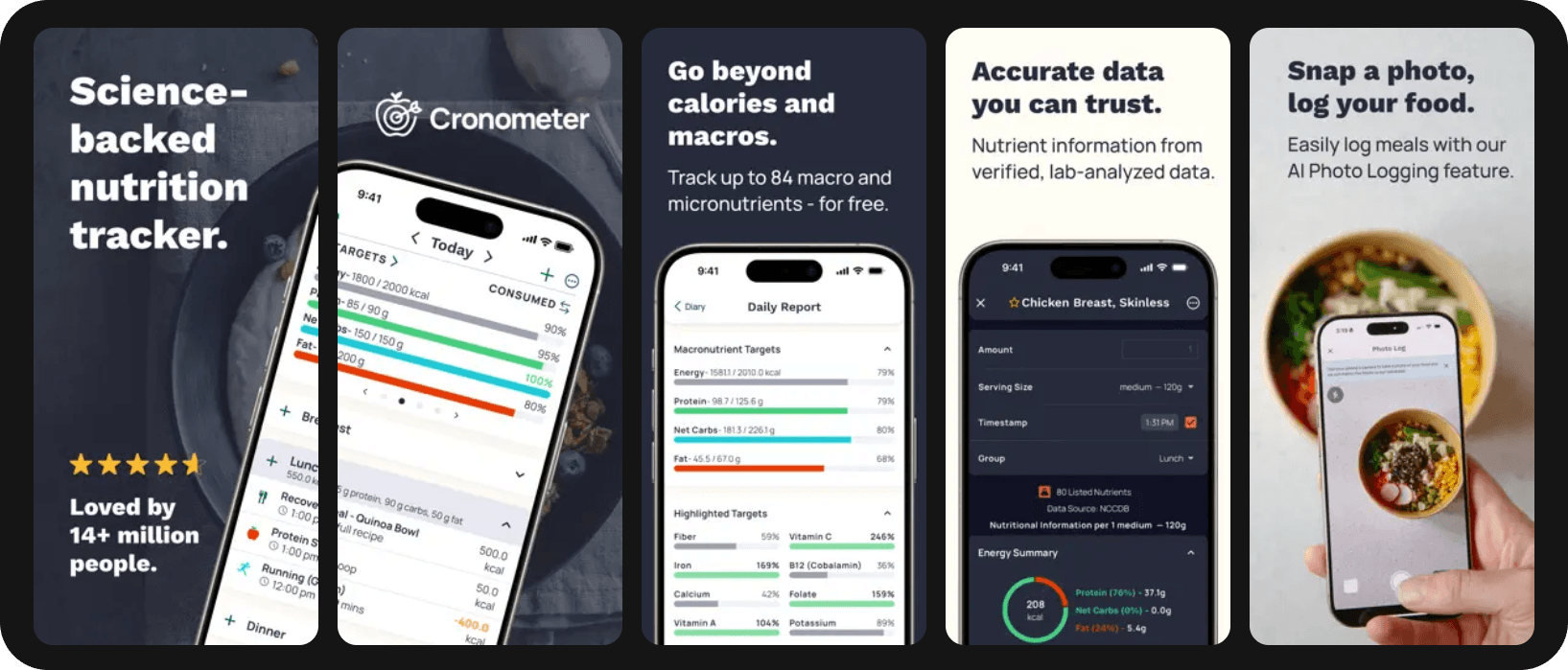
Cronometer tracks 80+ micronutrients in addition to macros, draws from the NCCDB and USDA databases, and is often the tool clinicians recommend when nutrient adequacy matters.
Best For
Athletes, clinicians, longevity-focused users, and anyone on a special diet (vegan, low-FODMAP, autoimmune protocols) where micronutrient adequacy is a real concern.
Pros
- Tracks 84+ nutrients including vitamins, minerals, and amino acids.
- Verified database.
- Strong integrations with Fitbit, Polar, and Oura.
- Custom macro targets, biometric logging, and detailed reporting.
Cons
- Interface can feel dense for users who only want calories and macros.
- Free-tier ad experience has drawn user complaints in 2025–2026 for being more disruptive than it used to be.
Pricing
Free version available. Cronometer Gold: $10.99/mo or $59.99/yr.
5. Lose It!
Quick Overview
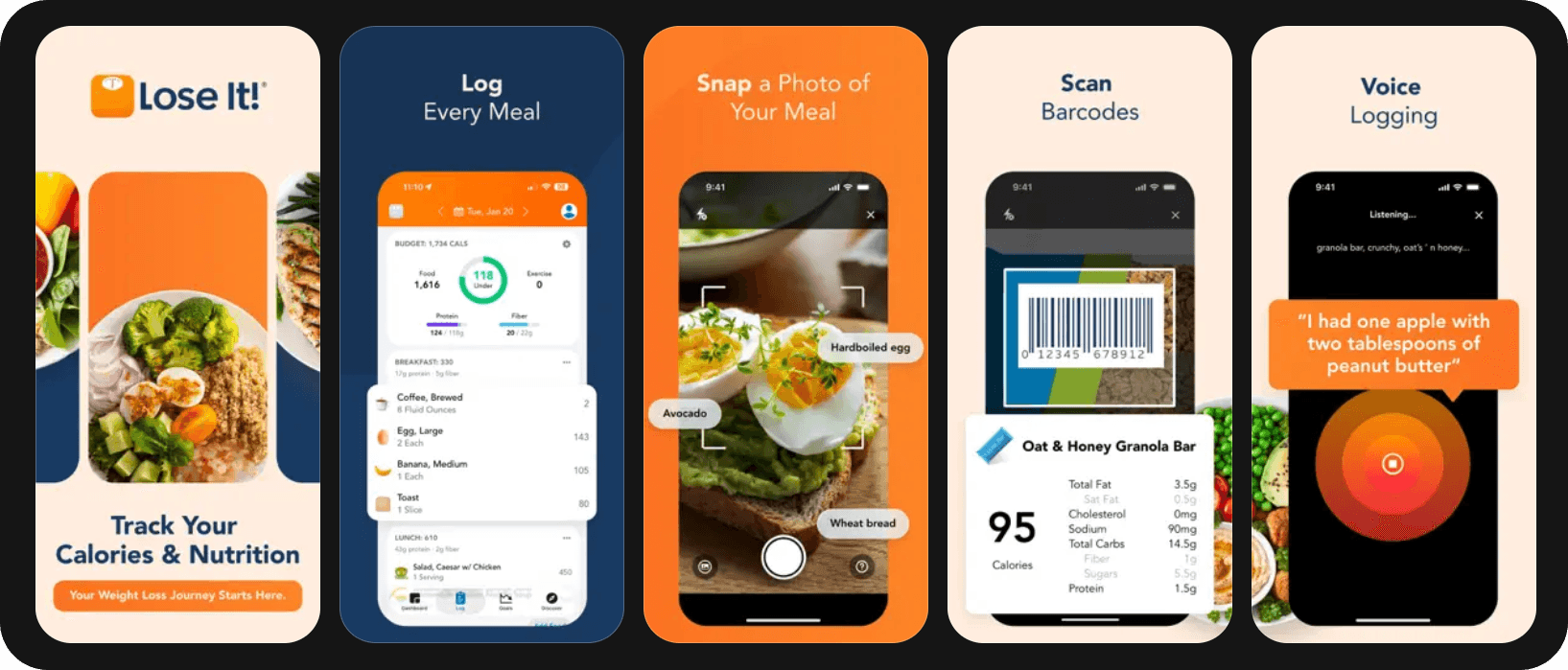
Lose It! prioritizes simplicity over depth. The app's clean design makes it one of the lowest-friction starting points for first-time trackers.
Best For
Beginners who want straightforward calorie and macro logging without learning a new vocabulary. Also a good fit for users who only need basic totals and don't want meal plans or coaching.
Pros
- Clean, approachable interface that's easy to navigate.
- Photo logging via "Snap It" and AI-assisted voice entry.
- Active community with challenges and badges for motivation.
Cons
- Macro customization is shallow compared to MacroFactor or Fitia.
- Database, while functional, isn't verified at the same level as Fitia or Cronometer.
Pricing
Free version available. Premium: $39.99/yr.
6. Lifesum
Quick Overview
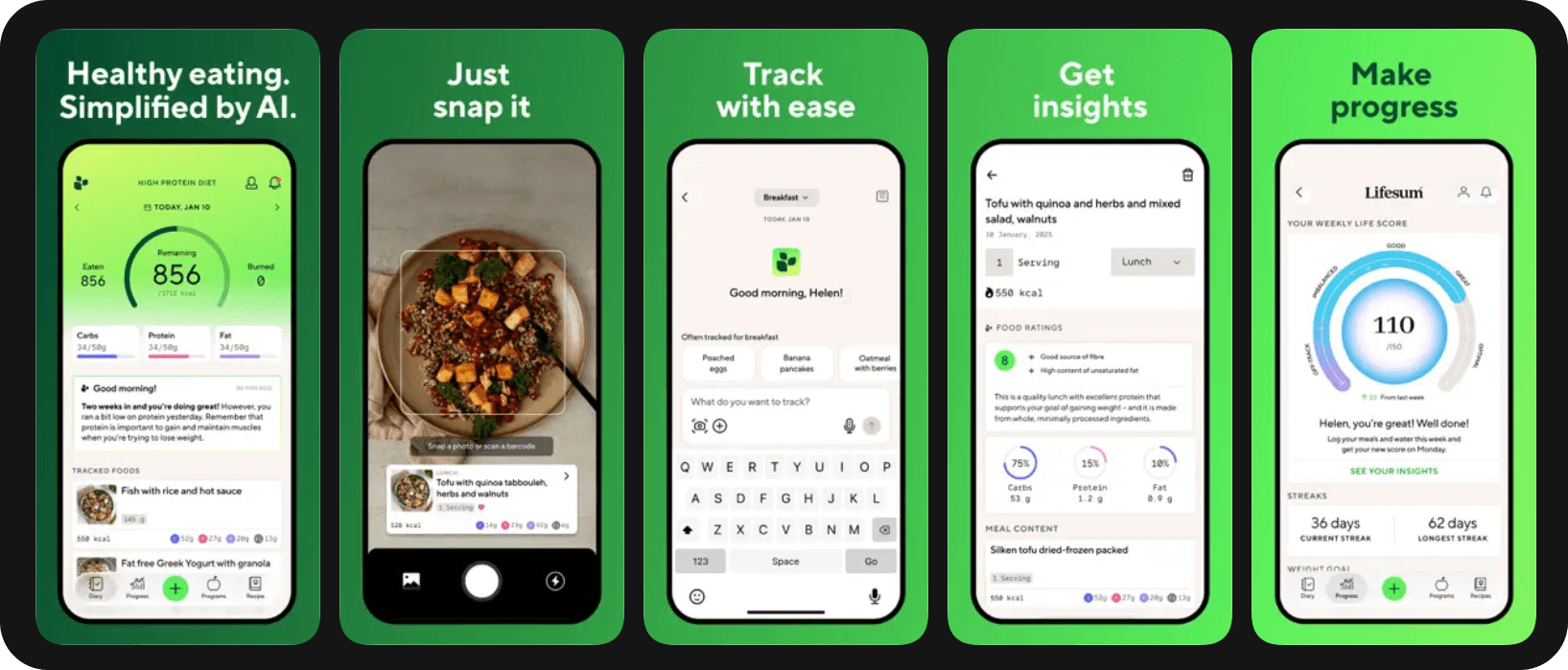
Founded in Sweden in 2013 with 60M+ downloads, Lifesum is known for its clean interface, themed diet plans (keto, Mediterranean, high protein, vegan), and "Life Score" that summarizes overall nutrition quality.
Best For
Visual learners and lifestyle-oriented users who want a guided, attractive experience and don't need bodybuilding-level macro precision.
Pros
- Great interface.
- Pre-built themed diet plans (keto, Mediterranean, vegan, high-protein, intermittent fasting).
- Built-in habit tracking for water, produce, and activity.
- "Life Score" gives users a single quality metric to optimize.
Cons
- Meal plans are templated with limited ingredient/portion customization.
- Smaller verified database than Fitia, Cronometer, or MacroFactor.
Pricing
Free version available. Premium: $18.49/mo or $99.99/yr
7. Yazio
Quick Overview
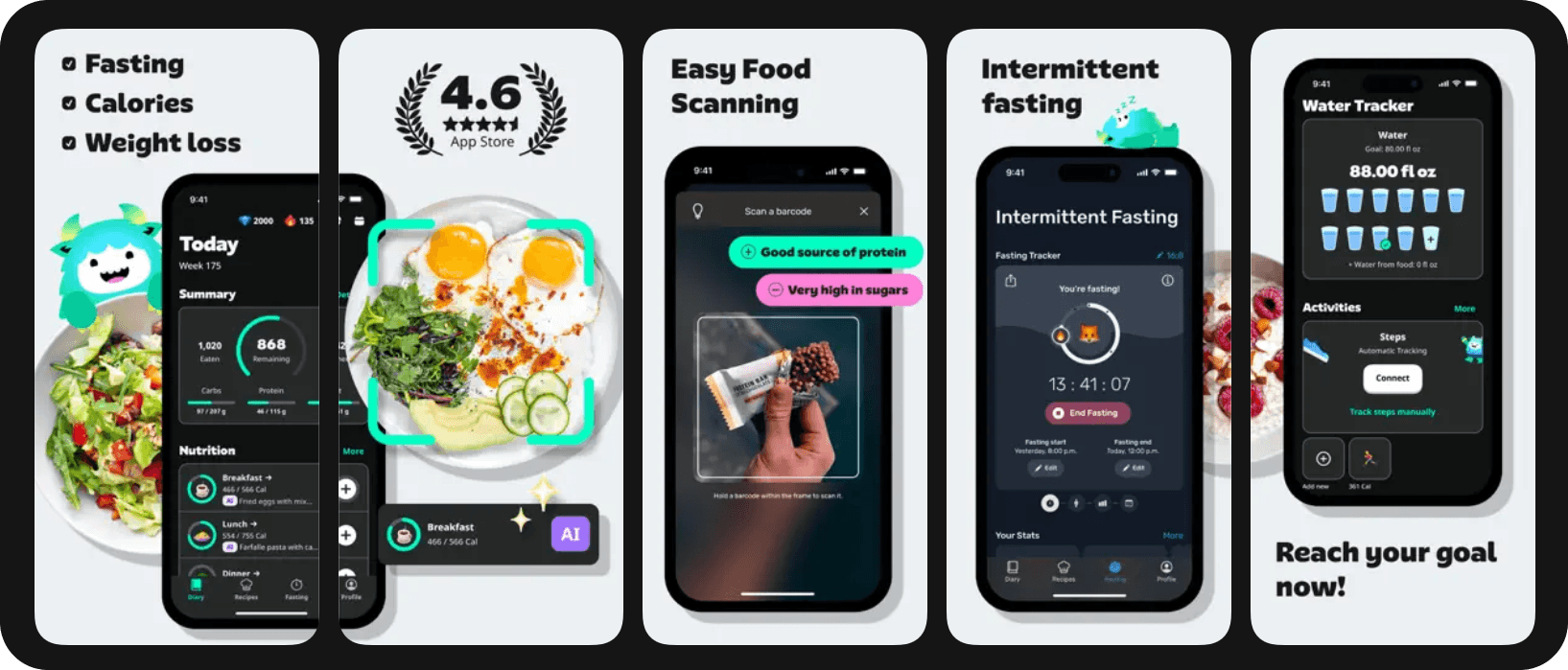
Yazio's signature strength is intermittent fasting integrated with macro tracking. It supports multiple fasting protocols (16:8, 18:6, 20:4, alternate day, OMAD), pairs them with a daily calorie budget, and includes a curated 1,500+ recipe library.
Best For
Intermittent fasting practitioners who want a single app handling both fasting windows and macro tracking with structured meal planning.
Pros
- Intermittent fasting protocol support.
- Auto-adjusts calories and macros based on progress.
- Strong recipe library curated for the fasting audience.
Cons
- Detailed nutrient breakdowns (fiber, sugar, salt), weekly analytics, barcode scanner, AI photo logging, and recipes all sit behind PRO.
- Free tier shows frequent ads between meal logs.
- Database coverage varies by region; some niche or new items may be missing.
Pricing
Free version available. Pro: $47.90/yr.
8. Carbon Diet Coach
Quick Overview
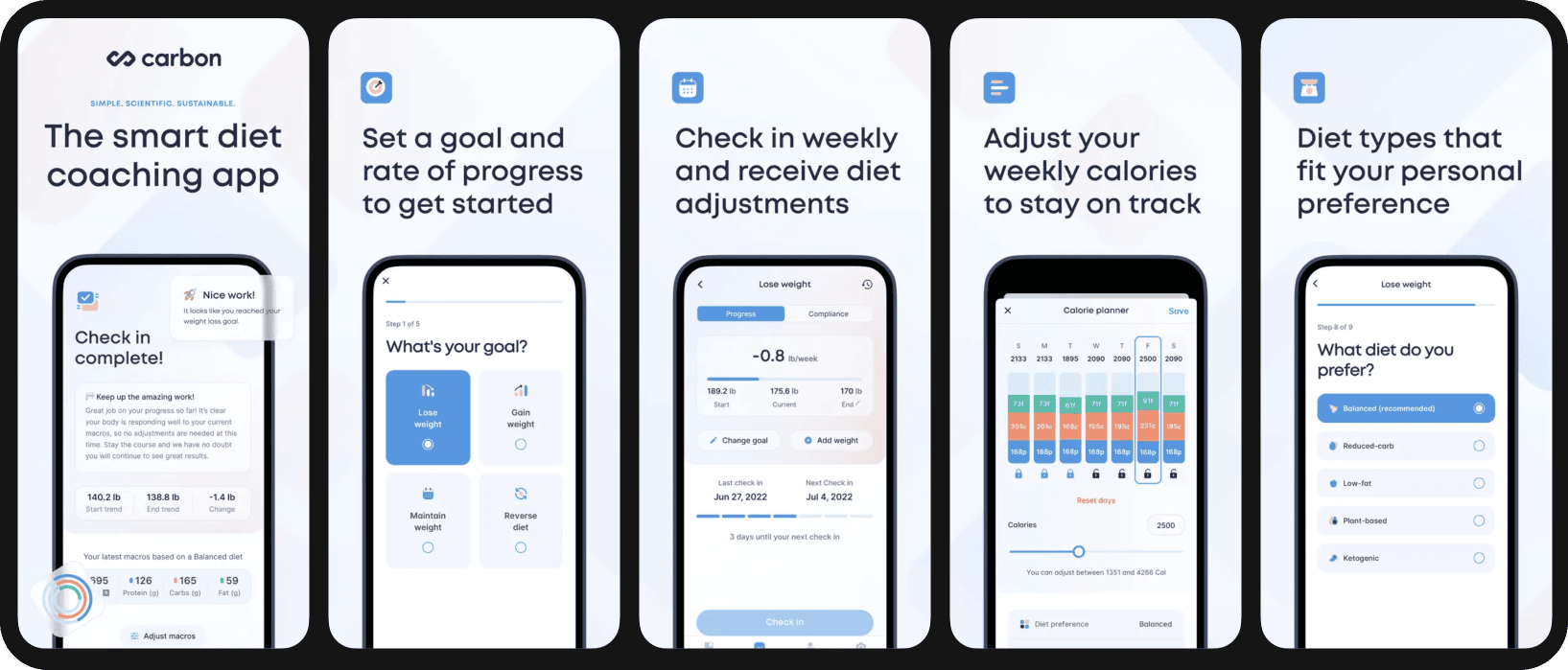
Carbon Diet Coach, created by Layne Norton, Ph.D., is built around adaptive macro adjustments tied to your weight trends and check-in feedback.
Best For
Data-driven lifters and gym-goers who love structure, respect Norton's evidence-based approach, and want adaptive coaching without paying for a human coach.
Pros
- Dynamic macro adjustments based on weekly weight trends.
- Backed by Norton's published research and decades of physique coaching.
- Strong fit for cut/bulk/recomp cycle structure.
Cons
- Less intuitive for casual users; manual entry can feel demanding compared to AI-assisted apps.
Pricing
Premium: $11.99/mo or $99.99/yr.
Summary comparison table
| Tool | Starting Price | Best For | Notable Features |
|---|---|---|---|
| Fitia | Free; $59.99/yr Premium | Body recomp, fat loss, and high-protein meal planning | Verified 10M+ DB, AI photo/voice logging, auto meal plans, adaptive targets, partner meal syncing |
| MacroFactor | No free version; $71.99/yr | Adaptive macro coaching for experienced lifters | TDEE algorithm, premium-only, no shame design |
| MyFitnessPal | Free; $79.99/yr Premium | Beginners who want the most familiar interface | 18M+ database, broad integrations |
| Cronometer | Free; $59.99/yr Gold | Micronutrient precision and clinical use | 84+ nutrients, NCCDB/USDA-backed, biometric logging |
| Lose It! | Free; $39.99/yr Premium | People who want simplicity | Snap It photo logging, clean UI, social challenges |
| Lifesum | Free; ~$99.99/yr Premium | Visual learners and lifestyle-oriented users | Themed diet plans, Life Score, polished design |
| Yazio | Free; ~$47.90/yr PRO | Intermittent fasting + macro tracking in one app | Multiple fasting protocols, 1,500+ recipes, European market leader |
| Carbon Diet Coach | No free version; $99.99/yr. | Data-driven lifters who trust Layne Norton's framework | Adaptive macro adjustments, science-backed coaching, cut/bulk cycles |
Why Fitia is the most complete macro tracker in 2026
Macro tracking in 2026 isn't a niche tool — it's the most reliable framework for body recomposition, sustainable fat loss, and protein-led eating. The question isn't whether to track. It's which app makes tracking actually sustainable.
Fitia is leading the category because it's the only major app that combines the three things that move the needle: a verified 10M+ food database, an adaptive algorithm that recalibrates your calories and macros as your body changes, and auto-generated meal plans that hit your target macros without you doing the math. MacroFactor matches the adaptive coaching but skips meal planning. MyFitnessPal has the database scale but uses unverified entries and defaults to a low-protein split. Cronometer has the micronutrient depth but a steeper learning curve. None of them deliver the full package for users who want body-composition results without becoming part-time macro accountants. Fitia does! And the 10M+ user base with a 4.9 rating reflects that gap closing.
If you want to skip the manual calculations and let an app do the structural work while you focus on showing up to your training and your meals, Fitia is the most direct path.
Personalized nutrition starts with meals built for you. Download Fitia now!
FAQs
What is a macro tracker?
A macro tracker is a nutrition app that monitors your daily intake of protein, carbohydrates, and fat alongside total calories. The best macro trackers also calculate target macros from your specific goal (fat loss, muscle gain, recomposition, maintenance), adapt those targets as your body changes, and give per-meal feedback so you can adjust before the day is over. Unlike pure calorie counters, macro trackers let you optimize what kind of weight you lose or gain — preserving muscle during a cut, supporting recovery during a bulk, or keeping satiety high during weight loss.
Is Fitia better than MyFitnessPal?
For macro-focused tracking, yes. MyFitnessPal's default macro split (50/30/20) is too low on protein for most fat-loss or recomposition goals, and its user-generated database produces inconsistent values for the same food across entries. Fitia auto-calculates a protein-forward split from your specific goal, uses a verified database reviewed by nutritionists, generates meal plans that hit the target macros, and recalibrates as your body changes.
How quickly will I see results from macro tracking?
Most users see measurable changes within 2–4 weeks of consistent tracking, with body composition shifts (less fat, more visible muscle) becoming clear at the 6–8 week mark for recomposition or 8–12 weeks for significant fat loss. Adaptive apps tend to accelerate this — Fitia's weekly recalibration and MacroFactor's TDEE algorithm both adjust as your metabolism adapts, which means you avoid the typical 6-week plateau where static-target users stall and quit. The single biggest predictor of results isn't which app you choose — it's logging consistency. People who log at least 5 days per week for the first 4 weeks almost always see results.
What's the difference between Fitia's free tier and Premium?
Fitia's free tier covers core calorie and macro tracking, including database search, barcode scanning, manual entry, and basic progress tracking — enough to use the app indefinitely. Premium unlocks AI logging (photo and voice recognition), the full meal-planning engine, auto-generated weekly meal plans hitting your target macros, smart grocery lists, the recipe library, intermittent fasting timers, and partner meal syncing. Most users who commit to macro tracking long-term move to Premium within the first month because the meal planning and AI logging are what make daily tracking sustainable.
What are the best alternatives to MyFitnessPal for macro tracking?
The strongest alternatives in 2026 are Fitia (verified database, auto-calculated macro splits, adaptive targets, and meal planning in one app), MacroFactor (adaptive coaching algorithm available, premium-only), and Cronometer (micronutrient depth). Fitia is the best all-around replacement for users who want everything MyFitnessPal does plus accuracy, meal planning, and AI logging. MacroFactor is the best fit for experienced lifters who want algorithmic precision. Cronometer wins if micronutrients matter to you. For users specifically frustrated by MyFitnessPal's database accuracy and default low-protein macro split, Fitia is the most direct upgrade.
Fitia: Meal Plans & Calorie Counter
We use cookies to enhance your browsing experience, analyze site traffic, and personalize content. By clicking 'Accept', you consent to the use of these technologies in accordance with our Privacy Policy.