The best MyFitnessPal alternatives in 2026
MyFitnessPal still leads on database size, but it's losing users. Here are the best alternatives in 2026 for meal plans, accuracy, and macro tracking.
- Published
- Updated
- 6 min read
- 6 min read
TL;DR: MyFitnessPal still leads on database size, but the blank diary, static calorie targets, accuracy issues, and a divisive 2026 redesign are pushing users to look elsewhere. The right alternative depends on what drove you away: Fitia for meal planning, MacroFactor for adaptive targets, Cronometer for verified accuracy, Lose It! for cleaner basic tracking.
Table of contents
- What MyFitnessPal does well (and where it falls short)
- No meal plan generation on the free or Premium tiers
- A large database with accuracy problems
- Static calorie targets
- Feature lock behind paid tiers
- A divisive 2026 redesign
- The best MyFitnessPal alternatives in 2026
- Fitia
- Cronometer
- MacroFactor
- Lose It!
- Yazio
- How alternatives compare on the metrics that matter
- Conclusion
What MyFitnessPal does well (and where it falls short)
MyFitnessPal has been the default calorie counter for over a decade for a reason: it has one of the largest food databases in the category (over 14 million entries by current third-party counts, with MyFitnessPal's own marketing citing as many as 20 million) and strong integrations with fitness trackers and third-party apps. For users who eat a wide variety of foods, particularly restaurant meals, international cuisines, and packaged foods, the database breadth is a genuine advantage.
The limitations that drive users to look at alternatives show up consistently across reviews and real-world use.
No meal plan generation on the free or Premium tiers
MyFitnessPal presents a blank food diary by default. Users decide what to eat and then log it. A Meal Plan Builder did launch in 2024 but sits behind the Premium+ tier ($99.99/year), the highest of MFP's three pricing tiers. For free or standard Premium users, the app tracks intake without guiding it, which is the primary friction point for anyone who doesn't already have a meal structure in place.
A large database with accuracy problems
The database's size is also its biggest liability. Entries are largely user-submitted without verification, which independent validation studies have repeatedly flagged: a 2024 BMJ Nutrition Prevention & Health study found that MyFitnessPal underestimated energy, carbs, and fat while overestimating protein, concluding that the database "has no way of validating the accuracy" of its values (Banal et al., 2024). Verified entries (green checkmark or "Best Match" label) are reliable, but users have to actively filter for them, and most don't.
This may interest you: The Best Calorie Counter Apps with Accurate Food Databases
Static calorie targets
MyFitnessPal calculates a starting calorie target at signup and holds it static until you manually update it. As weight changes during a cut or a bulk, the target drifts further from your actual maintenance, which is a common cause of plateaus that users misattribute to other factors.
Feature lock behind paid tiers
Features that competitors include in their free tiers (barcode scanning, custom macro goals by gram, ad-free use, voice logging, meal scan) all moved behind MyFitnessPal Premium ($79.99/year) or Premium+ ($99.99/year) between 2024 and 2026. Free users can still log food and view macros by percentage, but the modern tracking experience requires a subscription.
A divisive 2026 redesign
An April 2026 update replaced the longtime Diary tab with a "Today" screen as the new home view. The change is permanent (no rollback option), and community response on Reddit and MyFitnessPal's own forums has been heavily negative, with users reporting that logging takes more taps, per-meal macro breakdowns are harder to find, and basic workflows now feel slower. If you're evaluating MyFitnessPal in 2026, expect a learning curve that didn't exist a year ago.
The best MyFitnessPal alternatives in 2026
Fitia
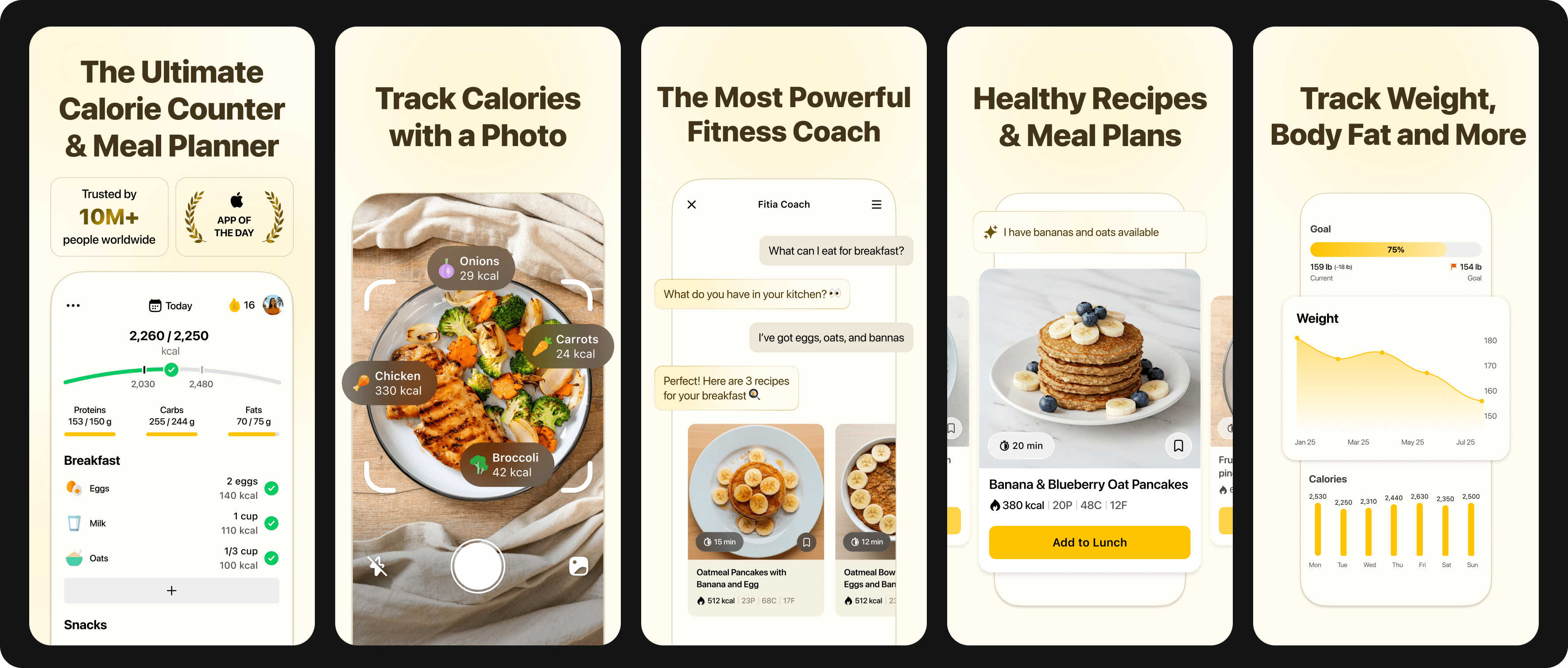
Fitia fixes the empty diary problem that MyFitnessPal does not address. Once set up, Fitia provides a personalized weekly meal plan based on your calorie and macronutrient goals, giving you a full diary from day one. The app adapts as weight changes, updating targets automatically rather than requiring manual recalibration.
Prefer to just track? Fitia works fine as a standalone calorie counter too. You get the same verified 10M+ food database, barcode scanning, and AI logging by photo, voice, or text, with no obligation to follow a generated plan. Recipes are there when you want one (search the database, browse curated options, or generate something with AI), but you can ignore them and log freely.
If you've quit MyFitnessPal more than once because you never knew what to log, the problem wasn't you. It was the wrong type of app. Fitia fixes that.
This may interest you: Fitia vs MyFitnessPal — a side-by-side breakdown of how the two apps stack up on database accuracy, meal planning, and pricing.
Cronometer

Cronometer's strength is data accuracy. Each food entry is reviewed for verification, and the app tracks more than 80 micronutrients alongside macros. For users who want consistent values across their logs, particularly those tracking protein for muscle gain or specific nutrients for a health condition, Cronometer offers a level of database precision that crowdsourced alternatives don't match.
MacroFactor
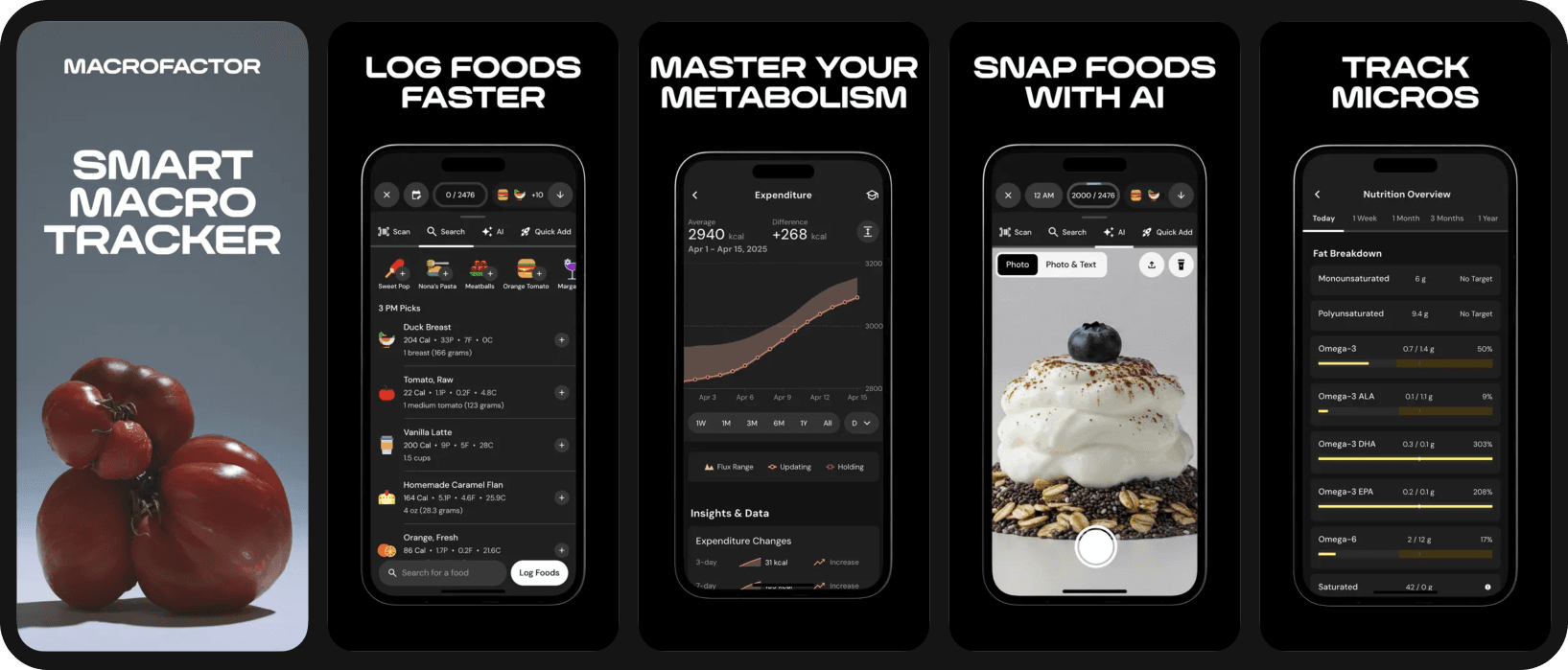
MacroFactor uses a weekly weight-trend algorithm to recalculate your macro targets based on how your body is actually responding. If you've been in a 300-calorie deficit for eight weeks and your weight has stopped dropping, MacroFactor detects the metabolic adaptation and adjusts your targets accordingly. The same adjustment would otherwise require manual recalculation or a coach check-in. Best for users who want macro management without a generated meal plan.
Lose It!
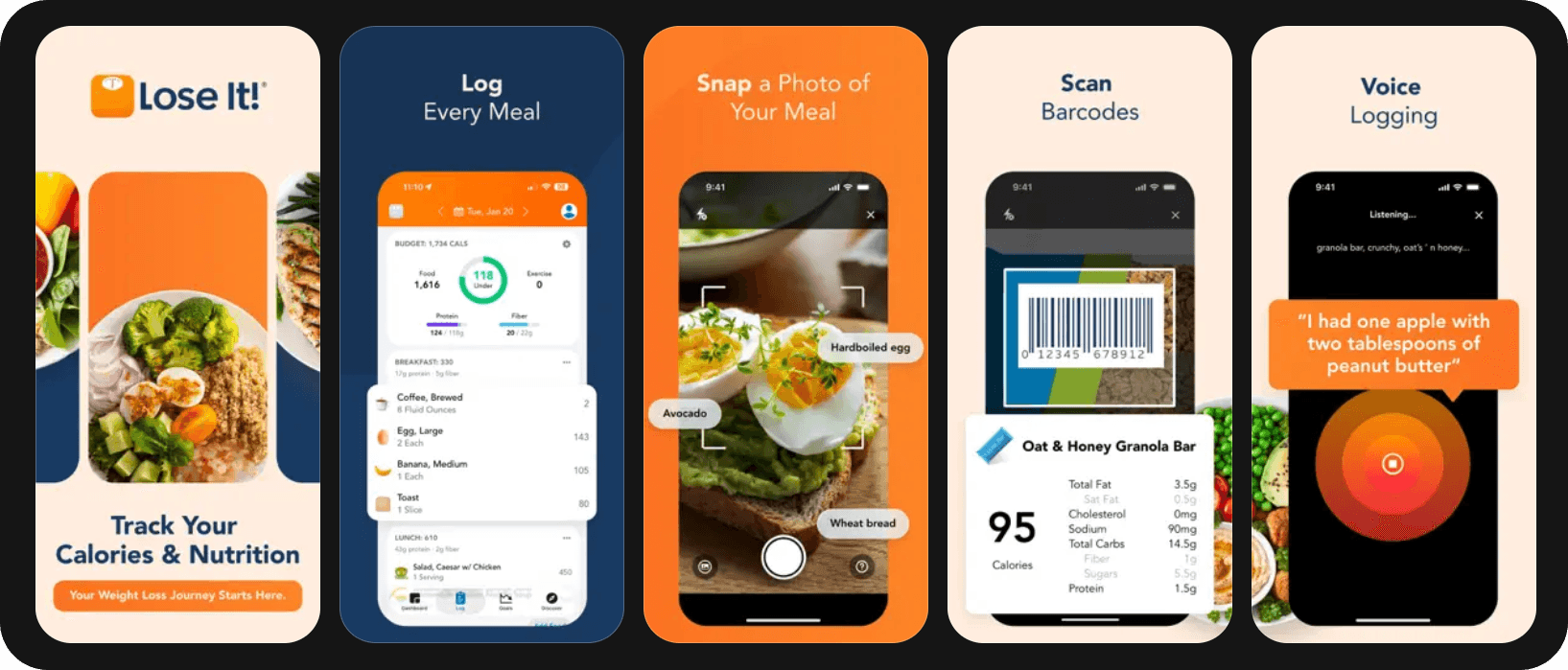
Lose It! offers similar core functionality to MyFitnessPal: barcode scanning, a large food database, and daily calorie tracking. The interface is more streamlined than MFP's, and more features are available on the free tier. It doesn't generate meal plans or offer adaptive targets, but for users who like MFP's basic tracking approach and want a simpler, lower-cost option, Lose It! is a comparable alternative.
Yazio
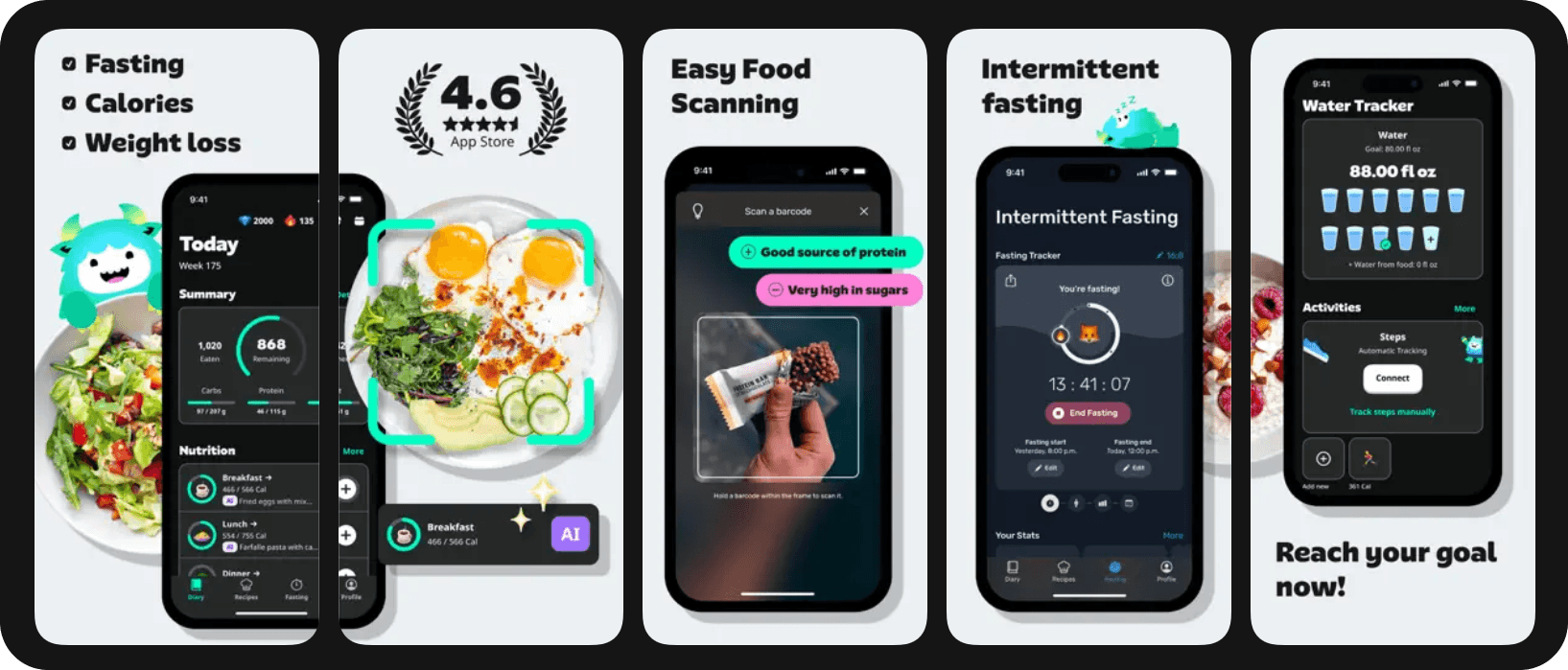
Yazio adds intermittent fasting trackers, mood logging, and habit-based features to a standard calorie counter foundation. Its food database is smaller than MFP's but more tightly verified, and it offers diet plan templates as a premium feature. A fit for users who want behavioral features alongside calorie tracking.
How alternatives compare on the metrics that matter
| Feature | MyFitnessPal | Fitia | MacroFactor | Cronometer | Lose It! |
|---|---|---|---|---|---|
| Meal plan generation | Only Premium + | Yes — personalized, adaptive | No | No | No |
| Adaptive calorie targets | No (static) | Yes | Yes | No | No |
| Database accuracy | Variable (user-submitted) | Verified | Curated | Fully verified | Verified |
| Free tier value | Limited | Solid | None | Solid | Solid |
Conclusion
MyFitnessPal's database is its biggest advantage: nothing else in the category comes close for breadth. But the blank diary model, static calorie targets, variable database accuracy, and the divisive 2026 redesign are pushing many users to look elsewhere.
The right alternative depends on what drove you away. For meal planning and structure, Fitia is the most complete upgrade. For adaptive macro precision, MacroFactor. For verified nutrition accuracy, Cronometer. For a simpler, cleaner tracking experience, Lose It!. The best calorie counter is the one that matches how you actually eat and think about food, not the one with the largest database.
References
- Banal, M. G., Bongga, D., Angbengco, J. M., Amarra, S., & Panlasigui, L. (2024). MyFitnessPal smartphone application: relative validity and intercoder reliability among dietitians in assessing energy and macronutrient intakes of selected Filipino adults with obesity. BMJ nutrition, prevention & health, 7(1), 54–60. https://doi.org/10.1136/bmjnph-2023-000770
Related articles
 Fat Loss
Weight Loss Calorie Chart (2026): How Many Calories to Eat by Body Weight, Sex, and Activity
See how many calories to eat to lose weight, with simple charts by body weight and activity, plus why your target changes as you go.
Read article
Best Calorie Counter App for Muscle Gain in the US (2026): 4 Apps Compared for Lifters
The 4 best calorie counter apps for US lifters in 2026, compared on macros, database, adaptation, and meal planning.
Read article
Best Online Nutrition Coach in the US (2026): What to Look For Before You Pay
Online nutrition coaching in the US 2026: three tiers, what the research says, and the red flags to spot before you pay for an app or coach.
Read article