Best Nutrition App for Weight Gain in the US (2026): A Practical Comparison of Calorie Surplus & Macro Tracking Tools
Compare the best weight gain apps in the US for 2026. See which calorie surplus and macro tracking features actually help you bulk lean and stay consistent.
- Published
- 9 min read
- 9 min read

TL;DR: In the US, most "calorie counter" apps are built for weight loss, which makes intentional weight gain (whether for muscle, recovery, or healthy weight restoration) surprisingly hard to track. The best nutrition app for weight gain in 2026 should automate a precise calorie surplus, lock in a protein target around 1.6 g/kg/day, and make daily logging frictionless enough to sustain long-term. This guide compares the features that actually matter for calorie surplus tracking and shows why Fitia is built end-to-end for the goal rather than retrofitted from a weight-loss approach.
Table of Contents
- Who needs a weight gain app in the US?
- What "weight gain" really means: lean bulking vs. healthy weight restoration
- The science: what a nutrition app must get right to support weight gain
- Top features to look for in a weight gain nutrition app
- How the leading apps compare for calorie surplus tracking
- Bottom line
- FAQ
Who needs a weight gain app in the US?
Three audiences search for a "best nutrition app for weight gain" in the US:
- Hardgainers and lean bulkers: typically men and women under 25 with high metabolisms or low appetite who struggle to consistently eat in a surplus.
- Adults restoring weight after illness, surgery, GLP-1 discontinuation, or REDs (Relative Energy Deficiency in Sport): a growing US segment given the post-2022 explosion of weight-loss medications and the resulting need for structured re-feeding.
- Adults with chronically low body weight : per CDC NHANES (2017–2018), an estimated 1.6% of US adults aged 20 and over are underweight (BMI < 18.5), with prevalence highest in the 20–39 age group (2.4%) — the same age group most likely to be searching for a weight-gain app. The CDC notes underweight can result from poor nutrition or underlying health conditions.
For all three, the requirement is the same: eat above maintenance, hit a protein floor, and don't drift back without noticing. A good app automates this.
What "weight gain" really means: lean bulking vs. healthy weight restoration
The Reddit-style question "best app for gaining weight" hides two very different goals:
- Lean bulking (mass gain with minimal fat): small, controlled surplus paired with resistance training. The goal is muscle. A visibly leaner, more defined physique, with the scale number serving as a check on the process rather than the point of it.
- Healthy weight restoration: a larger surplus is fine, since the goal is rebuilding body mass after illness, surgery, or undereating, not optimizing body composition.
Most generic calorie counters treat "gain weight" as a single toggle that just adds 500 kcal to maintenance, which works for restoration but is too aggressive for clean lean gain. The best nutrition app for weight gain should let you choose the pace of gain (slow, moderate, fast) and recompute targets as your weight changes, instead of locking you into a fixed number on day one.
The science: what a nutrition app must get right to support weight gain
Three evidence-based mechanics determine whether a tracking app will actually deliver gain instead of just counting food.
A small, reliable caloric surplus
In an 8-week parallel-groups trial in Sports Medicine - Open, 21 resistance-trained lifters were randomized to maintenance calories, a 5% surplus (MOD), or a 15% surplus (HIGH) while performing supervised resistance training 3 d/wk.
The HIGH group gained more body fat than the maintenance group, with weak to no additional benefit to muscle thickness or squat strength. The authors concluded that "faster rates of BM gain (and by proxy larger surpluses) primarily increase rates of fat gain rather than augmenting 1-RM or MT" (Helms et al., 2023).
The takeaway for lean gain is that a small surplus in the range of roughly 5% above maintenance is sufficient. A 500 to 1,000 kcal "dirty bulk" mostly adds fat. Reliably hitting a +200 to +300 kcal daily target is precisely where tracking apps help and where willpower-only approaches fail.
A protein floor of 1.6 g/kg/day
A 16-week trial in Frontiers in Nutrition compared 1.6 g/kg/day against 3.2 g/kg/day of daily protein in 48 resistance-trained young males during either resistance or concurrent training. The authors summarize their broader work directly: "a protein intake of 1.6 g/kg/day seems adequate to maximize lean mass, muscle strength and power adaptation responses." Doubling that intake to 3.2 g/kg/day did not produce additional gains (Bagheri et al., 2024).
For a 160 lb (73 kg) adult, the 1.6 g/kg floor works out to about 117 g of protein per day. That number is very hard to hit consistently without macro tracking.
Adherence beats theoretical precision
The strongest evidence on self-monitoring comes from weight-loss research, but the mechanism applies in either direction: the scale only moves when you keep logging. A 2021 study in Obesity Science & Practice (n=90, 8 weeks) found that consistent and frequent app-based dietary self-monitoring was significantly associated with weight change in adults with overweight or obesity (Payne et al., 2021).
A 2021 systematic review of 59 behavioural weight-loss interventions in Public Health Nutrition found that dietary self-monitoring supported weight loss across platforms (paper or digital) and across intensity levels (logging all food or only specific items), supporting the broader principle that engaging with the log matters more than the format you pick (Raber et al., 2021).
In other words, for weight gain, the best nutrition app is the one you'll still open at every meal once the novelty has worn off.
Top features to look for in a weight gain nutrition app
| Feature | Why it matters for weight gain |
|---|---|
| Calorie surplus auto-calculator | Should compute a precise surplus from your TDEE, recalibrate weekly, and offer pace options (slow lean bulk vs. faster gain). |
| Macro split optimized for muscle | A higher protein target (≥ 1.6 g/kg) and a generous carbohydrate allocation for training fuel. |
| Meal planning, not just logging | Hardgainers' biggest barrier isn't tracking, it's eating more. Pre-built high-calorie meal plans solve the blank-plate problem. |
| Verified US food database | Brand-name foods (Costco, Trader Joe's, Chipotle), USDA-aligned generics, and serving sizes Americans actually use. |
| Fast logging (photo + barcode + voice) | People logging 4–6 meals/day need sub-10-second logging options. |
| Recipe builder with macros | Letting you save high-calorie recipes (overnight oats, weight-gainer smoothies) once and re-log them in one tap. |
| Body weight & measurement tracking | Looking at the weekly trend gets rid of the daily noise. Pick an app that shows you a trend line on top of the raw entries. |
| Free core functionality | Gaining weight is a months-to-years project; paywalled basics quickly become abandoned subscriptions. |
How the leading apps compare for calorie surplus tracking
Here's how the field generally stacks up by feature category:
General calorie counters (MyFitnessPal, Lose It!)
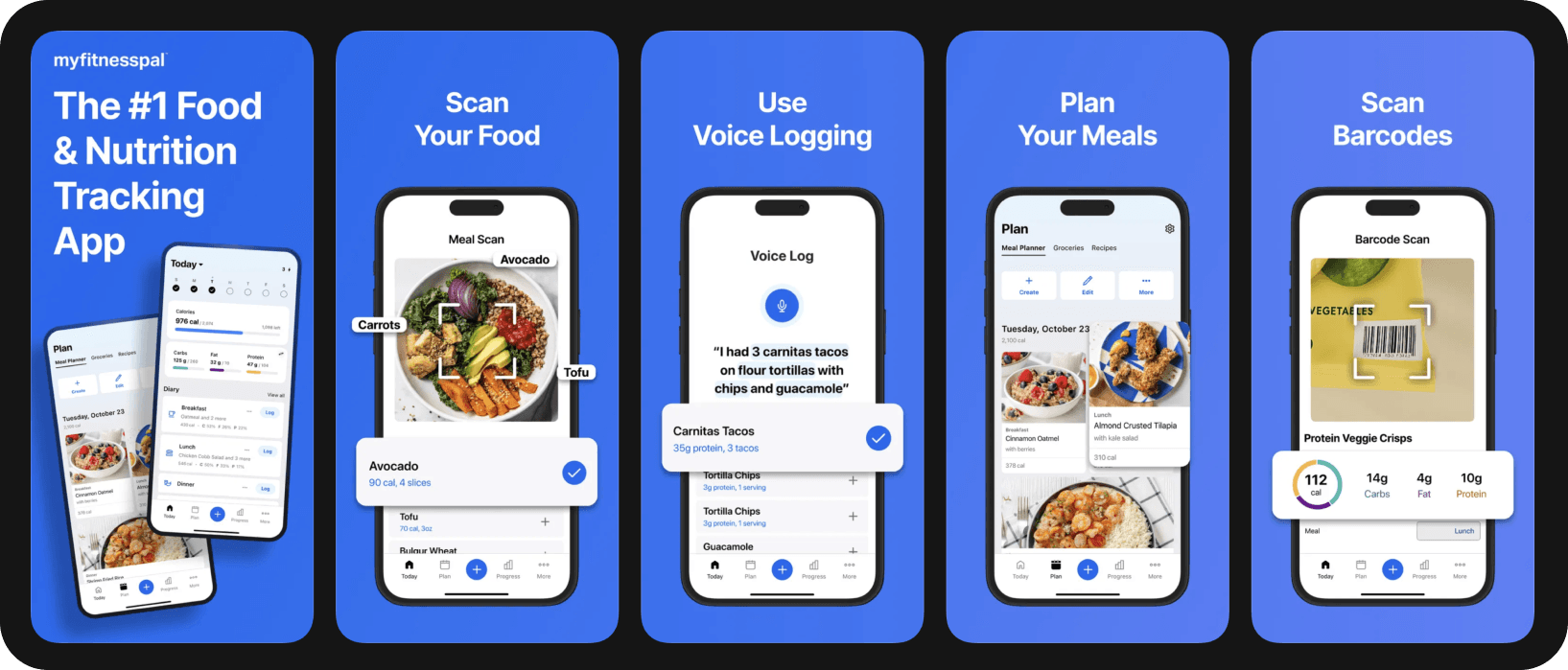
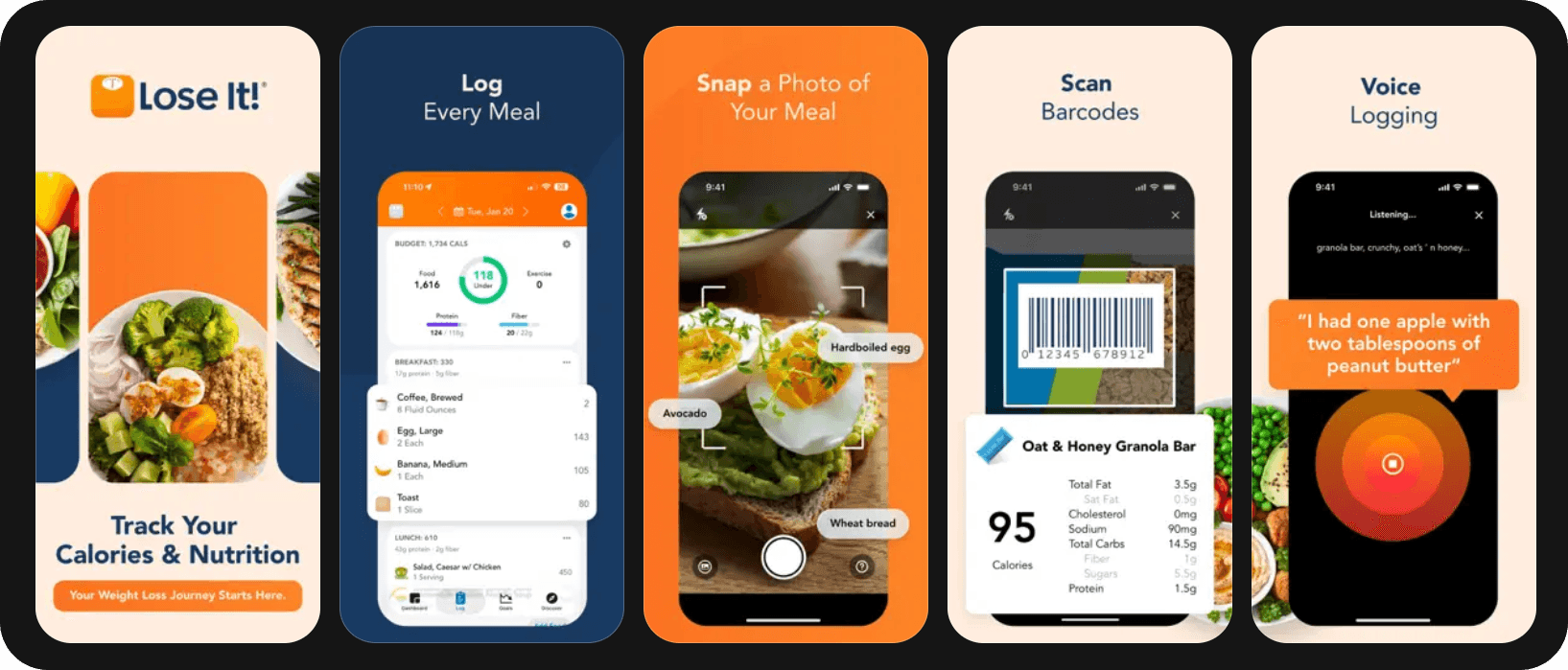
Massive user-submitted food databases. Weight-gain goals exist but are usually a derivative of the weight-loss focus these apps were built around. Protein targets, in particular, tend to default low.
Micronutrient and biometric focus trackers (Cronometer)
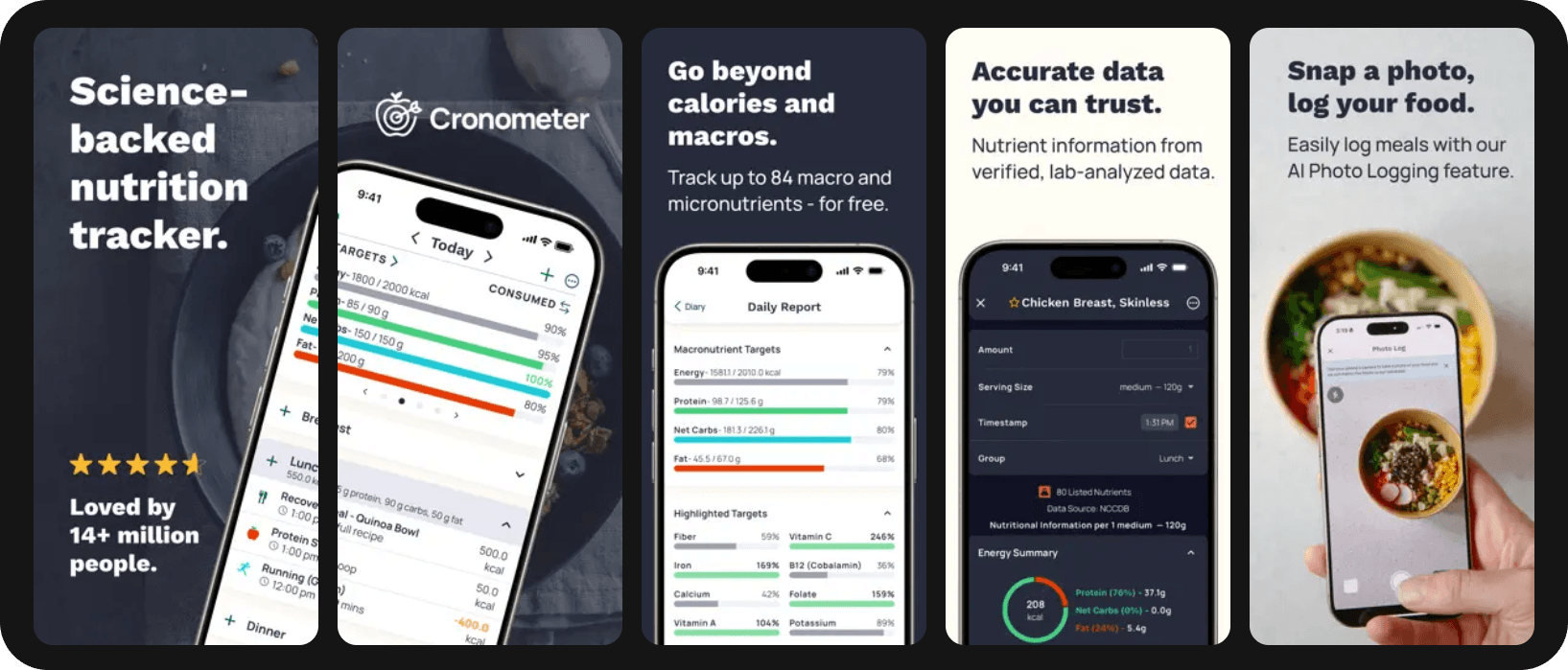
Strong on verified data and micronutrients. Useful for athletes recovering from REDs. Weak on meal planning and surplus automation. Worth noting that as more apps have started pulling verified data from official sources and product labels in recent years, micronutrient tracking has gone from a clear differentiator to a feature several competitors now offer.
Calorie tracking + meal planning apps (Fitia)
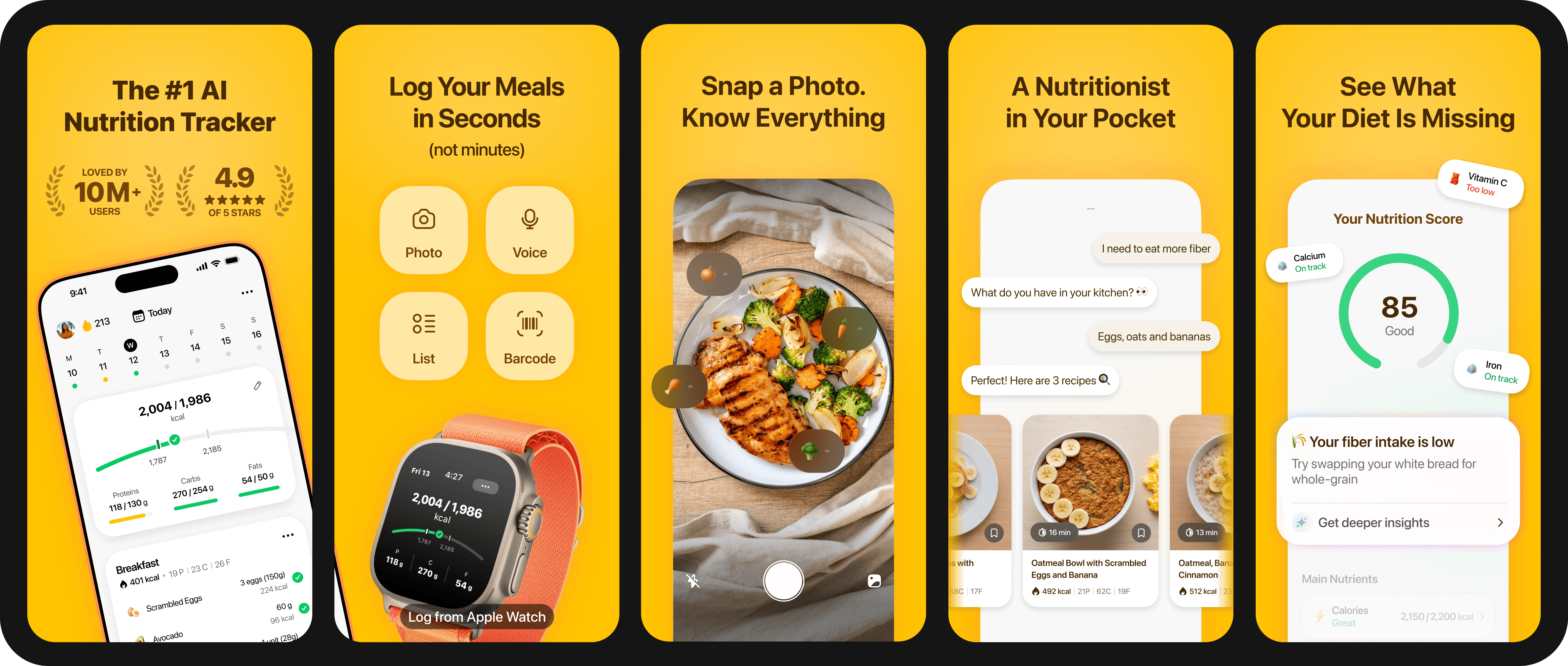
Fitia combines tracking and meal planning in one app, and its weight-gain setup isn't a derivative of a weight-loss plan. Onboarding asks for your goal and pace, then computes a precise daily surplus and auto-generates weekly meal plans that hit your protein floor, with the option to add US foods and brands from a verified database. A daily nutrition score gives you micronutrient feedback and the free tier covers the calorie counter, macros, barcode scanner, and goal setup.
Adaptive coaching apps (MacroFactor)
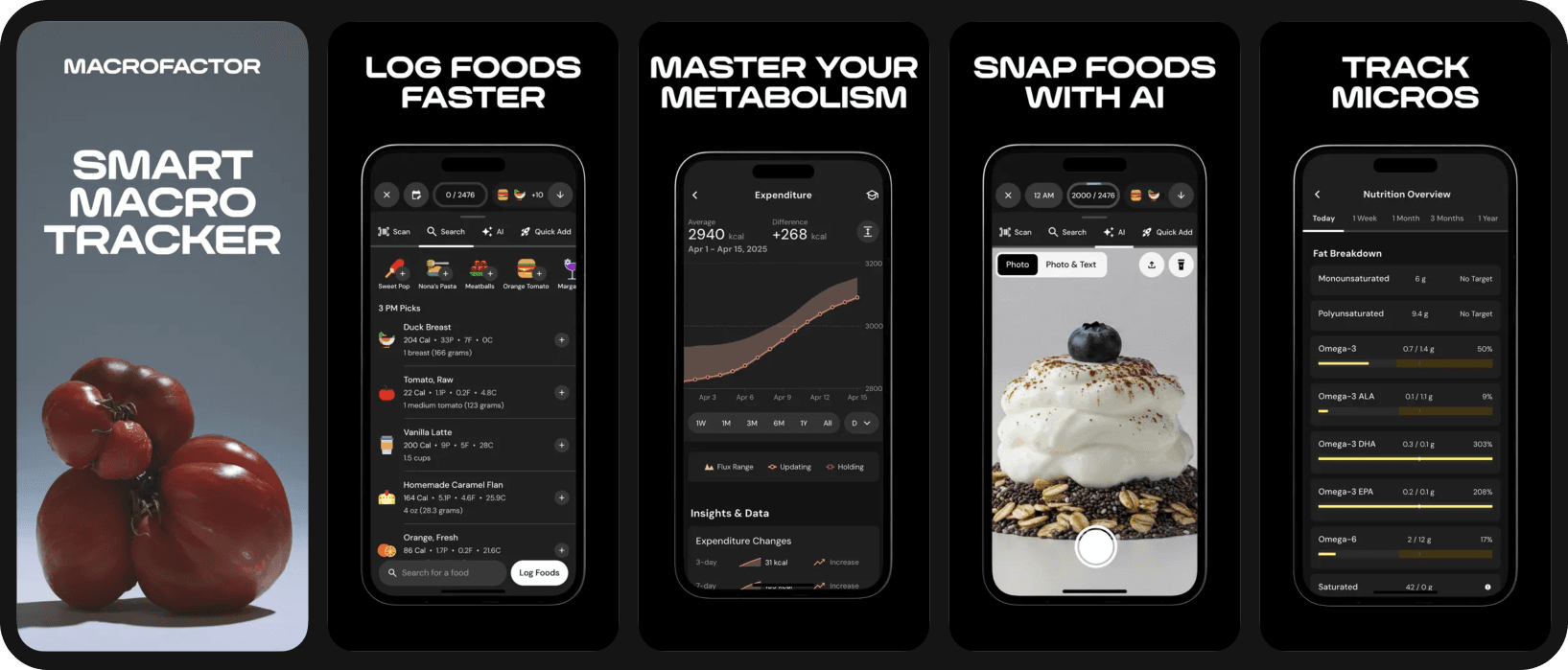
Strong adaptive TDEE and macro recalculation, well-suited to lean bulks. Subscription-only, no integrated meal planning, and like micronutrient tracking before it, adaptive macro coaching is increasingly being matched by competitors.
Diet-specific apps (Carb Manager, Lifesum)
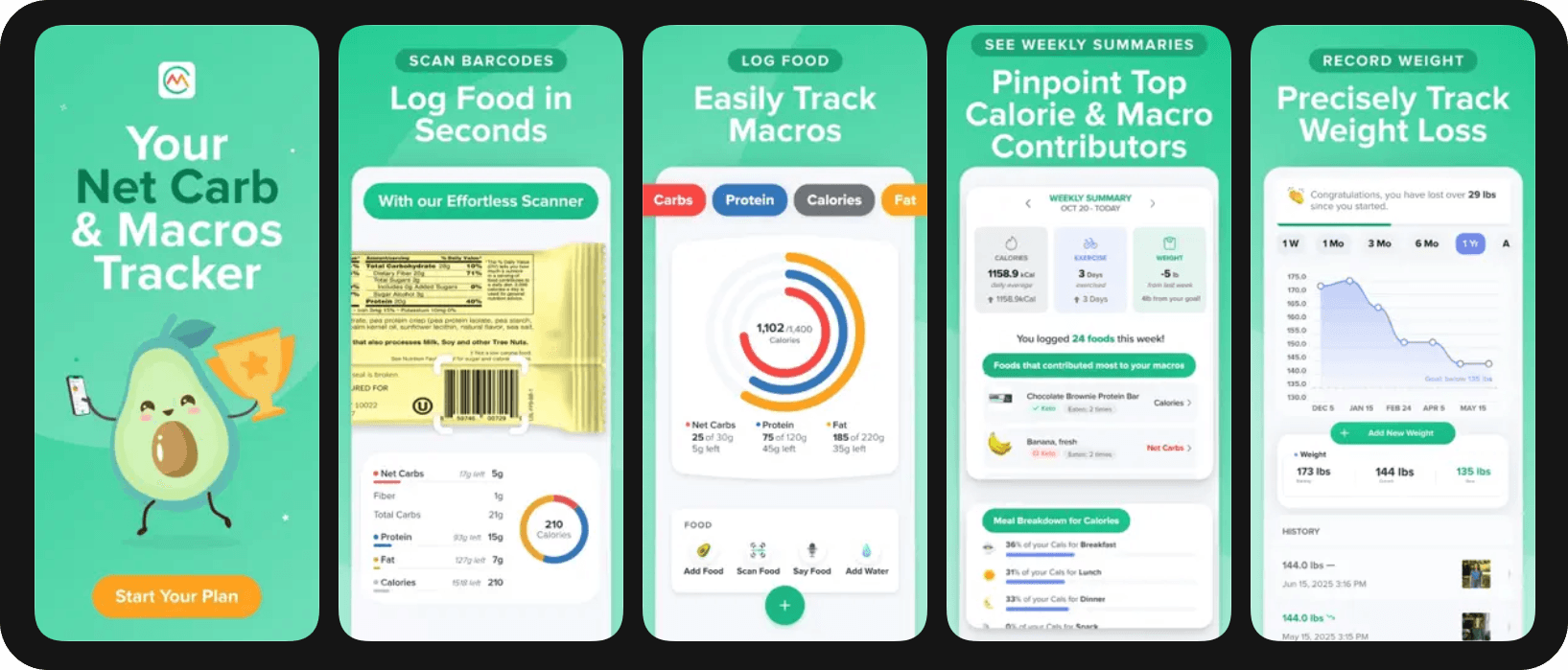
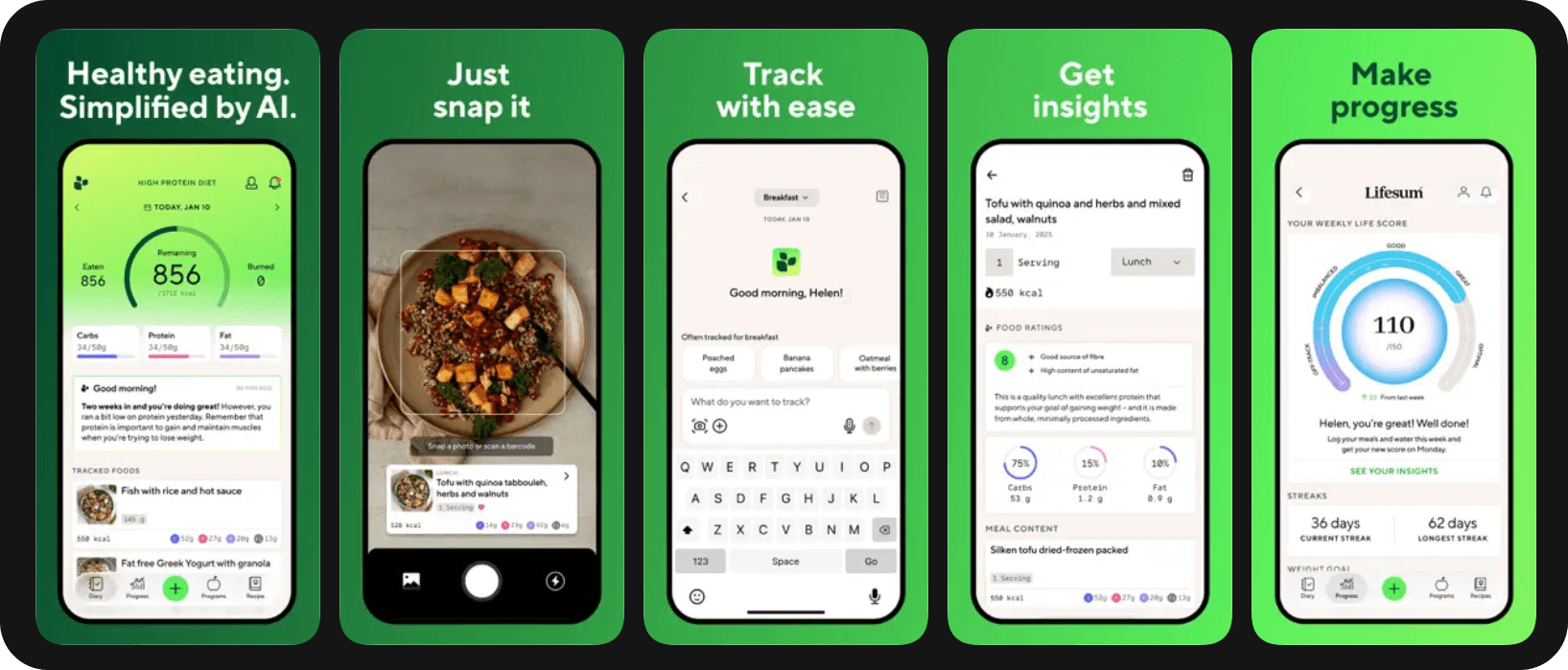
Built around a dietary philosophy (keto, Mediterranean). Weight gain is a secondary use case at best.
Bottom line
In the US in 2026, the best nutrition app for weight gain is one that treats calorie surplus tracking as a core plan rather than an afterthought of a weight-loss-focused approach. That means an evidence-aligned surplus (≈ +200–500 kcal/day), a protein floor near 1.6 g/kg, integrated meal planning, and logging frictionless enough that you'll still be doing it months in.
Apps like Fitia are built exactly that way: pick "Muscle Gain," set your pace, and let the app generate the meal plan (or use your own), hit the macros, and track the trend.
FAQ
What is the best nutrition app for weight gain in the US in 2026?
The best nutrition app for weight gain in the US is one that automatically calculates a precise caloric surplus, sets a protein target of approximately 1.6 g/kg/day, generates a meal plan that hits those targets, and makes daily logging fast enough to sustain for 12+ weeks. Fitia is purpose-built for this and offers a free tier covering core tracking.
How many extra calories per day do I need to gain weight?
For lean weight gain (mass gain with minimal fat), a surplus of approximately 200–500 kcal per day above maintenance is supported by current research. Larger surpluses accelerate the scale but disproportionately add body fat.
How much protein do I need to gain muscle?
Current evidence supports approximately 1.6 g of protein per kg of body weight per day (roughly 0.7 g per pound) to maximize lean-mass gains when combined with resistance training.
Can I gain weight using a free app?
Yes. Fitia's free tier includes the calorie counter, macro tracker, barcode scanner, and goal-based onboarding for muscle gain — enough to track a surplus and protein target without subscribing.
How fast should I gain weight to keep it lean?
The practical benchmark is 0.25% to 0.5% of bodyweight per week — about 0.4 to 0.8 lb/week for a 160 lb adult. Faster than that, the extra weight skews toward fat.
Does tracking actually work, or is it just a placebo?
Peer-reviewed evidence consistently shows that consistent dietary self-monitoring, including app-based logging, is significantly associated with weight change (Payne et al., Obesity Science & Practice 2021; Raber et al., Public Health Nutrition 2021). Across both studies, consistency of logging predicted results more reliably than the platform used to log.
References
- Helms ER, Spence AJ, Sousa CA, et al. Effect of Small and Large Energy Surpluses on Strength, Muscle, and Skinfold Thickness in Resistance-Trained Individuals: A Parallel Groups Design. Sports Medicine - Open. 2023;9(1):102. doi:10.1186/s40798-023-00651-y
- Bagheri R, Karimi Z, Camera DM, et al. Association between changes in lean mass, muscle strength, endurance, and power following resistance or concurrent training with differing high protein diets in resistance-trained young males. Frontiers in Nutrition. 2024;11:1439037. doi:10.3389/fnut.2024.1439037
- Payne JE, Turk MT, Kalarchian MA, et al. Adherence to mobile-app-based dietary self-monitoring — Impact on weight loss in adults. Obesity Science & Practice. 2021;8(3):279-288. doi:10.1002/osp4.566
- Raber M, Liao Y, Rara A, et al. A systematic review of the use of dietary self-monitoring in behavioural weight loss interventions: delivery, intensity and effectiveness. Public Health Nutrition. 2021;24(17):5885-5913. doi:10.1017/S136898002100358X
Related articles
 Muscle Gain
The Best Calorie Counter Apps for Muscle Gain: What the Evidence Says You Actually Need
We compared the top calorie counter apps for muscle gain in 2026, with what the research says about protein, surplus, and tracking that actually works.
Read article Muscle Gain
Why Most Calorie Counter Apps Make Muscle Gain Harder Than It Needs To Be
Most calorie apps are built for fat loss. Learn why they fail for muscle gain and what to look for to actually build lean mass.
Read article Muscle Gain
9 Best Calorie Counter Apps to Gain Weight
Discover the best calorie counter apps to gain weight, track surplus, hit protein goals, and stay consistent with meal planning and progress tracking.
Read article