Best Nutrition Monitoring Tools in the US (2026): The Methods That Actually Work — and How to Build Your Toolkit
Build a US nutrition monitoring toolkit that actually sticks in 2026: the food-logging apps, wearables, and scales that work, backed by recent research.
- Published
- 12 min read
- 12 min read
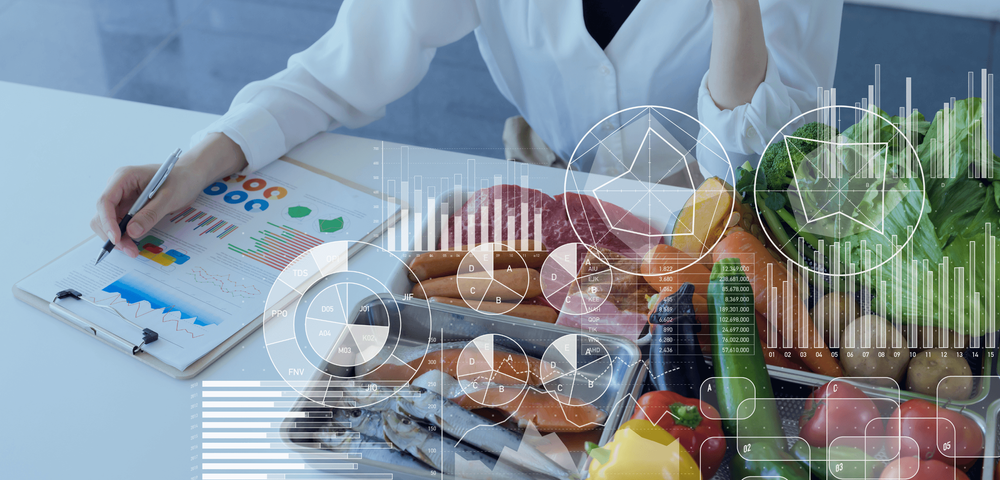
TL;DR: If you live in the US and you're trying to monitor your nutrition in 2026, you're not really picking a single calorie app, you're assembling a toolkit. The full toolkit spans four categories: food-logging apps (which now combine barcode, voice, text, and AI photo scan), weight-tracking tools, activity wearables, and registered-dietitian-grade professional analysis. The research from the last five years is consistent on two points: how regularly you log matters more than how detailed your records are, and food, weight, and activity each need a different kind of tool. This guide maps the US landscape, explains what each category does, and shows how to build a toolkit you'll actually sustain.
Table of Contents
- What "nutrition monitoring tools" actually means
- The 4 categories of monitoring tools (and what each does)
- What the latest research says: consistency beats sophistication
- Different targets need different tools
- How to build a US-friendly monitoring setup you'll actually keep using
- Where an app like Fitia fits in your US toolkit
- FAQ
What "nutrition monitoring tools" actually means
A nutrition monitoring tool is anything that helps you see and record what you eat and how your body responds, so you can adjust. That's broader than a calorie-counting app. It spans four distinct categories — food-logging apps, weight-tracking tools, activity wearables, and clinical/professional analysis — and most Americans serious about monitoring end up using more than one.
The reason this distinction matters is that if you only ask "which calorie app is best?", you optimize for what one tool in isolation can do. The better question is "which combination of tools fits my goal and my willingness to keep using them?", because monitoring is a system, not a single app. That framing is now well-established in the US public-health literature; the most comprehensive 2024 state-of-the-art review in Nutrition Reviews (Abeltino et al., 2024) treats digital nutrition tools as an ecosystem of consumer apps, professional dietitian platforms, and AI-assisted assessment systems, not a single product category.
The 4 categories of monitoring tools (and what each does)
1. Food-logging apps. This is your main tool. You record meals against a calorie and macro target. Modern apps in 2026 accept multiple food logging methods in a single experience: barcode scanning, text search, voice entry, and AI photo capture, where you snap a meal and the app estimates portions and nutrients automatically. Best for awareness of intake and hitting a target. This is where the US market leaders operate: MyFitnessPal, Cronometer, MacroFactor, Fitia, Lose It!, and newer AI-photo-first entrants like Cal AI.
2. Weight and body-measurement tools. Smart scales (Happy Scale, Withings, Eufy, Garmin Index) and body-measurement tracking. Best for monitoring the outcome of your intake over time. That trend tells you whether your plan is working.
3. Activity and wearable trackers. Apple Watch, Fitbit, Garmin, Whoop, and Oura monitor energy expenditure and movement. Best for the "calories out" side. Their advantage is that they're passive and just work in the background, without much daily effort. In January 2026, Garmin even added native nutrition tracking to Garmin Connect (behind its Connect+ subscription), blurring the line between wearable and food log.
4. Professional and clinical tools. Dietary-assessment software used by US registered dietitians (RDNs) and researchers, plus curated university and federal resources like nutrition.gov, USDA's FoodData Central, and the NIH's Dietary Reference Intakes. Best for clinical accuracy and detailed nutrient analysis, typically used with professional guidance.
Most consumer needs in the US are met by combining the first three. The last is situational.
What the latest research says: consistency beats sophistication
Here's the finding that should reshape how you pick tools: across the peer-reviewed evidence, and the evidence has grown considerably since 2021, how consistently you monitor predicts results far more than which tool you choose or how detailed your logs are.
The original 2019 Obesity paper that established this in a US online weight-loss program is still cited everywhere (Harvey, Krukowski, & Priest, 2019). Participants who lost ≥5% or ≥10% of body weight logged into their food journal roughly 2–3 times per day, more than less-successful peers. Encouragingly, the time it took dropped from about 23 minutes per day in month 1 to about 15 minutes by month 6. Monitoring gets easier the longer you do it.
A 2021 systematic review by Raber and colleagues in Public Health Nutrition synthesized 59 weight-loss intervention studies that used dietary self-monitoring. Among trials that compared structured self-monitoring against a true control group, the majority showed statistically significant weight-loss effects, and abbreviated approaches (tracking only some foods or behaviors) produced outcomes similar to full-intake tracking. In other words, the review found no evidence that more detailed monitoring outperformed simpler approaches.
That finding was tested directly in a US pilot trial by Nezami and colleagues (2022), published in Obesity. In a 6-month mobile-delivered behavioral weight-loss intervention with 72 parents of young children, participants were randomized to either simplified dietary self-monitoring (tracking only high-calorie "red" foods) or standard full-calorie tracking. The simplified group lost 4.0% of body weight versus 5.7% in the standard group, a statistically non-significant difference, and the two groups hit a clinically meaningful 5% loss at nearly identical rates (42.9% vs. 43.2%).
The translation for tool selection is that a quick, sustainable log beats a meticulous, sporadic one, a finding now supported by a randomized trial rather than observational data alone.
A 2022 meta-analysis in JMIR mHealth and uHealth (Antoun, Itani, & AlArab, 2022) pooled 34 randomized trials of smartphone-app weight-loss interventions and reached two relevant conclusions: apps produced modest but real weight loss (around 2 kg at three months, 2.8 kg at six months), and neither the type nor the number of app features was associated with weight-loss outcomes. The biggest predictor of bigger losses was the addition of a human coach, not how many bells and whistles the app shipped with.
The relationship between consistency and effort is more nuanced than "less burden is always better," though. A 2021 case study by Turner-McGrievy and colleagues in the Journal of Technology in Behavioral Science compared three self-monitoring methods (a wearable, a photo-based app, and a standard searchable-database app) and found that participants in the lower-burden conditions had a harder time remembering to use their tool than those using the standard app. Some active effort, it turns out, may be what builds the habit. The practical implication is that the best logging apps offer multiple low-friction inputs without making the experience entirely passive, so the act of logging stays present enough to become routine.
This is also why the multi-input design of modern food-logging apps matters. If you've spent any time on Reddit's r/loseit or r/CICO this year, you've seen the recurring debate about whether AI photo-logging is "accurate enough." The 2022 systematic review by Dalakleidi and colleagues in Advances in Nutrition analyzed 78 image-based food-recognition studies and found that food recognition has improved sharply with deep learning, but estimating the volume of food on the plate remains a weak link, and volume error drives calorie error. The 2024 Abeltino review in Nutrition Reviews reaches a similar conclusion: digital nutrition tools' biggest limitations are around data accuracy, accessibility, and affordability, and the most promising apps combine multiple input methods so users can verify or adjust when one method is uncertain.
The practical takeaway for anyone choosing nutrition monitoring tools in the US in 2026 is to pick the tools you'll use consistently, not the most sophisticated ones. A tool you abandon in week three measures nothing.
Different targets need different tools
A second research finding reshapes how you combine tools: monitoring food, weight, and activity are genuinely different behaviors, and they don't behave the same way.
A 2019 study in Obesity Science & Practice (Butryn et al., 2019) and a 2022 study in JMIR Formative Research (Carpenter, Eastman, & Ross, 2022) both found that adherence differs sharply by what you're monitoring. Passive tools — like a Fitbit or Garmin counting steps — sustained engagement far longer (a median of nearly 20 weeks for activity self-monitoring in the Carpenter trial), while active food logging declined faster because it takes more effort (a median of about 10 weeks). Yet active food logging was the behavior most tied to weight-loss outcomes, and greater consistency in monitoring both food and weight each independently predicted greater weight loss.
The implication is a multi-tool setup, not a single tool:
- Use a passive tool (a wearable) for the activity side
- Use an active tool (a food-logging app) for intake. It takes effort but drives the behavior change.
- Use a trend tool (a smart scale or weekly weigh-in) for the outcome.
No one tool covers all three well. Matching the tool to the target is what matters.
How to build a US-friendly monitoring setup you'll actually keep using
A practical, research-aligned setup for most US adults in 2026:
- Anchor on one food-logging app with low-friction input (barcode, voice, photo, and text) so daily logging stays fast. This is your highest-effort, highest-value tool. Protect its sustainability above all else.
- Add passive activity tracking via a wearable or your phone (Apple Health and Health Connect both work for free), so the "calories out" side requires no daily work.
- Weigh a few times a week on a regular or smart scale, and read the weekly trend, not the daily number.
- Aim for consistency over completeness. Log most days, estimate when you must, and don't let a missed perfect entry become a missed day. The Nezami 2022 trial showed that simplified logging gets you most of the way there.
- Bring in professional tools only if you need them. If you have a clinical condition (diabetes, CKD, food allergies), are training competitively, or have specific micronutrient goals, a US registered dietitian (RDN) plus a clinical-grade tool is worth it. Most people don't need them.
This setup covers intake, output, and outcome, while concentrating your limited willpower on the one tool (food logging) that actually requires it.
Where an app like Fitia fits in your US toolkit
Within this toolkit, the food-logging app is the anchor. It's also the one tool whose sustainability holds the rest of the setup together. That's where Fitia is built to fit US users:
- It reduces the friction that kills consistency. Fitia supports photo, voice, barcode, text, and manual search entry in one app, so a meal rarely takes more than a few seconds and you have fallbacks when one input method is awkward.
- The numbers are trustworthy. Fitia's food database is validated by an internal algorithm and reviewed by nutrition professionals, with US-specific entries for chain restaurants and packaged brands you'll actually scan. Database accuracy is one of the biggest limitations of digital nutrition tools, and a multi-method app with a verified database is how you avoid it.
- It connects intake to outcome in one place. Fitia ties logging to calorie and macro targets and to progress tracking (weight, measurements, photos), and syncs with Apple Health and Health Connect. The "intake," "outcome," and "activity" pieces of your toolkit live in one place instead of scattered across tools.
- It adds the guidance most monitoring tools skip. Beyond recording, Fitia can build personalized meal plans and grocery lists, turning monitoring into a plan. That's particularly valuable for US users who want US grocery brands and US-friendly meal structures rather than generic templates.
In short: Fitia is designed to be the active-logging anchor of a sustainable monitoring toolkit, unifying the passive and outcome tools around it.
Build your toolkit around a calorie tracker you'll keep using. You can start Fitia's free trial and see how consistent fast logging feels for a couple of weeks.
FAQ
What are the best tools for monitoring nutrition in the US in 2026?
A complete setup usually combines three: a food-logging app (for intake), a wearable or phone (for activity), and a scale (for the outcome trend). The food-logging app is the anchor. The most-cited options in 2026 are Fitia, MyFitnessPal, Cronometer, MacroFactor, and Lose It! Choose one with fast logging and a verified US database that you'll actually use.
Do I need more than a calorie-counting app to monitor my nutrition?
Often a good food-logging app covers most needs, especially if it also tracks weight and syncs with a wearable through Apple Health or Health Connect. Standalone smart scales and activity trackers add the "outcome" and "calories out" sides, but the food log is the core tool.
What matters most when choosing a nutrition monitoring tool?
Consistency of use. Harvey 2019 found that successful losers logged 2–3 times per day on most days, and the 2022 Nezami pilot RCT showed simpler logging produced weight loss similar to detailed tracking. The lesson is that how regularly you log matters more than how detailed your records are. Pick the tool you'll actually keep using, and prioritize a verified, accurate database.
Are wearables enough to monitor nutrition?
No. Wearables monitor activity and energy expenditure well and require little effort. Carpenter 2022 found they're the easiest type of monitoring to sustain, but they don't track what you eat. Garmin added some nutrition logging to Garmin Connect in January 2026, but it's still best paired with a dedicated food-logging app to cover both sides.
How accurate are AI photo-logging features in apps like Fitia and Cal AI?
Food recognition is generally good in 2026. Photo input is most reliable inside food-logging apps that also support barcode scanning, voice, text, and manual search entry, so you can quickly verify when the AI is uncertain rather than rely on photo alone.
How often should I log my food to see results?
Research associates frequent, consistent logging with better outcomes. In Harvey 2019, successful losers logged 2–3 times per day on most days of the week, and broader reviews of digital self-monitoring (Raber 2021, Antoun 2022) consistently find that adherence, not feature-richness, drives the bigger weight-loss effect. Aim for consistency over perfection; the time it takes drops as you get used to it.
References
- Abeltino, A., Riente, A., Bianchetti, G., et al. (2024). Digital applications for diet monitoring, planning, and precision nutrition for citizens and professionals: a state of the art. Nutrition Reviews, 83(2), e574–e601. DOI: 10.1093/nutrit/nuae035
- Antoun, J., Itani, H., & AlArab, N. (2022). The Effectiveness of Combining Nonmobile Interventions With the Use of Smartphone Apps With Various Features for Weight Loss: Systematic Review and Meta-analysis. JMIR mHealth and uHealth, 10(4), e35479. DOI: 10.2196/35479
- Butryn, M. L., Godfrey, K. M., Martinelli, M. K., et al. (2019). Digital self-monitoring: Does adherence or association with outcomes differ by self-monitoring target? Obesity Science & Practice, 6(2), 126–133. DOI: 10.1002/osp4.391
- Carpenter, C. A., Eastman, A., & Ross, K. M. (2022). Consistency With and Disengagement From Self-monitoring of Weight, Dietary Intake, and Physical Activity in a Technology-Based Weight Loss Program: Exploratory Study. JMIR Formative Research, 6(2), e33603. DOI: 10.2196/33603
- Dalakleidi, K. V., Papadelli, M., & Kapolos, J. (2022). Applying Image-Based Food-Recognition Systems on Dietary Assessment: A Systematic Review. Advances in Nutrition, 13(6), 2590–2619. DOI: 10.1093/advances/nmac078
- Harvey, J., Krukowski, R. A., & Priest, J. S. (2019). Log Often, Lose More: Electronic Dietary Self-Monitoring for Weight Loss. Obesity, 27(3), 380–384. DOI: 10.1002/oby.22382
- Nezami, B. T., Hurley, L., & Power, J. (2022). A pilot randomized trial of simplified versus standard calorie dietary self-monitoring in a mobile weight loss intervention. Obesity, 30(3), 628–638. DOI: 10.1002/oby.23377
- Raber, M., Liao, Y., & Rara, A. (2021). A systematic review of the use of dietary self-monitoring in behavioural weight loss interventions: delivery, intensity and effectiveness. Public Health Nutrition, 24(17), 5885–5913. DOI: 10.1017/S136898002100358X
- Turner-McGrievy, G., Yang, C.-H., & Monroe, C. M. (2021). Is Burden Always Bad? Emerging Low-Burden Approaches to Mobile Dietary Self-monitoring and the Role Burden Plays with Engagement. Journal of Technology in Behavioral Science, 6(3), 447–455. DOI: 10.1007/s41347-021-00203-9
Related articles
 Fat Loss
Weight Loss Calorie Chart (2026): How Many Calories to Eat by Body Weight, Sex, and Activity
See how many calories to eat to lose weight, with simple charts by body weight and activity, plus why your target changes as you go.
Read article
Best Calorie Counter App for Muscle Gain in the US (2026): 4 Apps Compared for Lifters
The 4 best calorie counter apps for US lifters in 2026, compared on macros, database, adaptation, and meal planning.
Read article
Best Online Nutrition Coach in the US (2026): What to Look For Before You Pay
Online nutrition coaching in the US 2026: three tiers, what the research says, and the red flags to spot before you pay for an app or coach.
Read article