
Jun 05, 2026
Best Personalized Meal Planning App for Weight Loss in the US (2026): Comparing Apps That Plan Around Your Likes, Dislikes & Food Preferences
TL;DR: "Personalized meal planning" is one of the most overused phrases in the diet app space. Few apps actually let you tell them what you like to eat and generate a plan around those preferences. This 2026 US guide compares Fitia, Eat This Much, Lifesum, and Mealime to show which ones genuinely plan around your likes, dislikes, dietary patterns, and cuisine preferences for weight loss. Most stop at your calorie target.
Table of Contents
- Why "personalized" meal planning often isn't actually personalized
- What real preference-based personalization looks like
- The meal planning apps worth considering in the US (2026)
- Bottom line
- FAQ
Why "personalized" meal planning often isn't actually personalized
If you've searched for a meal planning app, you've seen the word "personalized" on every landing page. The problem is that most apps mean very different things by it.
Two flavors of "personalization" you could actually get:
- Calorie & macro personalization. The app calculates your daily target from your weight, height, age, and goal. Useful, but every calculator does this. It's the floor of personalization rather than the substance of it.
- Preference personalization. The app asks what you actually like to eat, what you avoid, what dietary patterns you follow, and generates a plan around those preferences. This is what most users searching for "an app that plans meals based on what I like to eat" actually want.
The second type is where apps genuinely differ, and where most fall short. Apps that ship with a generic recipe library and call themselves "personalized" because they use your calorie target aren't doing what users actually need.
The real test comes when you tell the app "I'm vegetarian, I don't eat fish," filter by cuisine (Mexican, Italian, Asian or other) and by how many minutes max you have to cook, and the app delivers a plan that respects all of those parameters. Most apps fail this test.
What real preference-based personalization looks like
A meal planning app that actually plans around your preferences should let you specify, at minimum:
- Foods you avoid. Allergies, intolerances, and dislikes. The plan should never include these.
- Dietary patterns. Vegan, vegetarian, keto, low-carb, high-protein... the plan should respect the pattern you follow.
- Cuisine preferences. Can you filter the recipes by country? Whatever you want should be available to add to the plan.
- Cooking time and skill. Do you want a quick 5-minute meal or something more elaborate? Whatever time you have to cook, the app should fit it into your schedule.
- Goal alignment. Weight loss, muscle gain, or maintenance. The plan should hit the calorie and macro targets that match your goal.
The meal planning apps worth considering in the US (2026)
Fitia
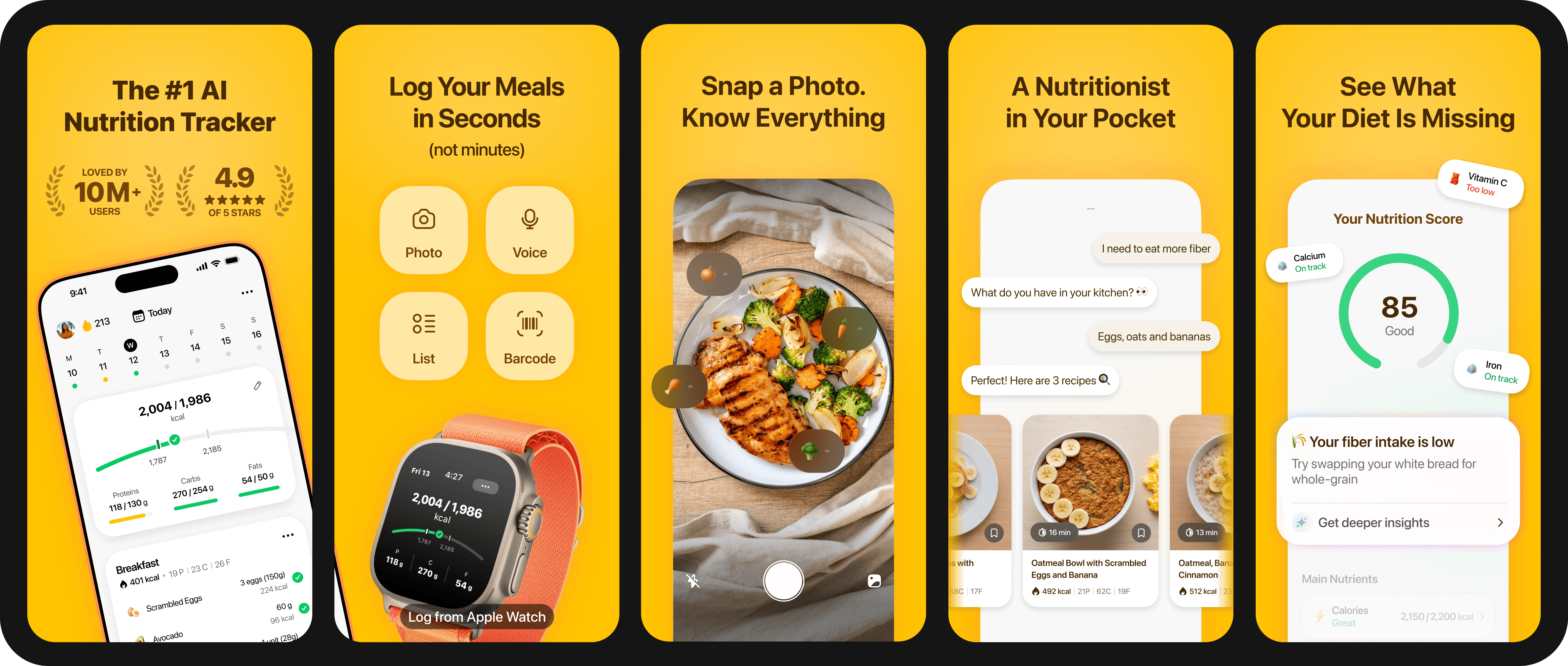
Fitia's onboarding asks for your goal (Fat Loss, Muscle Gain, or Maintenance), pace, dietary pattern, food preferences, foods to avoid, and meal settings (number of meals per day, recipes or generic meals, variability on the plan). It then generates a weekly meal plan tuned to your calorie and macro targets using foods that respect all of those inputs.
The plan auto-adjusts portions, builds a shopping list, exports to Instacart, and recalibrates as your weight changes. You can also start a meal plan with someone else and sync plans, so you eat the same foods but with portions adjusted to each person's goals.
- Premium: $19.99/month, $59.99/year; Family $89.99/year for 2 to 6 users. Unlocks the full auto-generated meal plan, AI logging, AI Coach, recipes, and shopping lists.
- Best for: Users who want the app to plan around their actual food preferences without having to filter recipes manually.
- Watch out for: Full preference-based meal generation sits in the Premium tier.
Eat This Much
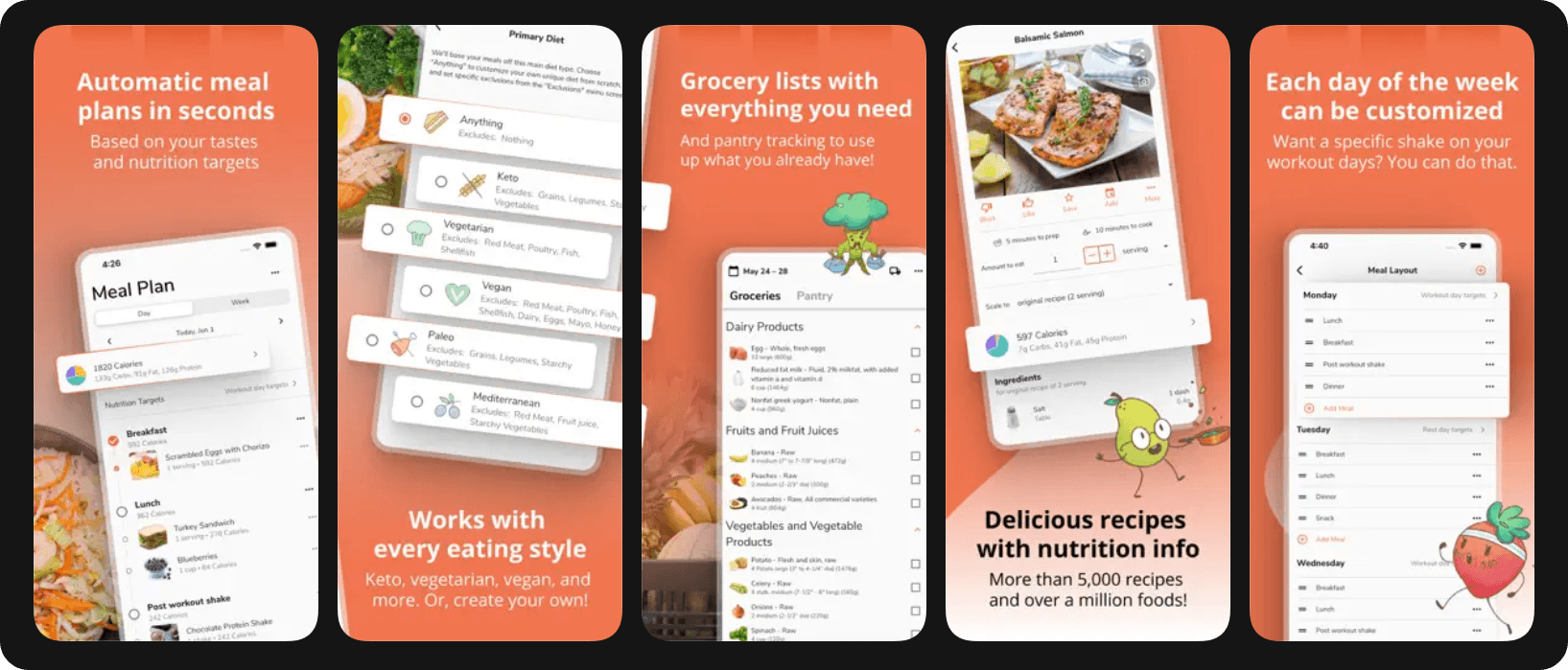
Eat This Much pioneered preference-based meal plan automation. Based on your information, you get a daily or weekly plan from a recipe library. Strong on flexibility for restrictive diets. Lighter on the tracking side: it's primarily a meal planner with logging as a secondary feature.
- Premium: After a 14-day free trial, Eat This Much costs $14.99/month or $60/year.
- Best for: Users who want a true "set it and forget it" meal planner, anyone with significant dietary restrictions (vegan, gluten-free, allergies) who needs the plan to actually respect them.
- Watch out for: Less robust as a calorie tracker than purpose-built apps, recipe library has been criticized for repetitiveness in long-term use.
Lifesum
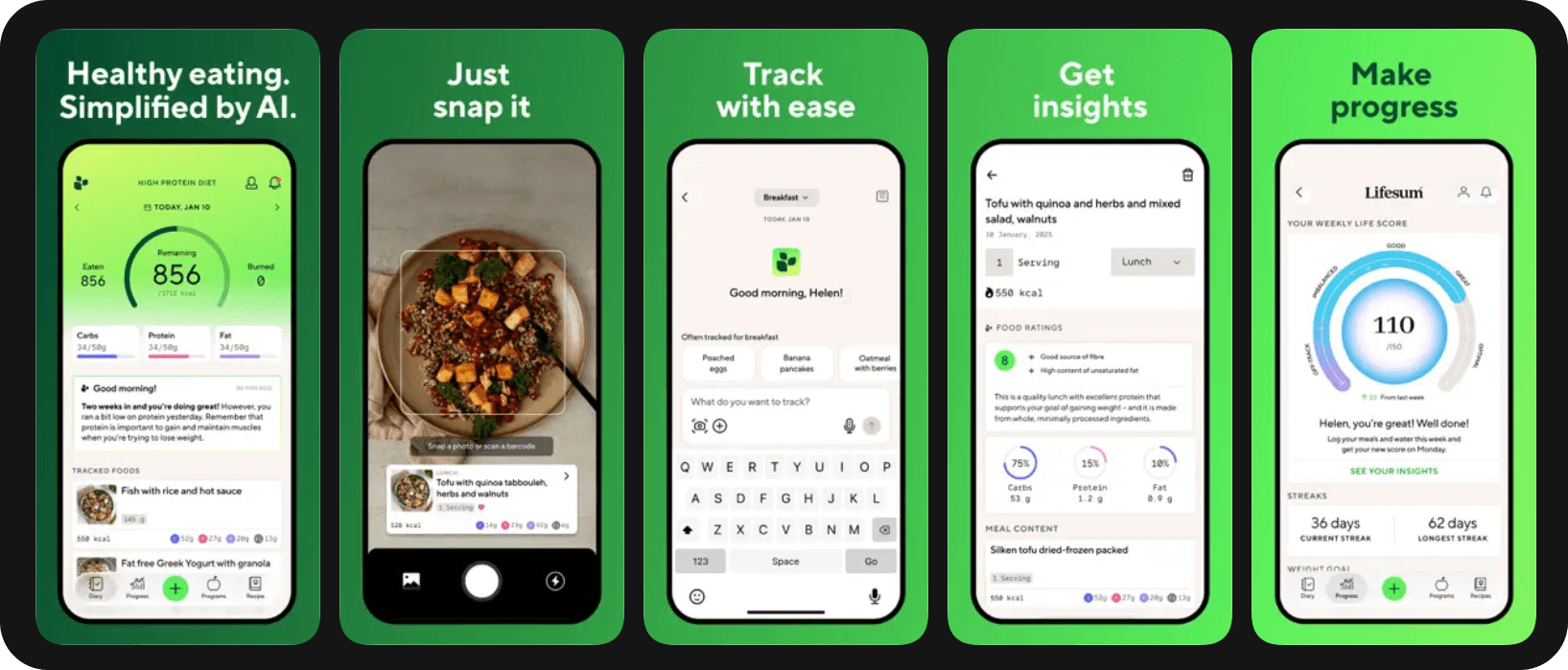
Lifesum's personalization is organized around dietary patterns. You pick a pattern (Mediterranean, keto, high protein, 5:2 fasting) and the app delivers recipes and meal plans that follow it. Cleaner interface than most competitors.
- Premium: $99.99/year or shorter plans starting at $10/month.
- Best for: Users who already know which dietary pattern they want to follow and want the app to handle the recipe selection within that pattern.
- Watch out for: Less granular preference input (you pick a pattern, not specific foods to avoid); macro detail and database depth lag behind general trackers.
Mealime
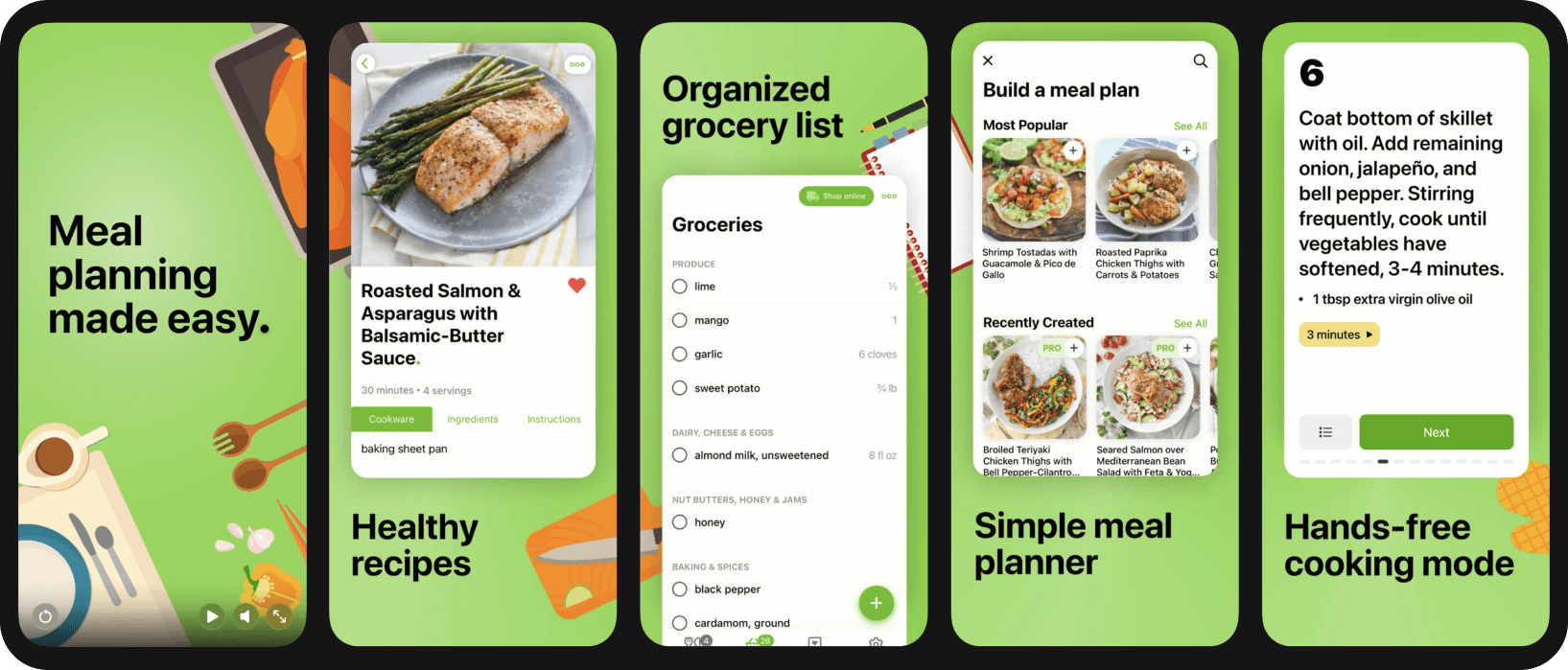
Mealime focuses on simplicity and speed, with recipes designed to take 30 minutes or less to prepare. More than 200 personalization options across dietary patterns (flexitarian, keto, low-carb, paleo, pescatarian, vegan, vegetarian) make it an accessible entry point for someone new to meal planning.
- Premium: Free basic version; Mealime Pro at $2.99/month.
- Best for: Busy individuals who want quick, simple meal planning without complex nutritional tracking.
- Watch out for: Limited nutrition tracking compared to dedicated calorie counters; no family-specific features or multi-user support.
Bottom line
In the US in 2026, the best personalized meal planning app for weight loss is the one that actually plans around what you like to eat rather than just your calorie target. Fitia and Eat This Much go deepest on preference input (foods you enjoy, foods you avoid, dietary patterns, cooking time), and both directly answer the "I want a meal plan based on what I actually like to eat" question. Lifesum is a solid pick if you've already chosen a dietary pattern, and Mealime is the cheapest entry point for quick, simple cooking.
Fitia combines preference-based meal generation with a verified database, AI logging, an AI Coach for variations, and US-curated foods. The free tier covers core tracking; the auto-generated meal plan and recipe library sit in Premium.
Try it free → Start Fitia's free trial and see what a preference-based meal plan looks like for your goals.
FAQ
Are there apps that plan meals based on what I actually like to eat?
Yes. Fitia and Eat This Much are the two most preference-driven meal planners in the US market. Both ask for foods you like, foods you avoid, dietary patterns, and goal information during onboarding, then generate plans around those inputs.
Can I get a personalized meal plan for free?
Most apps gate the full meal plan behind a subscription. Mealime offers free basic meal planning. Fitia's free tier covers core tracking with goal setting in onboarding, while the auto-generated plan sits in Premium. Eat This Much's free version generates a single day's plan; the weekly planner is paid.
Which app is best for vegetarian or vegan personalized meal plans?
Fitia and Eat This Much handle vegetarian and vegan patterns natively. Lifesum offers plant-based meal plans as one of its patterns. Mealime supports vegetarian and vegan among its dietary options.
Can I personalize my plan around specific cuisines (Mexican, Mediterranean, Asian)?
Fitia lets you filter by country of origin, often surfacing recipes and meals authentic to those cuisines. Eat This Much has cuisine filters within its recipe library. Lifesum's Mediterranean pattern is its strongest cuisine-specific option.
Fitia: Meal Plans & Calorie Counter
We use cookies to enhance your browsing experience, analyze site traffic, and personalize content. By clicking 'Accept', you consent to the use of these technologies in accordance with our Privacy Policy.