Does Eating at Night Cause Weight Gain? What Science Says
Find out what science says about how eating at night affects your weight. Is it really that bad?
- Published
- 7 min read
- 7 min read
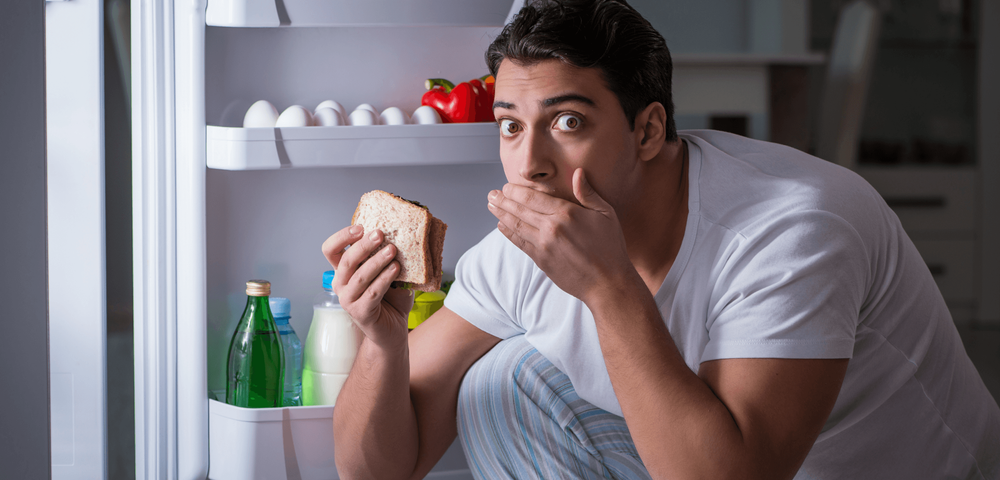
You've probably heard someone say, "eating at night makes you gain weight."
This is a myth that has been around for years in the world of health and fitness, but it's time to debunk it with science.
In this article, we'll dive into how weight loss and gain really work, explore key studies, and most importantly, learn how to enjoy late-night meals without the guilt.
👉 You might be interested in: The Keys To Fat Loss
Get a personalized meal plan tailored to your goals and needs with Fitia. Download it for free here.
Why is it believed that eating at night leads to weight gain?
The belief that eating at night causes weight gain is based on several factors that are often misunderstood or exaggerated.
Here are the most common arguments behind this belief, along with the real explanations:
1. "Metabolism slows down at night"
One of the most common ideas is that metabolism slows down at night, making it harder for your body to use the food you eat as energy. This leads people to think that anything eaten at night is stored as fat. Is this true? Let’s break it down:
"Metabolism" refers to the set of chemical and biological processes in your body that sustain life and carry out essential functions. It's a broad term.
In this context, the claim that "metabolism slows down" implies that at night your body functions at a lower rate, burning fewer calories (energy). While it's true that you burn fewer calories during sleep—because you’re not exercising, eating, or moving around—your metabolism doesn’t actually “slow down” or become less capable of processing nutrients.
According to various studies, even while sleeping, your body continues to burn about the same amount of energy to maintain essential functions as it does during the day (1,2,3). This energy expenditure is known as your basal metabolic rate (BMR), which is the energy your body uses just to keep you alive. In fact, BMR accounts for 50 to 70% of your daily calorie burn.
So no, your metabolism doesn’t slow down at night. However, because you’re less active, you do burn fewer calories during this period. Does this mean you’ll store more fat? Let’s explore that in the next point:
2. "You're less physically active at night"
One of the reasons is that during the night we tend to be less physically active compared to the day. The idea is that if you consume calories before going to sleep, you won't have the opportunity to burn them, which could lead to weight gain.
However, point number one: this overlooks the fact that your body continues to burn energy even while you rest, as we mentioned earlier.
And point number two: even if you don’t immediately burn the energy you consume, as long as your total calorie intake throughout the day (and over time) stays within your daily requirement, this energy won’t automatically turn into fat.
Think of energy like money: it comes in and goes out. Imagine you get paid today, but you spend that money next week. Will you have any left to save? No, because the amount of money that came in was the same as what went out.
It’s the same with calories. If, throughout the day, you consume the same amount of calories as you burn (regardless of the time), you won’t have any leftover energy to store, and therefore, your fat reserves won’t increase. It doesn’t matter if you don’t use that energy right away—it’s about the balance over the entire day and even over several days.
3. "Insulin sensitivity is lower at night"
This argument goes as follows: At night, your sensitivity to insulin (the hormone responsible for processing carbohydrates and converting them into energy) is lower than it is during the day. This means that your body will need to produce more insulin to process the nutrients from your meal. Since one of the physiological effects of higher insulin levels is promoting fat storage, eating at night, they claim, will cause weight gain.
It sounds logical, right? But there's a key misunderstanding here.
While it’s true that insulin levels are higher at night than they are first thing in the morning, they aren’t higher than at other times of the day (4).
In the morning, your body is coming off a prolonged period without nutrients. As a result, when you eat, your body requires less insulin to convert those nutrients into energy because it needs the process to be faster (5). In fact, there’s substantial evidence that fasting for extended periods improves insulin sensitivity (5,6).
However, your insulin sensitivity remains stable for the rest of the day (4). If this argument were accurate, eating at any time after breakfast would also make you gain weight, which we know isn’t true.
Ultimately,
What really leads to weight gain is consistently consuming more calories than you burn.
Here's a clearer explanation: What truly has the power to influence your weight—whether you’re trying to lose or gain—is your overall energy balance for the day, meaning how many calories you consume compared to how many you burn (7).
So, there are three possible scenarios:
- If you consume fewer calories than you burn (caloric deficit), your weight will decrease.
- If you consume the same amount of calories as you burn (maintenance), your weight will remain stable.
- If you consume more calories than you burn (caloric surplus), your weight will increase.
Here's a graphic to help you visualize this better:
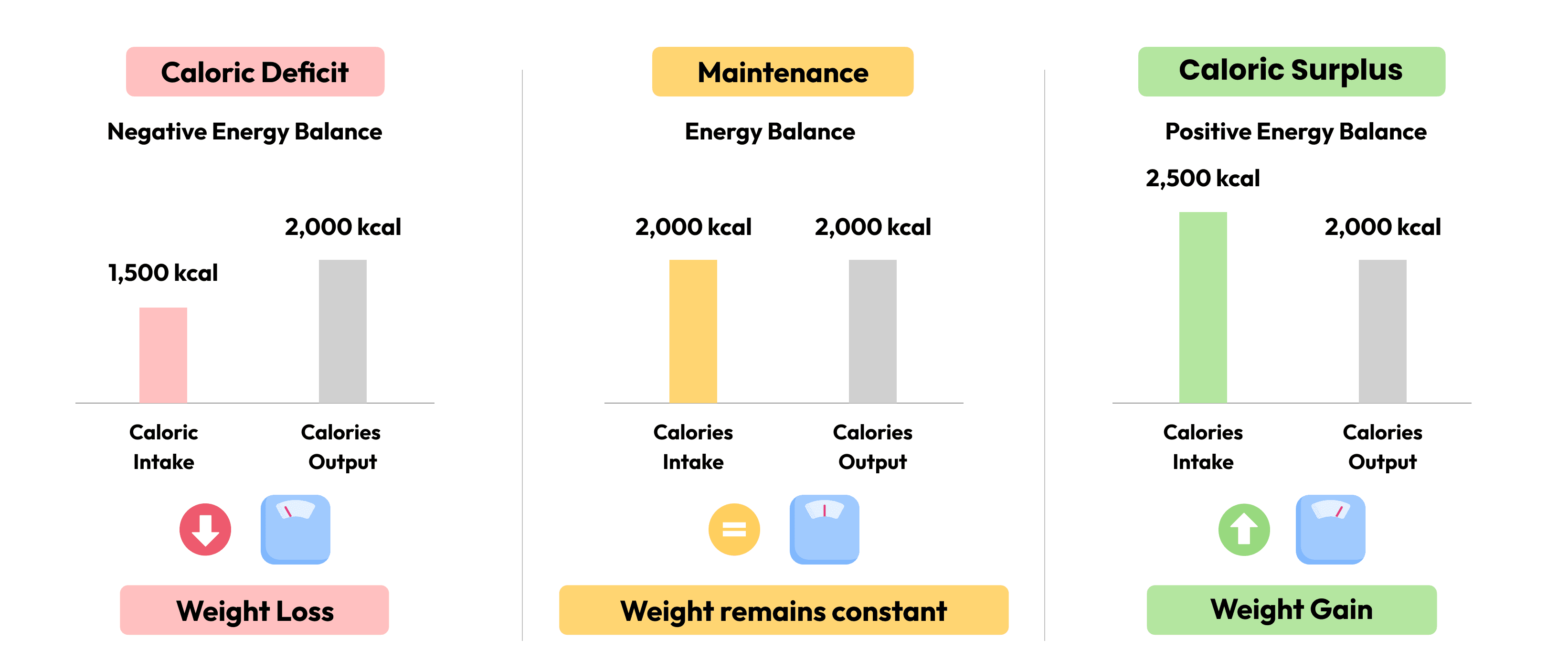
So, what actually causes weight gain is consuming excess calories throughout the day. It’s not about a single food, a single meal, or even the time you eat.
If you're aiming to lose weight, you need to know your calorie and macronutrient requirements for a deficit in order to achieve it. If your goal is to maintain or gain weight, you'd also need to understand your requirements based on that objective.
This way, you can distribute and balance your meals in a way that fits your preferences and lifestyle, without having to worry about eating at night.
👉 Get a personalized meal plan for a calorie deficit for free with the Fitia app. Download it here.
So... Does eating at night make you gain weight?
Relax. Eating dinner or having a late-night snack isn't what causes weight gain.
Now you know that weight gain, maintenance, or loss is mainly determined by your overall calorie balance throughout the day, not the time you eat.
So, eating at night (or during the day) will only lead to weight gain if those meals push your calorie intake beyond what you burn.
In fact, a meta-analysis of 5 clinical trials found that eating less at night did not have a significant effect on weight loss compared to eating more at night (3).
On the other hand, a recent study involving participants aiming to lose weight explored what was more effective: eating more in the morning or in the evening? (8)
To investigate, researchers selected 30 overweight or obese individuals, divided them into two groups, and placed them on the same weight-loss plan, with the same caloric deficit and macronutrient distribution.
The only difference was how they distributed their calories throughout the day. One group consumed larger meals in the morning, while the other had bigger meals in the evening:
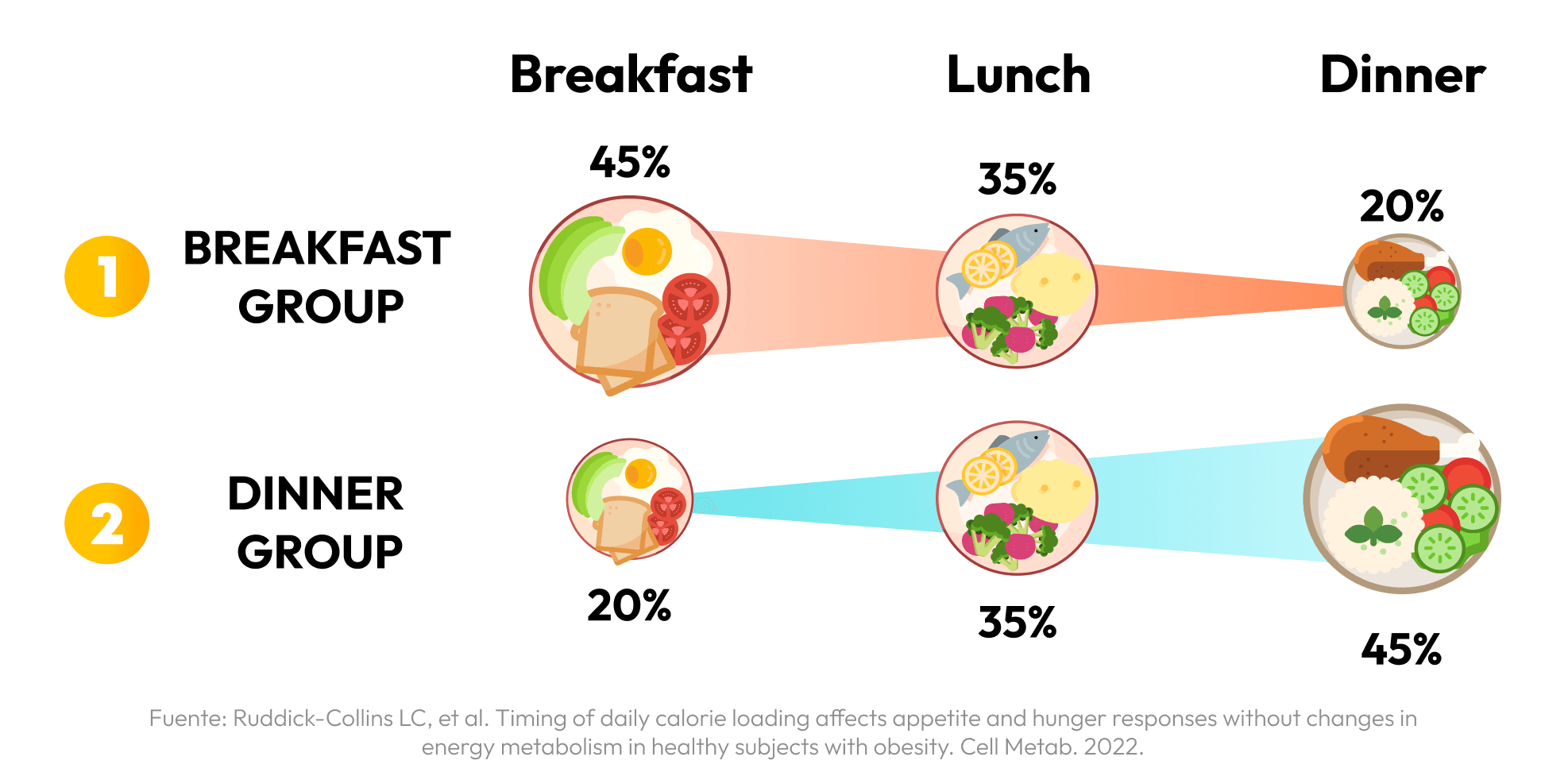
One highlight of this research is that it was highly controlled, as all meals were provided by the researchers themselves.
Additionally, the study had two phases: for the first 4 weeks, participants followed one meal distribution (larger breakfast or larger dinner), and during the final 4 weeks, they switched.
This design allowed the researchers to evaluate the effect of meal distribution between the groups while minimizing bias from individual variations.
At the end of the study, weight loss was found to be nearly identical in both groups. This suggests, once again, that nutrient and calorie intake are the most significant factors influencing weight loss.
However, be cautious with your food choices at night.
While eating at night, in and of itself, won’t cause weight gain, it could make it easier to exceed your caloric needs if your food choices aren’t ideal.
What do we mean by that? In the evening, we often opt for higher-calorie foods like snacks, processed treats, and sweets.
This is especially common if you've had a stressful day and are turning to food for comfort, or if you’re eating while distracted, such as watching TV or using the computer—leading to eating more than you realize.
This could result in consuming excess calories and, consequently, gaining weight.
References
- Seale JL, Conway JM. Relationship between overnight energy expenditure and BMR measured in a room-sized calorimeter. Eur J Clin Nutr. 1999 Feb;53(2):107-11. doi: 10.1038/sj.ejcn.1600685. PMID: 10099943.
- Katayose Y, Tasaki M, Ogata H, Nakata Y, Tokuyama K, Satoh M. Metabolic rate and fuel utilization during sleep assessed by whole-body indirect calorimetry. Metabolism. 2009 Jul;58(7):920-6. doi: 10.1016/j.metabol.2009.02.025. PMID: 19394978.
- Zhang K, Sun M, Werner P, Kovera AJ, Albu J, Pi-Sunyer FX, Boozer CN. Sleeping metabolic rate in relation to body mass index and body composition. Int J Obes Relat Metab Disord. 2002 Mar;26(3):376-83. doi: 10.1038/sj.ijo.0801922. PMID: 11896493.
- Biston P, Van Cauter E, Ofek G, Linkowski P, Polonsky KS, Degaute JP. Diurnal variations in cardiovascular function and glucose regulation in normotensive humans. Hypertension. 1996 Nov;28(5):863-71. doi: 10.1161/01.hyp.28.5.863. PMID: 8901836.
- Patikorn C, Roubal K, Veettil SK, Chandran V, Pham T, Lee YY, Giovannucci EL, Varady KA, Chaiyakunapruk N. Intermittent Fasting and Obesity-Related Health Outcomes: An Umbrella Review of Meta-analyses of Randomized Clinical Trials. JAMA Netw Open. 2021 Dec 1;4(12):e2139558. doi: 10.1001/jamanetworkopen.2021.39558. PMID: 34919135; PMCID: PMC8683964.
- Sutton EF, Beyl R, Early KS, Cefalu WT, Ravussin E, Peterson CM. Early Time-Restricted Feeding Improves Insulin Sensitivity, Blood Pressure, and Oxidative Stress Even without Weight Loss in Men with Prediabetes. Cell Metab. 2018 Jun 5;27(6):1212-1221.e3. doi: 10.1016/j.cmet.2018.04.010. Epub 2018 May 10. PMID: 29754952; PMCID: PMC5990470.
- Howell S, Kones R. "Calories in, calories out" and macronutrient intake: the hope, hype, and science of calories. Am J Physiol Endocrinol Metab. 2017 Nov 1;313(5):E608-E612. doi: 10.1152/ajpendo.00156.2017. Epub 2017 Aug 1. PMID: 28765272.
- Ruddick-Collins LC, Morgan PJ, Fyfe CL, Filipe JAN, Horgan GW, Westerterp KR, Johnston JD, Johnstone AM. Timing of daily calorie loading affects appetite and hunger responses without changes in energy metabolism in healthy subjects with obesity. Cell Metab. 2022 Oct 4;34(10):1472-1485.e6. doi: 10.1016/j.cmet.2022.08.001. Epub 2022 Sep 9. PMID: 36087576; PMCID: PMC9605877.
Related articles
 Fat Loss
Weight Loss Calorie Chart (2026): How Many Calories to Eat by Body Weight, Sex, and Activity
See how many calories to eat to lose weight, with simple charts by body weight and activity, plus why your target changes as you go.
Read article Fat Loss
Best Personalized Meal Planning App for Weight Loss in the US (2026): Comparing Apps That Plan Around Your Likes, Dislikes & Food Preferences
Compare Fitia, Eat This Much, Lifesum & Mealime on how deeply each one plans meals around your likes, dislikes, and dietary patterns for weight loss.
Read article Fat Loss
Best Calorie Deficit App to Diet Without Feeling Hungry in the US (2026): Satiety-Focused Reviews & Feature Comparison
Compare the best calorie deficit apps in the US for 2026. See which satiety features actually keep you full so you can stick to a deficit for months.
Read article