Your First 30 Days of Calorie Tracking: A Week-by-Week Honest Timeline
Most people quit calorie tracking by week three. This honest, research-backed timeline tells you exactly what to expect — and how to push through it.
- Published
- Updated
- 9 min read
- 9 min read
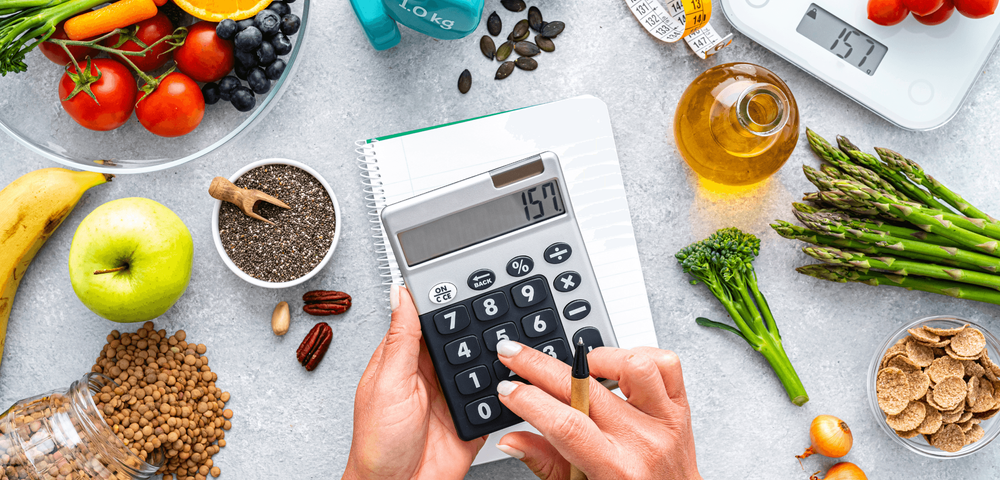
TL;DR: Most people don't fail calorie tracking because they lack discipline. They fail because the first 30 days follow a predictable pattern that nobody warned them about. Engagement drops sharply around week three, underreporting hides the real deficit in week one, and the logging habit hasn't become automatic yet. Understanding the arc before you start, and using an app built for it, changes the outcome.
Table of contents
- What the behavioral science says about the first month of calorie tracking
- How to get through the first month of calorie tracking, week by week
- How a good tracking app can change the curve
- FAQ
What the behavioral science says about the first month of calorie tracking
The first four weeks of calorie tracking are not a smooth ramp. The behavioral literature documents a predictable pattern of engagement, friction, and breakthrough that is remarkably consistent across studies, and understanding it in advance dramatically improves the odds of making it past the point where most people quit.
That point comes earlier than most expect. A 2022 exploratory study in JMIR Formative Research tracking digital self-monitoring adherence across a 6-month weight loss program found that the median time to disengagement from dietary logging was just 10 weeks, and that participants who disengaged earlier had significantly worse weight outcomes (Carpenter, Eastman, & Ross, 2022). Earlier studies of commercial health apps put that window even shorter, with some data suggesting users typically disengage within approximately a month of starting. The pattern is consistent enough that researchers have a name for it: engagement decay.
The cause is not lack of motivation. A 2019 study in Obesity tracking 142 participants across a 24-week behavioral weight loss intervention found that time spent self-monitoring dropped from an average of 23.2 minutes per day in month one to 14.6 minutes by month six — yet within that decline, logging frequency remained the strongest predictor of outcome (Harvey, Krukowski, & Priest, 2019). Participants who logged more sessions per day were significantly more likely to hit both 5% and 10% weight loss targets.
The problem is not that people run out of reasons to track. It's that the behavior hasn't yet become automatic, so it competes with everything else in daily life.
This is where app design matters more than most people realize. A 2019 systematic review and meta-analysis in Obesity Reviews analyzing 41 app-based mobile interventions across 6,348 participants found a meaningful positive effect on obesity indices (Hedges' g = 0.30; 95% CI 0.15–0.45, p < 0.001), with most effective interventions incorporating goal-setting, feedback and monitoring, shaping knowledge, and social support as core components (Villinger et al., 2019). Notably, the review found no significant difference in outcomes between commercial and research-designed apps — what separated results was whether the structural ingredients were present, not who built the interface.
A separate 2021 systematic review in Obesity examining 39 digital self-monitoring studies found that greater self-monitoring frequency was linked to better weight loss in 74% of occurrences, while very few interventions achieved engagement rates above 75% of days (Patel, Wakayama, & Bennett, 2021).
That gap — between what frequency predicts and what users actually sustain — is the core challenge of the first 30 days.
There is also the accuracy problem that compounds the engagement problem. Research consistently documents that self-logged intake is underreported by 400–500 kcal/day relative to objective measurements (Wadden, Tronieri, & Butryn, 2020). This means that users who finish week one believing they maintained a 500 kcal deficit were often closer to maintenance. When the scale doesn't move as expected by day 10–14, motivation erodes — not because tracking failed, but because the user had no way to know their baseline was off. Knowing this in advance converts a confidence-killing surprise into an expected mid-course adjustment.
The behavioral arc of the average user based upon the synthesis of these findings looks like this: week one is run by novelty & logistics, week two reveals the gap between assumed and actual intake, week three is where most people quit because they don’t see results yet while friction is still high, and week four is where users who push through start to experience compounding returns, both physiological and behavioral as logging starts to feel more automatic. The research is consistent that the structure around the tracking, not the logging interface itself, is what determines whether users make it to that point.
How to get through the first month of calorie tracking, week by week
After seeing numerous clients go through this same process, I can confidently give specific advice depending on where they are in their first month of tracking — to help them push through when willpower starts to slip.
Week 1: logistics over results. The goal of this initial part of the process is to get a hold of the logging habit. Whether the targets were handed to you or calculated by an app, your job now is to start tracking as accurately as possible — with a food scale, preferably over visual estimates like a handful or a tablespoon. There will be some friction, since you're adding extra minutes to what used to be faster: setting up the plate, weighing each ingredient, logging one by one. Know that this initial discomfort gets easier as you go. A good first week is one where you logged at least 5 out of 7 days. And don't compare your expectations against the scale yet, since water weight noise dominates the first 7–10 days.
Week 2: reality check. Now that you have the hang of it, go a bit deeper and double-check that nothing is missing from your log: cooking oils, sauces, drinks, bites while cooking, condiments. This is the time to catch any extra calories that slipped through because they didn't seem worth logging or you assumed they had no real caloric impact.
Week 3: the dropout cliff. This is where most people quit. The novelty has worn off, results so far feel small relative to the effort, and logging hasn't become automatic yet. This is a good time to lean on faster logging tools if weighing every meal feels unbearable. Be strategic: save common meals as a single recipe you can log in one tap, and identify your go-to meals and snacks for situations where tracking gets annoying — so you can copy and paste instead of starting from scratch.
Week 4: compounding starts. Two things converge in week four. First, if you've been running a calorie deficit, visible body composition changes start to show — usually 2–4 lbs of real loss for someone at a 500 kcal/day deficit, along with reduced bloating, looser-fitting clothes, and improved energy. Second, logging becomes more efficient and you start to internalize how many calories and macros to expect from the foods you eat regularly. Users who make it past week four are statistically more likely to reach month three.
How a good tracking app can change the curve
Apps that provide the structural fixes identified in a 2019 Obesity Reviews meta-analysis — automated goal setting, feedback loops, and layered knowledge built into the workflow — help flatten the dropout cliff.
Apps that automatically recalculate your calorie needs based on your actual progress can absorb small day-to-day variations — a higher calorie day here, a change in your exercise routine there — and still keep you on track. Apps with verified food databases mean you can trust that your entries are accurate, so the protein, fat, and carb targets you're hitting actually reflect what you're eating. For some users, built-in meal planning takes it a step further — making it easier to understand what to cook in order to hit your macros, which saves the kind of mental energy that runs low in weeks two and three.
The first thirty days are when structural support matters most, and users who choose the wrong app for their specific obstacle most often give up.
Tracking can be hard enough on its own — the app you use in these first thirty days shouldn't make it harder. Fitia adjusts your calorie targets as you progress, lets you log by photo, text, voice, or barcode, and runs on a dietitian-verified database. Download it free and use code FITIANOW to save on Premium.
FAQ
How long does it take for calorie tracking to start working?
The first 7–10 days are dominated by water-weight fluctuation. Real weight movement shows up in week two if a genuine deficit is being maintained. By week four, someone at a 500 kcal/day deficit typically sees 2–4 lbs of real loss, reduced bloating, and noticeable changes in how clothes fit.
Why am I not losing weight after a week of tracking?
Two likely causes. First, research shows self-logged intake runs 400–500 kcal/day below actual intake, meaning your assumed deficit may not be a real one (Wadden et al., 2020). Second, water-weight noise in the first 7–10 days masks the underlying trend. Audit your week-one logs for missing items and trust the trend across 14+ days, not a single morning weigh-in.
Why do most people quit calorie tracking by week three?
Week three sits in the worst combination: friction is still high, results are still small, and logging isn't automatic yet. Research consistently documents a sharp engagement drop after the first month (Carpenter et al., 2022). The clients who push through almost always describe the same shift: they stopped trying to log perfectly and focused on logging something every day instead.
What's the most important habit to build in the first 30 days?
Logging frequency. Users who log 6–7 days a week consistently outperform those who log 4–5 days, even when the less frequent group is more accurate per entry (Ashton et al., 2020; Harvey et al., 2019). In the first month, consistency beats precision every time.
About the Author
 | Marcela Perez-Albela R. is a registered dietitian and nutritionist from Universidad Peruana de Ciencias Aplicadas (UPC), with more than half a decade of experience in nutrition and public health, including clinical work through SERUMS with the Peruvian Air Force. At Fitia, she works as Operations Analyst, combining her nutrition background with her drive to make healthy living more accessible. She believes small, consistent changes in how people eat can make a real difference in their lives. |
References
- Carpenter, C. A., Eastman, A., & Ross, K. M. (2022). Consistency with and disengagement from self-monitoring of weight, dietary intake, and physical activity in a technology-based weight loss program: Exploratory study. JMIR Formative Research, 6(2), e33603. https://doi.org/10.2196/33603
- Harvey, J., Krukowski, R. A., & Priest, J. S. (2019). Log often, lose more: Electronic dietary self-monitoring for weight loss. Obesity, 27(3), 380–384. https://doi.org/10.1002/oby.22382
- Patel, M. L., Wakayama, L. N., & Bennett, G. G. (2021). Self-monitoring via digital health in weight loss interventions: A systematic review among adults with overweight or obesity. Obesity, 29(3), 478–499. https://doi.org/10.1002/oby.23088
- Villinger, K., Wahl, D. R., & Boeing, H. (2019). The effectiveness of app-based mobile interventions on nutrition behaviours and nutrition-related health outcomes: A systematic review and meta-analysis. Obesity Reviews, 20(10), 1465–1484. https://doi.org/10.1111/obr.12903
- Wadden, T. A., Tronieri, J. S., & Butryn, M. L. (2020). Lifestyle modification approaches for the treatment of obesity in adults. American Psychologist, 75(2), 235–251. https://doi.org/10.1037/amp0000517
Related articles
 Fat Loss
Weight Loss Calorie Chart (2026): How Many Calories to Eat by Body Weight, Sex, and Activity
See how many calories to eat to lose weight, with simple charts by body weight and activity, plus why your target changes as you go.
Read article
Best Calorie Counter App for Muscle Gain in the US (2026): 4 Apps Compared for Lifters
The 4 best calorie counter apps for US lifters in 2026, compared on macros, database, adaptation, and meal planning.
Read article
Best Online Nutrition Coach in the US (2026): What to Look For Before You Pay
Online nutrition coaching in the US 2026: three tiers, what the research says, and the red flags to spot before you pay for an app or coach.
Read article