How Fast Should You Lose Weight? What the Evidence Actually Says
Losing weight too fast costs you muscle, slows your metabolism, and makes regain more likely. Here's the rate the research actually supports — and why it works.
- Published
- Updated
- 6 min read
- 6 min read
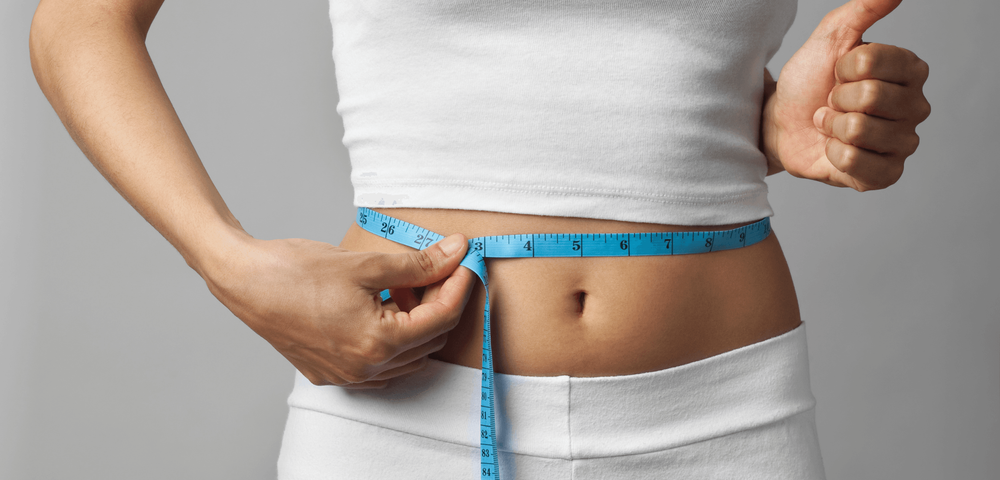
TL;DR: Losing weight faster isn't the same as losing it better. The evidence supports a rate of 0.5 to 0.75% of body weight per week — slow enough to preserve muscle, fast enough to make real progress. Go above that and you lose more lean mass, your metabolism adapts downward, and adherence falls apart before results do.
Table of Contents
- What Actually Happens to Your Body at Different Rates of Weight Loss
- What Rate of Weight Loss Does the Evidence Actually Support?
- What Losing Weight Too Fast Actually Costs You
- Adherence Drops Sharply
- The Weight Comes Back Faster
- The Scale Lies to You Early On
- The Best Rate of Weight Loss for Sustainable Fat Loss
Most people set a weight loss goal by picking a deadline first — a trip, an event, a date that feels meaningful — and then working backward to figure out how fast they need to lose weight to get there. It seems logical. It's also usually the wrong way to approach it.
The rate at which you lose weight isn't really a scheduling decision. It's a biological variable that determines what you're actually losing — fat, muscle, or some mix of both — and whether the results hold once the diet ends. Set the rate too aggressively and you don't just lose weight faster; you lose it differently, in ways that can work against you for months afterward.
So before asking "how fast can I lose weight?", it's worth asking a better question: what rate produces mostly fat loss, preserves muscle, and is realistic enough to sustain for the time it actually takes?
What actually happens to your body at different rates of weight loss
When you're in a calorie deficit, the weight you lose is never pure fat. Some proportion always comes from lean tissue — muscle and other metabolically active mass. The question is how much.
Under well-controlled conditions with adequate protein intake, lean tissue typically accounts for 20 to 30 percent of total weight lost, with the remaining 70 to 80 percent coming from fat. A 2020 randomized trial published in JAMA Internal Medicine confirmed this range as the benchmark for normal weight loss — and notably showed what happens when it goes wrong: people in a time-restricted eating group lost roughly 65% of their total weight as lean tissue, far outside that normal range.
The reason this matters isn't just aesthetic. Muscle is metabolically active, it burns calories at rest. When you lose a meaningful amount of it during a diet, your resting energy expenditure drops, which makes maintaining your new weight harder than it would otherwise be. Research in Obesity Reviews has confirmed that losing lean tissue rather than fat decreases total energy expenditure to a greater extent, widening the gap that your body then tries to close by increasing appetite.
At aggressive deficit sizes — the kind that produce rapid loss of two or more pounds per week — this lean-to-fat loss ratio shifts unfavorably. A review in Nutrients found that slower rates of weight loss are consistently associated with better preservation of lean tissue compared to rapid loss approaches, and that higher protein intake helps but doesn't fully compensate when the deficit is very large.
What rate of weight loss does the evidence actually support?
The research converges on a fairly consistent range. Here's what the numbers look like in practice:
A daily deficit of 300 to 500 calories produces roughly 0.5 to 1 pound of loss per week and is associated with predominantly fat loss with good lean mass preservation. Pushing to a 500 to 700 calorie deficit gets you to roughly 1 to 1.5 pounds per week, but requires more deliberate protein management to protect muscle. Above 750 calories of daily deficit, weight comes off faster but the proportion of lean mass loss rises meaningfully, and dietary adherence tends to fall apart before long.
A more precise way to think about rate is as a percentage of your body weight per week, because the right absolute number varies depending on how much you weigh:
| Body weight | 0.5% per week | 1% per week |
|---|---|---|
| 130 lbs | ~0.65 lbs | ~1.3 lbs |
| 150 lbs | ~0.75 lbs | ~1.5 lbs |
| 170 lbs | ~0.85 lbs | ~1.7 lbs |
| 200 lbs | ~1.0 lbs | ~2.0 lbs |
| 230 lbs | ~1.15 lbs | ~2.3 lbs |
People with more weight to lose can sustain higher absolute rates while staying within the optimal percentage range.
Someone at 230 pounds losing 2 pounds a week is right at the 1% threshold — a rate where most of the loss is still fat. Someone at 130 pounds losing 2 pounds a week is at 1.5% — a rate where lean mass loss risk climbs noticeably.
For most adults with a moderate amount of weight to lose, targeting 0.5 to 0.75% of body weight per week is the evidence-supported sweet spot. It's achievable, it produces a favorable fat-to-lean loss ratio, and it's a rate most people can sustain without the diet collapsing.
What losing weight too fast actually costs you
Lean mass loss is the most documented downside of aggressive weight loss, but it's not the only one. There are three others that rarely get discussed in popular advice.
Adherence drops sharply
A larger calorie deficit means a more restrictive eating plan — fewer calories, more hunger, less flexibility. The research on dietary adherence consistently shows that the bigger the deficit, the faster adherence falls apart. A moderate deficit maintained for six months produces more total fat loss than an aggressive deficit kept up for four weeks before being abandoned.
The weight comes back faster
Losing lean mass during a rapid diet reduces your resting metabolic rate — the baseline number of calories your body burns at rest. Once the diet ends, your maintenance calorie level is lower than it was before you started, which means the calorie intake that previously maintained your weight now creates a surplus. This is one of the main biological reasons that weight regain after crash dieting tends to happen faster than the loss did.
The scale lies to you early on
In the first one to two weeks of a significant calorie cut, the scale can drop rapidly — sometimes three to five pounds in a single week. Almost none of that is fat. Most of it is water loss and glycogen depletion as your body draws down its carbohydrate stores. People who set aggressive goals often read this initial drop as confirmation that their plan is working, then feel discouraged when the rate slows sharply in weeks three and four. It hasn't stopped working, it's just moved from water loss to actual fat loss, which takes longer.
The best rate of weight loss for sustainable fat loss
There's no single number that works for everyone, but the evidence points in a consistent direction: moderate, sustained deficits outperform aggressive ones both for body composition and for long-term results.
The goal isn't to lose weight as fast as possible. It's to lose the right kind of weight — mostly fat, with lean mass preserved — at a rate you can actually maintain for long enough to reach your target and stay there.
For most people, that means targeting somewhere between 0.5 and 0.75 percent of body weight per week, achieved through a daily deficit of 300 to 500 calories, with enough protein to protect muscle while the fat comes off.
Knowing your number is the starting point. Everything else — your meal plan, your calorie target, your protein goal — follows from there.
Knowing your target rate is step one. Fitia calculates the right deficit for your body weight, sets your protein goal, and builds a meal plan that keeps you in the sweet spot. Download now.
References
- Lowe, D. A., Wu, N., Rohdin-Bibby, L., Moore, A. H., Kelly, N., Liu, Y. E., Philip, E., Vittinghoff, E., Heymsfield, S. B., Berggren, J. R., Dugas, L. R., & Olgin, J. E. (2020). Effects of time-restricted eating on weight loss and other metabolic parameters in women and men with overweight and obesity: The TREAT randomized clinical trial. JAMA Internal Medicine, 180(11), 1491–1499. https://doi.org/10.1001/jamainternmed.2020.4153
- McCarthy, H. D., & Berg, A. (2021). Weight loss strategies and the risk of skeletal muscle mass loss. Nutrients, 13(7), 2473. https://doi.org/10.3390/nu13072473
- Brown, E., Wilding, J., & Barber, T. M. (2019). Weight loss variability with SGLT2 inhibitors and GLP-1 receptor agonists in type 2 diabetes mellitus and obesity: Mechanistic possibilities. Obesity Reviews, 20(6), 816–828. https://doi.org/10.1111/obr.12841
Related articles
 Fat Loss
Weight Loss Calorie Chart (2026): How Many Calories to Eat by Body Weight, Sex, and Activity
See how many calories to eat to lose weight, with simple charts by body weight and activity, plus why your target changes as you go.
Read article
Best Calorie Counter App for Muscle Gain in the US (2026): 4 Apps Compared for Lifters
The 4 best calorie counter apps for US lifters in 2026, compared on macros, database, adaptation, and meal planning.
Read article
Best Online Nutrition Coach in the US (2026): What to Look For Before You Pay
Online nutrition coaching in the US 2026: three tiers, what the research says, and the red flags to spot before you pay for an app or coach.
Read article