How to Pick a Calorie Counter App You'll Actually Stick With
Most calorie counter apps fail because of friction, not features. Learn what actually predicts sticking with one and how to pick the right one for you.
- Published
- 5 min read
- 5 min read
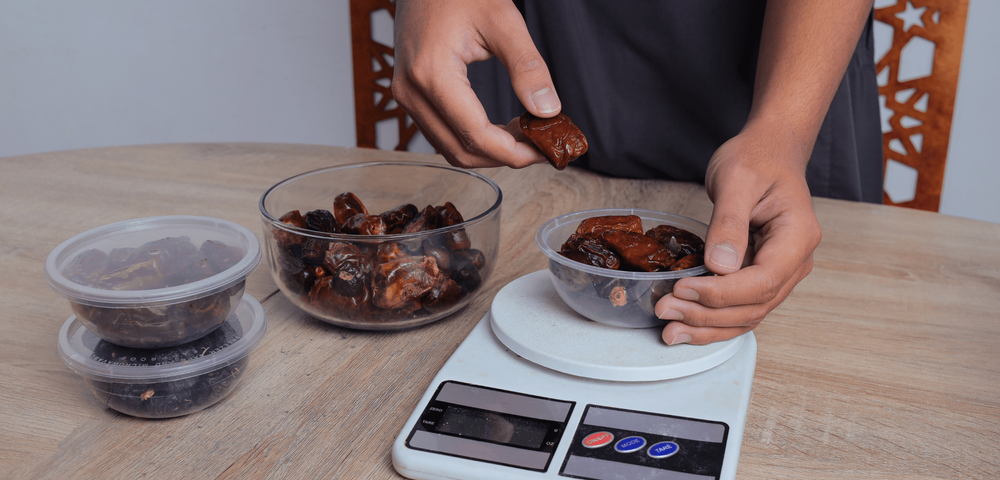
TL;DR: The simplest calorie counter isn’t the one with the fewest features, it’s the one that requires the least unnecessary effort to log daily. Look for apps that make logging fast and straightforward while still offering depth when you need it.
Table of Contents
- What actually predicts sticking with a calorie counter
- What actually helps my clients stay consistent with calorie tracking
- How Fitia changes the logging process
- FAQs
- Conclusion
What actually predicts sticking with a calorie counter
The dietary self-monitoring literature has converged on a clear and slightly counterintuitive finding: people who lose more weight aren't logging more carefully, they're logging more frequently.
A 2019 study in Obesity tracked 142 adults across a 24-week behavioral weight-control program and found that participants who reached a 5% weight loss accessed their food log a mean of 2.4 times per day, compared to 1.6 for those who didn't. The number of minutes spent logging didn't differ between groups, but daily access frequency did, with high statistical significance (Harvey et al., 2019).
The same paper documented something else worth absorbing: total time spent self-monitoring among successful losers fell from about 23 minutes per day in month one to under 15 minutes in month six. People didn't quit logging; they got faster at it. Saved meals, recurring foods, and barcode shortcuts compressed the same behavior into a smaller daily slot.
A 2020 systematic review and meta-analysis of 20 mHealth self-monitoring trials reported a moderate effect on weight loss (mean 1.78 kg greater loss versus comparators) and significantly higher adherence than paper diaries. Also, the subgroup analysis identified smartphones specifically as the most effective device for weight management (Cavero-Redondo et al., 2020).
A 2018 randomized pilot in JMIR mHealth and uHealth compared smartphone-app self-monitoring against paper diaries in adults with type 2 diabetes and obesity. The mobile group lost 2.73% of body weight at six months versus 0.13% in the paper group.
The difference wasn’t because the app was doing anything special, it came down to higher session attendance and more consistent self-monitoring. People kept using what felt easier (Wang et al., 2018).
For choosing a calorie counter, the point is simple: every barrier between you and logging a meal, like slow search, no recent foods, missing items, or a hidden add button, reduces adherence, and adherence is what drives results.
What actually helps my clients stay consistent with calorie tracking
When bringing a calorie counter into practice with clients, I check three simple bottlenecks that can make a big difference in how long someone keeps logging their food.
First, how easy it is to log recurring foods. Most clients rotate the same one or two meals depending on the time of day, so having an app that remembers what you ate and lets you log it again in one tap is crucial.
Second, I check how easy it is to log a meal someone else cooked. Not everyone follows a plan 100%. People visit family or go to birthdays, so being able to log a meal without knowing exact ingredients matters. This can be done through full-meal entries that get close to the target or AI-supported tools that help estimate portions.
Finally, I look at how easy it is to plan ahead. Most apps should allow this, but surprisingly not all make it simple enough.
If an app can reduce even a few seconds from the act of logging meals, it usually earns a spot on my recommended list.
Outside of these criteria, one of the biggest mistakes people make is choosing the app with the most features. After a certain point, more features mean more screens, more taps, and more decisions. Consistency tends to drop as complexity increases beyond what you actually use.
How Fitia changes the logging process
Fitia takes a structurally different approach. Most calorie counters treat the diary as an empty space the user has to fill. Fitia still gives you full control over logging, but it can also pre-populate your day based on your targets with auto-generated meal plans.
This shifts the task from “what should I log?” to “this what I’m eating!”
For people who struggle with decision fatigue, especially later in the day, that shift can be the difference between staying consistent for weeks or dropping off early.
Conclusion
Most people assume results come from precision, but the evidence points in a different direction. What actually drives progress is consistency, and consistency depends on how easy it is to log your food day after day.
The best calorie counter is the one you can use quickly and repeatedly. Every extra step, delay, or missing food increases the chance that you stop logging altogether.
That is why the small details matter. Fast access to recurring meals, simple ways to log in not-so-ideal situations, and the ability to plan ahead all reduce the effort required to stay consistent.
If your goal is to stay consistent long enough to see real results, choose the tool that makes logging feel effortless, not the one that looks the most powerful on paper.
Pick the right app today! Download Fitia and use code FITIANOW to save on Premium.
FAQs
Do calorie counters actually help with weight loss?
Yes, pooled randomized data shows smartphone-based self-monitoring produces greater weight loss than non-app interventions, with significantly higher adherence than paper diaries. The effect comes from sustained daily use, not from any specific feature.
How long does it take to see weight loss using a calorie counter?
Most people who reach clinically meaningful weight loss do so between months four and six of consistent logging. The strongest behavioral predictor is days-per-month logged; six or more days per week, particularly early in the program, predicts greater odds of success.
What if I miss a few days of logging?
A few missed days won't derail your results. The risk is that two missed days becomes two missed weeks. If you slip, log the very next meal you eat. Most successful users have gaps; what they don't do is treat a gap as a reason to stop.
About the Author
 | Arantza Echeandía León is a registered dietitian and nutritionist, graduated from Universidad Peruana de Ciencias Aplicadas (UPC), where she ranked in the top 10% of her class. She specializes in sports nutrition and metabolic conditions, with experience supporting athletes and collaborating with multidisciplinary teams to optimize performance and recovery. She holds a Level I ISAK certification in kinanthropometry and currently leads food database optimization and AI-driven nutrition feature integration at Fitia Inc. |
References
- Harvey, J., Krukowski, R., Priest, J. and West, D. (2019), Log Often, Lose More: Electronic Dietary Self-Monitoring for Weight Loss. Obesity, 27: 380-384. https://doi.org/10.1002/oby.22382
- Cavero-Redondo, I., Martinez-Vizcaino, V., Fernandez-Rodriguez, R., Saz-Lara, A., Pascual-Morena, C., & Álvarez-Bueno, C. (2020). Effect of Behavioral Weight Management Interventions Using Lifestyle mHealth Self-Monitoring on Weight Loss: A Systematic Review and Meta-Analysis. Nutrients, 12(7), 1977. https://doi.org/10.3390/nu12071977
- Wang J, Cai C, Padhye N, et al. A Behavioral Lifestyle Intervention Enhanced With Multiple-Behavior Self-Monitoring Using Mobile and Connected Tools for Underserved Individuals With Type 2 Diabetes and Comorbid Overweight or Obesity: Pilot Comparative Effectiveness Trial. JMIR mHealth and uHealth. 2018;6(4):e92. DOI: 10.2196/mhealth.4478
Related articles
 Fat Loss
Weight Loss Calorie Chart (2026): How Many Calories to Eat by Body Weight, Sex, and Activity
See how many calories to eat to lose weight, with simple charts by body weight and activity, plus why your target changes as you go.
Read article Fat Loss
Best Personalized Meal Planning App for Weight Loss in the US (2026): Comparing Apps That Plan Around Your Likes, Dislikes & Food Preferences
Compare Fitia, Eat This Much, Lifesum & Mealime on how deeply each one plans meals around your likes, dislikes, and dietary patterns for weight loss.
Read article Fat Loss
Best Calorie Deficit App to Diet Without Feeling Hungry in the US (2026): Satiety-Focused Reviews & Feature Comparison
Compare the best calorie deficit apps in the US for 2026. See which satiety features actually keep you full so you can stick to a deficit for months.
Read article