6 Keys To Increase Your Testosterone Levels Naturally
Testosterone is associated with higher levels of muscle mass and lower fat %. These 6 keys will help you increase it.
- Published
- Updated
- 9 min read
- 9 min read
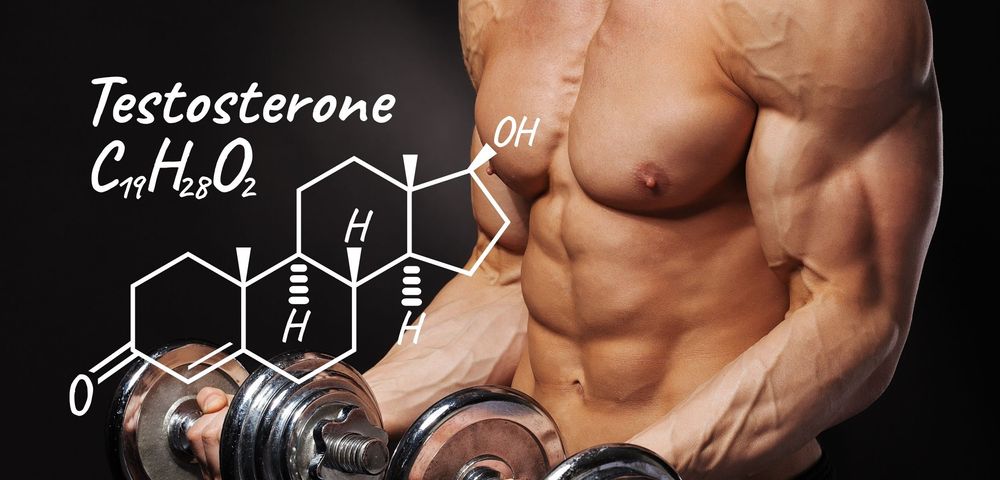
Testosterone is the main androgenic hormone present in every male organism. These hormones are responsible for developing and maintaining the biological characteristics specific to males.
Testosterone is produced mainly in the testes (about 95%) and a small part (5%) can be synthesized from the dihydrotestosterone produced in the adrenal glands.
In women, who also possess testosterone but in significantly lower amounts than males, production primarily occurs in the ovaries. (1,2).
Among its main functions are:
- Spermatogenesis, i.e., the production of spermatozoa
- Growth of the male sexual organ
- Increased libido
- Growth of facial hair
- Thickening of the voice
While these are its most prominent functions, evidence has shown that it also fulfills other important tasks such as:
- Elevating protein synthesis in the organism, which confers anabolic and anti-catabolic properties
- Promote the development and growth of tissues such as neuronal and bone
- Facilitate muscle hypertrophy
- Promote the development of strength and endurance (1)
Given these additional functions, testosterone has garnered significant attention in the realm of exercise and sports. Studies indicate that higher testosterone concentrations lead to improved performance outcomes. Consequently, its use is strictly prohibited by the World Anti-Doping Agency (WADA) at all times, including both during competition and preparation periods (3).
However, some research has raised the possibility of naturally increasing testosterone levels through nutritional strategies. Below we will discuss how dietary patterns have the ability to modify to increase or decrease testosterone concentrations.
💡 Remember that Fitia calculates your calorie and macronutrient needs for you. Download it for free here.
1. Avoid a severe energy deficit
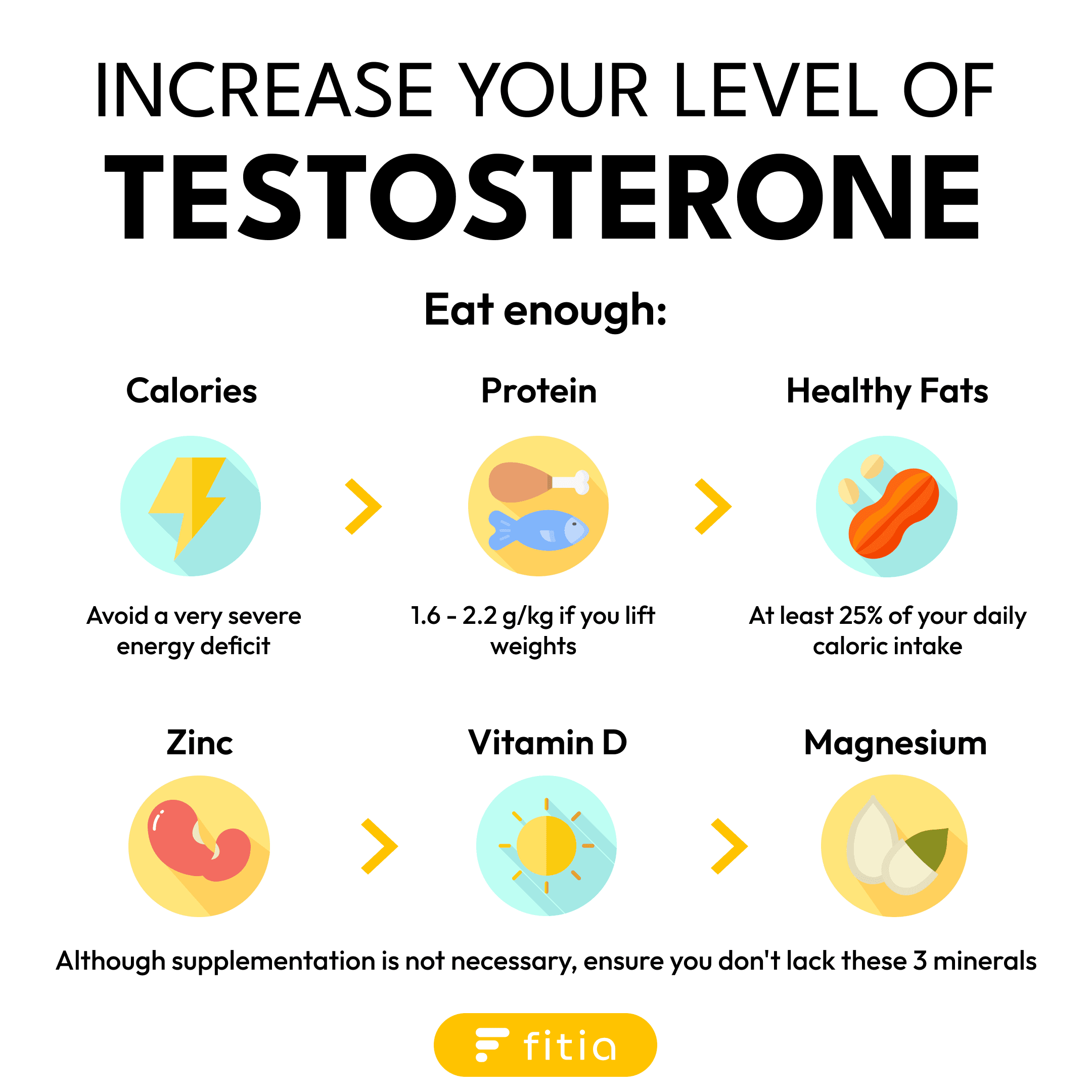
Several studies have shown that low energy availability, defined as an intake of less than 30 kcal/kg fat-free mass per day, is associated with lower circulating testosterone levels in the blood (1). This effect is mainly due to the fact that low energy intake decreases the production of luteinizing hormone, one of the hormones that signal and stimulate the hypothalamic-pituitary-gonadal axis (the pathway by which testosterone is produced) (1).
This is particularly important because when aiming for fat loss, the basic strategy involves reducing calorie intake below maintenance levels. However, maintaining an overly severe deficit can have adverse effects on testosterone levels and since this hormone prevents muscle breakdown, having reduced levels could be counterproductive to the goal.
As evidence of this, a 2014 experimental study examined testosterone levels in 33 subjects, including both men and women. All participants underwent a 40% energy deficit for 21 days (achieved by increasing energy expenditure and decreasing intake).
Additionally, they were randomly divided into 3 groups and assigned different protein intakes of 0.3, 0.72 and 0.85 g/lb/day (0.8, 1.6, and 2.4 g/kg/day), respectively. The results showed that all three groups experienced decreases in total testosterone concentrations regardless of whether they were on a high or low protein diet (4).
Severely restrictive calorie deficits (intake <30 kcal/kg of fat-free mass/day or an energy deficit >40%) lead to reduced testosterone concentrations in the bloodstream. If aiming for an energy deficit period without affecting hormone levels, it should be gradual and moderate.
💡 Calculate an ideal calorie deficit for you with Fitia. Download it for free here.
2. Include enough sources of good quality fat
As previously mentioned, testosterone belongs to the group of androgens. These are a group of steroid hormones, meaning they are fat-soluble organic compounds formed from cholesterol. This is why fat consumption in the diet is crucial for the synthesis of both female and male sex hormones: they are the base substances upon which these hormones will be produced.
In this regard, it is suggested that the minimum fat intake should be around 0.23g/Lb (0.5g/kg) of body weight per day. Furthermore, some research on high-fat eating patterns (ketogenic diet and high-fat diets without inducing ketosis) suggests that such a dietary pattern has the ability to increase total testosterone and free testosterone concentrations when compared to a diet with moderate fat intake (20% of total calories) (1).
On the other hand, it has also been seen that the type of fats consumed can increase testosterone production to a greater extent. In 2020, a secondary analysis of a double-blind randomized clinical trial was published, conducted on subjects with obesity (men and women). This compared 12-week supplementation with omega-3 fatty acids (860 mg DHA + 120 g EPA/day) in contrast to the supplementation received by the control group with corn oil.
The results showed that males receiving omega-3 supplementation significantly increased their total testosterone levels; however, the results were not replicated for female participants (5).
Fat intake is crucial for the synthesis of steroid hormones such as testosterone, as its chemical structure is formed from cholesterol. In this regard, a daily intake of at least 0.23g/Lb grams of fat per punds of body weight should be ensured (0.0.5 g/Lb). In addition, it has been shown that a diet rich in fat can increase the concentration of testosterone compared to a diet with a moderate fat intake. The type of fats consumed could also favor such an increase.
3. Do not neglect protein intake
Currently, there is no definitive evidence to suggest that high protein intake can increase testosterone levels. However, animal studies seem to suggest that insufficient intake of this macronutrient can lead to decreased levels of the hormone in question.
In 2018, an experimental study analyzed the influence of a low-protein diet (4% of calories consumed) compared to a normal-protein diet (20.5% of calories consumed) in adolescent rats and found that testosterone production in rodents fed low protein had decreased by 73.9% (6).
An adequate protein intake will depend largely on personal characteristics of each individual. However, general recommendations suggest the following:
- General Population (sedentary): 0.54 - 0.64 g/lb (1.2 - 1.4 g/kg/day)
- Endurance Activities: 0.64 - 0.82 g/lb (1.4 - 1.8g/kg/day)
- Strength Activities: 0.73 - 1.00 g/lb (1.6 - 2.2g/kg/day)
On the other hand, within the academic environment, interest arose in determining whether protein supplements had different effects on testosterone levels in men depending on their origin: whey-based protein supplement vs. soy-based protein supplement. This is due to the high content of phytoestrogens in soy (plant-derived compounds similar to estrogen, a female sex hormone).
Thus, some studies seemed to suggest that although the intake of soy protein supplements did not decrease testosterone concentrations in men, neither did it seem to increase it to the level that whey protein did (1). However, a recent meta-analysis that included 141 other studies concluded that intake of soy or its isoflavones (the main phytoestrogens present in soy) did not correlate with lower testosterone production (7).
Animal studies suggest that insufficient protein intake appears to have a negative effect on testosterone production. However, there is a lack of evidence in humans to prove this. Likewise, it has been seen that the intake of soy or its phytoestrogens does not affect the concentration of the hormone.
💡 Calculate your protein needs and track your intake with Fitia. Download it for free here.
4. Zinc for testosterone production
Zinc plays a role in several processes that directly and indirectly relate to testosterone concentrations in the blood. First of all, this mineral is necessary for the production of luteinizing hormone, which as seen above is one of the components of the hypothalamic-pituitary-gonadal axis (the one that produces testosterone).
Additionally, zinc has also been shown to enhance the function of the angiotensin-converting enzyme, which, in turn, increases the production of luteinizing hormone in the pituitary gland. (1).
Likewise, several descriptive studies have correlated serum zinc concentrations with higher levels of total testosterone in blood, as well as have shown that a diet deficient in the mineral is related to lower levels of the hormone (1,8).
The amount of zinc required varies according to age, sex and other individual factors. For adult men, the recommended daily intake of zinc is approximately 11 mg, while for adult women it is 8 mg.
It is important to emphasize that zinc supplementation has not been shown to have strong benefits on testosterone levels, nor has a supplementation dose been established for healthy individuals with the objective of increasing their levels of this hormone. In this sense, the basic recommendation is to eat a varied diet that provides a sufficient amount of zinc without the need to resort to a supplement.
Zinc is directly and indirectly related to testosterone synthesis. Therefore, it is essential to reach the daily requirements of this mineral through food to avoid deficiencies and thus maintain adequate levels of testosterone. Supplementation, without the presence of deficiency, is not necessary, since it will not raise the levels of this hormone.
5. Get enough vitamin D
Although the way in which vitamin D influences testosterone concentrations has not yet been fully described, it is suggested that there is a relationship between the two since a large number of vitamin D receptors and metabolizing enzymes have been found in gonadal tissues (1).
Thus, research published in 2016 found that healthy, fertile males who presented low blood concentrations of vitamin D in its active form (<25 nmol/l), exhibited lower concentrations than those subjects who presented values within the normal range (>75 nmol/l) (9).
Even so, several studies that have attempted to evaluate the effect of vitamin D supplementation on testosterone levels have not recognized an increase in the hormone caused by a higher intake through supplementation (10,11).
Such results seem to suggest that rather than a high intake through supplementation, what is needed is not to become deficient.
Normal blood concentrations of vitamin D seem to be related to better testosterone values compared with vitamin D deficiency. However, no significant benefit from supplementation has been found.
6. Meet your magnesium requirements
Finally, magnesium intake appears to be associated, albeit indirectly, with testosterone levels. Thus, it has been proposed that there is a correlation between adequate magnesium levels and higher concentrations of total and free testosterone in the blood. This relationship appears to be of particular interest to the athletic population, since magnesium deficiency is a relatively common problem in this group (1,12).
The way that has been proposed to explain how both variables interact with each other is through the capacity of magnesium to participate in antioxidant and anti-inflammatory reactions, thus generating better conditions for the adequate production of testosterone.
Although the way in which magnesium interacts with testosterone concentrations is not fully understood, it has been proposed that maintaining adequate levels of the mineral generates favorable conditions for the production of this hormone.
References
- Zamir A, Ben-Zeev T, Hoffman JR. Manipulation of Dietary Intake on Changes in Circulating Testosterone Concentrations. Nutrients. 2021;13(10):3375. Published 2021 Sep 25. doi:10.3390/nu13103375
- Nassar GN, Leslie SW. Physiology, Testosterone. 2021 Jan 9. In: StatPearls [Internet]. Treasure Island (FL): StatPearls Publishing; 2021 Jan–. PMID: 30252384.
- WORLD ANTI-DOPING AGENCY. INTERNATIONAL STANDARD PROHIBITED LIST 2021.
- Henning PC, Margolis LM, McClung JP, Young AJ, Pasiakos SM. High protein diets do not attenuate decrements in testosterone and IGF-I during energy deficit. Metabolism. 2014 May;63(5):628-32. doi: 10.1016/j.metabol.2014.02.007. Epub 2014 Feb 17. PMID: 24641883.
- Abbott K, Burrows TL, Acharya S, Thota RN, Garg ML. Dietary supplementation with docosahexaenoic acid rich fish oil increases circulating levels of testosterone in overweight and obese men. Prostaglandins Leukot Essent Fatty Acids. 2020 Dec;163:102204. doi: 10.1016/j.plefa.2020.102204. Epub 2020 Nov 12. PMID: 33221700.
- de Oliveira JC, de Moura EG, Miranda RA, de Moraes AMP, Barella LF, da Conceição EPS, Gomes RM, Ribeiro TA, Malta A, Martins IP, Franco CCDS, Lisboa PC, Mathias PCF. Low-protein diet in puberty impairs testosterone output and energy metabolism in male rats. J Endocrinol. 2018 Jun;237(3):243-254. doi: 10.1530/JOE-17-0606. Epub 2018 Mar 29. PMID: 29599416.
- Reed KE, Camargo J, Hamilton-Reeves J, Kurzer M, Messina M. Neither soy nor isoflavone intake affects male reproductive hormones: An expanded and updated meta-analysis of clinical studies. Reprod Toxicol. 2021 Mar;100:60-67. doi: 10.1016/j.reprotox.2020.12.019. Epub 2020 Dec 28. PMID: 33383165.
- Prasad AS, Mantzoros CS, Beck FW, Hess JW, Brewer GJ. Zinc status and serum testosterone levels of healthy adults. Nutrition. 1996 May;12(5):344-8. doi: 10.1016/s0899-9007(96)80058-x. PMID: 8875519.
- Blomberg Jensen M, Gerner Lawaetz J, Andersson AM, Petersen JH, Nordkap L, Bang AK, Ekbom P, Joensen UN, Prætorius L, Lundstrøm P, Boujida VH, Lanske B, Juul A, Jørgensen N. Vitamin D deficiency and low ionized calcium are linked with semen quality and sex steroid levels in infertile men. Hum Reprod. 2016 Aug;31(8):1875-85. doi: 10.1093/humrep/dew152. Epub 2016 Jun 19. PMID: 27496946.
- Lerchbaum E, Pilz S, Trummer C, Schwetz V, Pachernegg O, Heijboer AC, Obermayer-Pietsch B. Vitamin D and Testosterone in Healthy Men: A Randomized Controlled Trial. J Clin Endocrinol Metab. 2017 Nov 1;102(11):4292-4302. doi: 10.1210/jc.2017-01428. PMID: 28938446.
- Lerchbaum E, Trummer C, Theiler-Schwetz V, Kollmann M, Wölfler M, Heijboer AC, Pilz S, Obermayer-Pietsch B. Effects of vitamin D supplementation on androgens in men with low testosterone levels: a randomized controlled trial. Eur J Nutr. 2019 Dec;58(8):3135-3146. doi: 10.1007/s00394-018-1858-z. Epub 2018 Nov 20. PMID: 30460609; PMCID: PMC6842386.
- Cinar V, Polat Y, Baltaci AK, Mogulkoc R. Effects of magnesium supplementation on testosterone levels of athletes and sedentary subjects at rest and after exhaustion. Biol Trace Elem Res. 2011 Apr;140(1):18-23. doi: 10.1007/s12011-010-8676-3. Epub 2010 Mar 30. PMID: 20352370.
Related articles
 Muscle Gain
Best Nutrition App for Weight Gain in the US (2026): A Practical Comparison of Calorie Surplus & Macro Tracking Tools
Compare the best weight gain apps in the US for 2026. See which calorie surplus and macro tracking features actually help you bulk lean and stay consistent.
Read article Muscle Gain
The Best Calorie Counter Apps for Muscle Gain: What the Evidence Says You Actually Need
We compared the top calorie counter apps for muscle gain in 2026, with what the research says about protein, surplus, and tracking that actually works.
Read article Muscle Gain
Why Most Calorie Counter Apps Make Muscle Gain Harder Than It Needs To Be
Most calorie apps are built for fat loss. Learn why they fail for muscle gain and what to look for to actually build lean mass.
Read article