Why Nutrition Apps Need More Than Just Photo Tracking
Photo tracking in nutrition apps offers convenience but is often inaccurate for beginners. Learn why apps should combine photo tracking with verified databases.
- Published
- Updated
- 5 min read
- 5 min read
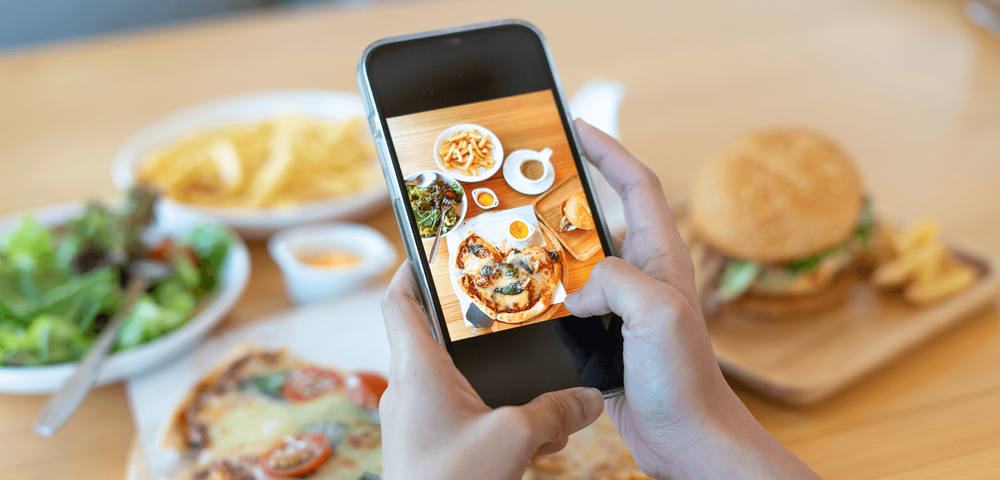
Photo tracking has quickly become a standout feature in nutrition apps, offering the convenience of snapping a photo and instantly receiving a nutritional breakdown.
While it might seem like a great solution, especially for beginners trying to track their food, there’s a reason why most experienced users distrust this feature.
In its current state, photo tracking is widely considered inaccurate and less reliable than weighing your food and tracking it manually. Relying solely on this method can easily lead to mistakes, particularly for beginners who haven’t yet mastered portion sizes or the intricacies of different foods.
That’s why, in this article, we’ll explain why your nutrition app should offer more than just the ability to open the camera.
How Accurate Is Photo Tracking for Counting Calories in Nutrition Apps?
While photo tracking offers convenience, it comes with notable limitations.
Common issues include misinterpreting portion sizes, overlooking ingredients, failing to recognize different preparation methods and general misinterpretations due to photo quality. Beginners, in particular, may struggle to adjust quantities or estimate portion sizes when the app provides a result. This can lead to confusion, especially if the app suggests an amount that doesn’t match what the user actually consumed.
Without a solid understanding of food measurements, beginners risk receiving misleading data that could hinder their progress toward health goals.
This happens because photo-based tracking relies heavily on AI, as well as the quality of user input (specifically, how well they can capture the picture).
To put it into perspective, achieving near-100% accuracy would require a scanning feature as precise as a lab conducting a full nutritional breakdown. For context, labs can charge hundreds, sometimes even thousands, of dollars for such detailed analyses. Until this technology evolves in both practicality and accessibility, photo tracking will remain a convenient, yet imperfect, tool.
Additionally, the photo may not always capture all the ingredients or some may be hidden, leading to incomplete or inaccurate data. The quality of the image itself can also impact how well the AI can analyze the food.
Is Photo Tracking Enough for Accurate Nutritional Analysis or Do You Need More Tools?
To ensure accuracy, nutrition apps need more than just photo tracking.
A trustworthy food database is essential. Apps like Fitia provide multiple reliable ways to log meals using an expert-verified database. This allows users to track their meals with confidence, knowing the information is accurate.
For beginners, access to reliable data is crucial for learning about portion sizes, food types and nutritional content.
Additionally, a verified database greatly enhances the accuracy of photo scanning results. At Fitia, we take pride in achieving top precision with our photo scanner feature, thanks to this approach, ensuring users can rely on more accurate meal tracking.
Finally, AI-powered tools like list writing and voice tracking further enhance the user experience by enabling quick and accurate meal entries. With list writing, users can easily input all the foods and quantities they’ve eaten in a note window. The AI then searches the database and automatically populates the log with the entered data, minimizing errors and saving time.
Voice tracking takes convenience a step further by allowing users to simply speak their meal choices, making it ideal for busy users on the go.
By combining verified data with these advanced AI tools, the tracking process becomes not only more intuitive but also far more efficient, minimizing errors and improving overall accuracy.
What Are the Advantages of Using Photo Tracking for Meal Logging?
Photo tracking, while not as precise as weighing your food, can still be a useful tool, especially when compared to not tracking at all.
It’s a great option in situations where accuracy isn’t as critical or when you don’t have a scale on hand. For example, using photo tracking during social gatherings, family meals or when dining out can help you keep track of your intake without needing to measure everything down to the gram.
It’s perfect for those moments when you're unsure about the ingredients or portion sizes in your meal but still want to stay mindful of your nutrition.
That said, those with more experience tracking calories through traditional methods, like weighing food and reading labels, will likely get more out of photo tracking. They’re able to quickly adjust for any inaccuracies and use the tool as a quick reference, rather than relying on it entirely.
Why Are So Many Nutrition Apps That Track with Photo Gaining Popularity?
Spend just a few minutes on Instagram or TikTok, and you’ll likely stumble upon an ad or influencer showcasing the latest calorie-tracking app that heavily relies on photo tracking as its main (and often only) feature. It feels like the market is pumping out one of these apps every day lately.
Don’t get us wrong, competition is great, but flooding the market with overpromised, underdelivered apps isn’t doing anyone any favors, especially users who are just starting their journey in nutrition tracking.
A major factor behind the rise of these apps is the increasing use of AI in health and wellness technology. AI-powered features like photo recognition and portion size estimation make these apps seem high-tech and efficient. While they’re marketed as innovative, they often lack the accuracy needed for reliable nutrition tracking, leading to potential mistakes and confusion for users.
Our main recommendation is to be cautious of apps that rely solely on photo tracking for counting calories. While photo tracking is a convenient tool that can complement your tracking routine, it’s far from an all-in-one solution that works in every context, every time.
Is Photo Tracking in Nutrition Apps Reliable for Beginners?
While photo tracking is a useful feature in nutrition apps, it should not be the only option, nor is it the most reliable for beginners.
For new users, relying on AI-driven photo tracking without the support of verified food databases and alternative input methods can lead to inaccurate results and confusion.
Apps like Fitia offer a balanced approach, combining photo tracking with other tools such as database search, voice tracking, barcode scanning and list-based tracking. This makes it a better choice for those seeking a more accurate and user-friendly way to track their nutrition.
Related articles
 Fat Loss
Weight Loss Calorie Chart (2026): How Many Calories to Eat by Body Weight, Sex, and Activity
See how many calories to eat to lose weight, with simple charts by body weight and activity, plus why your target changes as you go.
Read article
Best Calorie Counter App for Muscle Gain in the US (2026): 4 Apps Compared for Lifters
The 4 best calorie counter apps for US lifters in 2026, compared on macros, database, adaptation, and meal planning.
Read article
Best Online Nutrition Coach in the US (2026): What to Look For Before You Pay
Online nutrition coaching in the US 2026: three tiers, what the research says, and the red flags to spot before you pay for an app or coach.
Read article