Strength Training: 8 Keys to Improve Your Performance
1. Get a Good Night's Sleep Beforehand 2. Eat Carbohydrates Before Training 3. Stay Well Hydrated Throughout the Day 4. Avoid very severe calorie restriction
- Published
- Updated
- 9 min read
- 9 min read
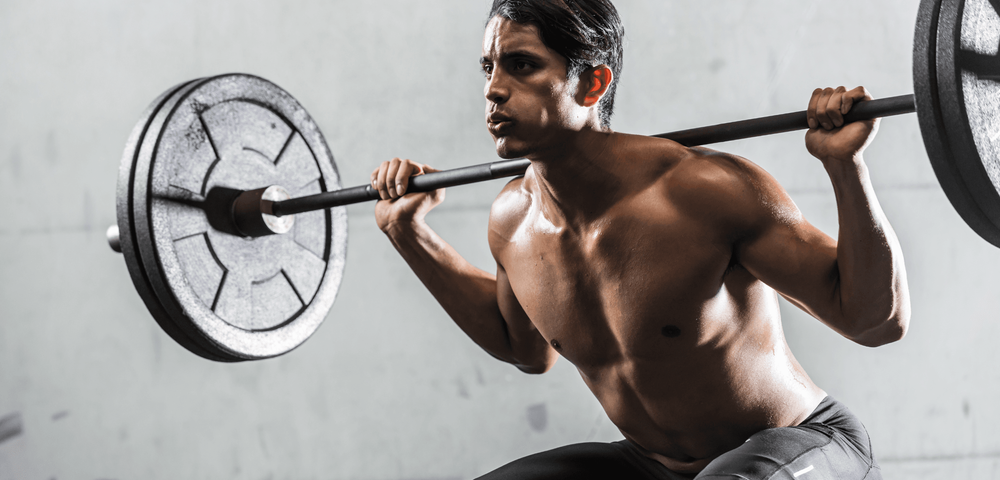
Are you looking to maximize your performance in strength training? If you want to reach your goals and push your limits, you're in the right place.
In this article, we present 8 scientifically proven tips that will help you boost your performance so you can achieve better results in your strength training workouts.
We understand that every training session counts, which is why we've gathered the best expert-backed advice in the field.
Whether you're looking to increase your strength, improve your endurance or maximize your recovery capacity, these tips will provide you with the necessary tools to succeed.
From training strategies to nutritional approaches, we’ll explore key areas that will help you optimize your strength training.
No matter if you’re a beginner or an experienced athlete, these tips are designed to suit any fitness level.
Let’s dive into the 8 tips to improve your strength training performance.
1. Get a Good Night's Sleep Beforehand

Sleep is one of the pillars of good physiological and psychological recovery, and therefore, essential for performance.
In fact, various studies have shown that poor sleep quality makes you feel more exhausted while training, reduces your strength, and decreases your reaction speed during workouts (1,2,3).
For example, a recent study on women who strength train found a negative effect on the amount of volume they could lift during training. Interestingly, even though the decrease in strength was slight (-1%), the athletes reported feeling much more tired than usual when training after a bad night’s sleep. In fact, their perception of exercise difficulty increased by 84% (they felt it was 84% harder even though they lifted less volume!) (3).
Therefore, if you don't get adequate sleep and the hours you need, it's very likely that your training performance will decrease or, at the very least, you'll feel it significantly more challenging.
How many hours should we sleep?
The American Academy of Sleep Medicine recommends that adults sleep between 7 and 9 hours each night (4).
2. Eat Carbohydrates Before Training
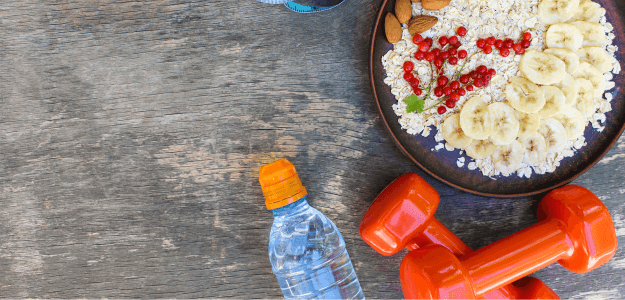
Carbohydrates are the stars when it comes to strength training.
In fact, around 80% of all the energy used during a strength workout comes from carbohydrates (6,7,8). Therefore, it is essential to include this nutrient before training.
Additionally, carbohydrates are stored in the body as glycogen (in muscles and liver). During strength training, these glycogen stores, especially those in the muscles, are utilized. If your glycogen stores are not full (for example, if you haven’t consumed enough carbohydrates), your performance during training can suffer, and you may experience increased muscle fatigue.
Therefore, it’s ideal for your glycogen stores to be at least partially full or, at the very least, not completely depleted (as can happen when training on an empty stomach) when starting your workout session (7).
Choose fast-absorbing carbohydrates (fruits, non-whole grains, etc.) if you have less than an hour before training, and slower-absorbing carbohydrates (with more fiber) if you have more time.
You might be interested in: What to Eat Before a Workout? Quick and Easy Pre-Workout Snacks
3. Stay Well Hydrated Throughout the Day
Approximately 55-75% of our body is made up of water, so it's no surprise that drinking water is essential for our body.
In addition, we naturally lose fluids throughout the day (e.g., through perspiration and urine). So, if you lose more fluid than you replace it, you will start to become dehydrated (5).
Being dehydrated can cause a decrease in physical and cognitive performance, leading to (9,10,11,12):
- Decreased endurance: When the body is dehydrated, blood volume decreases, making it harder to deliver oxygen and nutrients to the muscles. This can result in greater muscle fatigue and a reduced ability to maintain prolonged endurance performance.
- Increased perception of effort: Dehydration can make exercise feel more difficult than usual. Even a slight loss of fluids can lead to a higher perception of effort during exercise, making you feel more tired and limiting your ability to maintain an optimal training pace.
- Reduced muscle strength and power: Dehydration can negatively affect muscle strength and power. The lack of fluids can decrease the body's ability to generate force and explosiveness, affecting performance in high-intensity exercises like weightlifting or sprints.
- Thermoregulation problems: Dehydration affects the body's ability to regulate internal temperature. During exercise, the body generates heat and uses sweat to cool down. However, when you are dehydrated, sweat production decreases and the ability to dissipate heat is compromised. This can lead to earlier heat exhaustion during exercise.
- Lower motivation and concentration during training: Dehydration levels above 2% can affect mood, causing unpleasant and distracting symptoms (such as dry mouth, thirst, and headache), and impair cognitive tasks involving attention, executive function, and motor coordination.
For all these reasons, it is essential to stay well-hydrated throughout the day.
How much water should you drink?
Aim to consume about 35 ml of water per kg of body weight per day, and generally, at least 250 ml of water for every 30-60 minutes of training (depending on the intensity).
For example, a person weighing 154.3 pounds (70 kg) should consume approximately 0.0159 liters per pound per day2.45 liters of water in a day.
should consume approximately 0.0159 liters of water per pound per day."
Remember that these recommendations can vary greatly and should be adjusted based on individual characteristics, lifestyle, level of physical activity, climate, sweat rate, and more.
Remember that in Fitia app you can get your water requirement and set reminders to stay hydrated during the day. Download it for free here.
👉 You might be interested in: 5 Symptoms of Dehydration You Shouldn't Over.
4. Avoid very severe calorie restriction

If you have a very restrictive diet, it is highly likely that your performance in training will decrease.
If your priority is to perform better in workouts, then a calorie deficit is not optimal and a severe calorie deficit is even worse.
Our body requires a certain amount of energy each day to function correctly. This includes vital functions such as breathing, digestion, and circulation, as well as voluntary daily activities like working, cooking, studying, and exercising.
But which functions do you think are more important? Vital functions, of course, come first. So, if you're not consuming enough energy (for example, if you're following an extremely restrictive diet), your body will prioritize the most critical functions, and naturally, you’ll feel more tired during exercise.
Moreover, consuming very few calories could result in a micronutrient deficiency, which can also lead to feelings of tiredness or fatigue (we’ll discuss this further later on).
Remember that with the Fitia app, you can easily calculate your personalized caloric requirements, whether you want to lose, gain, or maintain your weight. This way, you can avoid consuming calories far below the recommended amount. Download it for free here.
You might be interested in: Calorie Deficit: What is it and How to Achieve it?
5. Drink coffee or other caffeinated beverages before training
Caffeine is one of the most studied substances in the field of sports.
According to a large number of studies, consuming caffeine before a workout can moderately improve physical endurance in both (13):
- Aerobic exercises (running, dancing, swimming long distance, etc.).
- Anaerobic exercises (strength training).
Additionally, it has been shown that consuming caffeine can help improve other aspects such as speed in running and power in jumps and throws (13).
It can also increase your strength, which is particularly beneficial for those who practice weightlifting, calisthenics, or CrossFit.
In an umbrella review (a review of other reviews and meta-analyses), 3 out of 4 meta-analyses that evaluated the effect of caffeine on participants' strength found a positive effect, and the level of evidence was classified as moderate-high (14).
The increase in strength was studied in exercises like squats and bench press.
How much caffeine is effective as a pre-workout?
Positive effects have been observed when consuming between 3 and 6 mg of caffeine per kilogram of body weight. These benefits occur both in athletes and in people who exercise for health or fun (13). For example, a person weighing 70 kg would need to consume between 210 and 420 mg of caffeine to experience the benefits.
To give you a better idea, a cup of coffee typically contains around 60-100 mg of caffeine on average.
As you may know, coffee is the most popular source of caffeine, but you can also find it in energy drinks and supplements (usually in higher amounts), and in some other foods like tea or yerba mate (in smaller amounts).
It’s recommended to consume caffeine 15-60 minutes before your workout and only when necessary to avoid developing tolerance.
6. Take a nap before training

Can taking a nap before a workout improve athletic performance?
That's the question a group of researchers aimed to answer. To find out, they conducted a systematic review of 37 studies and found that taking a nap during the day can have a positive impact on athletes' physical and cognitive performance (15).
Naps were shown to reduce fatigue and muscle soreness, increase motivation, and improve speed, power, alertness, and attention during training. These effects are even more noticeable in those who have lost hours of sleep.
To obtain these benefits it is advisable to:
- Nap between 1 and 4 pm to avoid interfering with nighttime sleep.
- Keep the nap between 20-90 minutes.
- Wait at least 30 minutes before starting physical activity to get past the “sleep inertia” period, where you still feel groggy after waking up.
7. Combine the Two Previous Tips: Take a "Coffee Nap"
If you're feeling very tired, you can combine the two previous tips: the "coffee nap" is gaining popularity lately.
What is it?
Simply, it involves drinking a cup of coffee right before taking a nap to recharge your energy. According to existing evidence, this strategy is much more effective than just drinking coffee or taking a nap independently.
A study on adults showed that participants who took 200 mg of caffeine followed by a 15-minute nap before being placed in a driving simulator for two hours felt 91% less drowsy compared to those who took a nap without caffeine (16).
Another study with a similar procedure found that caffeine and a nap were more effective in boosting energy and performance at work compared to taking a nap and washing one's face or being exposed to bright light (17).
However, keep in mind that it's not advisable to use this technique late in the afternoon or at night, as it could interfere with your ability to fall asleep later.
8. Listen to your favorite music

Surprisingly, creating a good training atmosphere with your favorite music can also help you train better.
For example, a study had 12 people perform two bench press workouts: one with their preferred music and the other with music they disliked. When they trained with music they liked, they managed to do more repetitions, with greater speed, higher power, and felt more motivated (18).
References
- Fullagar HH, Skorski S, Duffield R, Hammes D, Coutts AJ, Meyer T. Sleep and athletic performance: the effects of sleep loss on exercise performance, and physiological and cognitive responses to exercise. Sports Med. 2015 Feb;45(2):161-86. doi: 10.1007/s40279-014-0260-0. PMID: 25315456.
- Arnal PJ, Lapole T, Erblang M, Guillard M, Bourrilhon C, Léger D, Chennaoui M, Millet GY. Sleep Extension before Sleep Loss: Effects on Performance and Neuromuscular Function. Med Sci Sports Exerc. 2016 Aug;48(8):1595-603. doi: 10.1249/MSS.0000000000000925. PMID: 27015382.
- Knowles OE, Drinkwater EJ, Roberts SSH, Alexander SE, Abbott G, Garnham A, Lamon S, Aisbett B. Sustained Sleep Restriction Reduces Resistance Exercise Quality and Quantity in Females. Med Sci Sports Exerc. 2022 Dec 1;54(12):2167-2177. doi: 10.1249/MSS.0000000000003000. Epub 2022 Sep 22. PMID: 36136596.
- Watson NF, Badr MS, Belenky G, Bliwise DL, Buxton OM, Buysse D, Dinges DF, Gangwisch J, Grandner MA, Kushida C, Malhotra RK, Martin JL, Patel SR, Quan SF, Tasali E. Recommended Amount of Sleep for a Healthy Adult: A Joint Consensus Statement of the American Academy of Sleep Medicine and Sleep Research Society. Sleep. 2015 Jun 1;38(6):843-4. doi: 10.5665/sleep.4716. PMID: 26039963; PMCID: PMC4434546.
- Watson A, Johnson M, Sanfilippo J. Decreased Sleep Is an Independent Predictor of In-Season Injury in Male Collegiate Basketball Players. Orthop J Sports Med. 2020 Nov 9;8(11):2325967120964481. doi: 10.1177/2325967120964481. PMID: 33225012; PMCID: PMC7658528.
- Aragon AA, Schoenfeld BJ. Nutrient timing revisited: is there a post-exercise anabolic window? J Int Soc Sports Nutr. 2013 Jan 29;10(1):5. doi: 10.1186/1550-2783-10-5. PMID: 23360586; PMCID: PMC3577439.
- Knuiman P, Hopman MT, Mensink M. Glycogen availability and skeletal muscle adaptations with endurance and resistance exercise. Nutr Metab (Lond). 2015 Dec 21;12:59. doi: 10.1186/s12986-015-0055-9. PMID: 26697098; PMCID: PMC4687103.
- Schoenfeld, Brad J. Science and development of muscle hypertrophy. Human Kinetics, 2020.
- Casa DJ, Cheuvront SN, Galloway SD, Shirreffs SM. Fluid Needs for Training, Competition, and Recovery in Track-and-Field Athletes. Int J Sport Nutr Exerc Metab. 2019 Mar 1;29(2):175-180. doi: 10.1123/ijsnem.2018-0374. Epub 2019 Apr 4. PMID: 30943836.
- Cheuvront SN, Kenefick RW. Dehydration: physiology, assessment, and performance effects. Compr Physiol. 2014 Jan;4(1):257-85. doi: 10.1002/cphy.c130017. PMID: 24692140.
- Meeusen R, Decroix L. Nutritional Supplements and the Brain. Int J Sport Nutr Exerc Metab. 2018 Mar 1;28(2):200-211. doi: 10.1123/ijsnem.2017-0314. Epub 2018 Feb 23. PMID: 29252056.
- Ganio, M.S., Armstrong, L.E., Casa, D.J., McDermott, B.P., Lee, E.C., Yamamoto, L.M., Lieberman, H.R. (2011). Mild dehydration impairs cognitive performance and mood of men. British Journal of Nutrition, 106(10), 1535–1543.
- Goldstein ER, Ziegenfuss T, Kalman D, Kreider R, Campbell B, Wilborn C, Taylor L, Willoughby D, Stout J, Graves BS, Wildman R, Ivy JL, Spano M, Smith AE, Antonio J. International society of sports nutrition position stand: caffeine and performance. J Int Soc Sports Nutr. 2010 Jan 27;7(1):5. doi: 10.1186/1550-2783-7-5. PMID: 20205813; PMCID: PMC2824625.
- Grgic J, Grgic I, Pickering C, Schoenfeld BJ, Bishop DJ, Pedisic Z. Wake up and smell the coffee: caffeine supplementation and exercise performance-an umbrella review of 21 published meta-analyses. Br J Sports Med. 2020 Jun;54(11):681-688. doi: 10.1136/bjsports-2018-100278. Epub 2019 Mar 29. PMID: 30926628.
- Lastella M, Halson SL, Vitale JA, Memon AR, Vincent GE. To Nap or Not to Nap? A Systematic Review Evaluating Napping Behavior in Athletes and the Impact on Various Measures of Athletic Performance. Nat Sci Sleep. 2021. PMID: 34194254.
- Reyner LA, Horne JA. Suppression of sleepiness in drivers: combination of caffeine with a short nap. Psychophysiology. 1997 Nov;34(6):721-5. doi: 10.1111/j.1469-8986.1997.tb02148.x. PMID: 9401427.
- Hayashi M, Masuda A, Hori T. The alerting effects of caffeine, bright light and face washing after a short daytime nap. Clin Neurophysiol. 2003 Dec;114(12):2268-78. doi: 10.1016/s1388-2457(03)00255-4. PMID: 14652086.
- Ballmann CG, McCullum MJ, Rogers RR, Marshall MR, Williams TD. Effects of Preferred vs. Nonpreferred Music on Resistance Exercise Performance. J Strength Cond Res. 2021 Jun 1;35(6):1650-1655. doi: 10.1519/JSC.0000000000002981. PMID: 30531416.
Related articles
 Training
Top 5 Fitness Apps to Start 2026 in Your Best Shape
Kick off 2026 with top fitness apps for nutrition, training, sleep and wellness. Build a routine that fits your day and helps you stay consistent.
Read article Training
Best Post-Run Foods to Boost Recovery and Rebuild Muscle
Learn the best post-run foods to refuel, rebuild muscle, and recover faster. Real meals, smart timing, and science-backed nutrition for runners.
Read article Training
How to Distribute Macros Throughout the Day for Better Post-Gym Recovery
Learn how to time protein, carbs, and fats for better post-gym recovery. Get practical tips and see how Fitia helps you hit your goals with ease.
Read article