Weight Loss vs. Fat Loss: What’s the Difference?
Learn the real difference between weight loss and fat loss so you can protect your muscle, improve health and follow a plan that actually works for your goals.
- Published
- Updated
- 8 min read
- 8 min read
Did you know that nearly half of all adults worldwide have tried to lose weight at some point in their lives?
In fact, a 2017 study found that 42% of adults had attempted to lose weight (1).
The reasons varied, but it’s no surprise that the most common motivations were “improving appearance” and “improving health or preventing disease” (1).
But in reality, losing weight and losing fat aren’t exactly the same thing. Understanding the difference between these two concepts is crucial so you can create an effective strategy and actually achieve the goal you’ve set.
Plus, remember that with Fitia you can get your calorie and macronutrient requirements, along with a meal plan based on the most up-to-date scientific recommendations to help you reach your nutrition goals in the most effective way. Download it free here.
What Is Weight Loss?
Body weight is expressed in kilograms, and this number represents the total of all the body’s components (2). In other words, everything that makes up the human body is included in that number you see on the scale.
To illustrate this better, the figure below shows different models that separate the components of the human body (3).
As you can see, body fat is only one of many components.
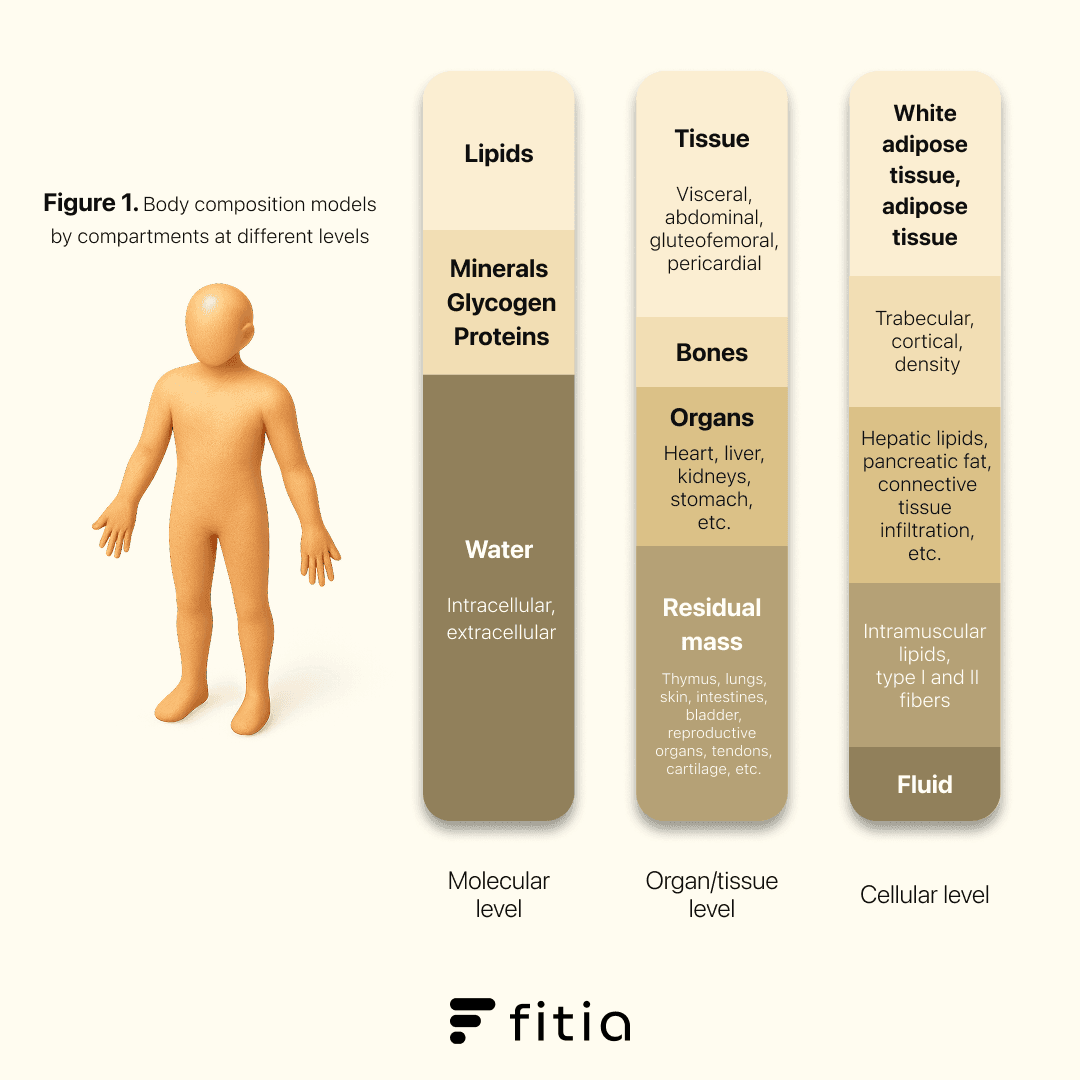
Following this logic, it’s technically possible to lose weight by reducing any of these components, for example, muscle mass or water.
A clear example of this is weight loss from dehydration before a competition in combat sports. In these situations, athletes undergo drastic dehydration and can lose 1.5–4% of their body mass in just one day (4).
And just as quickly as the weight is lost, it’s regained, since most of the water weight comes back within the 7 days following the fight or event (4).
This is similar to what happens with diets or meal plans that promise rapid weight loss in a short period of time.
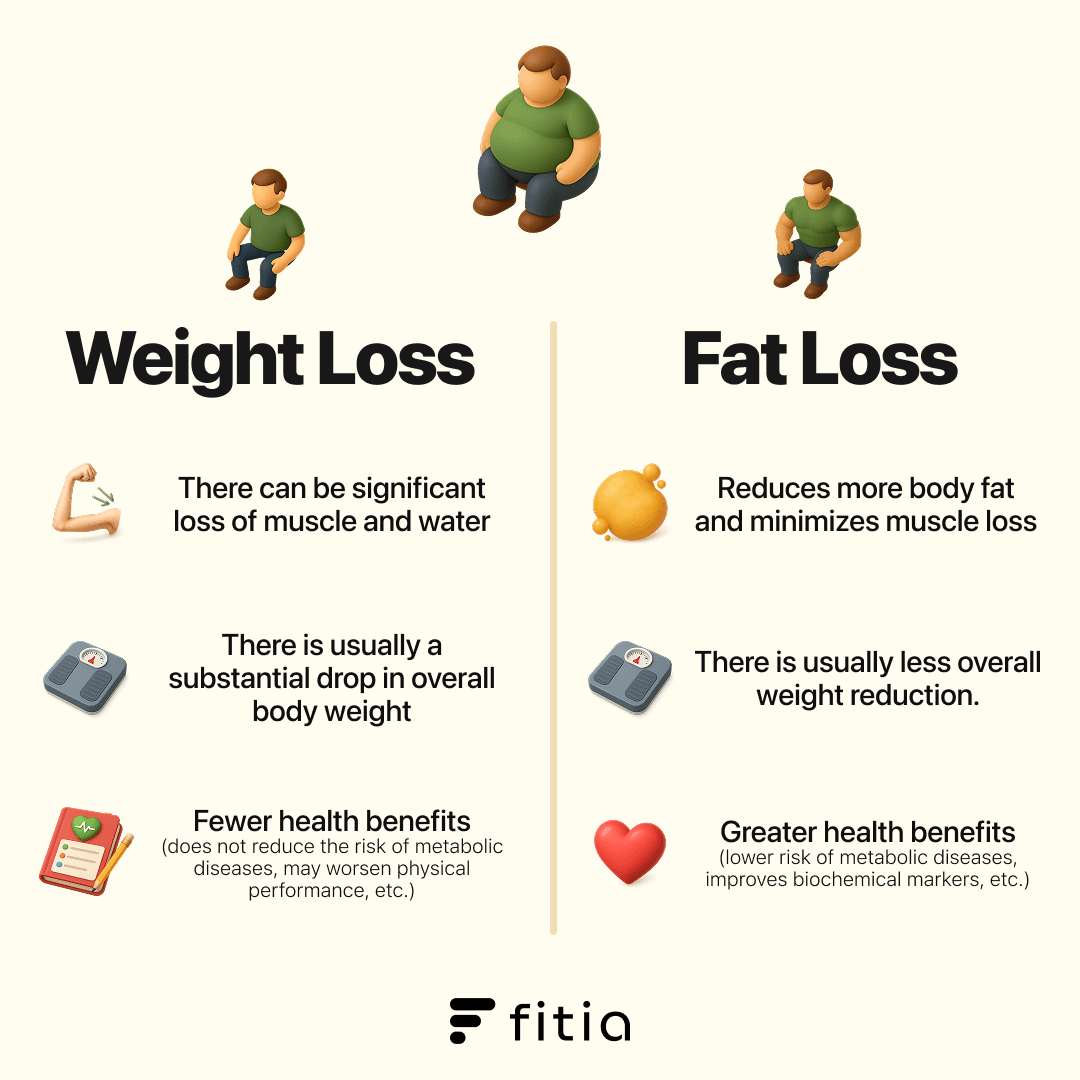
Usually, these strategies put a person into a severe calorie deficit, and as a result, weight is lost mainly from water and muscle mass, not from a meaningful reduction in body fat (5).
Ultimately, this leads to negative health consequences and is not sustainable long term (5).
So, we can conclude that wanting to “lose weight” is a very vague goal. If your goal is to improve your health or your physical appearance, it’s best to redefine the concept to make it more specific. Your goal should be fat loss.
What Is Fat Loss?
The main reason to focus on this component is that excess body fat is the factor most strongly associated with the development of diseases (6).
In fact, research shows that the fat-to-muscle ratio is a better predictor of disease than weight or body mass index (BMI) (6,7,8).
This is especially relevant to chronic non-communicable diseases such as cardiometabolic conditions, dyslipidemia, hypertension, diabetes, and even certain types of cancer (6,7,8,9).
For this reason, if your goal is to improve health or prevent disease, the best approach is to begin a fat-loss process that also preserves as much muscle mass as possible (6,7,9).
On the other hand, subcutaneous fat is the layer of fat located between the skin and muscle tissue (10).
Although this type of fat is less associated with disease risk compared to visceral fat (the fat stored around the organs) (10), reducing subcutaneous fat is key when you have aesthetic goals.
In other words, if you want a “toned” appearance, you need low levels of subcutaneous fat and a solid amount of muscle mass.
This shows that improvements in health and/or physical appearance are achieved when fat levels decrease while muscle mass is maintained or increased (11).
Likewise, maintaining and building muscle mass helps increase basal metabolic rate (meaning you burn more energy at rest), improves exercise and daily performance, slows the natural loss of muscle that happens with aging, and more (11).
On the other hand, if the sole focus is reducing the number on the scale—weight—it’s possible to experience undesirable muscle loss.
Tips for Fat Loss
While recommendations should be personalized, there are fundamental principles that guide fat loss:
- A calorie deficit is the primary condition, you need to consume less energy than you burn so your body uses stored fat. However, it’s important to note that the deficit does not need to be extreme, nor should it require eliminating large food groups.
- Consume enough protein: it promotes satiety and helps maintain muscle mass. If you do strength training, aim for 1.6 to 2.2 grams of protein per kilogram of body weight.
- Do strength training: this type of exercise helps retain and build muscle tissue, which can increase fat-loss percentage because your body composition changes significantly. Aim for at least 2–3 strength-training sessions per week.
- Prioritize rest: Aim for 7–9 hours of sleep per night. Research shows that people who sleep less tend to lose more muscle and less fat during a calorie deficit (12).
- Manage stress effectively: High stress levels can alter eating behavior, increasing cravings and driving preference for highly processed, calorie-dense foods high in sugar and saturated fat (13). In this article, you can find more information on how stress affects the fat-loss process.
How to Know If You’re Losing Fat
The best way to track progress is with a body composition assessment. While there are many highly accurate methods available today, most aren’t easy to access outside medical or academic settings (2). Below are easy ways to measure your progress:
U.S. Navy Formula
This is one of the most accurate and accessible formulas for estimating body fat percentage (3–4% margin of error). It only requires weight, height, waist, neck, and hip measurements (hips for women only) (14).
The formula for men is:
Body fat % = 86.010 × log10 (abdominal circumference − neck circumference) − 70.041 × log10 (height) + 36.76
For women, the formula is:
Body fat % = 163.205 × log10 (waist circumference + hip circumference − neck circumference) − 97.684 × log10 (height) − 78.387
Where:
- All measurements must be in centimeters
- Waist circumference is measured at the narrowest point of the torso while relaxed, not sucking in or holding breath.
- Neck circumference is measured at the narrowest point with the subject looking straight ahead.
- Hip circumference (women only) is measured at the most prominent part of the glutes.
Waist-to-Height Ratio
This indicator has proven to be a better predictor of body fat percentage than BMI, waist circumference alone, or the waist-to-hip ratio (15). Simply measure your waist with a tape measure and divide that value by your height in centimeters. A result above 0.53 for men and 0.54 for women indicates a high body fat percentage (15).
Use a Bioimpedance Scale
These scales provide information about muscle mass, subcutaneous fat, and visceral fat. While they aren’t the most accurate tool for measuring visceral fat (they have up to an 8% margin of error), they correlate well with subcutaneous fat measurements (2).
Skinfold Measurements with a Caliper
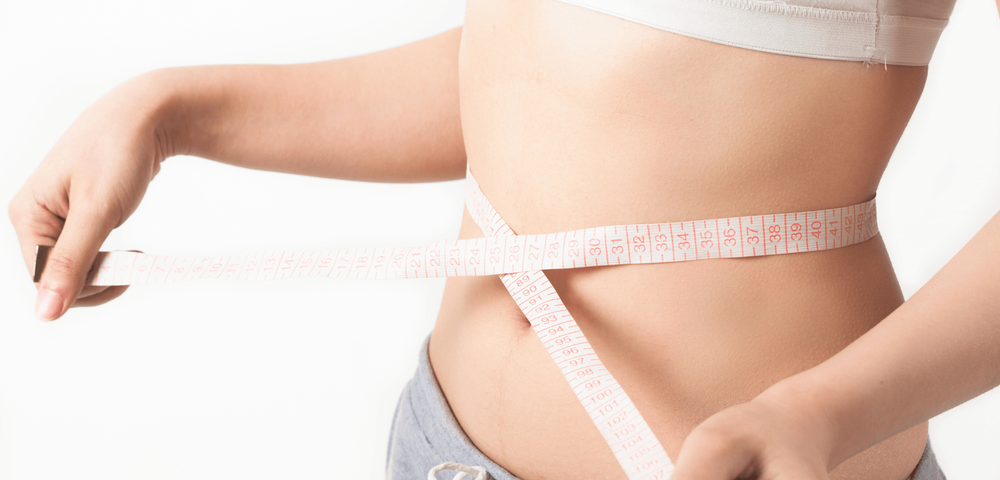
The tool shown in the cover photo of this article is called a caliper, used to measure skinfold thickness at different body sites. These measurements are then translated (through formulas) into an approximate body fat percentage (16). As you lose fat, these measurements decrease, while stable measurements may indicate loss of muscle, water, or other components instead. This method requires practice, and values can be affected by poor technique, so we recommend working with an expert (16).
Body Circumference Measurements
Reducing circumference in areas like the waist, hips, and neck can give you a general sense of progress (15). This is also useful for tracking muscle maintenance or growth. For example, thigh circumference tends to remain relatively stable during fat loss but decreases quickly during muscle loss.
Visible Changes
As you move through your fat-loss journey, changes become noticeable to the naked eye. Comparing photos over time can help you visually track progress, making progress photos a useful strategy.
Ready to lose fat the right way, keep your muscle, and follow a plan that actually works? Fitia gives you your exact calories, macros, and a science based meal plan built for your goals. Download Fitia and start today.
FAQ Section
1. What is the main difference between weight loss and fat loss?
Weight loss is any drop on the scale and can come from water, muscle, or fat. Fat loss specifically targets body fat while preserving muscle, which leads to better health and better physical results.
2. Why should I focus on fat loss instead of just losing weight?
Fat loss improves health markers, reduces disease risk, supports a toned look, and helps maintain a healthy metabolism. Weight loss alone can include muscle loss, which is not ideal for long term health.
3. How can I track if I am really losing fat?
You can use body measurements, formulas like the U.S. Navy method, progress photos, bioimpedance scales, or skinfold calipers. The key is to look at body composition changes, not just the number on the scale.
4. Can Fitia help me lose fat more effectively?
Yes. Fitia gives you personalized calories, macros, and a meal plan based on your goals so you can lose fat while keeping your muscle. It makes the whole process simpler and more accurate.
References
Santos I, Sniehotta FF, Marques MM, Carraça EV, Teixeira PJ. Prevalence of personal weight control attempts in adults: a systematic review and meta-analysis. Obes Rev. 2017 Jan;18(1):32-50. doi: 10.1111/obr.12466. Epub 2016 Sep 21. PMID: 27653242; PMCID: PMC5215364.
Borga M, West J, Bell JD, Harvey NC, Romu T, Heymsfield SB, Dahlqvist Leinhard O. Advanced body composition assessment: from body mass index to body composition profiling. J Investig Med. 2018 Jun;66(5):1-9. doi: 10.1136/jim-2018-000722. Epub 2018 Mar 25. PMID: 29581385; PMCID: PMC5992366.
Müller MJ, Braun W, Pourhassan M, Geisler C, Bosy-Westphal A. Application of standards and models in body composition analysis. Proc Nutr Soc. 2016 May;75(2):181-7. doi: 10.1017/S0029665115004206. Epub 2015 Nov 6. PMID: 26541411.
Barley, O. R., Chapman, D. W., & Abbiss, C. R. (2018). Weight Loss Strategies in Combat Sports and Concerning Habits in Mixed Martial Arts. International Journal of Sports Physiology and Performance, 13(7), 933–939. doi:10.1123/ijspp.2017-0715
Redman LM, Heilbronn LK, Martin CK, de Jonge L, Williamson DA, Delany JP, Ravussin E; Pennington CALERIE Team. Metabolic and behavioral compensations in response to caloric restriction: implications for the maintenance of weight loss. PLoS One. 2009;4(2):e4377. doi: 1371/journal.pone.0004377. Epub 2009 Feb 9. PMID: 19198647; PMCID: PMC2634841.
Chen YY, Fang WH, Wang CC, et al. Fat-to-muscle ratio is a useful index for cardiometabolic risks: A population-based observational study.PLoS One. 2019;14(4):e0214994. Published 2019 Apr 9. doi:10.1371/journal.pone.0214994
Jhee JH, Joo YS, Han SH, Yoo TH, Kang SW, Park JT. High muscle-to-fat ratio is associated with lower risk of chronic kidney disease development. J Cachexia Sarcopenia Muscle. 2020 Jun;11(3):726-734. doi: 10.1002/jcsm.12549. Epub 2020 Feb 5. PMID: 32020762; PMCID: PMC7296269.
Zeng Q, Dong SY, Sun XN, Xie J, Cui Y. Percent body fat is a better predictor of cardiovascular risk factors than body mass index.Braz J Med Biol Res. 2012;45(7):591-600. doi:10.1590/s0100-879x2012007500059
Ronco AL, Boeing H, De Stefani E, Schulz M, Schulze M, Pischon T. A case-control study on fat-to-muscle ratio and risk of breast cancer. Nutr Cancer. 2009;61(4):466-74. doi: 10.1080/01635580902725995. PMID: 19838918.
Mittal B. Subcutaneous adipose tissue & visceral adipose tissue.Indian J Med Res. 2019;149(5):571-573. doi:10.4103/ijmr.IJMR_1910_18
Cava E, Yeat NC, Mittendorfer B. Preserving Healthy Muscle during Weight Loss.Adv Nutr. 2017;8(3):511-519. Published 2017 May 15. doi:10.3945/an.116.014506
Wang X, Sparks JR, Bowyer KP, Youngstedt SD. Influence of sleep restriction on weight loss outcomes associated with caloric restriction. Sleep. 2018 May 1;41(5):10.1093/sleep/zsy027. doi: 10.1093/sleep/zsy027. PMID: 29438540; PMCID: PMC8591680.
Geiker NRW, Astrup A, Hjorth MF, Sjödin A, Pijls L, Markus CR. Does stress influence sleep patterns, food intake, weight gain, abdominal obesity and weight loss interventions and vice versa? Obes Rev. 2018 Jan;19(1):81-97. doi: 10.1111/obr.12603. Epub 2017 Aug 28. PMID: 28849612.
Shaheen A, Javed N, Azam F, Liaquat A, Khan M, Alam SM, Mumtaz S. Comparison of Bioelectrical Impedance and Navy Seal Formula to Measure Body Composition in Medical Students. Cureus. 2019 May 22;11(5):e4723. doi: 10.7759/cureus.4723. PMID: 31355083; PMCID: PMC6650177.
Swainson MG, Batterham AM, Tsakirides C, Rutherford ZH, Hind K. Prediction of whole-body fat percentage and visceral adipose tissue mass from five anthropometric variables.PLoS One. 2017;12(5):e0177175. Published 2017 May 11. doi:10.1371/journal.pone.0177175
Madden, A. M., & Smith, S. Body composition and morphological assessment of nutritional status in adults: a review of anthropometric variables. Journal of Human Nutrition and Dietetics. 2014; 29(1), 7–25. doi:10.1111/jhn.12278
Related articles
 Fat Loss
Weight Loss Calorie Chart (2026): How Many Calories to Eat by Body Weight, Sex, and Activity
See how many calories to eat to lose weight, with simple charts by body weight and activity, plus why your target changes as you go.
Read article Fat Loss
Best Personalized Meal Planning App for Weight Loss in the US (2026): Comparing Apps That Plan Around Your Likes, Dislikes & Food Preferences
Compare Fitia, Eat This Much, Lifesum & Mealime on how deeply each one plans meals around your likes, dislikes, and dietary patterns for weight loss.
Read article Fat Loss
Best Calorie Deficit App to Diet Without Feeling Hungry in the US (2026): Satiety-Focused Reviews & Feature Comparison
Compare the best calorie deficit apps in the US for 2026. See which satiety features actually keep you full so you can stick to a deficit for months.
Read article