Apr 13, 2024
10 Foods to Gain Weight
Let's start this article by making it clear that there are no foods that inherently have the ability to make you gain weight.
What does this mean? It means that JUST because you start consuming one of the foods on this list (or already consume them), you won't automatically gain weight.
What Really Causes Weight Gain?
What really causes your weight to increase is reaching a caloric surplus with your diet, meaning consuming more calories than you're burning in a day
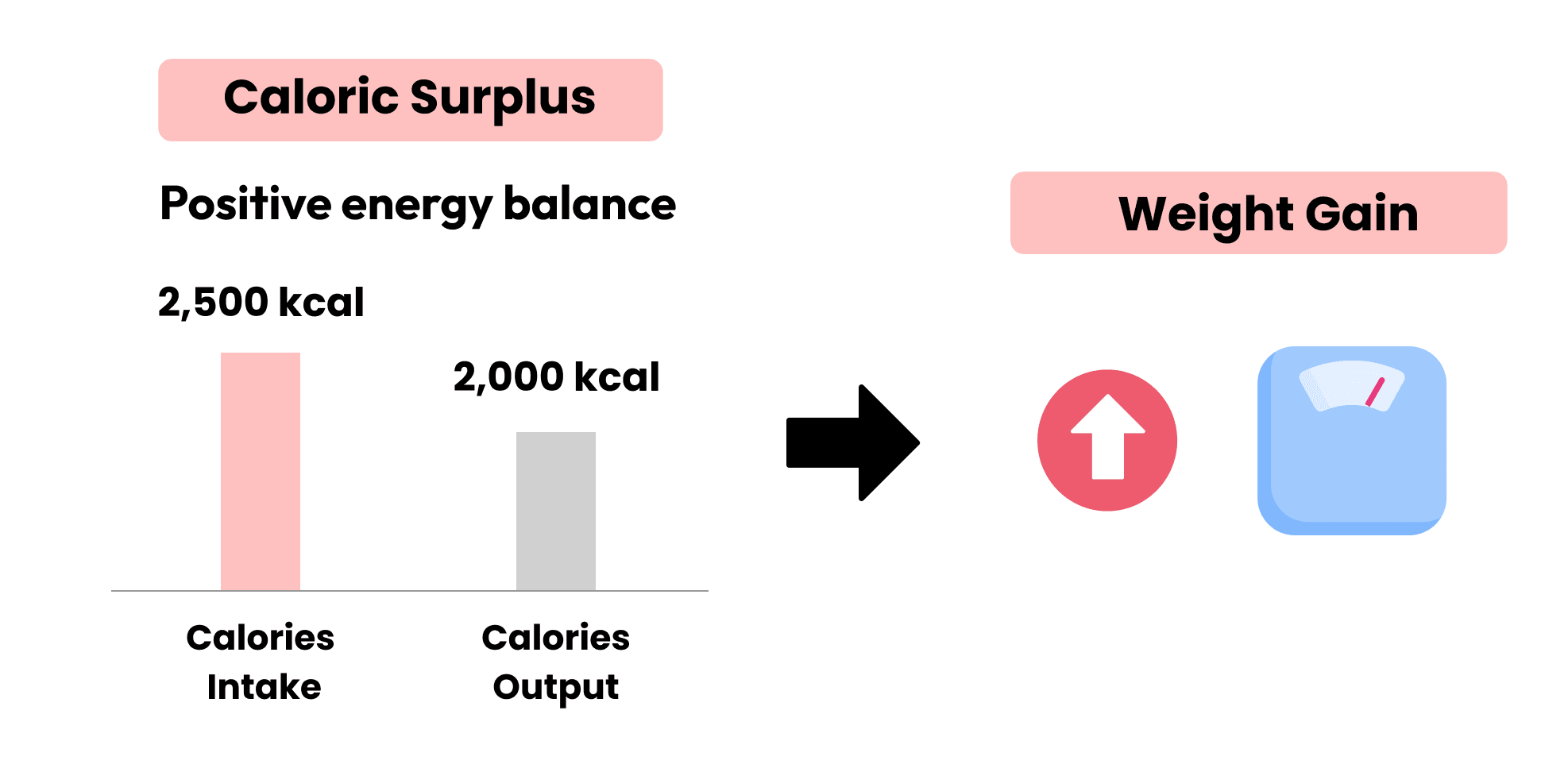
Now, with this in mind, there are some strategies you can apply to achieve a caloric surplus more easily, thus avoiding discomfort from overfilling yourself.
Among these strategies, probably the most useful is to frequently include high-calorie density foods, that is, meaning foods that pack a lot of calories into a small volume.
Below, we've compiled a list of some foods (or food groups) that are ideal for a period of weight gain.
👉 You might be interested in: 7 Benefits of Protein Backed by Science
Fitia calculates your calorie and macronutrient requirements based on your goals, whether it's gaining weight, losing fat, or maintaining.
Moreover, you'll discover thousands of recipes to incorporate into your days, join challenges with individuals sharing similar goals to yours, track your progress, and much more. Download Fitia for free here.
1. Nuts and Nut Butters
Nuts will be excellent allies when you are looking to reach a caloric surplus, as they are known for being highly energy-dense foods (1).
Nuts primarily provide fats. Remember that every gram of fat provides 9 kcal, unlike carbohydrates and proteins which provide 4 kcal per gram.
Therefore, foods rich in fats tend to be high in calories.
Additionally, nuts are also good sources of proteins and carbohydrates.
You can incorporate them into your diet as mid-morning or mid-afternoon snacks, or as toppings for yogurts, smoothies, or oatmeal.
What Is the Caloric and Nutritional Content of Popular Nuts?
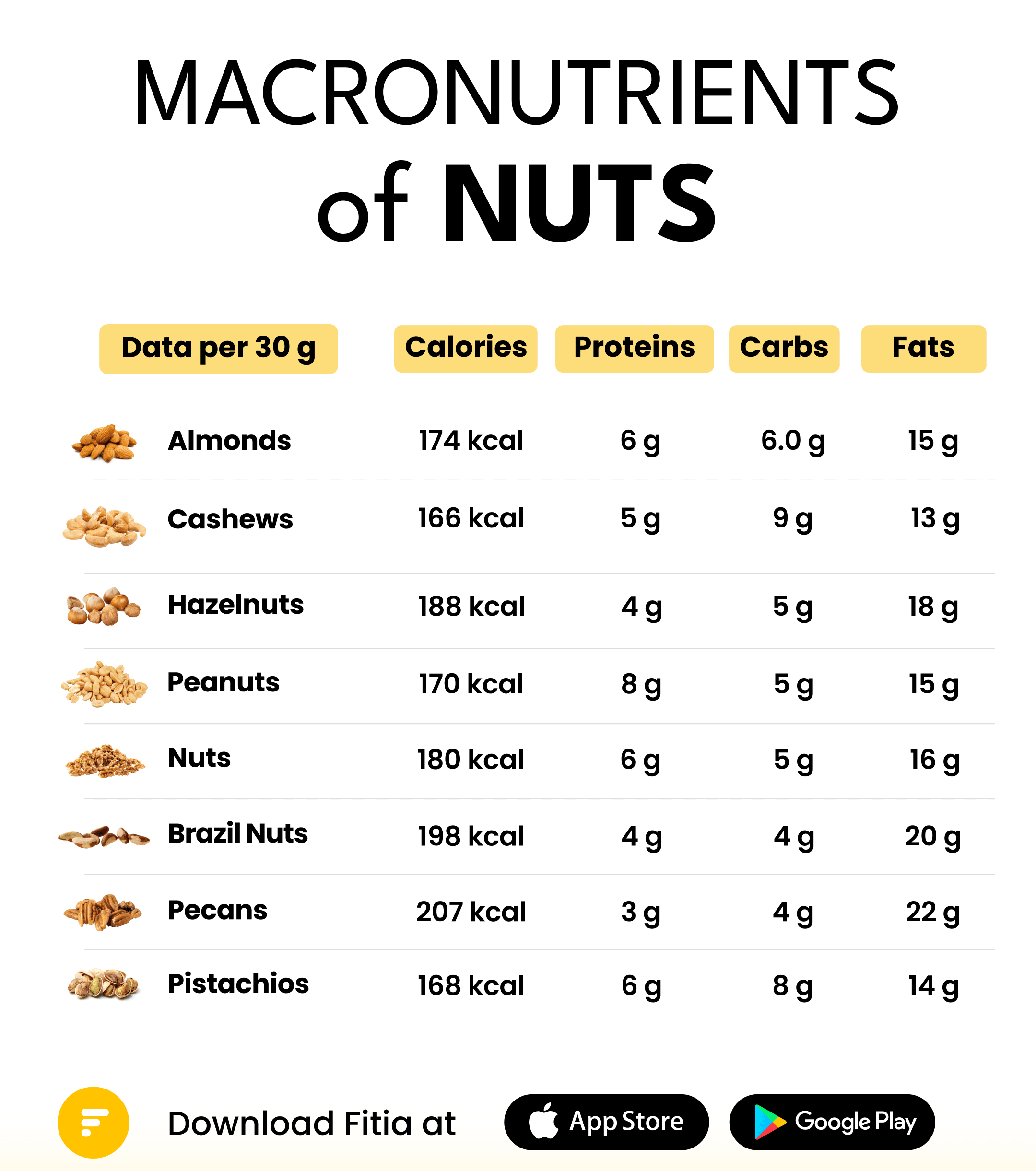
For example, every 30 grams (about 1 handful) of the following nuts will provide you with:
Almonds:
174 kcal | 6 g Protein | 6 g Carbohydrate | 15 g Fat.
Cashews:
166 kcal | 5 g Protein | 9 g Carbohydrate | 13 g Fats
Hazelnuts:
188 kcal | 4 g Protein | 5 g Carbohydrates | 18 g Fats.
Peanuts:
170 kcal | 8 g Protein | 5 g Carbohydrates | 15 g Fats
Nuts:
180 kcal | 6 g Protein | 5 g Carbohydrates | 16 g Fats
Brazil nuts:
196 kcal | 5 g Protein | 4 g Carbohydrate | 20 g Fat.
Pecans:
207 kcal | 3 g Protein | 4 g Carbohydrates | 22 g Fats
168 kcal | 6 g Protein | 8 g Carbohydrates | 14 g Fats.
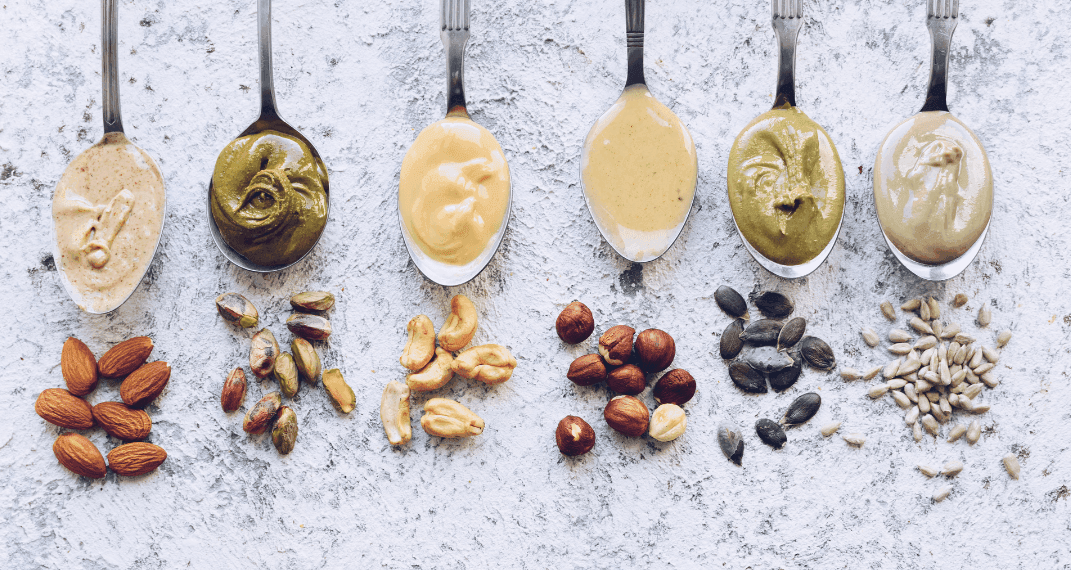
Similarly, nut butters are also excellent options to include in a caloric surplus.
They may even be more useful than whole nuts if you tend to feel full easily since solid foods create a greater feeling of satiety than liquids, soft, or creamy ones.
You can incorporate them as accompaniments to yogurts, oatmeal bowls, in sauces or dressings for salads, in smoothies, desserts, or even in stew dressings.
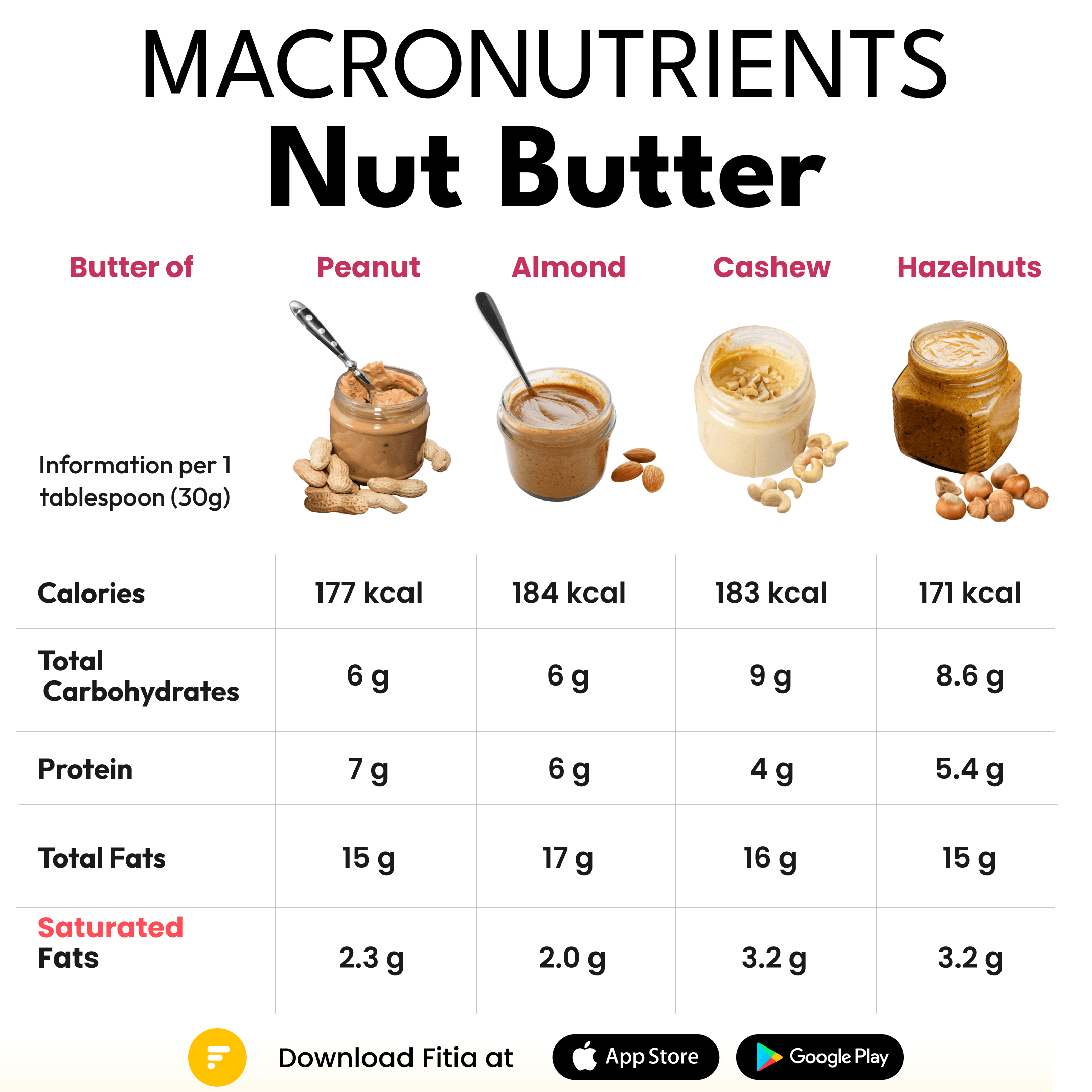
A 30-gram serving (about 1 tablespoon) of butter from the following nuts will provide you with:
Peanuts:
177 kcal | 7 g Protein | 6 g Carbohydrate | 15 g Fat.
Almonds:
184 kcal | 6 g Proteins | 6 g Carbohydrates | 17 g Fats.
Cashews:
183 kcal | 4 g Protein | 9 g Carbohydrate | 16 g Fat
Hazelnuts:
171 kcal | 5 g Proteins | 9 g Carbohydrates | 15 g Fats.
If you have set out to gain weight, remember that with the Fitia app you can get a personalized eating plan for this goal, your personal characteristics and food preferences .Download Fitia for free here.
2. Oily fish
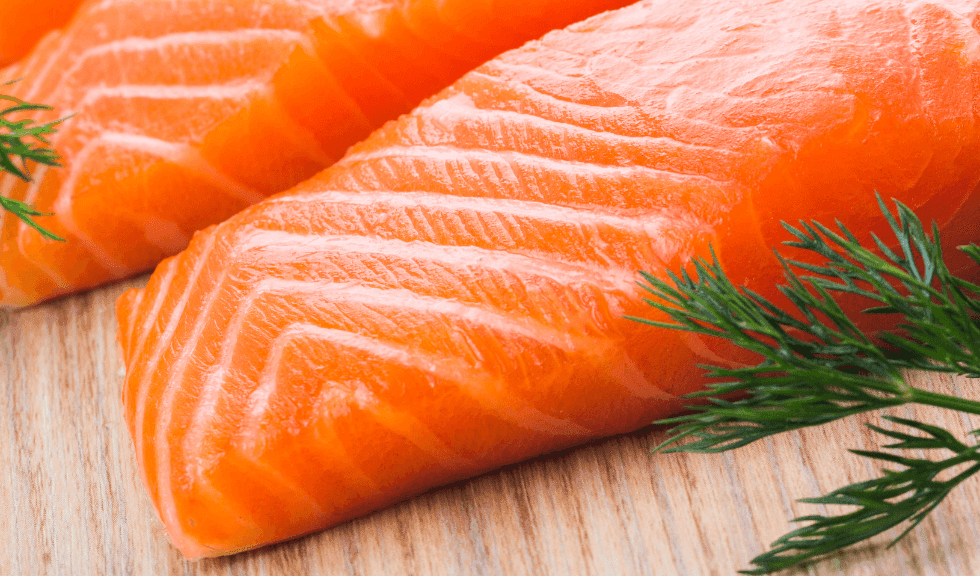
Blue fish, also known as "oily fish," are not only excellent sources of protein but also have a high fat content, particularly rich in polyunsaturated fats like omega-3. This distinguishes them from other types of fish and makes them more calorie-dense.
Therefore, if your goal is to gain weight, we recommend frequently including oily fish such as salmon, tuna, sardines, bonito, mackerel, and others in your diet.
To give you a clearer reference let's look at this comparison:
- 100 grams (in raw weight) of chicken fillet will provide you with 120 kcal, 23 grams of protein and 3 grams of fat.
- 100 grams (in raw weight) of salmon fillet will give you 175 kcal, 20 grams of protein and 10 grams of fat.
You can see that the difference in calories is mainly due to the difference in fat. This way, they can help you during your weight gain period.
100 grams of other oily fish will provide you with:
Fresh tuna:
144 kcal | 23 g Proteins | 0 g Carbohydrates | 5 g Fat
186 kcal | 27 g Proteins | 0 g Carbohydrates | 8 g Fat
158 kcal | 20 g Proteins | 0 g Carbohydrates | 8 g Fat
208 kcal | 25 g Protein | 0 g Carbohydrate | 11 g Fat
3. Rice and other cereals
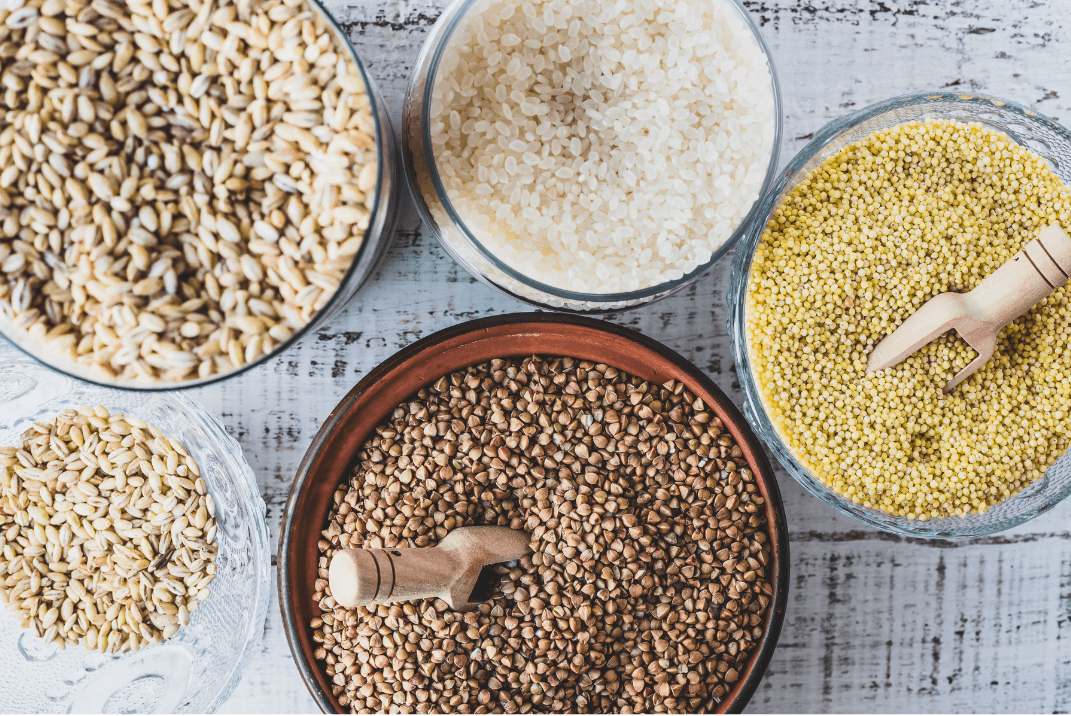
Rice and other cereals such as oats, wheat, and their derivatives (like bread) are often regarded as the quintessential weight-gain foods due to their high carbohydrate content.
In fact, they are even feared by those who intend to lose weight.
However, as you already know, this isn't necessarily the case. Eating these foods doesn't guarantee weight gain, nor does eliminating them ensure weight loss.
Nevertheless, certain cereals can be useful if you're looking to gain some weight.
If you are looking to gain weight, we recommend choosing carbohydrate sources with low fiber content. The lower the fiber content in your carbohydrate source, the less satiating it will be, allowing you to eat more without feeling too full.
Therefore, you might want to choose white versions of rice, breads, pastas, etc.
Additionally, remember that carbohydrates serve as our primary energy source, which can be very helpful in enhancing your strength training sessions.
100 grams (in raw weight) of the following foods will provide you with:
325 kcal | 7 g Protein | 70 g Carbohydrate | 1 g fiber | 1 g Fat.
395 kcal | 15 g Protein | 77 g Carbohydrate | 5 g fiber | 2 g Fat.
266 kcal | 9 g Protein | 49 g Carbohydrate | 3 g Fiber | 3 g Fat
Oats:
379 kcal | 13 g Protein | 68 g Carbohydrates | 10 g Fiber | 7 g Fats
330 kcal | 14 g Protein | 69 g Carbohydrate | 11 g Fiber | 2 g Fat
4. Whole dairy products
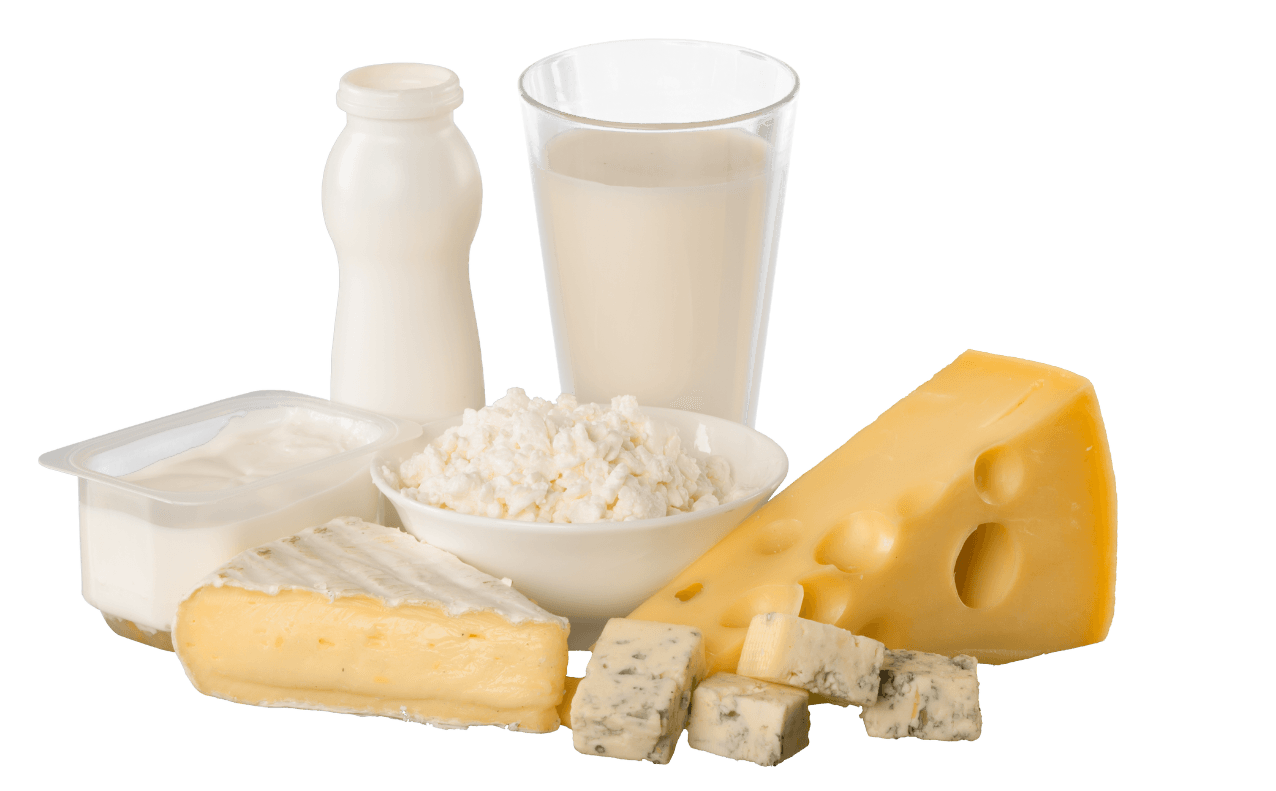
The dairy category is so broad that its nutritional composition can vary greatly depending on the product and its processing.
The ones that will benefit you and help you consume more energy and nutrients during a period of weight gain are whole dairy products, meaning those that have not had the fat removed.
Here's a list of dairy products you should prioritize if you're planning to include them in your regular diet.
1 cup (240 ml) of the following dairy products will give you:
146 kcal | 8 g Protein | 11 g Carbohydrate | 8 g Fat
233 kcal | 22 g Proteins | 10 g Carbohydrates | 12 g Fats
In the case of cheeses, cured and ripened cheeses are those with the highest concentration of nutrients.
1 portion of 60 grams (2 large slices approximately) of the following cheeses will provide you with:
214 kcal | 15 g Proteins | 1 g Carbohydrates | 17 g Fats
214 kcal | 15 g Proteins | 1 g Carbohydrates | 16 g Fats
212 kcal | 13 g Proteins | 1 g Carbohydrates | 17 g Fats
👉 You might be interested in: 5 Healthy Cheeses and How to Choose the Best for You
5. Dried fruits
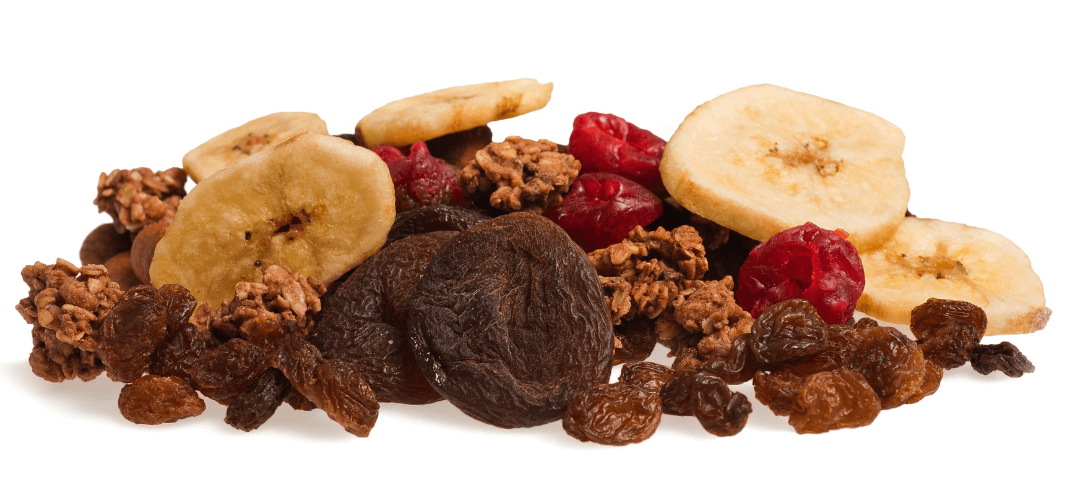
Fresh fruits are primarily composed of water. Therefore, when they undergo dehydration, the other nutrients become concentrated.
In this regard, consuming dried fruits will provide you with a high concentration of nutrients and calories in smaller amounts compared to fresh fruits.
However, they will still mainly provide carbohydrates, fiber, vitamins, and minerals.
If you compare the nutritional value of one fresh grape with one raisin, it will remain the same (except for the water content). What changes is their weight and size. A raisin weighs less and is smaller than a fresh grape because it loses water.
This makes dried fruits useful for consuming those extra calories you need during a period of weight gain without filling you up too much.
For example, look at the difference between what 1 cup of fresh grapes and raisins provides:
Fresh grapes (150g)
103 kcal | 1 g Protein | 27 g Carbohydrate | 0 g Fat.
Raisins (150g)
444 kcal | 4 g Protein | 118 g Carbohydrate | 1 g Fat
While any fruit can be dehydrated, some of the easiest ones to find besides raisins are dried cherries, dates, and dried apricots, and sometimes, dried bananas, pineapples, and apples.
You can include them in cooked or baked oatmeal, as a topping for yogurt, in smoothies or as a snack between meals.
6. Granola
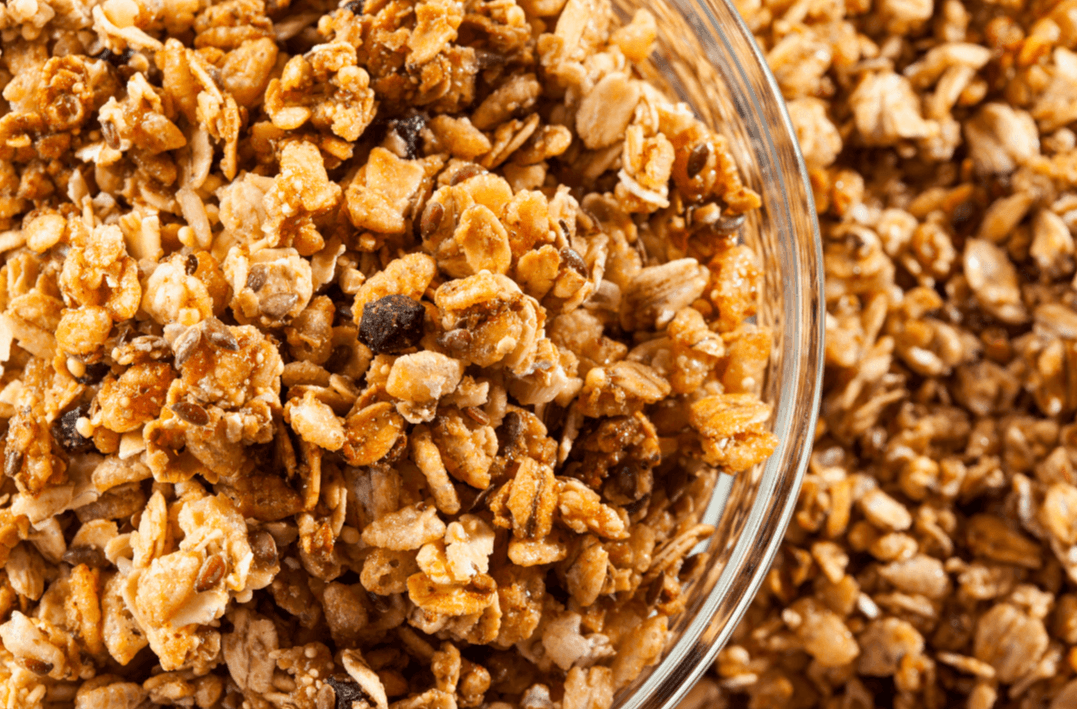
Granola is another excellent food to include in a weight gain stage, as it is a combination of cereals, nuts, dried fruits (all part of this list) and usually, some oil and sweetener such as honey.
In fact, this combination is very rich in both fats and carbohydrates.
A serving of 60 grams of granola (approximately ½ cup or 6 tablespoons) will provide you with:
245 kcal | 8g Protein | 32 g Carbohydrates | 15 g Fat
We recommend pairing granola with another protein-rich food, such as Greek yogurt, for example. This combination can help balance your intake of carbohydrates, fats, and proteins, making it an excellent choice for a nutritious and satisfying meal or snack.
7. Egg
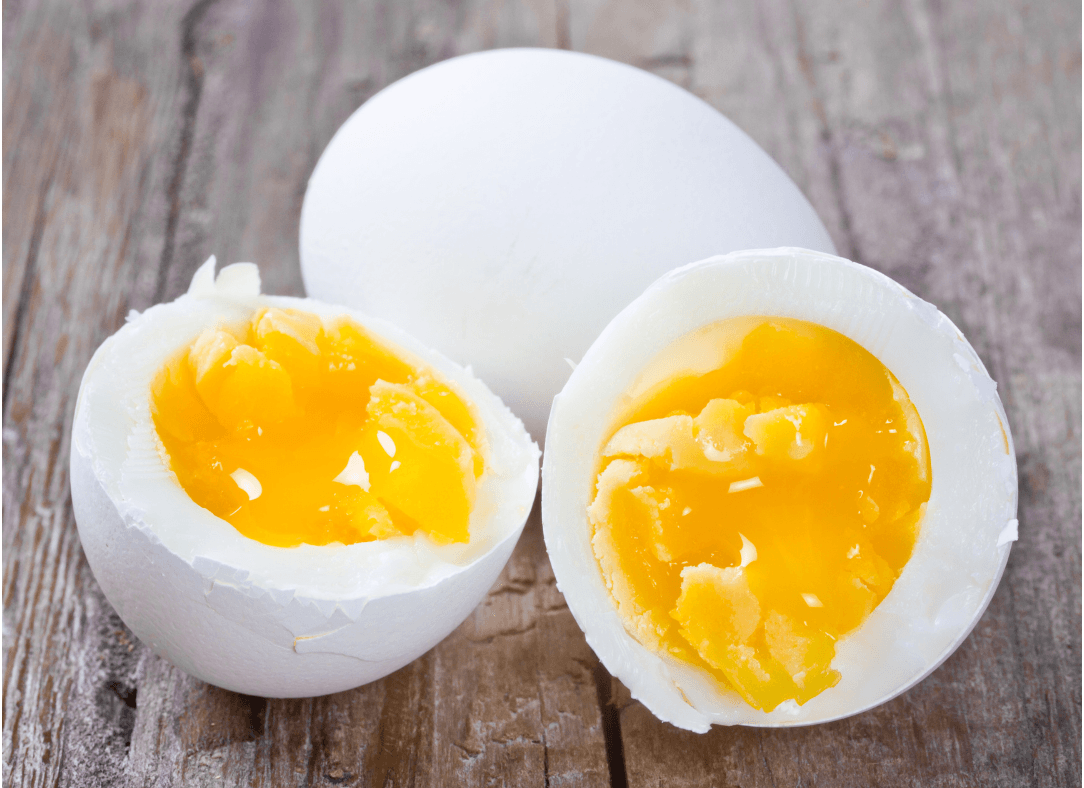
Eggs are one of the most well-known and commonly used protein sources. However, they are also a significant source of fats.
In fact, the amount of protein and fat they contain is quite similar. This makes eggs a balanced and versatile food choice, ideal for various dietary needs.
1 egg (55 g) contains
79 kcal | 7g Protein | 0 g Carbohydrates | 5 g Fat
It's important to note that all the fat in an egg is found in the yolk, while the protein is present in both the yolk and the white.
During a phase of weight and muscle gain, ensuring your protein intake is crucial. Therefore, eggs are extremely beneficial. Consuming whole eggs will also help you add more calories to your diet, which can be advantageous if you're looking to increase your caloric intake.
8. Dark chocolate

Dark chocolate is another high-calorie food, as it is rich in both fats and carbohydrates. This makes it an excellent option for adding extra calories to your diet in a relatively small volume, providing both energy and a variety of beneficial nutrients.
1 serving of only 40 grams of dark chocolate (70-85% cocoa) will provide you with:
239 kcal | 3 g protein | 18 g Carbohydrates | 17 g Fat
You can include dark chocolate as a dessert or snack, use it as a topping for yogurts, or add it to enhance the chocolate flavor in mug cakes, smoothies, or oatmeal.
Moreover, cocoa has been found to contain compounds with high antioxidant capacities. Regular consumption of cocoa could improve insulin resistance, reduce blood pressure, enhance cardiovascular health, and improve mood and cognitive function (2,3,4,5).
9. Seeds
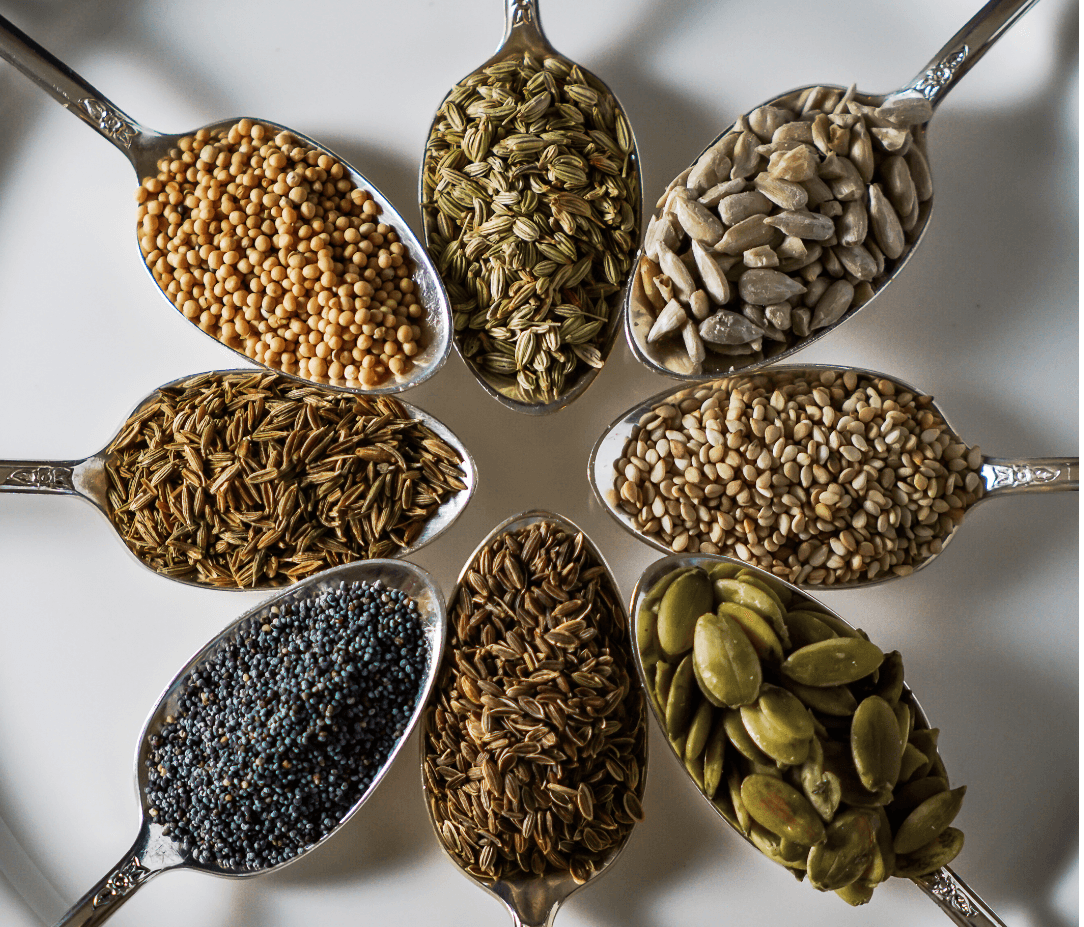
Seeds, much like nuts, are primarily composed of fats, making them high-calorie foods.
A 30-gram serving (about 3 tablespoons) of the following seeds will give you:
175 kcal | 6 g Protein | 6 g Carbohydrate | 15 g Fat.
146 kcal | 5 g Protein | 13 g Carbohydrate | 9 g Fat
160 kcal | 5 g Protein | 9 g Carbohydrates | 13 g Fats
172 kcal | 5 g Protein | 7 g Carbohydrate | 15 g Fat
134 kcal | 6 g Protein | 16 g Carbohydrate | 6 g Fat.
Now, the seeds have an external layer that covers them, which we have to break mechanically to be able to access its nutritional content, because our organism does not have the capacity to digest this type of fiber that covers them.
Normally this would not be a problem, since chewing is enough to break this layer.
However,some seeds such as chia, flaxseed and sesame are so small that it is very difficult to chew them completely .
Therefore, if you want to increase your calorie intake, we recommend consuming these small seeds after grinding them.
You can do this by blending them (including them in smoothies, for example), processing them or grinding them with a coffee grinder.
10. Olive oil and other healthy oils
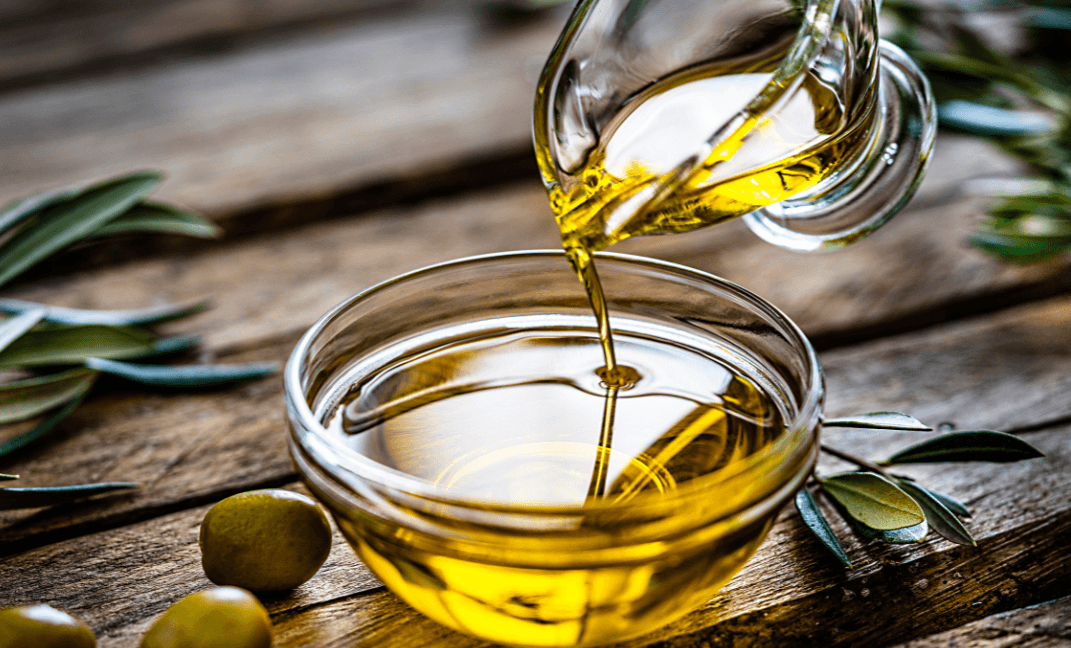
Finally, oils are the calorie-dense foods par excellence.
As they are extracted from the fatty part of oilseeds or fruits rich in fats such as coconut or avocado, they are composed almost entirely of fats.
As a result, they provide a high number of calories in just a small amount of food, making them an efficient way to increase calorie intake without needing to consume large quantities of food.
One serving of just 10 grams (about 1 tablespoon) of any type of oil will provide you with:
88 kcal | 0 g Protein | 0 g Carbohydrates | 10 g Fat
At this point it is important to emphasize that the excess consumption of oils can generate a high consumption of saturated fats. Especially if you use them for frying.
Our recommendation is to avoid oils that are naturally high in saturated fats, such as palm oil.
On the other hand, extra virgin olive oil has been the most researched and has shown the best characteristics and health benefits. We recommend choosing this oil and, whenever possible, consuming it cold (such as in salad dressings, for example). This helps preserve its nutritional properties and provides health benefits without the added risks that come with high heat cooking.
References
References
- de Souza RGM, Schincaglia RM, Pimentel GD, Mota JF. Nuts and Human Health Outcomes: A Systematic Review. Nutrients. 2017 Dec 2;9(12):1311. doi: 10.3390/nu9121311. PMID: 29207471; PMCID: PMC5748761.
- Hooper L, et al. Effects of chocolate, cocoa, and flavan-3-ols on cardiovascular health: a systematic review and meta-analysis of randomized trials. 2012.
- Latif R. Chocolate/cocoa and human health: a review. 2013
- Ried K, Fakler P, Stocks NP. Effect of cocoa on blood pressure. Cochrane Database Syst Rev. 2017.
- Scholey A, Owen L. Effects of chocolate on cognitive function and mood: a systematic review. 2013.
Fitia: Meal Plans & Calorie Counter
We use cookies to enhance your browsing experience, analyze site traffic, and personalize content. By clicking 'Accept', you consent to the use of these technologies in accordance with our Privacy Policy.