The best apps for planning a calorie deficit diet without feeling hungry all the time
We tested the best apps for running a calorie deficit without constant hunger. Protein-first meal plans, adaptive targets, and what the research backs.
- Published
- Updated
- 7 min read
- 7 min read

TL;DR: Most people fail calorie deficits because of how the food is composed, not how big the deficit is. The right app builds a protein-first, high-volume meal plan calibrated to your specific targets, and adapts the target as your weight drops. Pure tracking apps that hand you a blank diary and a calorie number leave the hard part (figuring out what to actually eat) to you.
Table of contents
- What the research says about staying full on a calorie deficit
- Protein quantity does the heaviest lifting
- Food volume gives you a second layer of fullness
- What a good app should do differently for a calorie deficit
- The best apps for a calorie deficit diet in 2026
- Fitia
- MacroFactor
- Cronometer
- Eat This Much
- Conclusion
- FAQ
What the research says about staying full on a calorie deficit
The research on sustainable calorie deficits points consistently to three practical factors: protein quantity, food volume, and adherence over time.
Protein quantity does the heaviest lifting
The reason high-protein diets feel less hungry at the same calorie count isn't in your head, it's in your hormones. Protein bumps up the signals that tell your brain you're full (GLP-1, CCK, peptide YY) and turns down the ones that make you hungry (ghrelin) (Koh & Moon, 2020). The more protein you eat within a practical range, the more pronounced the effect.
The benefit also sticks around after the diet ends. A meta-analysis looked at 21 trials of different strategies for keeping weight off after a successful diet (van Baak & Mariman, 2019). Higher protein was the only one that actually worked. Fibre, green tea, low-glycemic foods, and several other popular strategies showed no significant effect. So protein isn't just about feeling less hungry while you're cutting. It's the variable most likely to keep the weight off afterward.
Food volume gives you a second layer of fullness
Vegetables and high-fiber foods fill you up in a completely different way than protein does. Instead of triggering hormones, they physically take up space in your stomach and trip the stretch receptors that tell your brain "okay, that's enough."
A 2022 meta-analysis pooled 31 experimental studies and found that lowering the energy density of meals reduced daily calorie intake by a large amount, with people barely compensating by eating more later (Robinson et al., 2022).
In plain terms: a calorie deficit built around vegetables, fruits, and whole grains feels meaningfully less hungry than the same deficit built around convenience foods that pack a lot of calories into a small volume.
👉 This may interest you: How to Run a Calorie Deficit Without Feeling Hungry: An Evidence-Based Guide
What a good app should do differently for a calorie deficit
Most calorie apps approach a deficit by subtracting a fixed amount (typically 500 kcal/day for ~1 lb/week of weight loss) from maintenance calories. That's the correct starting calculation. What most apps don't do is build a meal plan that fills the target with foods that actually satisfy hunger.
A good calorie deficit app should:
Set a calorie target and distribute it intentionally across meals. A 1,600-calorie day feels very different as three well-balanced meals than as two large meals with nothing in between. Apps that generate meal plans distribute calories deliberately; apps that just track leave the distribution to the user.
Prioritize protein within the macro split. The research-backed range for a comfortable deficit puts protein at 0.7–1 g per pound of body weight, which for most users lands at 30–35% of total calories. Apps that default to a low-protein RDA-based split produce more hunger at the same calorie count.
Include high-volume, low-calorie foods. A generated meal plan with vegetables, lean proteins, and fiber-rich foods produces more satiety per calorie than one built around convenience foods. Apps with meal plan generation have more control over this than apps that only track what the user already chose.
Adapt as weight drops. As body weight decreases on a deficit, maintenance calories decrease too. Apps that hold the original target static eventually move users from a deficit into maintenance without them noticing. Adaptive recalculation preserves the deficit automatically as the body changes.
👉 You may also like: How to Build a Meal Plan to Lose 10 Pounds Sustainably
The best apps for planning a calorie deficit without constant hunger
Fitia — Best for meal plan generation with satiety in mind
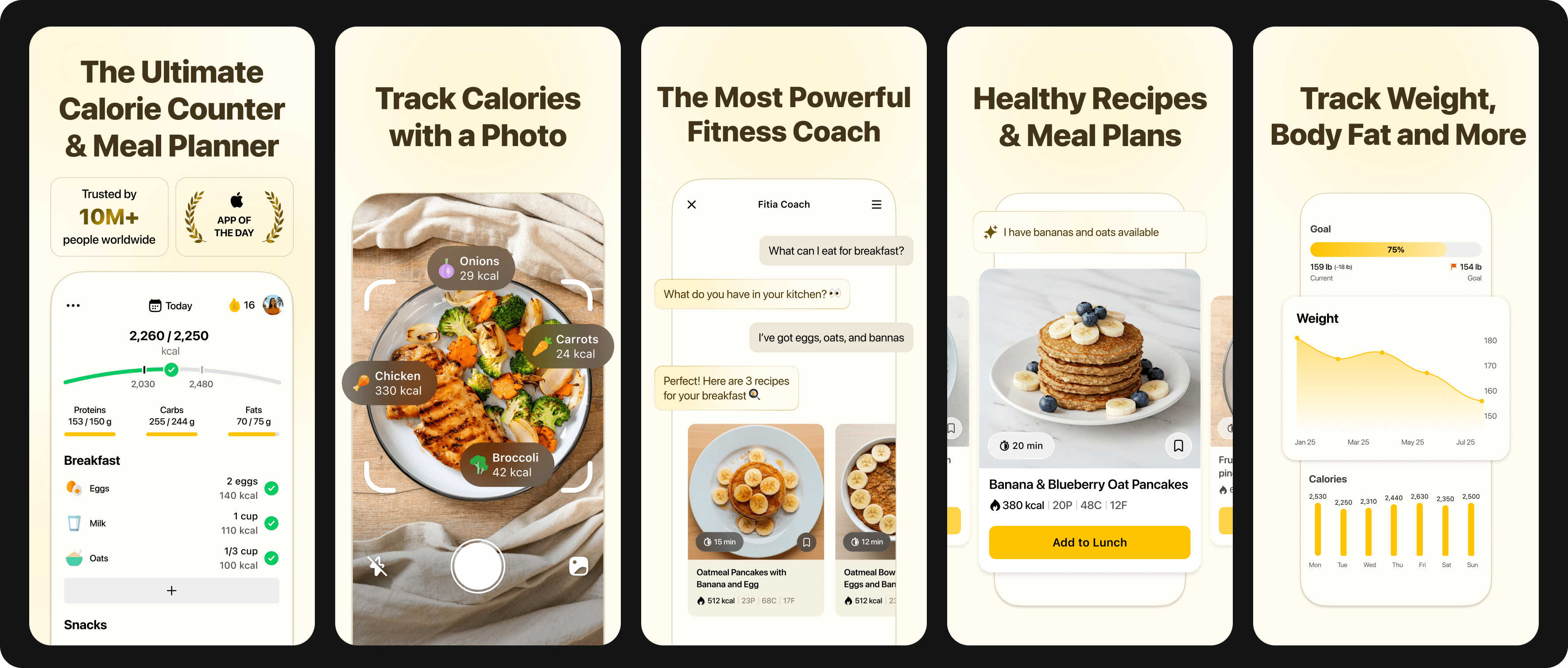
Fitia generates a full weekly meal plan for a calorie deficit goal, distributing protein across meals and building the plan around whole foods. Users who select a fat loss goal receive a plan that reflects appropriate protein levels from the start — they don't need to manually configure macro targets or research protein requirements. The app recalibrates the meal plan as weight changes, preserving the deficit automatically. Best for users who want the app to build their deficit diet, not just track it.
MacroFactor — Best for adaptive deficit
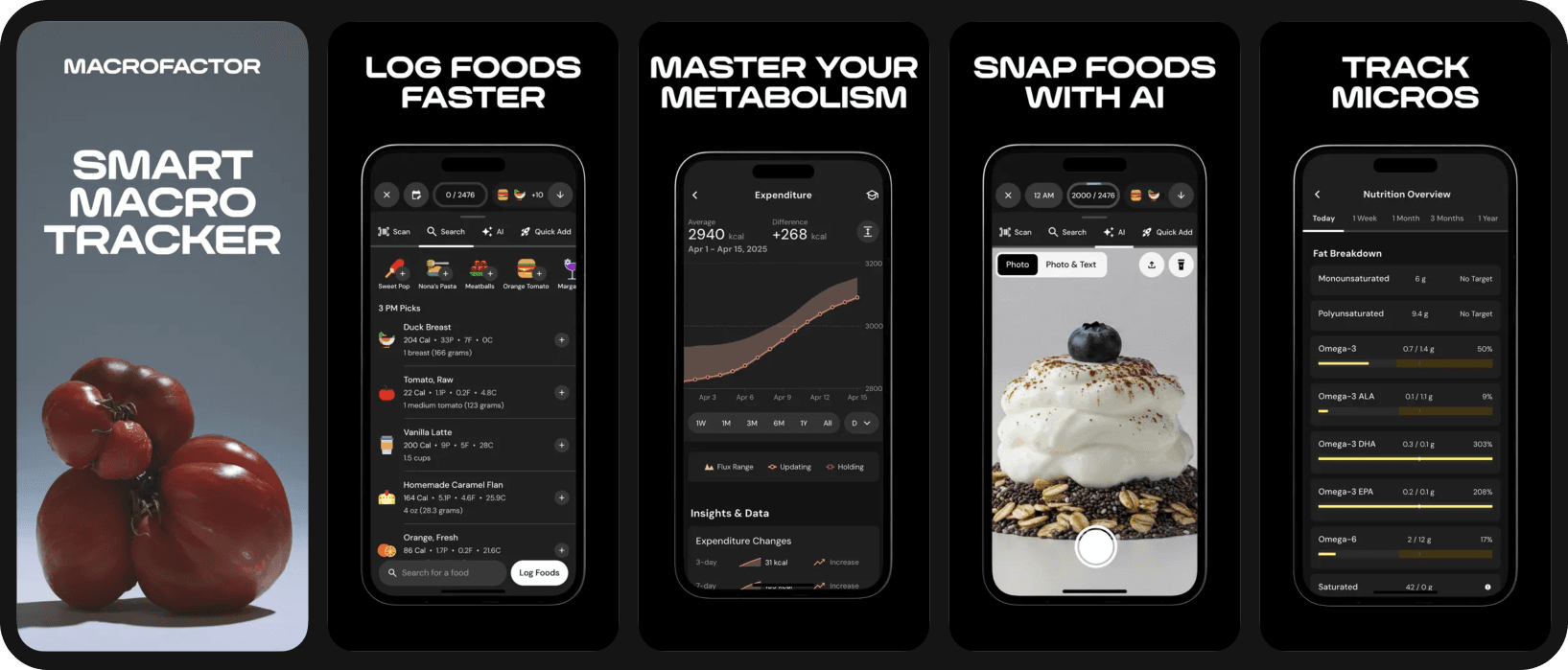
MacroFactor recalculates your deficit-maintaining calorie target weekly based on actual weight trend data. If weight loss has stalled, the app identifies this and adjusts targets. For users who have experience building their own high-protein meals and simply need the deficit to stay calibrated as weight drops.
Cronometer — Best for nutrient verification
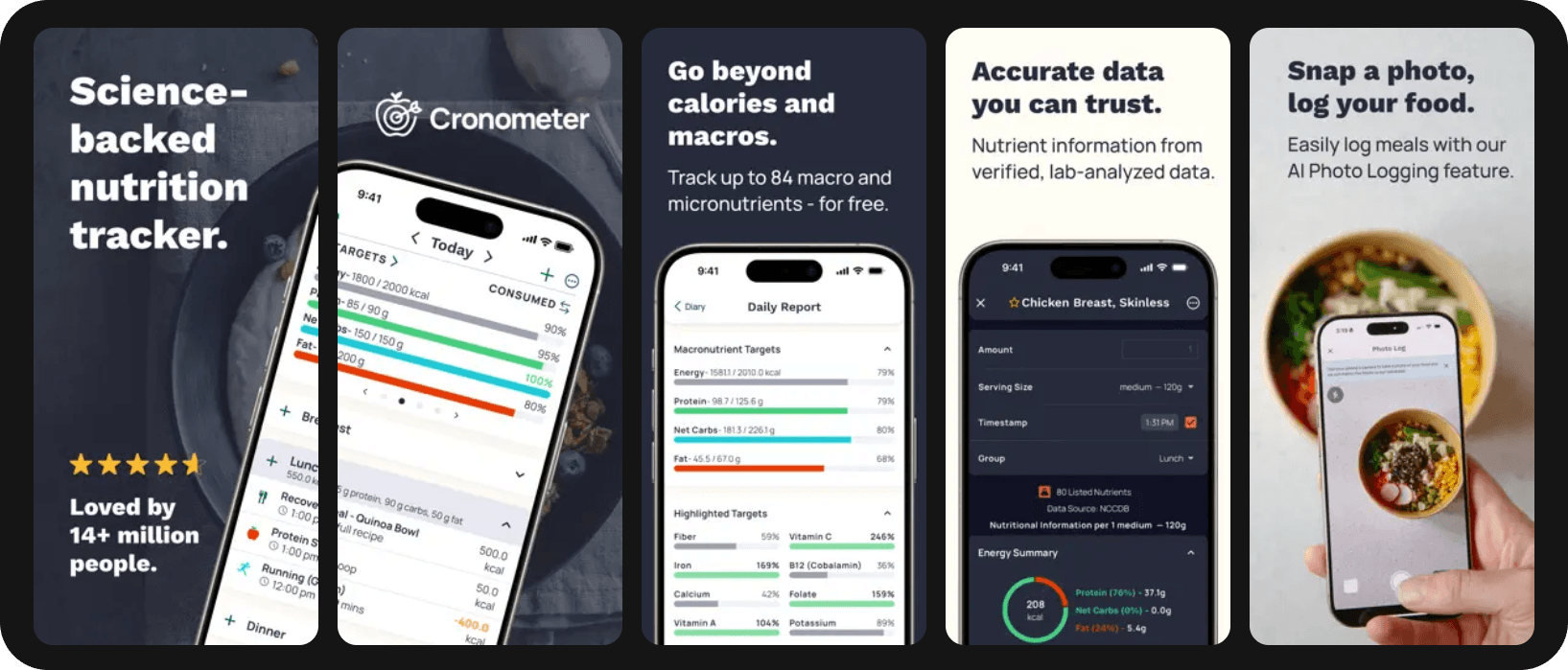
Eating in a deficit reduces the margin for nutritional error — lower total food volume makes micronutrient shortfalls more likely. Cronometer's verified nutritional data and full micronutrient tracking are particularly valuable for users on a long-term deficit who want to confirm they're meeting nutritional minimums.
Eat This Much — Best for straight-to-the-point meal planning
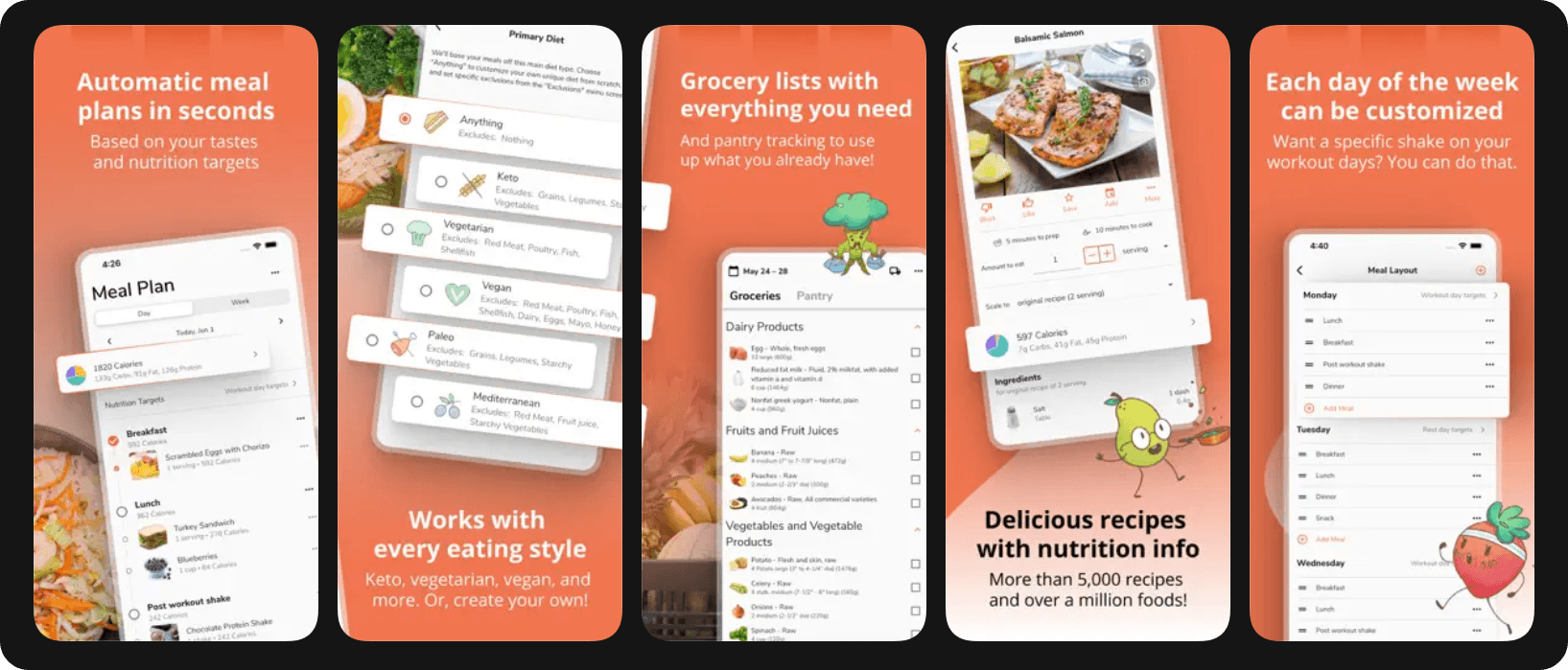
Eat This Much generates calorie and macro-targeted meal plans, with custom protein ratios and dietary preferences (keto, vegan, paleo, etc.). For a deficit, the plan stays within your calorie target by default and protein can be set high. The gap for satiety-focused dieting is that meals are selected by macro fit rather than food volume or energy density, so users wanting maximum fullness per calorie may need to swap meals manually.
Conclusion
Feeling constantly hungry on a calorie deficit is almost always a food-composition problem, not a deficit-size problem. The right app for a calorie deficit doesn't just hand you a calorie target and walk away. It builds a protein-first, high-volume meal plan calibrated to your specific numbers, and updates that plan as your weight drops.
Apps that generate structured deficit plans or adaptively recalculate the deficit as weight comes off handle the two failure modes that derail most diets: a plan that doesn't keep you full, and a target that quietly stops working as you lose weight. The goal isn't a strict diet that lasts two weeks. It's a structure that reduces hunger enough to sustain for three to six months.
Build a deficit you can sustain for six months. Download Fitia, protein-first, high-volume meal plans calibrated to your specific calorie target, with adaptive recalculation as your weight drops.
FAQ
Why do most calorie deficits stop working after a few weeks?
Two reasons. First, as you lose weight, your maintenance calories drop too (roughly 50 to 100 kcal per 10 lbs lost), so the same target slowly stops being a deficit unless your app recalculates from actual weight trends. Second, hunger signals get louder the longer the deficit runs, and meals built around low-protein, low-volume foods don't suppress them well.
👉 New to dieting? Read Caloric Deficit: What is it and How to Achieve it? for the foundational walkthrough on setting up a deficit safely.
How much protein should I eat on a calorie deficit?
The evidence-supported range is 0.7 to 1 gram per pound of body weight per day (roughly 1.6 to 2.2 g/kg), which usually lands at 30 to 35% of total calories. Higher protein doesn't directly cause more weight loss, but it suppresses hunger through gut hormone signaling, preserves muscle while you lose fat, and is the most reliable strategy for keeping weight off after the deficit ends.
Can I use a regular calorie tracker for a deficit, or do I need a meal planner?
You can use a tracker, but you'll be solving the hard part yourself. A tracker tells you whether you hit your calorie target after the fact; a meal planner builds the day around the target before you start. For most people, the planning layer is what separates a deficit you sustain from one you abandon in week three.
References
- Moon, J., & Koh, G. (2020). Clinical Evidence and Mechanisms of High-Protein Diet-Induced Weight Loss. Journal of obesity & metabolic syndrome, 29(3), 166–173. https://doi.org/10.7570/jomes20028
- van Baak, M. A., & Mariman, E. C. M. (2019). Dietary Strategies for Weight Loss Maintenance. Nutrients, 11(8), 1916. https://doi.org/10.3390/nu11081916
- Robinson, E., Khuttan, M., McFarland-Lesser, I., et al. (2022). Calorie reformulation: a systematic review and meta-analysis examining the effect of manipulating food energy density on daily energy intake. International Journal of Behavioral Nutrition and Physical Activity, 19, 48. https://doi.org/10.1186/s12966-022-01287-z
- Harvey, J., Krukowski, R., Priest, J., & West, D. (2019). Log Often, Lose More: Electronic Dietary Self-Monitoring for Weight Loss. Obesity, 27(3), 380–384. https://doi.org/10.1002/oby.22382
Related articles
 Fat Loss
Weight Loss Calorie Chart (2026): How Many Calories to Eat by Body Weight, Sex, and Activity
See how many calories to eat to lose weight, with simple charts by body weight and activity, plus why your target changes as you go.
Read article
Best Calorie Counter App for Muscle Gain in the US (2026): 4 Apps Compared for Lifters
The 4 best calorie counter apps for US lifters in 2026, compared on macros, database, adaptation, and meal planning.
Read article
Best Online Nutrition Coach in the US (2026): What to Look For Before You Pay
Online nutrition coaching in the US 2026: three tiers, what the research says, and the red flags to spot before you pay for an app or coach.
Read article