The Best Calorie Counter Apps for Muscle Gain: What the Evidence Says You Actually Need
We compared the top calorie counter apps for muscle gain in 2026, with what the research says about protein, surplus, and tracking that actually works.
- Published
- 8 min read
- 8 min read

TL;DR Calorie tracking for muscle gain is about more than adding a surplus. The apps that produce the best results either adapt your calorie target as you gain weight, generate meal plans that distribute protein across at least four meals a day, or give you the nutrient depth to support training recovery. The four serious options in 2026 are Fitia, MacroFactor, Cronometer, and MyFitnessPal, each strong in a different way. Below, what the research actually says, what to look for in a tracking app, and how each option fits.
Table of contents
- What the research says about nutrition for building muscle
- Protein is the dietary lever that does the work
- Logging frequency matters more than logging perfection
- Meal planning supports dietary adherence
- An RD's filter for muscle-gain tracking apps
- What features actually matter for a lean bulk
- Adaptive calorie and macro targets
- Protein as the primary metric
- A verified food database
- Meal plan generation aligned to a surplus
- What features actually matter for a lean bulk
- The best calorie counter apps for muscle gain in 2026
- Fitia
- MacroFactor
- Cronometer
- MyFitnessPal
- Conclusion
- FAQ
What the research says about nutrition for building muscle
The evidence on muscle gain converges on three variables: a calorie surplus, sufficient protein, and consistent tracking.
Protein is the dietary lever that does the work
A 2020 review in the Journal of Obesity & Metabolic Syndrome (Koh & Moon, 2020) synthesized clinical trials of high-protein diets and concluded that elevated protein intake reduces body weight, improves body composition by decreasing fat mass while preserving fat-free mass, and increases satiety through gut hormone signaling (GLP-1, CCK, peptide YY up; ghrelin down).
For muscle gain specifically, the same mechanism that preserves lean mass during a deficit also supports lean mass gains during a surplus, which is why protein targets matter regardless of whether you're cutting or bulking.
Logging frequency matters more than logging perfection
A 2019 study in Obesity (Harvey et al., 2019) tracked 142 participants in a 24-week online weight-loss intervention and found that the number of times per day participants logged into their food diary was significantly associated with weight loss, while total minutes spent self-monitoring was not. People who lost more than 10% of body weight logged in an average of 2.7 times per day versus 1.7 times for those who lost less. The study was on weight loss rather than muscle gain, but the takeaway transfers: short, frequent logging beats long, occasional sessions for sustained behavior change.
This may interest you: Can I Gain Muscle Mass and Lose Fat at the Same Time?
Meal planning supports dietary adherence
A 2019 cross-sectional study in IJERPH (Hanson et al., 2019) of first-year college students found that meal-planning behaviors were associated with greater fruit and vegetable intake and lower BMI, independent of cooking frequency. The study didn't measure protein target adherence directly, but the underlying mechanism — pre-committing to what you'll eat removes a daily decision-making burden — applies to any dietary goal that requires hitting targets across multiple meals.
For muscle gain users who need to hit protein at three or four eating occasions per day, the planning step is what makes that consistent.
An RD's filter for muscle-gain tracking apps
People trying to grow their muscles often have one major issue when they use calorie tracking: they set their protein targets too low, or if the targets are high enough, they save most of their protein for the last meal of the day, leaving very little earlier on.
For muscle development, I tell my clients to hit their protein target across at least four meals a day, not just at dinner. In a 2018 review, Schoenfeld and Aragon looked at different ways of distributing protein intake throughout the day. They found that around 0.4 grams of protein per kilogram of body weight, spread across at least four meals, is the practical model for maximizing muscle protein synthesis at a daily intake of 1.6 g/kg.
Most tracking apps will show you how many grams of protein you've consumed on a given day, but they don't help you distribute that protein across your meals. Apps that build meal plans around protein allocation per meal solve the problem structurally, instead of asking the user to figure it out on their own.
You may also like: How to Gain Muscle
What features actually matter for a lean bulk
When clients ask me what to look for in a tracking app for muscle gain, four features make the real difference:
Adaptive calorie and macro targets
A lean bulk requires a calorie target that keeps moving as your body weight does. Apps that recalculate from your actual weight trend, rather than a one-time estimate at signup, prevent the target from going stale. A useful rule of thumb: recalculate every 5 to 10 lbs of weight gain. If the scale hasn't moved in six weeks, the first thing to check is when you last updated your calorie target.
Protein as the primary metric
Morton et al.'s 2018 BJSM meta-analysis identified ~1.6 g/kg/day (roughly 0.73 g/lb) as the point where additional protein stops producing extra gains in fat-free mass during resistance training. Going higher won't add more muscle, but it gives a buffer for tracking error and supports satiety, which is why the practical coaching range sits at 1.6–2.2 g/kg/day (roughly 0.7–1 g/lb). That said, don't undercut the other macros: carbs fuel your training and replenish glycogen, fat supports baseline hormone function. Apps that surface remaining macros in real time make hitting your target easier.
Wondering when to time your protein? Read Optimal Timing for Protein Intake: Before or After Training?
A verified food database
Muscle-gain meal plans lean on specific protein sources, eggs, chicken, Greek yogurt, protein powder, red meat, and fish, where nutrition profiles vary significantly between cuts, brands, and preparations. Verified entries matter more than database size.
Meal plan generation aligned to a surplus
The most common error I see in lean bulking is not knowing how to consistently hit a surplus while eating food the client actually enjoys. Tracking retroactively at the end of the day, then trying to "make up the calories" with a late snack, rarely works. Apps that generate meal plans calibrated to a specific calorie and macro target remove this issue.
The best calorie counter apps for muscle gain in 2026
Fitia
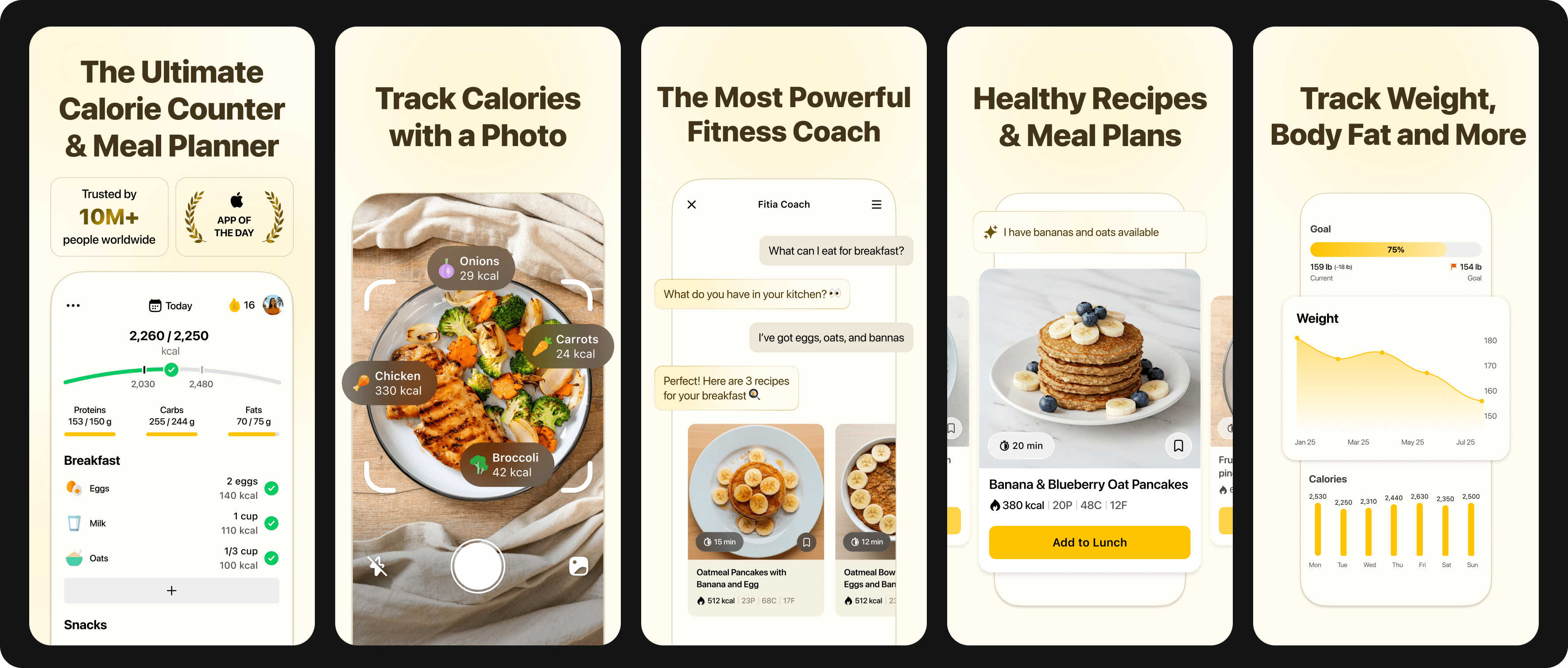
Fitia generates personalized meal plans for muscle gain goals and fat loss. At setup, users who select a muscle gain or weight gain goal receive a calorie surplus target and a meal plan with recipes distributed across the day, with protein spread across meals. For users who struggle to hit high protein targets or build a varied meal rotation, having a generated plan significantly reduces the daily planning burden. The app recalibrates as weight changes. Best for users who want to be told what to eat for their bulk, not just track what they choose.
MacroFactor
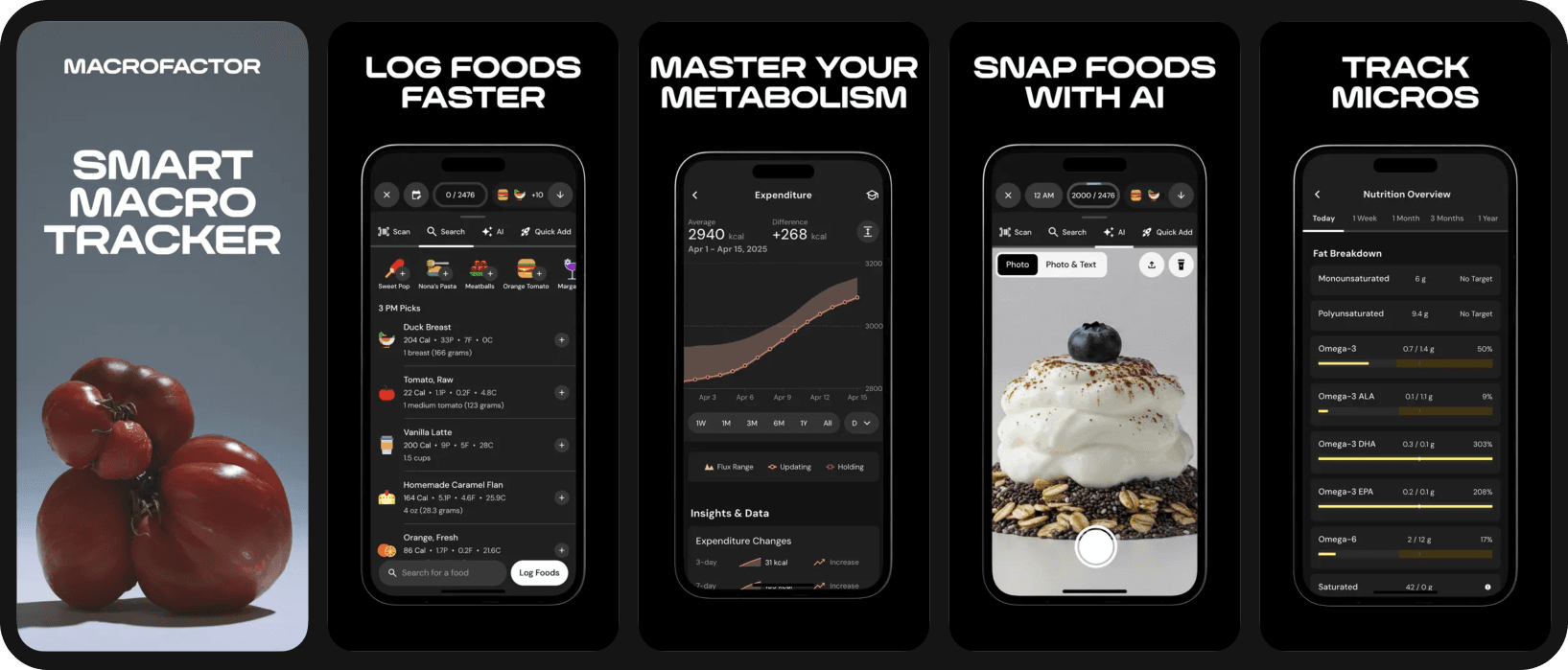
MacroFactor uses a dynamically updated algorithm that recalculates your macro targets weekly based on your actual weight trends. For a lean bulk, this is particularly valuable: as weight increases, the app automatically adjusts your calorie ceiling to maintain the intended surplus rate. No meal plan generation, but a good adaptive tracking layer in the category.
Cronometer
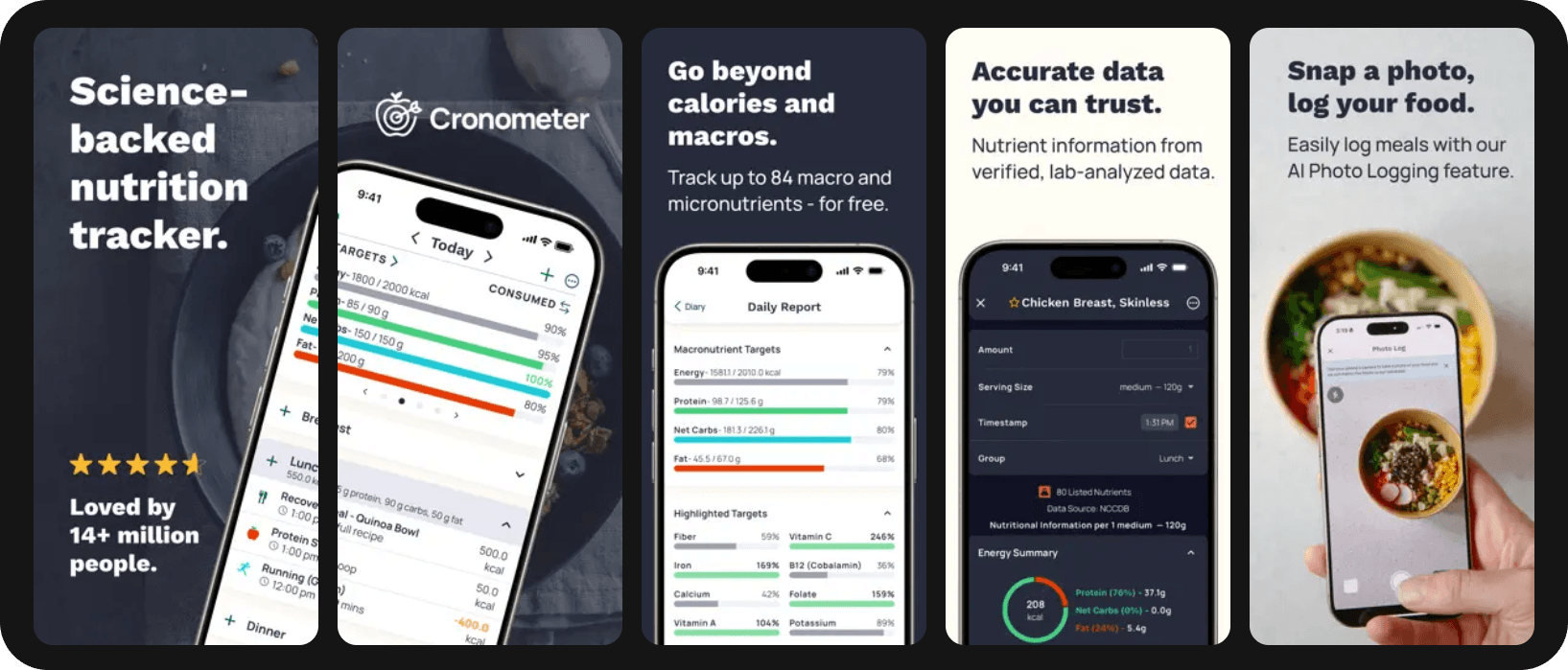
Cronometer tracks over 80 micronutrients alongside macros, with entirely verified data. Best for muscle-gain athletes concerned with training recovery, nutrient sufficiency, and performance markers beyond protein and calories. Less useful for meal planning or adaptive targets, but strong on nutrient depth.
MyFitnessPal
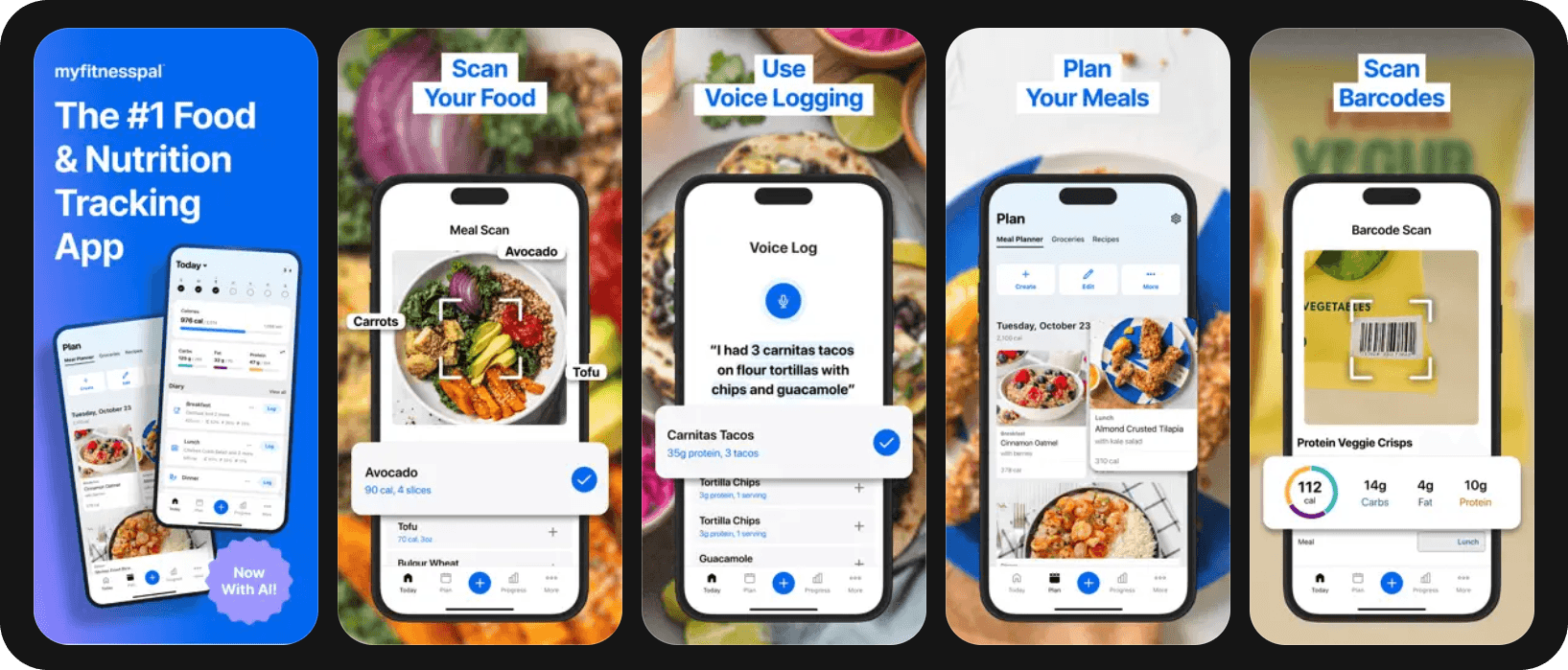
MyFitnessPal's large database makes it the most versatile logging tool for users who eat a wide variety of foods, including international cuisines, restaurant meals, and complex recipes. No adaptive targeting or meal plan generation, unless you go Premium +, but the coverage advantage is unmatched for users who prioritize logging flexibility over structural guidance.
Conclusion
For muscle gain, the right calorie counter app does more than add a surplus to your calorie settings. The best tools either adapt your targets as you gain, generate meal plans that distribute your protein correctly across the day, or provide micronutrient precision to support training performance. The core habit is consistent protein and calorie tracking — and whichever app makes that habit easiest to maintain will produce the best long-term results.
FAQ
How many calories above maintenance should I eat to gain muscle?
The evidence-supported range for a lean bulk is 200 to 400 kcal above your true maintenance level. Larger surpluses produce faster weight gain but with proportionally more fat accumulation. A calorie counter app that recalculates maintenance based on actual weight trends — rather than a static estimate — will give you a more accurate surplus target.
Does calorie tracking help with muscle gain?
Yes, though for different reasons than weight loss. In a bulk, the risk is overeating rather than undereating. Tracking calories and protein ensures the surplus stays controlled and protein targets are consistently met — both of which improve the ratio of lean mass to fat gain during a bulk.
What protein target should I use in a muscle gain app?
The standard evidence-based target is 0.7 to 1g of protein per pound of bodyweight per day. Set your app's protein target at the lower end if you're new to tracking, and increase toward the upper end as you build consistency. Distribute across at least three meals for optimal muscle protein synthesis.
About the Author
 | Arantza Echeandía León is a registered dietitian and nutritionist, graduated from Universidad Peruana de Ciencias Aplicadas (UPC), where she ranked in the top 10% of her class. She specializes in sports nutrition and metabolic conditions, with experience supporting athletes and collaborating with multidisciplinary teams to optimize performance and recovery. She holds a Level I ISAK certification in kinanthropometry and currently leads food database optimization and AI-driven nutrition feature integration at Fitia Inc. |
References
- Moon, J., & Koh, G. (2020). Clinical Evidence and Mechanisms of High-Protein Diet-Induced Weight Loss. Journal of obesity & metabolic syndrome, 29(3), 166–173. https://doi.org/10.7570/jomes20028
- Harvey, J., Krukowski, R., Priest, J., & West, D. (2019). Log Often, Lose More: Electronic Dietary Self-Monitoring for Weight Loss. Obesity (Silver Spring, Md.), 27(3), 380–384. https://doi.org/10.1002/oby.22382
- Hanson, A. J., Kattelmann, K. K., McCormack, L. A., Zhou, W., Brown, O. N., Horacek, T. M., Shelnutt, K. P., Kidd, T., Opoku-Acheampong, A., Franzen-Castle, L. D., Olfert, M. D., & Colby, S. E. (2019). Cooking and Meal Planning as Predictors of Fruit and Vegetable Intake and BMI in First-Year College Students. International journal of environmental research and public health, 16(14), 2462. https://doi.org/10.3390/ijerph16142462
- Schoenfeld, B. J., & Aragon, A. A. (2018). How much protein can the body use in a single meal for muscle-building? Implications for daily protein distribution. Journal of the International Society of Sports Nutrition, 15, 10. https://doi.org/10.1186/s12970-018-0215-1
- Morton, R. W., Murphy, K. T., McKellar, S. R., Schoenfeld, B. J., Henselmans, M., Helms, E., Aragon, A. A., Devries, M. C., Banfield, L., Krieger, J. W., & Phillips, S. M. (2018). A systematic review, meta-analysis and meta-regression of the effect of protein supplementation on resistance training-induced gains in muscle mass and strength in healthy adults. British journal of sports medicine, 52(6), 376–384. https://doi.org/10.1136/bjsports-2017-097608
Related articles
 Muscle Gain
Best Nutrition App for Weight Gain in the US (2026): A Practical Comparison of Calorie Surplus & Macro Tracking Tools
Compare the best weight gain apps in the US for 2026. See which calorie surplus and macro tracking features actually help you bulk lean and stay consistent.
Read article Muscle Gain
Why Most Calorie Counter Apps Make Muscle Gain Harder Than It Needs To Be
Most calorie apps are built for fat loss. Learn why they fail for muscle gain and what to look for to actually build lean mass.
Read article Muscle Gain
9 Best Calorie Counter Apps to Gain Weight
Discover the best calorie counter apps to gain weight, track surplus, hit protein goals, and stay consistent with meal planning and progress tracking.
Read article