Optimal Timing for Protein Intake: Before or After Training?
Do I need to consume protein immediately after training? Learn when to take it for best results.
- Published
- Updated
- 7 min read
- 7 min read
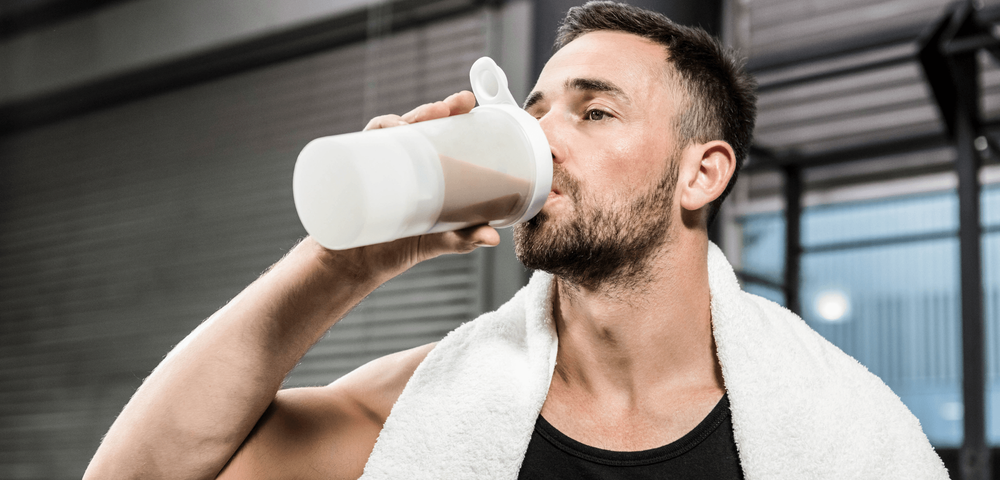
You're strength training and you either have protein powder on hand or you're considering getting some, but you're not sure when the best time to take it is. Is there any difference between taking it before or after your workout?
You see, protein powder essentially helps you meet your daily protein requirements.
Moreover, thanks to a wealth of scientific evidence, we know that meeting this requirement is crucial for maintaining and building muscle, and it can also aid in fat loss.
👉 You might be interested in: 7 Benefits of Protein Backed by Science
In this article, we'll delve into the available evidence to determine the optimal timing for consuming protein powder to achieve better results in the gym.
💡Also, remember that on the Fitia app you can get a personalized meal plan based on your goal, whether you're looking to lose fat, gain muscle or simply improve your nutrition. Download it for free here.
👉 You might be interested in: What is the Anabolic Window?
Is there a better time to take protein if you're strength training?
You might have heard that it's best to take protein immediately after training to enhance muscle mass gain during the period known as the "anabolic window".
But what exactly is this anabolic window? Some studies have referred to the "anabolic window" as the short period of time after strength training during which muscle mass gain can be enhanced through nutrition, specifically through protein consumption (1,2,3).
While the duration of this period hasn't been clearly defined, it's generally discussed as within 1 hour post-workout or even within minutes (1,2).
If this were true, then the answer would be clear: it would be better to take protein after training.
However, various studies have attempted to test this hypothesis and haven't found solid support.
For instance, in one study, 21 individuals followed the same training and nutritional plan for 10 weeks and were divided into 2 groups. The only difference between the groups was that one consumed a 25-gram whey protein shake before the workout, and the other after the workout
After 10 weeks, the changes in muscle mass, fat and strength were equivalent in both groups (4).
Another study compared the effect on muscle mass, strength, and power in 33 experienced men when consuming protein supplements (2 shakes of 42 g of protein each) at different times. One group consumed the proteins immediately before and after training, while another group consumed the proteins early in the morning and at night. The results found no significant differences in the amount of muscle mass gained between the groups (5).
In a very similar study, the effect of consuming an amino acid and carbohydrate solution immediately before or immediately after the training session was compared. The results showed that muscle protein synthesis (the indispensable process for building muscle) after exercise was greater when the solution was drunk before training (6).
Therefore, to date, there is no solid evidence demonstrating that consuming proteins immediately after finishing the workout session is superior to consuming them 2 or 3 hours later, or even consuming them before (1,4,5,6,7).
In fact, a meta-analysis on the topic examined whether consuming protein within a range of 2 hours before or after training had a beneficial effect on muscle gain compared to consuming nothing during that period. The analysis found a small to moderate positive effect of consuming protein during that period on muscle mass gain (8).
However, when a subgroup analysis was conducted, it became evident that the total amount of protein consumed throughout the day was responsible for the effect, rather than the timing of consumption (8).
So, is it the same to take protein before or after training?
This answer is somewhat more complex than just yes or no.
Taking your protein shake before or after training will be equally beneficial to your results in the gym as long as the following conditions are met:
Meet your total daily protein requirement: For individuals engaged in strength training, the optimal protein intake range is between 0.72 - 1 g/lb (1.6 - 2.2 g/kg of body weight per day).
Distribute your protein requirement across all your meals throughout the day, rather than concentrating consumption in very few meals. In this regard, it would be advisable to have meals that provide between 0.88 g/lb y 1.21 g/lb (0.4 - 0.55 grams of protein per kg of body weight) each time, and have at least 4 meals a day (to help you meet the total requirement) (9,10).
The reason for these recommendations lies in these two very important factors:
- After a strength training session, the increase in muscle protein synthesis (the process by which muscle is built) not only rises for 1 hour but can remain elevated for up to 48 hours after a workout session (1,11).
- The anabolic potential (the potential to increase protein synthesis) of a protein-rich meal can extend up to 4 - 6 hours after consumption (9,12).
This means that:
- It would be more important to consume protein steadily throughout the day and every day to maintain amino acid availability during the entire time protein synthesis is increased.
- The true duration of the "anabolic window" would be much longer than just 1 hour and could last between 4-5 hours depending on when you ate before training.
- Even the pre-workout meal can continue to provide sufficient amino acids to increase protein synthesis.
So, it wouldn't be necessary to "rush for your protein shake after training," although there won't be any adverse effects for doing so, and there may be some circumstances in which it may even be beneficial.
For instance, if you've trained on an empty stomach, your availability of amino acids will be low since your last meal was many hours ago. In this case, it would be advisable to consume a good amount of protein as soon as possible to replenish those amino acids.
Similarly, there are occasions when it will be more useful to take it before training. For example, if you have little time before your workout starts and need a source of quickly digestible protein.
💡 Tip: At Fitia you can get a meal plan that covers your calorie and nutrient requirements (including protein) .Download it for free here.
👉 You might be interested in: How to Gain Muscle?
Does this also apply to weight loss ?
Absolutely. Remember that to effectively lose fat, two of the main strategies are consuming enough protein and strength training.
So, if you're already strength training and implementing the conditions mentioned earlier, you can take your shake before or after your workout session depending on how you've organized your meals for the day.
In fact, a protein shake can serve you equally well as pre or post-workout, as both moments will require a good protein intake.
👉 You might be interested in: Can I Gain Muscle Mass and Lose Fat at the Same Time? How?
Conclusions
- You can consume your protein shake before or after training, or even at another time of the day.
- If you meet your daily protein requirements with a distribution across 4-5 meals, you'll reap the maximum benefits from your training and won't need to worry too much about consuming the shake immediately after training.
- By fulfilling these conditions, you ensure a constant supply of amino acids throughout the day, which will keep muscle protein synthesis elevated for most of the day.
- In this regard, your protein shake should adapt to and complement your other meals of the day. It could serve as a pre or post-workout option, as well as be included in your breakfast, snacks, or dinner, for example.
💡 Tip: Remember that in the Fitia app you can find thousands of pre and post workout ideas and hundreds of recipes with protein powder. Download it for free here.
References
- Aragon AA, Schoenfeld BJ. Nutrient timing revisited: is there a post-exercise anabolic window? J Int Soc Sports Nutr. 2013 Jan 29;10(1):5. doi: 10.1186/1550-2783-10-5. PMID: 23360586; PMCID: PMC3577439.
- Candow DG, Chilibeck PD. Timing of creatine or protein supplementation and resistance training in the elderly. Appl Physiol Nutr Metab. 2008 Feb;33(1):184-90. doi: 10.1139/H07-139. PMID: 18347671.
- Kerksick CM, Arent S, Schoenfeld BJ, Stout JR, Campbell B, Wilborn CD, Taylor L, Kalman D, Smith-Ryan AE, Kreider RB, Willoughby D, Arciero PJ, VanDusseldorp TA, Ormsbee MJ, Wildman R, Greenwood M, Ziegenfuss TN, Aragon AA, Antonio J. International society of sports nutrition position stand: nutrient timing. J Int Soc Sports Nutr. 2017 Aug 29;14:33. doi: 10.1186/s12970-017-0189-4. PMID: 28919842; PMCID: PMC5596471.
- Schoenfeld BJ, Aragon A, Wilborn C, Urbina SL, Hayward SE, Krieger J. Pre- versus post-exercise protein intake has similar effects on muscular adaptations. PeerJ. 2017 Jan 3;5:e2825. doi: 10.7717/peerj.2825. Erratum in: PeerJ. 2017 Aug 1;5: PMID: 28070459; PMCID: PMC5214805.
- Hoffman JR, Ratamess NA, Tranchina CP, Rashti SL, Kang J, Faigenbaum AD. Effect of protein-supplement timing on strength, power, and body-composition changes in resistance-trained men. Int J Sport Nutr Exerc Metab. 2009 Apr;19(2):172-85. doi: 10.1123/ijsnem.19.2.172. PMID: 19478342.
- Tipton KD, Rasmussen BB, Miller SL, Wolf SE, Owens-Stovall SK, Petrini BE, Wolfe RR. Timing of amin
- Tipton KD, Elliott TA, Cree MG, Aarsland AA, Sanford AP, Wolfe RR. Stimulation of net muscle protein synthesis by whey protein ingestion before and after exercise. Am J Physiol Endocrinol Metab. 2007 Jan;292(1):E71-6. doi: 10.1152/ajpendo.00166.2006. Epub 2006 Aug 8. PMID: 16896166.
- Schoenfeld BJ, Aragon AA, Krieger JW. The effect of protein timing on muscle strength and hypertrophy: a meta-analysis. J Int Soc Sports Nutr. 2013 Dec 3;10(1):53. doi: 10.1186/1550-2783-10-53. PMID: 24299050; PMCID: PMC3879660.
- Schoenfeld, Brad J. Science and development of muscle hypertrophy. Human Kinetics, 2020.
- Schoenfeld BJ, Aragon AA. How much protein can the body use in a single meal for muscle-building? Implications for daily protein distribution. J Int Soc Sports Nutr. 2018 Feb 27;15:10. doi: 10.1186/s12970-018-0215-1. PMID: 29497353; PMCID: PMC5828430.
- Phillips SM. A brief review of critical processes in exercise-induced muscular hypertrophy. Sports Med. 2014 May;44 Suppl 1(Suppl 1):S71-7. doi: 10.1007/s40279-014-0152-3. PMID: 24791918; PMCID: PMC4008813.
- Schoenfeld BJ, Aragon AA. Is There a Postworkout Anabolic Window of Opportunity for Nutrient Consumption? Clearing up Controversies. J Orthop Sports Phys Ther. 2018 Dec;48(12):911-914. doi: 10.2519/jospt.2018.0615. PMID: 30702982.
Related articles
 Training
Top 5 Fitness Apps to Start 2026 in Your Best Shape
Kick off 2026 with top fitness apps for nutrition, training, sleep and wellness. Build a routine that fits your day and helps you stay consistent.
Read article Training
Best Post-Run Foods to Boost Recovery and Rebuild Muscle
Learn the best post-run foods to refuel, rebuild muscle, and recover faster. Real meals, smart timing, and science-backed nutrition for runners.
Read article Training
How to Distribute Macros Throughout the Day for Better Post-Gym Recovery
Learn how to time protein, carbs, and fats for better post-gym recovery. Get practical tips and see how Fitia helps you hit your goals with ease.
Read article