How to Choose an AI Food Scanner App in 2026: A Buyer's Checklist
There's no single best AI food scanner app. Here's how to pick one by what you need after the scan, a verified database, real goals, and a plan that sticks.
- Published
- Updated
- 7 min read
- 7 min read
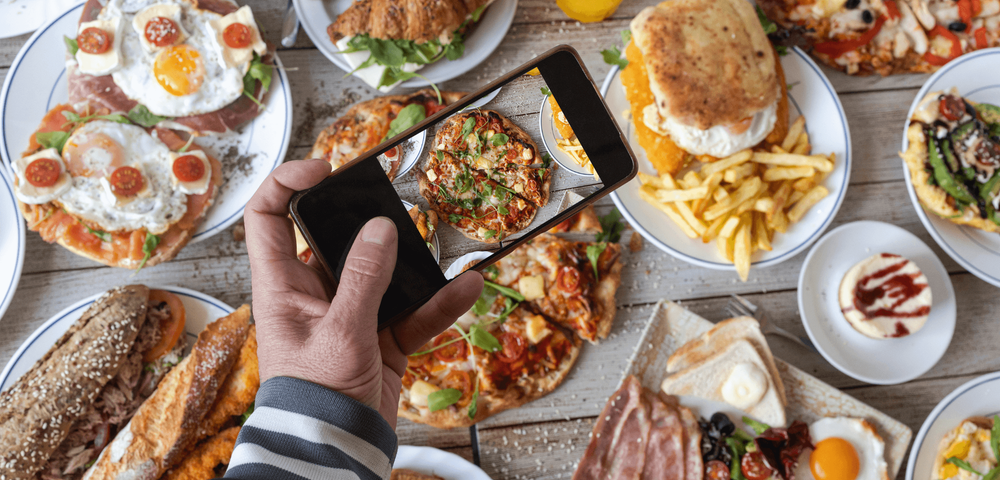
TL;DR: There's no single "best" AI food scanner app. The right one depends on what you need it to do after it reads your plate. Scanner-first apps are built for fast snapshot logging, while full nutrition apps treat the scan as one input feeding a verified database, a calorie target, and a plan. This guide gives you a way to choose by purpose, not just marketing hype. (For how accurate food scanning itself is, see Fitia's research reviews linked below.)
Table of Contents
- Why choosing an AI food scanner app depends on what you need it for
- The two kinds of AI food scanner apps (and who each suits)
- A 6-point checklist for evaluating an AI food scanner app in 2026
- What the research says actually drives results
- Where Fitia fits in your decision
- FAQ
Why choosing an AI food scanner app depends on what you need it for
Search for an AI food scanner app and you'll find dozens of options that all look similar at the moment of the scan. But the scan is only the fresh paint on top; the real differences show up in what happens after the scanner fires: which database the result is checked against, whether you can correct it, whether it connects to a calorie goal, and whether the app helps you decide what to eat next.
So the useful question isn't "which app has the best food scanner?" It's "which app is built for what I'm trying to accomplish?" This guide gives you a checklist to answer that for yourself, a set of criteria you can run any app through, rather than a ranking that doesn't know your goal.
Want the underlying accuracy data first? Fitia has already covered how accurate photo calorie apps are and whether an app can really count calories from a photo in depth. This article focuses on how to choose between your options.
The two kinds of AI food scanner apps (and who each suits)
Almost every option falls into one of two categories:
Type 1: Scanner-first trackers
These are built primarily around the food scanner. You snap, you get a number, you move on. Their strength is speed and a frictionless first log. Their limit is that the scan result is often the whole product, and there may be little behind it to verify the number, correct a bad portion guess, or connect the data to a plan. Best for people who want a quick, low-commitment snapshot and are comfortable with directional estimates.
Type 2: Full nutrition apps with the scanner as one input
Here the food scanner is one of several ways to log, alongside barcode, voice, and search, and every entry resolves against a maintained food database and a personal calorie/macro target. The scanner is a convenience feature, but not the entire value proposition. Best for people who want the speed of scanning and trustworthy numbers, goal tracking, and guidance on what to do next.
Knowing which type you actually want eliminates most of the confusion before you evaluate a single feature.
A 6-point checklist for evaluating an AI food scanner app in 2026
Run any candidate app through these six questions:
- What's behind the scanner? Does the scan result map to a verified, professionally reviewed food database, or an unvetted crowd-sourced one? This determines whether the number is trustworthy once the food is identified.
- Can you correct it? Can you edit the AI's food choice and portion in a tap or two before saving? Correctable apps recover most of the accuracy lost in a bad guess, while "snap and forget" apps don't.
- What else can you log with? Scanner-only apps force every food through the scanner. Multi-log apps (scan + barcode + voice + search) let you use the most accurate method for each food: a barcode for packaged items, a scan for a plated meal.
- Does it connect to a goal? Does the logged meal land against a personalized calorie and macro target, or just display a standalone number with no context?
- Does it help you decide what to eat? The best apps add meal plans, recipes, or guidance, which is what turns tracking into actual progress.
- Will you still use it in a month? Ease of use, design, and feedback are the features research links most to sustained engagement (more on that next).
A scanner-first app typically wins on speed but is weaker at guiding you toward your goal. A full nutrition app trades a little novelty for strength across the board.
What the research says actually drives results
If you're choosing an app to change your body, it's worth knowing what the evidence says moves the needle, because it isn't the food scanner alone.
A 2015 systematic review and meta-analysis in the Journal of Medical Internet Research pooled 12 controlled studies and found that using a weight-loss app was associated with a significant reduction in body weight (about −1.04 kg versus control) (Flores-Mateo et al., 2015). Notably, the same review identified the features users rank most highly for staying engaged: ease of use, design, feedback, function, and tailored information, and it observed that many users stop opening an app after the first month.
More recent evidence points the same way. A 2025 evaluation of nearly 58,000 people in a digital weight-loss program found that engaged users lost significantly more weight than non-engaged ones (about 9% versus 5.9% at three months) (Johnson et al., 2025), and a 2025 study found that tailoring a program's advice to the individual significantly increased app engagement, the behavior most closely tied to results (Szypula et al., 2025). A 2021 meta-analysis in Obesity Reviews reinforces the core point: digital self-monitoring significantly supported weight loss and cut calorie intake, and tailored interventions were significantly more effective than non-tailored ones (Berry et al., 2021).
In other words, an app that adapts targets to you and keeps you engaged outperforms one that simply reads plates faster. The practical implication for your decision is to gravitate toward an app with a clear track record of keeping users connected to their goal through guidance and sustainable dieting, and to treat the food scanner as a nice-to-have rather than the deciding factor.
Where Fitia fits in your decision
Within this checklist, Fitia sits firmly in the "full nutrition app, food scanner as one additional logging feature" category, and that's the deliberate distinction from scanner-first tools:
- The scanner is backed by a verified database. A Fitia scan resolves against a food database validated by an internal algorithm and reviewed by nutrition professionals.
- You're never stuck with the scanner's guess. You can correct the AI's result, or log the same meal by barcode, voice, or search, using the most accurate method for each food.
- Every log connects to your goal. Meals land against your personalized calorie and macro targets, so you immediately see whether something fits, not just an isolated number.
- It helps with the next decision, too. Fitia can build meal plans, recipes, and grocery lists, so it answers "what should I eat?" not only "what did I eat?"
If you want a quick, no-strings snapshot, a scanner-first app may be all you need. If you want the speed of this sort of logging plus numbers you can trust and a plan attached to them, that combination is where Fitia is positioned.
Put it to the test. You can start Fitia's free trial and log the same plate by photo, barcode, and voice to see which feels right before deciding.
FAQ
How do I choose an AI food scanner app?
Choose based on what you need after the scan, not the scan itself. Check whether the scan result maps to a verified database, whether you can correct it, whether it offers other logging methods, and whether it connects to a calorie goal and a plan. Match those to your goal rather than to a recognition-accuracy claim.
How do scanner-only apps differ from full nutrition apps?
Scanner-only apps are built around the camera and often stop at a standalone estimate. Full nutrition apps treat the scan as one of several logging methods, check it against a maintained database, and connect it to your goals and a plan.
Should I pick an AI food scanner app based on its recognition accuracy?
Accuracy matters, but it's not the deciding factor. Research links sustained results more to usability, feedback, and tailored guidance than to any single feature. Prioritize a verified database, the ability to correct results, and goal connection.
Are AI food scanner apps worth it for weight loss?
Yes, when used consistently and connected to a goal. Studies find weight-loss apps produce modest but real weight loss, with engagement and personalization driving outcomes more than the scanning feature itself.
Can one app do scanning, barcodes, and meal planning together?
Yes. Multi-log apps like Fitia let you log by photo, barcode, voice, or search against one verified database and attach every entry to a personalized plan, which is generally more useful than a scanner-only tool.
References
- Flores-Mateo, G., Granado-Font, E., Ferré-Grau, C., et al. (2015). Mobile Phone Apps to Promote Weight Loss and Increase Physical Activity: A Systematic Review and Meta-Analysis. Journal of Medical Internet Research, 17(11), e253. https://doi.org/10.2196/jmir.4836
- Berry, R., et al. (2021). Does self-monitoring diet and physical activity behaviors using digital technology support adults with obesity or overweight to lose weight? A systematic review and meta-analysis of randomised controlled trials. Obesity Reviews, 22(10), e13306. https://doi.org/10.1111/obr.13306
- Johnson, H., Huang, D., Liu, V. N., et al. (2025). Impact of Digital Engagement on Weight Loss Outcomes in Obesity Management Among Individuals Using GLP-1 and Dual GLP-1/GIP Receptor Agonist Therapy: Retrospective Cohort Service Evaluation Study. Journal of Medical Internet Research, 27, e69466. https://doi.org/10.2196/69466
- Szypula, J., Jarvstad, A., Jones, L., et al. (2025). Personalizing a Weight Loss Program Using Cognitive-Behavioral Phenotypes to Improve Engagement and Weight Loss in Adults With Overweight or Obesity: Quasi-Experimental Study. JMIR Formative Research, 9, e72645. https://doi.org/10.2196/72645
Related articles
 Fat Loss
Weight Loss Calorie Chart (2026): How Many Calories to Eat by Body Weight, Sex, and Activity
See how many calories to eat to lose weight, with simple charts by body weight and activity, plus why your target changes as you go.
Read article
Best Calorie Counter App for Muscle Gain in the US (2026): 4 Apps Compared for Lifters
The 4 best calorie counter apps for US lifters in 2026, compared on macros, database, adaptation, and meal planning.
Read article
Best Online Nutrition Coach in the US (2026): What to Look For Before You Pay
Online nutrition coaching in the US 2026: three tiers, what the research says, and the red flags to spot before you pay for an app or coach.
Read article