Can an app really count calories from a photo? An evidence-based reality check (2026)
Photo calorie counter apps work about as well as food diaries — but the real story is what that means for your weight loss. Here's what 5 studies say.
- Published
- 8 min read
- 8 min read
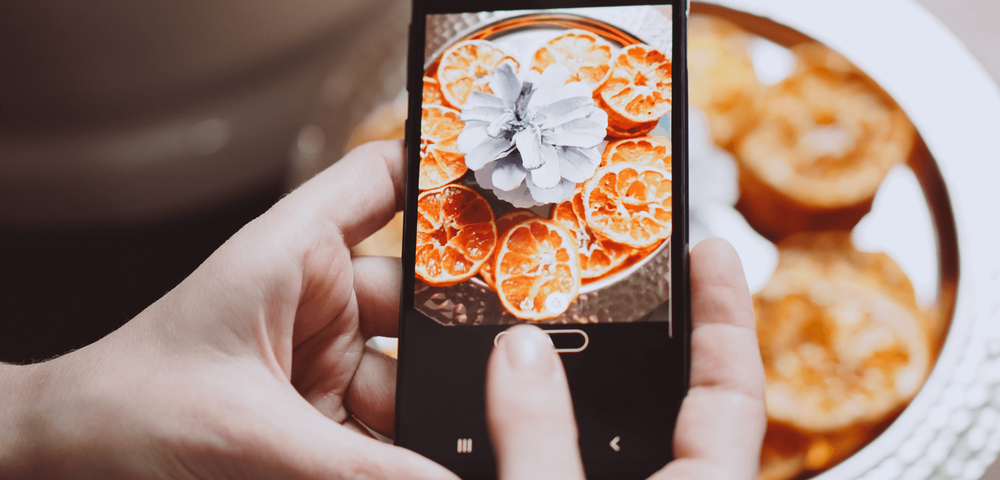
TL;DR: AI photo calorie counters produce energy estimates roughly on par with traditional food diaries and 24-hour recalls (within ~10% at the group level), with bigger errors on visually complex meals and several specific nutrients. Their value for weight loss comes from keeping users logging consistently, not from photo recognition being uniquely accurate. Photo logging earns its place alongside traditional methods, not above them.
Table of Contents
- How do photo calorie counter apps actually work?
- Why are some photo calorie apps more accurate than others?
- How accurate are photo calorie apps? What peer-reviewed research shows
- Do photo calorie apps actually help with weight loss?
- So, can an app really count calories from a photo?
- FAQs
How do photo calorie counter apps actually work?
A photo-based calorie counter is doing at least three things between taking a picture and receiving results. First, after you take a photo, the app uses LLM (AI model) technology to determine what type(s) of food are in your photo. It then provides a list of possible answers (like "grilled chicken", "rice" and "broccoli") and selects the top choice.
Second, once the top choices have been selected, the app makes an educated guess about how much of each item is in the frame (usually by using some form of depth cueing, referencing the edge of the plate and/or other reference items visible in the shot).
Third, the app will look up the amount/portion of all the items previously determined to be in the frame against a pre-existing nutrition database. This information will include calories and macro-nutrient data.
Each of these three steps has its own margin of error. The identification process may have trouble with visually ambiguous foods (such as white sauce vs. white frosting, or ground beef vs. ground turkey), or when ingredients aren't visible to the camera — for example, the oil used in cooking or the fruit added to overnight oats.
Portion estimation is also subject to errors. These can occur if the camera view doesn't capture the full depth of the food being photographed, or if nothing in the frame serves as a reference.
Finally, database lookup can fail — even when both previous steps succeed — if the database isn't properly curated, if the food photographed is a local or regional dish that doesn't exist in the database, or if the model picks a generic description of a food when the actual photograph contained something more specific. Identifying which part of the process failed is the difference between a useful caloric estimate and inaccurate information.
You might also be interested in: Why Nutrition Apps Need More Than Just Photo Tracking — a closer look at where photo recognition genuinely adds value and where its limits show up.
Why are some photo calorie apps more accurate than others?
Two design choices separate the most accurate apps from the rest. The first is whether the database is verified (entries reviewed by nutrition professionals before publishing) or crowdsourced (entries contributed by users with minimal vetting). Verified databases produce more consistent calorie values for the same food searched on different days, which directly affects the trustworthiness of any AI lookup.
The second is whether the user can correct the AI's output before saving — apps that surface ranked alternatives and let the user tap a more accurate match recover most of the accuracy lost during identification.
How accurate are photo calorie apps? What peer-reviewed research shows
A 2020 systematic review and meta-analysis published in Clinical Nutrition synthesized the validity literature for image-based dietary assessment methods and concluded that, when used as a primary dietary record, photo-based methods produce energy and macronutrient estimates as valid as those from traditional self-report tools — 24-hour recalls and weighed food records — but not as valid as the biomarker gold standard, doubly-labeled water (Ho et al., 2020).
In plain terms: photo logs are roughly on par with the food-record tools clinicians already use, but they inherit the same systematic underreporting those tools carry.
Drilling deeper, a 2020 randomized validation study in JMIR mHealth and uHealth tested an AI-powered photo calorie app against 3-day food diaries in 72 Canadian adults. Pearson correlations between the app (after dietitian review) and the food-diary reference ranged from 0.04 to 0.51 across nutrients, and most differences in mean intake fell within 10%.
But the picture changed under closer inspection. After dietitian review, significant differences from the 3-day diary persisted for total energy, protein, carbohydrates, percent fat, saturated fatty acids, iron, and potassium (Ji et al., 2020). The authors explicitly highlighted "the importance of verifying data entries of participants before proceeding with nutrient analysis." In other words, an unverified photo log is closer to a draft than a final number. Dietitian review tightens it but doesn't close the gap on several nutrients.
That said, a 2021 Nutrients validation of the WAIDA WeChat applet pinned down which photo conditions reduce error. The study compared photo-based intake against the weighing gold standard in pregnant women and found that capturing food from three angles (directly above, 45° front, 45° back) plus using a regionally matched food atlas produced narrower limits of agreement than the 24-hour recall method (Ding et al., 2021).
The same study acknowledged that mixed dishes — stews, layered bowls, foods where ingredients are visually hidden — remain a persistent source of disparity even with multi-angle imaging. Single foods on a plate work well; the more visually complex the meal, the wider the error band.
Do photo calorie apps actually help with weight loss?
The downstream effect on weight loss is well-characterized. The 2020 American Psychologist review of lifestyle modification for obesity noted that self-logged calorie intake is underreported by 456–510 kcal per day across paper, computer, and smartphone methods alike — a bias general to self-monitoring, not specific to photo apps.
The implication for users is that what photo apps actually deliver is consistent self-monitoring made low-friction — and that consistency, even with a known bias, is the variable most strongly associated with weight-loss success in the same review (Wadden, Tronieri, & Butryn, 2020).
Beyond that, a 2019 Obesity Reviews meta-analysis of 41 app-based interventions (6,348 participants, 27 RCTs) showed app-based interventions modestly improve weight outcomes overall (Hedges' g = 0.30), but couldn't tie that improvement to any specific feature or technique — and the techniques most apps share (goal-setting, feedback, education, social support) don't involve photo recognition (Villinger et al., 2019).
So, can an app really count calories from a photo?
Taken together, photo logging has demonstrated value as a friction-reducer and produces a workable calorie estimate, but it isn't a uniquely superior way to track food for weight loss. It earns a place alongside traditional logging methods, not above them. Its real contribution is keeping the user logging long enough for the rest of the system — the calorie target, the feedback, the plan — to do the work that actually moves the scale.
Want more than just photo recognition in a calorie app? Fitia pairs AI photo recognition with a 10M+ food database verified by in-house dietitians, plus voice and barcode logging as backups, and lets you edit any AI result before saving. Download it now.
FAQ's
How accurate are photo calorie counter apps, really?
For total energy intake, validated photo apps come within roughly 10% of reference methods (24-hour recalls, food diaries) at the group level (Ji et al., 2020). Per-meal accuracy varies more, especially for visually complex dishes and several specific nutrients — iron, potassium, saturated fat — where gaps persist even after dietitian review. Photo logging is accurate enough to support consistent self-monitoring, but unverified results are best treated as a draft, not a final number.
Why does the AI get my food wrong sometimes?
Three usual suspects: the food is visually ambiguous (white sauces, ground meats), the angle hides portion depth or has no reference object in frame, or the dish is regional or homemade and the database lacks an entry.
Can I lose weight using only photo calorie counting?
Yes — but not because of the photo recognition itself. The 2019 Villinger meta-analysis found that what drives results in app-based interventions isn't any specific feature; it's the broader behavior-change infrastructure (goal-setting, feedback, education, social support). Photo logging works because it keeps users consistently engaged, and logging frequency is the variable most strongly associated with weight-loss success (Wadden et al., 2020). Photo logging is a friction-reducer, not an intervention on its own.
Is photo logging more accurate than typing?
The validation literature finds photo logging produces estimates comparable to traditional self-report methods — neither approach is reliably more accurate than the other (Ho et al., 2020). Where they differ is what each asks of the user. Photo logging is fast enough that more users keep doing it; manual entry requires more sustained effort. Logging frequency is the variable most strongly associated with weight-loss success (Wadden et al., 2020), so the strongest results come from hybrid workflows: photo for speed, manual correction for meals where the AI's guess looks generic.
About the Author
 | Arantza Echeandía León is a registered dietitian and nutritionist, graduated from Universidad Peruana de Ciencias Aplicadas (UPC), where she ranked in the top 10% of her class. She specializes in sports nutrition and metabolic conditions, with experience supporting athletes and collaborating with multidisciplinary teams to optimize performance and recovery. She holds a Level I ISAK certification in kinanthropometry and currently leads food database optimization and AI-driven nutrition feature integration at Fitia Inc. |
References
- Ho, D. K. N., Tseng, S.-H., Wu, M.-C., Shih, C.-K., Atika, A. P., Chen, Y.-C., & Chang, J.-S. (2020). Validity of image-based dietary assessment methods: A systematic review and meta-analysis. Clinical Nutrition, 39(10), 2945–2959. https://doi.org/10.1016/j.clnu.2020.08.002
- Ji, Y., Plourde, H., Bouzo, V., Kilgour, R. D., & Cohen, T. R. (2020). Validity and usability of a smartphone image-based dietary assessment app compared to 3-day food diaries in assessing dietary intake among Canadian adults: Randomized controlled trial. JMIR mHealth and uHealth, 8(9), e16953. https://doi.org/10.2196/16953
- Ding, Y., Lu, X., Xie, Z., Jiang, T., Song, C., & Wang, Z. (2021). Evaluation of a Novel WeChat Applet for Image-Based Dietary Assessment among Pregnant Women in China. Nutrients, 13(9), 3158. https://doi.org/10.3390/nu13093158
- Wadden, T. A., Tronieri, J. S., & Butryn, M. L. (2020). Lifestyle modification approaches for the treatment of obesity in adults. The American psychologist, 75(2), 235–251. https://doi.org/10.1037/amp0000517
- Villinger, K., Wahl, D. R., Boeing, H., Schupp, H. T., & Renner, B. (2019). The effectiveness of app-based mobile interventions on nutrition behaviours and nutrition-related health outcomes: A systematic review and meta-analysis. Obesity reviews : an official journal of the International Association for the Study of Obesity, 20(10), 1465–1484. https://doi.org/10.1111/obr.12903
Related articles
 Fat Loss
Weight Loss Calorie Chart (2026): How Many Calories to Eat by Body Weight, Sex, and Activity
See how many calories to eat to lose weight, with simple charts by body weight and activity, plus why your target changes as you go.
Read article
Best Calorie Counter App for Muscle Gain in the US (2026): 4 Apps Compared for Lifters
The 4 best calorie counter apps for US lifters in 2026, compared on macros, database, adaptation, and meal planning.
Read article
Best Online Nutrition Coach in the US (2026): What to Look For Before You Pay
Online nutrition coaching in the US 2026: three tiers, what the research says, and the red flags to spot before you pay for an app or coach.
Read article