This is probably one of the most searched questions on the internet and one of the goals that most people seek to achieve.
However, we regret to tell you that, according to current scientific evidence, it's not possible to lose fat only in specific areas, nor can you choose which part of your body will lose fat (unless through some type of surgical intervention or something similar).
Anyone telling you otherwise is likely trying to take advantage of you, perhaps by selling you a supplement, a training plan, or a diet that lacks scientific backing.
But don't worry. Don’t get confused or discouraged. Losing abdominal fat is totally achievable.
What’s not possible is to say, "I want to lose fat only in my abdomen and nowhere else," and expect a specific formula for it.
In this article we explain how fat loss works.
Why Can't You Lose Fat Locally?
Localized fat loss is a very common myth. Fat accumulation in different areas of the body isn't something we can control. While we can influence certain factors like lifestyle (diet, physical activity level, etc.), fat distribution is more related to uncontrollable factors such as genetics, sex, and age (1,2,3).
Factors Influencing Fat Accumulation:
- Genetics: Plays a crucial role in where fat accumulates.
- Sex: Women tend to accumulate fat in the hips and thighs, while men tend to do so in the abdomen (1).
- Age: As we age, fat distribution can change. For example, during menopause, women experience a redistribution of fat towards the abdominal area due to hormonal changes.
It's important to understand that just as we can't control where fat accumulates, we also can't decide from which area we will lose fat first during a fat loss process. Fat reduction occurs generally throughout the body.
Do Ab Workouts Burn Abdominal Fat? Do Targeted Exercises Work?
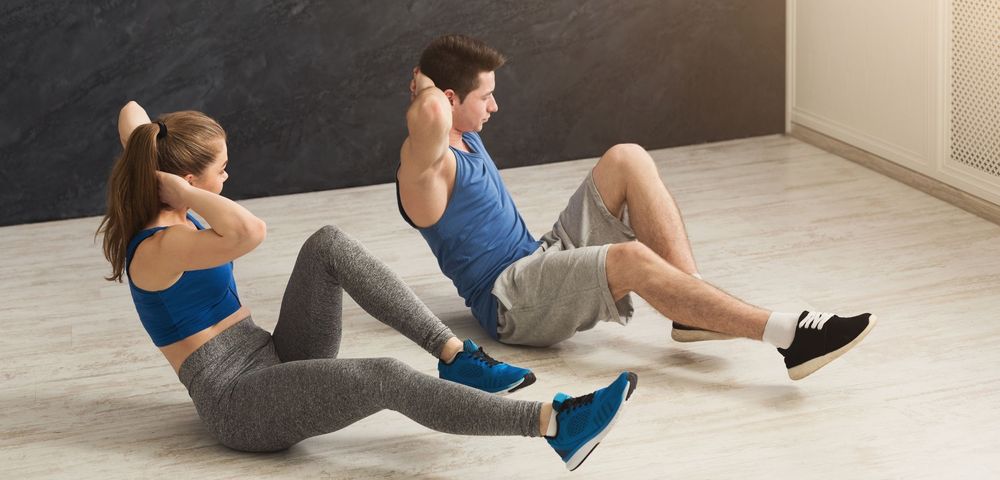
It's very common to believe that doing exercises for the abdomen will make you lose fat in that area; that doing leg exercises will make you lose fat in the legs, and so on for different body parts. However, this is a big myth.
The Myth of Localized Fat Loss
Exercise is a great tool for losing body fat. However, doing exercises focused on a specific area of the body won't make you lose fat in that particular area. Muscle tissue and fat tissue are different and behave differently during exercise.
Benefits of Targeted Exercises
When you exercise, you actively work the muscles, which improves their endurance and strength. If you complement exercise with good planning and diet, you can gain muscle mass in the targeted area. However, this won't reduce the amount of fat in that specific area.
Scientific Evidence on Ab Exercises
A study investigated the effect of ab exercises on abdominal fat. It involved 24 healthy and sedentary people, divided into two groups (4):
- Experimental Group: Performed 7 ab exercises (2 sets of 10 reps each), 5 days a week for 6 weeks.
- Control Group: Did not perform ab exercises.
Neither group modified their caloric intake or macronutrient consumption during the study. After 6 weeks, the results showed that doing ab exercises did not produce significant changes in body weight, body fat percentage, abdominal fat, waist circumference, or abdominal skinfolds. However, those who did ab exercises improved their muscular endurance.
However, there was a considerable improvement in muscular endurance, as participants who did ab exercises increased the number of repetitions they could do compared to the beginning and to the other group.
Other studies have obtained similar results (5,6,7). A recent meta-analysis evaluated 13 studies with 1158 participants, comparing the effect of training on localized fat loss (in one leg that trained vs one leg that didn't) (8).
The researchers concluded that localized muscle training does not affect fat deposits in specific areas, regardless of the participants' characteristics and exercise program.
Fat Loss Occurs Throughout the Body
Since you can't choose where to lose fat from, you have to start a process of overall body fat loss, not localized fat loss. Just as you might tend to store fat in certain areas more than others, you might also tend to lose fat from certain areas first. Unfortunately, this is something you can't control. You just have to be patient, trust the process, and do it as optimally as possible.
Training is crucial for general fat loss, but there is no exercise that allows localized fat loss. The key to effective fat loss is a combination of regular exercise, a balanced diet, and a healthy lifestyle.
What Should I Do to Lose Abdominal (or Body) Fat?
To lose fat in the abdomen, you need to follow the steps necessary to lose fat anywhere else on the body. Here's how to do it:
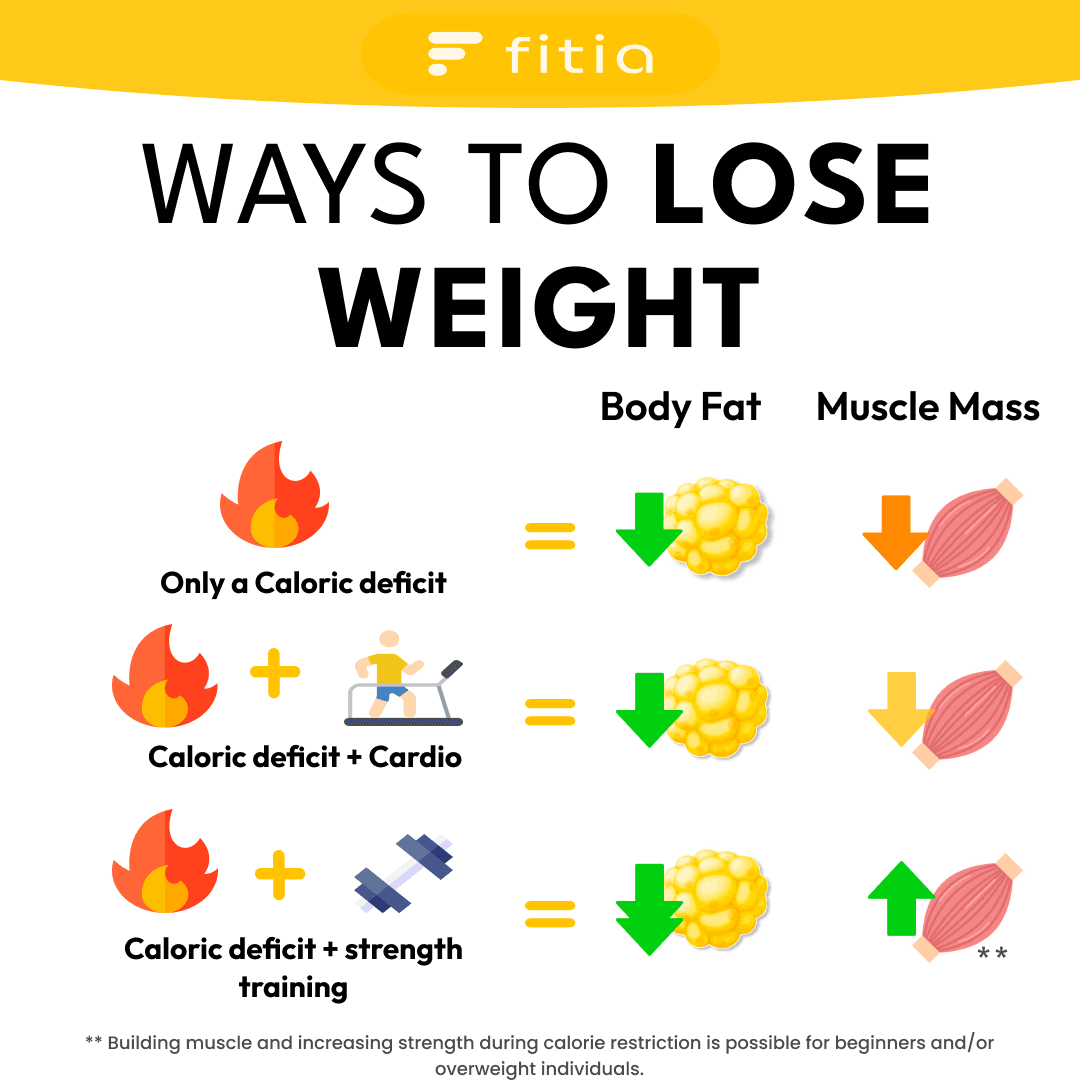
1. Create a Caloric Deficit
Creating a caloric deficit means consuming fewer calories than you burn. This is the essential condition for losing fat because when you consume less energy than you use, your body will turn to its fat reserves for energy.
We explain everything about caloric deficit, how to calculate it and apply it here.
With the Fitia app, you can get a personalized meal plan with a calculated caloric deficit according to your characteristics and preferences. Download it and get your daily meal plan for free.
2. Consume Enough Protein
Consuming enough protein during a period of caloric deficit will help you maintain as much muscle mass as possible.
If you don't have adequate protein intake while in a deficit, you'll likely lose muscle mass, as your body will also turn to your muscles as a source of energy.
Protein Intake Recommendations:
- If you're doing strength training (which is also optimal for the fat loss process), aim to consume between 1.6 and 2.2 grams of protein per kg of body weight per day. For example, if you weigh 70 kg, you should consume between 112 and 154 grams of protein per day.
- Consuming enough protein also helps control your appetite as it increases the feeling of fullness.
3. Exercise
Focus primarily on strength training since it helps retain and build muscle tissue. Muscle is metabolically active tissue, meaning it helps you burn more energy and achieve a caloric deficit more easily.
Exercise Recommendations:
Aim for at least 2-3 strength training sessions per week.
4. Sleep 7-9 Hours Each Night
Various studies show that not getting enough sleep can make fat loss more difficult. So, make sure to get enough sleep every night.
Lack of sleep disrupts appetite regulation: it increases levels of ghrelin (the hunger hormone) and decreases levels of leptin (the satiety hormone), making it harder to achieve a caloric deficit (9,10). This means you’ll feel hungrier, making it harder to reach a caloric deficit.
5. Manage Your Stress Levels
High and constant stress also makes fat loss difficult due to several factors:
- Appetite Regulation: Stress disrupts your appetite regulation.
- Food Preferences: It makes you crave hyper-palatable foods (ultra-processed or "junk" foods).
- Physical Activity: It reduces your level of physical activity.
- Body Fat: It is associated with higher levels of body fat.
- Muscle Mass: It hampers muscle gain.
References
- Karastergiou K, Smith SR, Greenberg AS, Fried SK. Sex differences in human adipose tissues - the biology of pear shape. Biol Sex Differ. 2012 May 31;3(1):13. doi: 10.1186/2042-6410-3-13. PMID: 22651247; PMCID: PMC3411490.
- Blaak E. Gender differences in fat metabolism. Curr Opin Clin Nutr Metab Care. 2001 Nov;4(6):499-502. doi: 10.1097/00075197-200111000-00006. PMID: 11706283.
- Saini S, Kaur Walia G, Pal Sachdeva M, Gupta V. Genomics of body fat distribution. J Genet. 2021;100:32. PMID: 34238772.
- Vispute SS, Smith JD, LeCheminant JD, Hurley KS. The effect of abdominal exercise on abdominal fat. J Strength Cond Res. 2011 Sep;25(9):2559-64. doi: 10.1519/JSC.0b013e3181fb4a46. PMID: 21804427.
- Kostek MA, Pescatello LS, Seip RL, Angelopoulos TJ, Clarkson PM, Gordon PM, Moyna NM, Visich PS, Zoeller RF, Thompson PD, Hoffman EP, Price TB. Subcutaneous fat alterations resulting from an upper-body resistance training program. Med Sci Sports Exerc. 2007 Jul;39(7):1177-85. doi: 10.1249/mss.0b0138058a5cb. PMID: 17596787.
- Ramírez-Campillo R, Andrade DC, Campos-Jara C, Henríquez-Olguín C, Alvarez-Lepín C, Izquierdo M. Regional fat changes induced by localized muscle endurance resistance training. J Strength Cond Res. 2013 Aug;27(8):2219-24. doi: 10.1519/JSC.0b013e31827e8681. PMID: 23222084.
- Gwinup G, Chelvam R, Steinberg T. Thickness of subcutaneous fat and activity of underlying muscles. Ann Intern Med. 1971 Mar;74(3):408-11. doi: 10.7326/0003-4819-74-3-408. PMID: 5552114.
- Ramirez-Campillo, Rodrigo, et al. A proposed model to test the hypothesis of exercise-induced localized fat reduction (spot reduction), including a systematic review with meta-analysis. Human Movement 23.3 (2022): 1-14.
- Spiegel K, Tasali E, Penev P, Van Cauter E. Brief communication: Sleep curtailment in healthy young men is associated with decreased leptin levels, elevated ghrelin levels, and increased hunger and appetite. Ann Intern Med. 2004 Dec 7;141(11):846-50. doi: 10.7326/0003-4819-141-11-200412070-00008. PMID: 15583226.
- Leproult R, Van Cauter E. Role of sleep and sleep loss in hormonal release and metabolism. Endocr Dev. 2010;17:11-21. doi: 10.1159/000262524. Epub 2009 Nov 24. PMID: 19955752; PMCID: PMC3065172.
Related articles
 Fat Loss
Weight Loss Calorie Chart (2026): How Many Calories to Eat by Body Weight, Sex, and Activity
See how many calories to eat to lose weight, with simple charts by body weight and activity, plus why your target changes as you go.
Read article Fat Loss
Best Personalized Meal Planning App for Weight Loss in the US (2026): Comparing Apps That Plan Around Your Likes, Dislikes & Food Preferences
Compare Fitia, Eat This Much, Lifesum & Mealime on how deeply each one plans meals around your likes, dislikes, and dietary patterns for weight loss.
Read article Fat Loss
Best Calorie Deficit App to Diet Without Feeling Hungry in the US (2026): Satiety-Focused Reviews & Feature Comparison
Compare the best calorie deficit apps in the US for 2026. See which satiety features actually keep you full so you can stick to a deficit for months.
Read article