How to Weigh Food: Raw or Cooked?
Explore how to weigh raw and cooked foods for an accurate diet according to your fitness goals.
- Published
- Updated
- 8 min read
- 8 min read
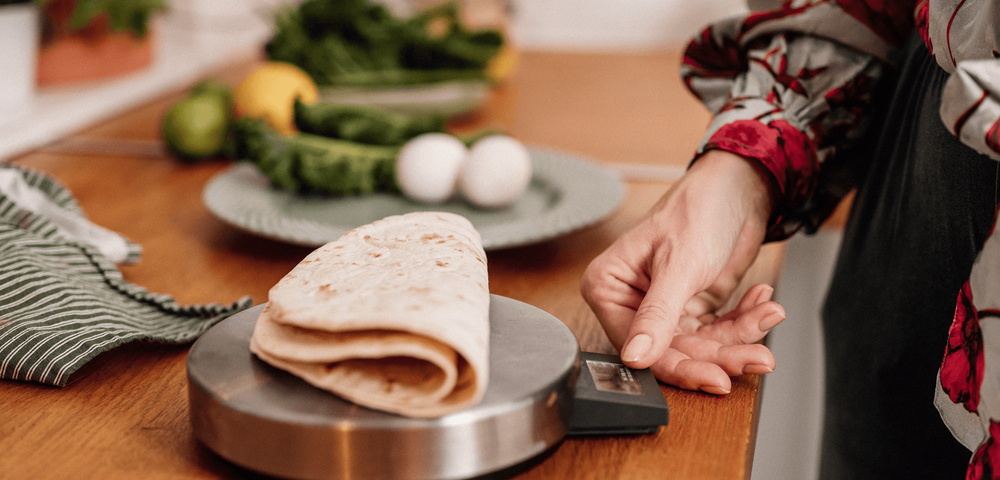
When following a meal plan, you typically rely on the recommended amounts for each food. However, it’s important to keep in mind that the weight of foods can vary between their raw and cooked states (1). For example, rice and pasta can double in weight when cooked, while vegetables lose water and shrink in volume. In meats, the weight decreases due to the loss of water and fat during cooking.
Weighing your food is key to reaching your nutritional or aesthetic goals, as it allows you to precisely control portions, calories, and macronutrients. Understanding how the weight of foods changes during cooking is essential for accurate tracking. In this article, we’ll explain everything you need to know to weigh your food precisely and effectively.
If you’re looking for an easy way to track your raw or cooked food, with Fitia, you can enter the weight of any food and switch between raw or cooked, automatically adjusting the nutritional information. Download Fitia here!
Factors That Affect Food Weight During Cooking
Cooking affects the weight of food in different ways, depending on several factors, primarily the type of food. Below, we explain the main aspects that influence the weight of food during cooking:
Absorption or Loss of Water
During cooking, many foods gain or lose water, which affects their weight. For example, rice and pasta absorb water, while meats and water-rich vegetables lose liquid during cooking.
Cooking Method
The type of cooking—whether frying, baking, boiling, or steaming—also influences the amount of water the food absorbs or loses. Some methods, like frying, may increase the amount of fat in the food, while others, like steaming, preserve more nutrients.
Temperature and Cooking Time
The heat applied and the amount of time the food is exposed to it are also key factors. Foods cooked for longer periods or at higher temperatures typically lose more water and, consequently, weight.
👉 Discover how cooking affects the weight of different foods. Click here to explore more comparisons of raw vs. cooked foods!
How Much Does Rice Weight Change From Raw to Cooked?
Raw rice can increase its weight by up to 150% during cooking. If you weigh 100 grams of raw rice, you'll end up with approximately 250 grams of cooked rice.
How Much Does Pasta Increase in Weight When Cooked?
Pasta, such as spaghetti or macaroni, absorbs a large amount of water, which can double its weight or even increase it further. If you start with 45 grams of raw pasta, you'll end up with around 115 grams of cooked pasta.
This doesn’t mean that cooked foods have more calories; rather, by absorbing water during cooking, their weight increases, but their caloric density decreases since water doesn’t contribute calories. As a result, 100 grams of cooked rice has fewer calories per gram than 100 grams of raw rice because water doesn’t add any calories.
In Fitia, you can log both raw and cooked foods and access their nutritional information, adjusted to their state. Download Fitia here.
2. Meats
On the other hand, meats tend to lose water and, in some cases, fat during cooking, which results in a loss of weight. Depending on the type of meat and cooking method, the meat can lose between 20% and 30% of its weight due to water evaporation and fat melting. For example, a 200-gram steak may weigh between 140 and 160 grams after cooking.
Although its weight decreases, the concentration of protein and fat per gram of meat increases, which can make cooked meat have a higher caloric density compared to its raw version. However, this doesn’t mean there is an actual increase in total calories; rather, the loss of water and fat concentrates the nutrients in the remaining weight.
3. Tubers
Tubers such as potatoes and root vegetables maintain their nutrients and structure, although they tend to lose some weight when steamed. This is in contrast to more intense cooking methods, such as frying or deep boiling, where tubers can absorb fats or lose more nutrients into the cooking water.
4. Vegetables
Vegetables with high water content, such as spinach or zucchini, lose a significant amount of weight when boiled due to water evaporation. To minimize this loss, you can opt for blanching, which involves briefly immersing the food in boiling water for just 1 or 2 minutes, depending on its firmness.
How Should I Weigh Raw or Cooked Foods?
The way you weigh food depends on several factors, such as the type of food and your goals (whether you're tracking portions, calories, or macronutrients).
To get the most accurate tracking of your calories and macronutrients, it’s generally best to weigh your food in its raw state before cooking. This ensures you're tracking the precise amount of food you’re preparing. This is especially true for meats, like chicken, which are commonly weighed raw in most nutritional tables, applications, and restaurants. Although the weight of meat decreases slightly due to the loss of water and fat during cooking, it’s still most reliable to measure it raw for consistency.
For foods that absorb water during cooking, like rice, pasta, and legumes, it’s often more practical to weigh them after cooking, as they gain weight by absorbing water. This way, you’re tracking the weight of the food as you actually consume it, which can be more intuitive.
Ultimately, the most important factor is finding the method that works best for your needs and goals.
Remember, Fitia allows you to easily switch between raw and cooked weights, automatically adjusting the nutritional information
How Does Cooking Affect the Nutritional Value and Weight of Foods?
While some cooking methods may increase food digestibility, others can reduce their nutritional value due to the breakdown of heat-sensitive nutrients or loss of water-soluble nutrients.
Proteins
Heat changes the structure of proteins, making them easier to digest and absorb. When cooking foods like chicken, water loss increases the concentration of proteins, raising their percentage from 23% to 30%. This happens because cooking reduces the food’s volume, concentrating the nutrients.
Carbohydrates
When cooking rice or potatoes, starch absorbs water and expands, which increases the size of the food but reduces the amount of starch per bite. This makes digestion easier and leads to a faster rise in blood sugar. To control glucose levels, cooking carbohydrates for a shorter time or eating them al dente can help maintain a lower blood sugar response.
Fats
Cooking at high temperatures and for long periods, such as deep frying, can oxidize fats, creating free radicals and harmful compounds like acrylamide. This affects the flavor, nutritional value, and digestibility of foods. On the other hand, methods like stewing and steaming, which use lower temperatures, preserve lipids better and reduce these risks (2).
Different cooking techniques, such as frying, boiling, steaming, and roasting, have varying impacts, often causing the loss of water-soluble vitamins and minerals. Let's take a closer look:
How Do Cooking Methods Affect the Nutrients in Foods?
Boiling
Boiling can lead to a significant loss of water-soluble vitamins and minerals, as seen with broccoli, which can lose up to 50% of certain vitamins. However, it reduces antinutrients, such as oxalic acid in spinach and phytates in grains, and increases the bioavailability of nutrients in legumes and grains (3).
Steaming
Steaming better preserves vitamins and minerals, especially water-soluble ones like vitamin C and the B-vitamins, as the food doesn't come into direct contact with water. It also reduces phytates in grains and legumes, improving mineral absorption. Additionally, steaming is a gentler method than boiling, helping retain the volume, color, and nutrients of vegetables since they only come into contact with the hot steam. Foods like broccoli and carrots retain better structure when steamed.
Roasting and Baking
Roasting and baking preserve fat-soluble vitamins better and minimize nutrient loss since no water is used. These methods also break down proteins in meats, aiding digestion.
Frying
Frying increases calorie availability and improves the texture of foods but can generate harmful compounds like acrylamide, especially when cooking starchy foods at very high temperatures (2).
Remember that in Fitia, you can find nutritional information for thousands of foods, both raw and cooked.
Is It Good or Bad to Weigh All My Foods?
It’s not necessary for everyone to weigh their food, as many people can improve their habits with nutritional education and proper macronutrient distribution.
However, weighing food is the most accurate way to know exactly what you’re consuming, which is key for optimizing athletic performance or improving aesthetics. Over time, familiarizing yourself with portion sizes allows you to recognize them without needing a scale, making it easier to transition to a more intuitive eating approach.
In Fitia, you can track both raw and cooked foods and get macronutrients and calories based on your selection.
Key Takeaways
If you want to achieve more accurate calorie and nutrient tracking based on the weight of each food item in your diet plan, it’s more reliable to weigh the food before cooking.
However, if you have the food cooked and it’s more convenient for you to weigh it that way, you can do so as long as you maintain consistency with that method of measurement, meaning you should use the nutritional information for the cooked weight. Remember, in Fitia, you can find the nutritional info for thousands of foods, both raw and cooked.
References
- Silvia Lisciani, Emanuela Camilli, Luisa Marletta, Stefania Marconi,Weight change of food after cooking: focus on the Italian Food Composition Tables appendix,International Journal of Gastronomy and Food Science,Volume 30, 2022,100605, ISSN 1878-450X. https://doi.org/10.1016/j.ijgfs.2022.100605.
- Wangxin Liu, Xianliang Luo, Ying Huang, Minjie Zhao, Tao Liu, Jing Wang, Fengqin Feng, Influence of cooking techniques on food quality, digestibility, and health risks regarding lipid oxidation. Food Research International,Volume 167,2023,112685,ISSN 0963-9969.
- Lee S, Choi Y, Jeong HS, Lee J, Sung J. Effect of different cooking methods on the content of vitamins and true retention in selected vegetables. Food Sci Biotechnol. 2017 Dec 12;27(2):333-342
Related articles
 Foods
FoodsTop 5 Low Calorie Cheeses Your Nutrition Tracker Will Approve
Discover the best low-calorie cheeses for weight loss, complete with macros, tips, and easy recipes. Find every cheese listed inside Fitia.
Read article Foods
Foods6 Tips for Breaking Your Fast in a Healthy Way
Discover 6 tips to break your fast the healthy way. Learn what to eat, what to avoid, and start your day with energy.
Read article Fat Loss
10 Ideal Foods for a Weight Loss Plan
They will help you achieve the caloric deficit more easily.
Read article