8 Keys to Reaching Your Protein Requirement
Always have protein in your main meals 2. Replacements with more protein 3. Keep protein-rich snacks on hand...
- Published
- Updated
- 9 min read
- 9 min read
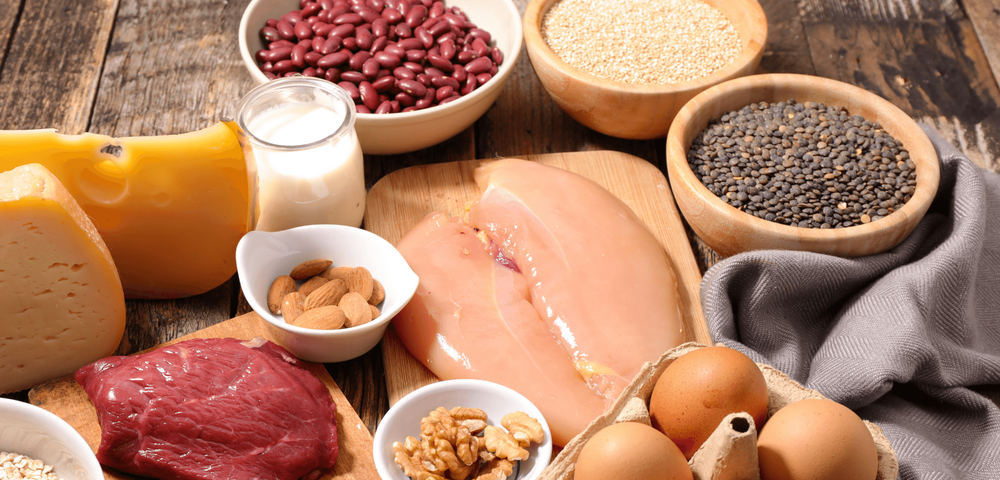
A balanced diet is essential for maintaining a healthy lifestyle and within this, proteins play a crucial role.
In fact, proteins have very important functions such as (1):
- Building the body's fundamental structures like muscle tissues, skin, and organs in general.
- Repairing and regenerating cells and tissues
- Enabling movement through muscle contractions
- Transport nutrients: Some proteins (e.g., hemoglobin and transferrin) bind to other molecules and thus, allowing them to be carried to where they are needed.
- Facilitating organic reactions by functioning as enzymes.
- Regulating our hormones: some hormones contain amino acids in their structures, such as adrenaline, noradrenaline, dopamine, etc.
However, for many people, reaching the optimal level of protein intake can be challenging.
If you find yourself in this group or are unsure about how much protein you need, keep reading because we bring you the most practical tips to help you meet your daily protein requirements.
The first thing you should do is understand your needs, so let's start with the basics:
How Much Protein Should I Consume Daily?
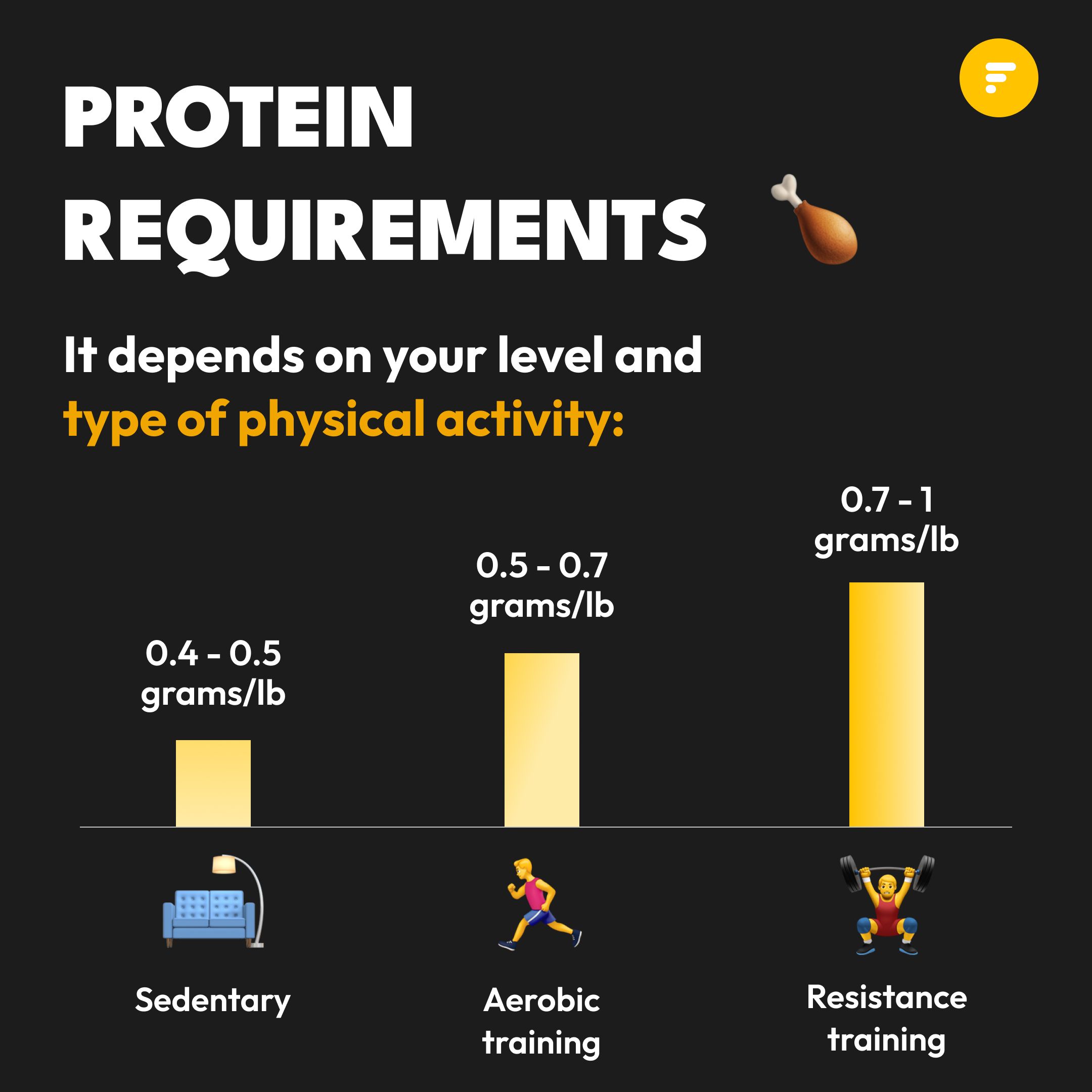
If you're still unsure about your daily protein requirements, here's a basic guide (2-8):
- If you engage in strength training: 0.72 - 1 g/lb (1.6 - 2.2 g/kg) per day.
- If you do aerobic resistance training (cardio): 0.54 - 0.72 g/lb (1.2 - 1.6 g/kg) per day.
- If you are sedentary: around 0.3 - 0.5 g/lb (0.8 - 1.2 g/kg) per day.
As you can see, protein requirements depend basically on the weight of the person (as the recommendation is given in grams of protein per kg of weight) and the type of physical activity performed.
For example, a 154 lb (70 kg) person who strength trains would have to consume between 112 and 154 grams of protein per day.
Now, keep in mind that depending on your goal, whether it's to lose or gain weight, it would be advisable to aim towards one end of the recommended range.
If your goal is to lose weight, we recommend approaching the upper limit of the corresponding range. Conversely, if you want to gain weight, aim for the lower end of the range (5,6,7).
Remember, with Fitia, you can instantly get your personalized protein requirements based on your weight, level of physical activity, and nutritional goals. Download it for free here.
Now, let's move on to the 8 tips that will help you increase your daily protein intake:
1.Always Include Protein-Rich Foods in Your Main Meals
Making sure that all of your main meals contain a good portion of a protein-rich food is probably the easiest way to ensure you meet much of your protein requirements.
What types of foods can you include? We recommend those where protein as the main macronutrient, as listed below.
In 100 grams of the following foods you will find:
- Chicken breast: 23 g of protein.
- Turkey breast: 23 g of protein
- Beef tenderloin: 22 g of protein
- Pork loin: 22 g of protein
- Fish: 19 g protein (take this as a reference as the protein content can vary depending on the type of fish)
- Tempeh: 20 g protein
- Seitan (gluten): 20 g of protein
- Texturized soy, commonly known as "soy meat": 21 g protein (hydrated)
- Eggs: 13 g protein (about 2 medium eggs)
- Low-fat Greek yogurt: 10 g of protein
- Skyr yogurt: 11 g of protein
The portion size you should consume will depend on how you distribute your meals and your specific protein requirements.
However, a quick and easy way to measure the portion of meat for your main meals is to use the palm of your hand.
👉 You might be interested in: 7 Benefits of Protein Backed by Science
Remember, the Fitia app provides nutritional information for thousands of foods so you can know how much protein is in the portion you are consuming. Download it for free here.
2. Replace Foods with Similar Options Higher in Protein
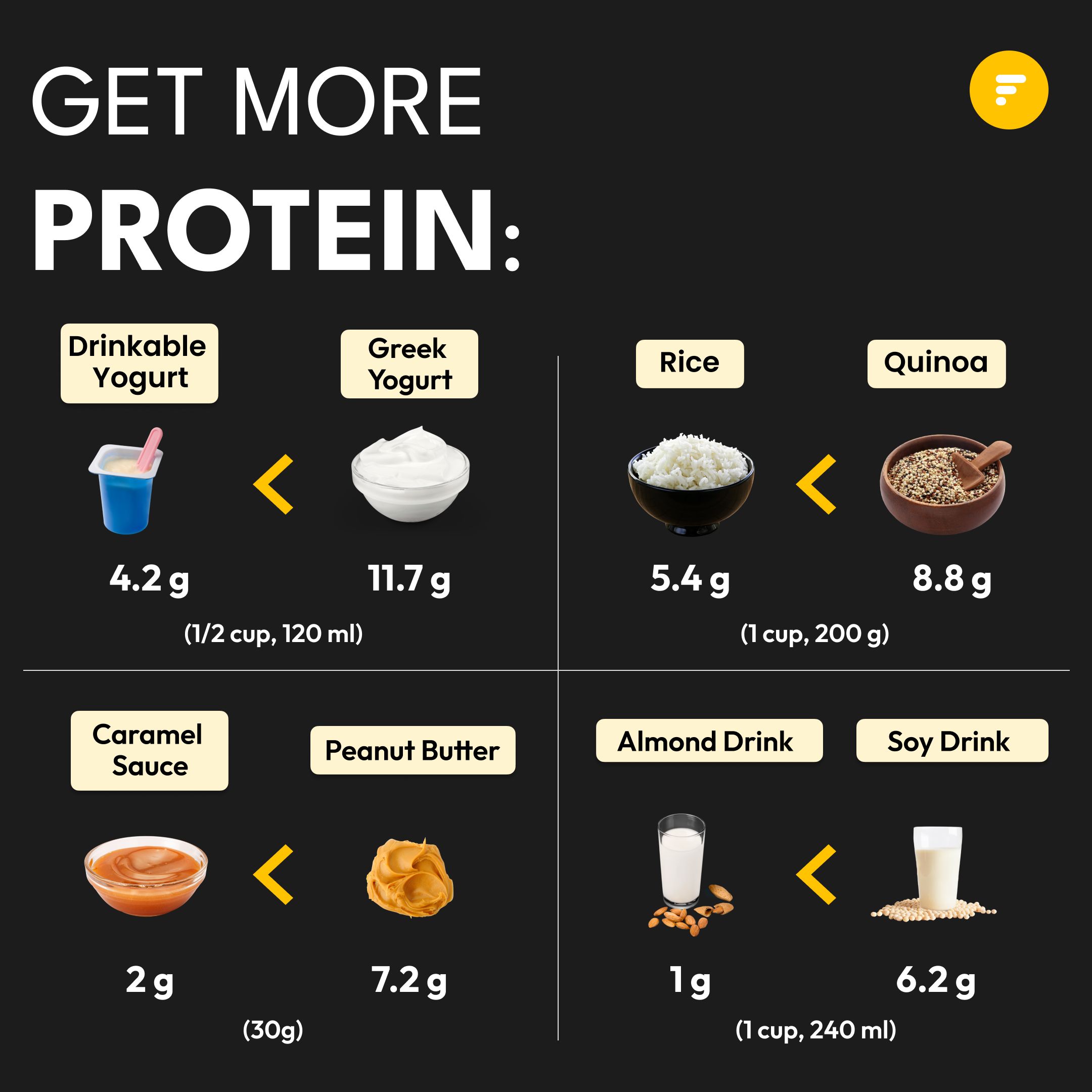
In addition to including protein-rich foods in your main meals, we recommend making some substitutions to get more protein.
For example, instead of eating potato chips as a snack, you could opt for peanuts or some other type of nut. While nuts are not primarily a protein food, they will provide you with a more significant amount of protein compared to the first option (and they offer greater nutritional value than chips).
Below is a list of easy and similar substitutions you can start making to increase the protein content in your daily diet:
3. Include Protein in Your Snacks
Just as you need to include protein in your main meals, you also need to include it in your snacks, especially if you're struggling to meet your requirement.
Depending on how you prepare them, a snack can easily provide you with over 20 grams of protein, which could be a significant percentage of your total daily requirement.
Remember that with the Fitia app, you can find thousands of high-protein recipes using ingredients you have at home. Download it for free here
4. Prioritize Lean Protein Sources
A lean protein source is a food that contains a high amount of protein and low fat.
This way, the protein percentage of the food will be higher relative to its calorie content.
Some of the best sources of lean protein include egg whites (which are composed almost entirely of protein, water, and some micronutrients), chicken or turkey meats, and white fish.
This approach will help you more easily meet your protein requirements without exceeding your fat or calorie intake, which is particularly useful if you are in a weight loss period (caloric deficit).
5. Supplement Your Side Dishes with Protein Sources
This is a simple trick to increase your protein intake without much effort.
Here, you can include foods that, although they may not contain only protein or might be richer in another nutrient, will help you add more protein to your day.
For example, consider foods like::
- Legumes: They are also sources of carbohydrates, but they contain good amounts of protein.
- Nuts: Primarily sources of fat, but they are also good sources of protein
You can use them as additional ingredients or to complement other dishes.
Protein-Rich Side Dish Ideas
- Add fresh peas or edamame to your salads
- Use beans as a side dish for your meals
- Mix rice with quinoa or replace rice entirely with quinoa
- Incorporate tarwi flour or nutritional yeast into your sauces
- Add almond flour to your pancakes or mug cakes
- Include yogurt in your fruit smoothies.
6. Diversify Your Protein Sources
Did you know that the more options you have available, the more likely you are to eat? Therefore, by offering more protein-rich food options on your plate, you'll find it easier to consume larger amounts.
This phenomenon is due to a concept known as "sensory-specific satiety," which refers to the decreased "interest" in a food as you continue to eat it. Essentially, you get "bored" of experiencing the same taste (9-13).
As a result, we tend to eat more when presented with a variety of flavors or textures (9-13).
So, if you're looking to increase your protein intake, it would be beneficial to include a wider variety of protein-rich foods on your plates.
For example, instead of just serving a large piece of chicken, you could combine it with eggs and also add some legumes.
7. Rely On Protein Supplements
Let's be clear: protein supplements are not indispensable. One can comfortably meet their protein requirements with food alone. However, they are very convenient and easy to consume.
So, if you are struggling to meet your requirements (whether due to lack of time for cooking or eating, because you get full quickly, etc.), a protein supplement could be an excellent alternative for you, as they concentrate a large amount of protein in a small serving.
There are various types of protein supplements on the market, and each offers different benefits depending on your needs and preferences.
Types of Protein Supplements
- Whey Protein: This is one of the most popular choices and is derived from milk whey. Whey is a fast-absorbing protein and rich in essential amino acids, making these supplements highly bioavailable.
- Casein Protein: It is also extracted from milk, casein is absorbed more slowly than whey. This means that casein provides a prolonged release of amino acids, making it a favorable option before bedtime to help maintain a steady flow of nutrients throughout the night.
- Soy Protein: This is a popular choice for those following a vegetarian or vegan diet or for those who have intolerances to dairy-source proteins. Soy protein contains all the essential amino acids.
👉 You might be interested in: How to Choose a High Quality Whey Protein: 4 Key Factors
How to Incorporate Protein Supplements into Your Diet
Here are some of the easiest ideas:
- Make Smoothies: Mix protein powder with water, milk, or plant-based beverages and/or fruits to create a delicious shake that you can use as a pre or post-workout drink or as a protein-rich snack between meals.
- Add It to Your Meals: Incorporate protein powder into oatmeal, yogurt bowls, pancakes, or baking mixes to increase their protein content.
- Make Protein Bars: Opt for protein bars that you can keep on hand as a convenient snack to help you out in a pinch.
8. Plan Your Meals and Make a Shopping List
Having a meal plan that quantifies the amount of protein is the most accurate way to ensure you meet your requirements.
Here’s what you’ll need to do:
- Create a Weekly Menu: Design a weekly menu that includes breakfasts, lunches, dinners, and snacks, making sure to incorporate protein sources in each meal. A menu planned in advance will allow you to shop more effectively and avoid making unhealthy last-minute decisions.
- Organize Your Shopping: Based on the weekly menu, create a detailed shopping list. Acquiring all the necessary ingredients to prepare your meals will prevent you from running out of protein options throughout the week.
If you're not sure how to do this, remember that Fitia does it all for you: it calculates your requirements, plans your meals based on those requirements and the foods you like, and generates a shopping list with everything you need to meet your plan. Download it for free here.
References
- LaPelusa A, Kaushik R. Physiology, Proteins. [Updated 2021 Nov 21]. In: StatPearls [Internet]. Treasure Island (FL): StatPearls Publishing; 2022 Jan-. Available from: https://www.ncbi.nlm.nih.gov/books/NBK555990/
- Morton RW, Murphy KT, McKellar SR, Schoenfeld BJ, Henselmans M, Helms E, Aragon AA, Devries MC, Banfield L, Krieger JW, Phillips SM. A systematic review, meta-analysis and meta-regression of the effect of protein supplementation on resistance training-induced gains in muscle mass and strength in healthy adults. Br J Sports Med. 2018 Mar;52(6):376-384. doi: 10.1136/bjsports-2017-097608. Epub 2017 Jul 11. Erratum in: Br J Sports Med. 2020 Oct;54(19):e7. PMID: 28698222; PMCID: PMC5867436.
- Stokes T, Hector AJ, Morton RW, McGlory C, Phillips SM. Recent Perspectives Regarding the Role of Dietary Protein for the Promotion of Muscle Hypertrophy with Resistance Exercise Training. Nutrients. 2018 Feb 7;10(2):180. doi: 10.3390/nu10020180. PMID: 29414855; PMCID: PMC5852756.
- Schoenfeld, Brad J. Science and development of muscle hypertrophy. Human Kinetics, 2020.
- Helms, Eric, Andrea Valdez, and Andy Morgan. "The Muscle and Strength Pyramid." Nutrition (2018).
- Hector AJ, Phillips SM. Protein Recommendations for Weight Loss in Elite Athletes: A Focus on Body Composition and Performance. Int J Sport Nutr Exerc Metab. 2018 Mar 1;28(2):170-177. doi: 10.1123/ijsnem.2017-0273. Epub 2018 Feb 19. PMID: 29182451.
- Phillips SM, Van Loon LJ. Dietary protein for athletes: from requirements to optimum adaptation. J Sports Sci. 2011;29 Suppl 1:S29-38. doi: 10.1080/02640414.2011.619204. PMID: 22150425.
- Lonnie M, Hooker E, Brunstrom JM, Corfe BM, Green MA, Watson AW, Williams EA, Stevenson EJ, Penson S, Johnstone AM. Protein for Life: Review of Optimal Protein Intake, Sustainable Dietary Sources and the Effect on Appetite in Ageing Adults. Nutrients. 2018 Mar 16;10(3):360. doi: 10.3390/nu10030360. PMID: 29547523; PMCID: PMC5872778.
- Lingawi NW, Berman T, Bounds J, Laurent V. Sensory-Specific Satiety Dissociates General and Specific Pavlovian-Instrumental Transfer. Front Behav Neurosci. 2022 Apr 15;16:877720. doi: 10.3389/fnbeh.2022.877720. PMID: 35493952; PMCID: PMC9051369.
- Hendriks AEM, Nederkoorn C, van Lier IMJ, van Belkom B, Bast A, Havermans RC. Sensory-specific satiety, the variety effect and physical context: Does change of context during a meal enhance food intake? Appetite. 2021 Aug 1;163:105179. doi: 10.1016/j.appet.2021.105179. Epub 2021 Mar 15. PMID: 33737211.
- Wilkinson LL, Brunstrom JM. Sensory specific satiety: More than 'just' habituation? Appetite. 2016 Aug 1;103:221-228. doi: 10.1016/j.appet.2016.04.019. Epub 2016 Apr 20. PMID: 27105584; PMCID: PMC4910838.
- Havermans RC, Janssen T, Giesen JC, Roefs A, Jansen A. Food liking, food wanting, and sensory-specific satiety. Appetite. 2009 Feb;52(1):222-5. doi: 10.1016/j.appet.2008.09.020. Epub 2008 Oct 4. PMID: 18951934.
- Rischel HE, Nielsen LA, Gamborg M, Møller P, Holm JC. Comparison of sensory-specific satiety between normal weight and overweight children. Appetite. 2016 Dec 1;107:486-493. doi: 10.1016/j.appet.2016.08.123. Epub 2016 Sep 1. PMID: 27593452.
Related articles
 Foods
FoodsTop 5 Low Calorie Cheeses Your Nutrition Tracker Will Approve
Discover the best low-calorie cheeses for weight loss, complete with macros, tips, and easy recipes. Find every cheese listed inside Fitia.
Read article Foods
Foods6 Tips for Breaking Your Fast in a Healthy Way
Discover 6 tips to break your fast the healthy way. Learn what to eat, what to avoid, and start your day with energy.
Read article Foods
FoodsHow to Weigh Food: Raw or Cooked?
Explore how to weigh raw and cooked foods for an accurate diet according to your fitness goals.
Read article