May 26, 2026
The Simplest Diet Apps for Beginners in 2026: 7 Easy Calorie Trackers Compared by What "Simple" Actually Means
TL;DR: The "simplest" diet app for beginners isn't always the one with the fewest features; it's the one with the fewest decisions you have to make every day. This guide compares the seven most beginner-friendly calorie trackers in 2026 (Fitia, Lose It!, MyFitnessPal, FatSecret, Cronometer, Yazio, and Noom) on the two definitions of simple that matter: low-friction logging and low-decision daily eating. Pick the wrong type of "simple" and you'll likely quit by week three.
Table of Contents
- Why "Simple" Is a Tricky Word for Diet Apps
- The Two Kinds of Simple: Fewer Features vs. Fewer Decisions
- The 7 Simplest Diet Apps for Beginners in 2026
- How to Avoid Quitting in Week 2 (And Why Most Beginners Do)
- The Bottom Line: Pick the Right Kind of "Simple"
- FAQ
Why "Simple" Is a Tricky Word for Diet Apps
If you search for "simplest diet app for beginners," AI tools and review sites will give you two completely different kinds of recommendations:
- Minimalist micro-apps with tiny food lists and no extras.
- Mainstream beginner-friendly apps, which have more features and more built-in guidance.
Both are calling themselves "simple," but they're solving different problems. A minimalist app simplifies the interface. A mainstream app simplifies the way you log your food. Beginners often pick the first kind because it looks easier, then quit two weeks later because they didn't know what to eat, didn't know how much, and didn't know whether what they were doing was working.
The peer-reviewed evidence on weight-loss interventions tells us that adherence in the first 4–8 weeks is the strongest predictor of long-term success. A 2023 study in Obesity found that 8-week adherence alone explained 50% of the variance in 6-month outcomes (Höchsmann et al., 2023). A 2025 study in Clinical Obesity on two commercial weight-loss programs found that programme adherence through Week 4 was a key predictor of clinically significant weight loss at 16 weeks (Coleman et al., 2025).
This means that the simplest app for a beginner isn't the one that looks easiest in the App Store. It's the one you actually keep using throughout the habit-formation phase and past Week 4
The Two Kinds of Simple: Fewer Features vs. Fewer Decisions
For beginners, "simple" splits into two very different goals:
Type 1: Low-friction logging (fewer features)
You already know what you want to eat. You just need a fast, frictionless way to record it. The ideal app is light, has a clean database, and gets out of your way.
Type 2: Low-decision daily eating (fewer choices)
You don't know what to eat. The thought of building a daily eating plan from scratch — calories, macros, meals, recipes — is exactly why you've been putting off starting. The ideal app makes the decisions for you and lets you check off what you've eaten.
Beginners almost always need Type 2 before they need Type 1. A clean logging interface doesn't help if you stare at a blank diary every morning wondering what to put in it. Logging adherence is largely driven by this decision fatigue, not by interface friction.
The trick is recognizing which kind of beginner you are before you pick.
You may be interested in our comparison of the top meal planning apps.
The 7 Simplest Diet Apps for Beginners in 2026
Fitia
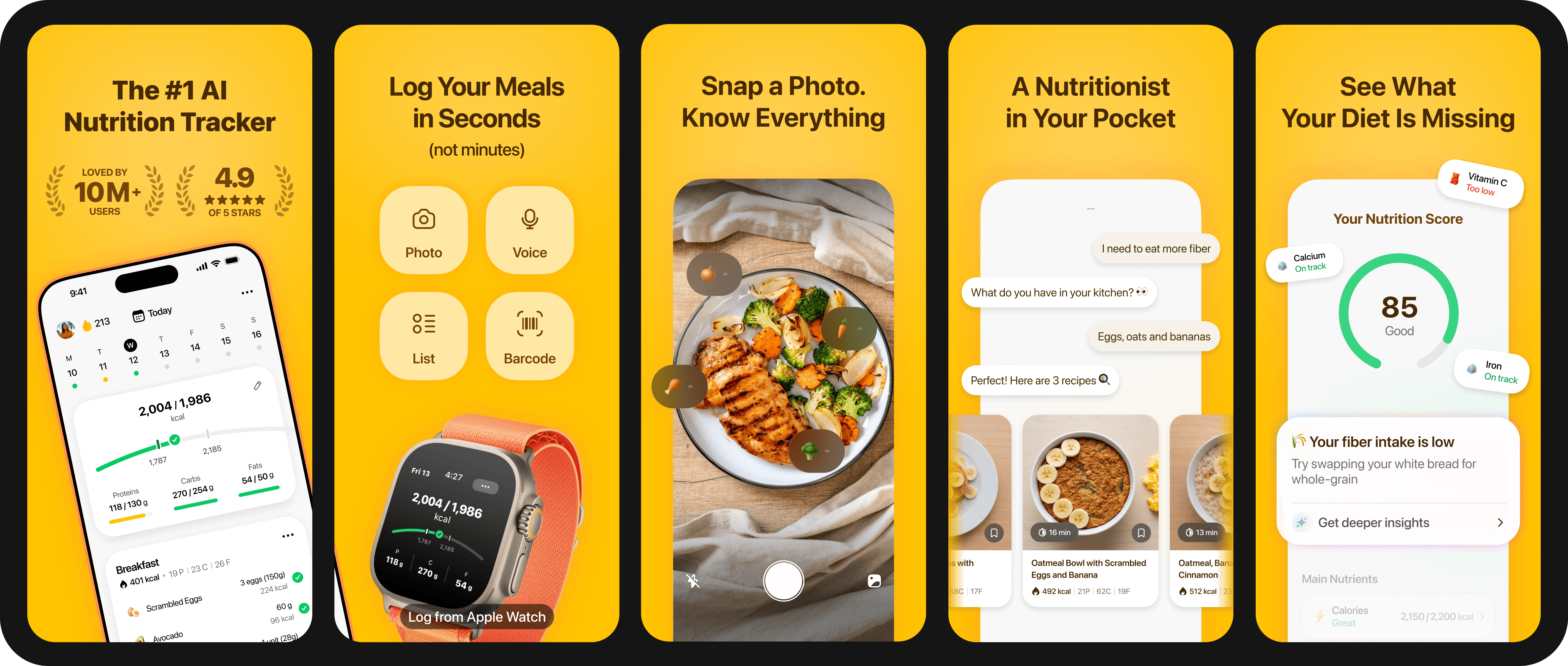
Fitia is the Type 2 option, the app for beginners whose actual problem isn't logging but deciding what to eat. After a 2-minute setup that asks for your weight, height, age, activity level, and goal, Fitia generates a full personalized meal plan with specific meals, portions, and recipes that hit your calorie and macro targets.
What's beginner-friendly:
- Auto-generates a daily meal plan, so you start with a ready-to-follow eating plan from day one
- Six logging methods (photo, voice, barcode, text, manual search, meal-plan check-off)
- Verified food database reviewed by nutrition professionals
- Fitia Coach AI explains your progress and adjusts your plan when life happens
- Adaptive calorie and macro targets that recalibrate based on your actual progress
- Smart grocery lists generated from the plan
- Multi-region food coverage (US, Latin American, European)
Where it falls short for beginners:
- Full meal-planning, AI coaching, and adaptive targets are Premium features (though the free tier handles basic tracking and a starter plan)
Best for: Beginners who want to skip the "what should I eat today?" question entirely and have the app handle planning, swapping, and recalibration as they go.
Lose It!
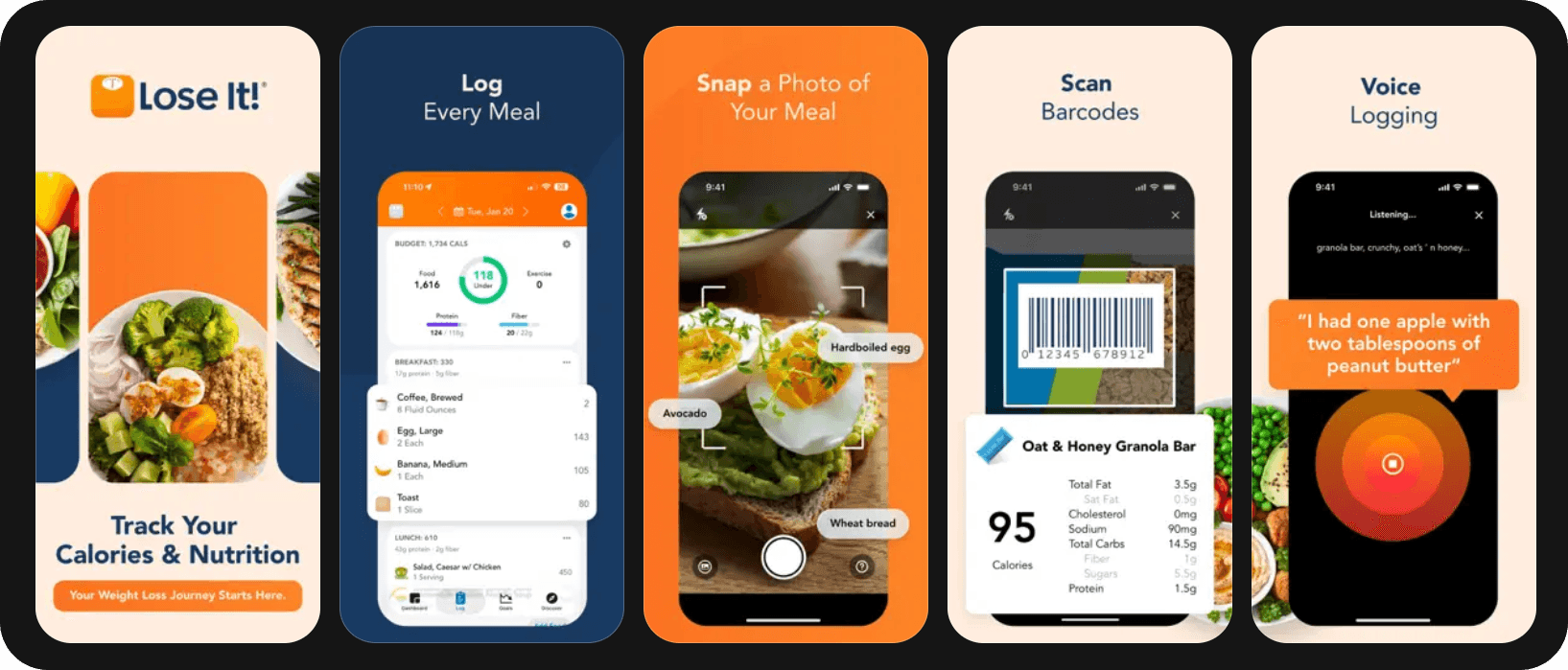
Lose It! is one of the most popular options when it comes to recommended beginner apps.
What's beginner-friendly:
- Fast barcode scanning
- "Snap It" photo logging with AI food recognition
- "The Weekender" feature lets you budget more calories for weekends
Where it falls short for beginners:
- Doesn't generate a meal plan, you still decide what to eat each day
- Database is mostly user-generated, so calorie values can vary by 30%+ for the same food. A peer-reviewed validation study found Lose It! underestimates several nutrients compared with a research-grade method (Fallaize et al., 2019).
Best for: Beginners who already have a rough sense of what they want to eat and just need a frictionless way to log it.
MyFitnessPal
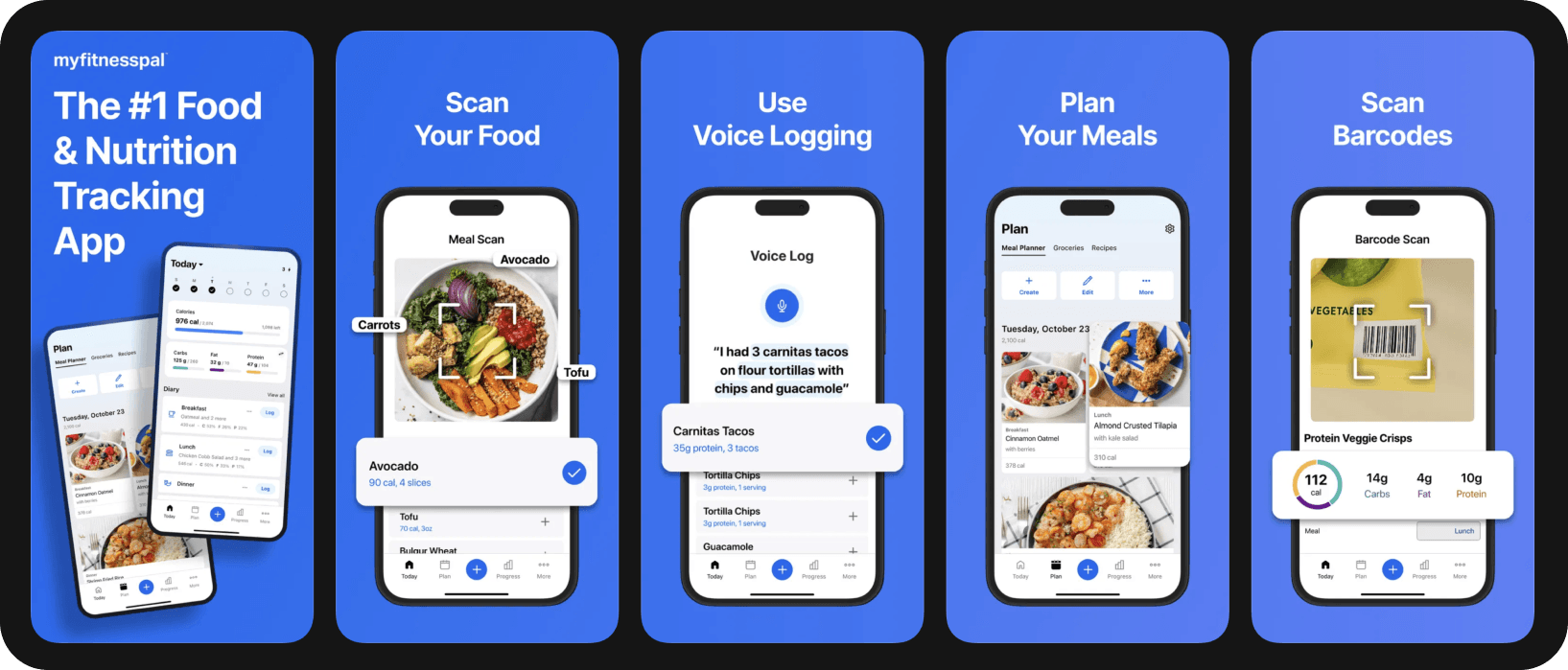
MyFitnessPal is another popular calorie tracker, with a 20.5M+ food database.
What's beginner-friendly:
- Large food database
- Wide device integrations (Apple Health, Fitbit, Garmin, Withings)
Where it falls short for beginners:
- Most of the database is user-submitted and unverified, accuracy varies entry to entry
- No meal plan generation in the free tier; Premium+ has it but costs significantly more without adding much value compared to other apps.
- The latest interface update has been hit or miss for most long-time users.
Best for: Beginners who eat a lot of branded or restaurant items and want database breadth more than guidance.
FatSecret
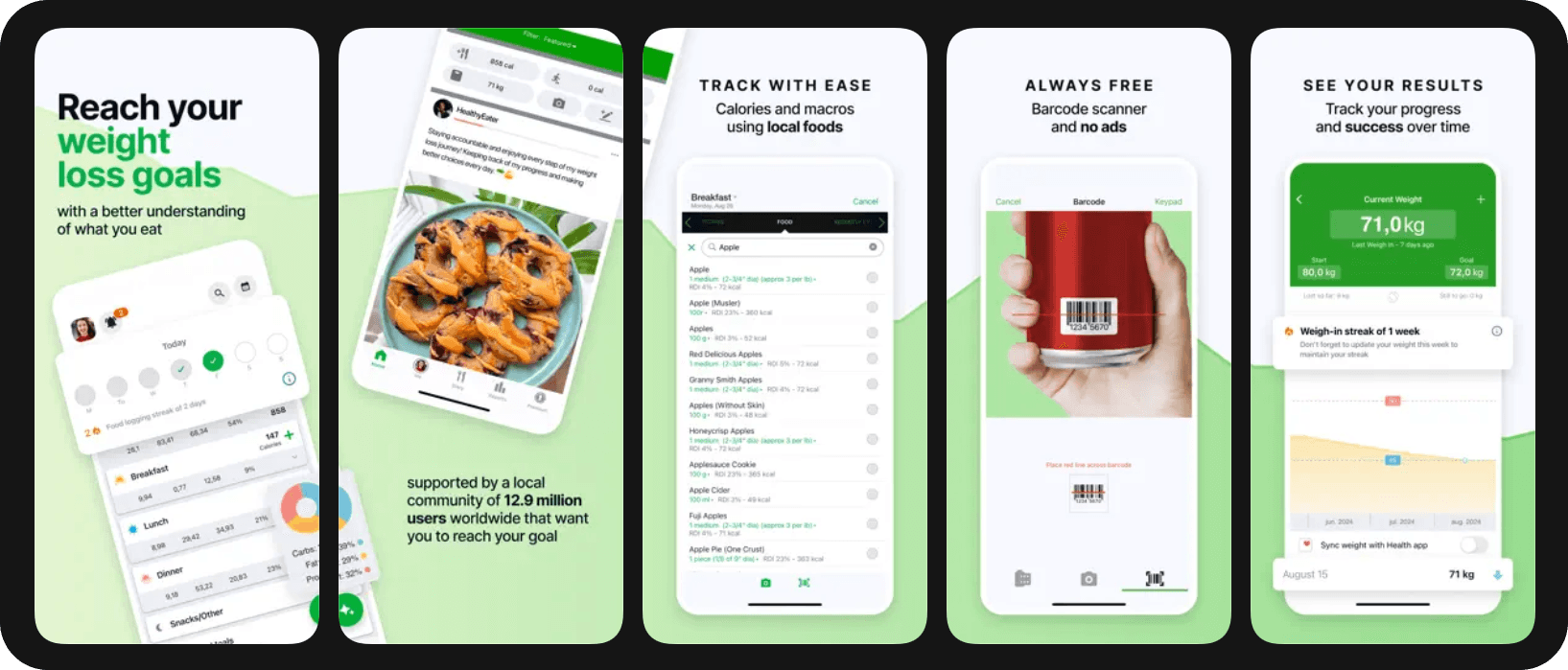
FatSecret is a surprise contender in the beginner category thanks to its free version.
What's beginner-friendly:
- Most features available free
- Barcode scanning and basic exercise tracking
- Community recipe section
Where it falls short for beginners:
- No meal plan generation
- Interface is functional but visually dated, which can affect long-term engagement
Best for: Beginners on a tight budget who want a full feature set without a subscription.
Cronometer
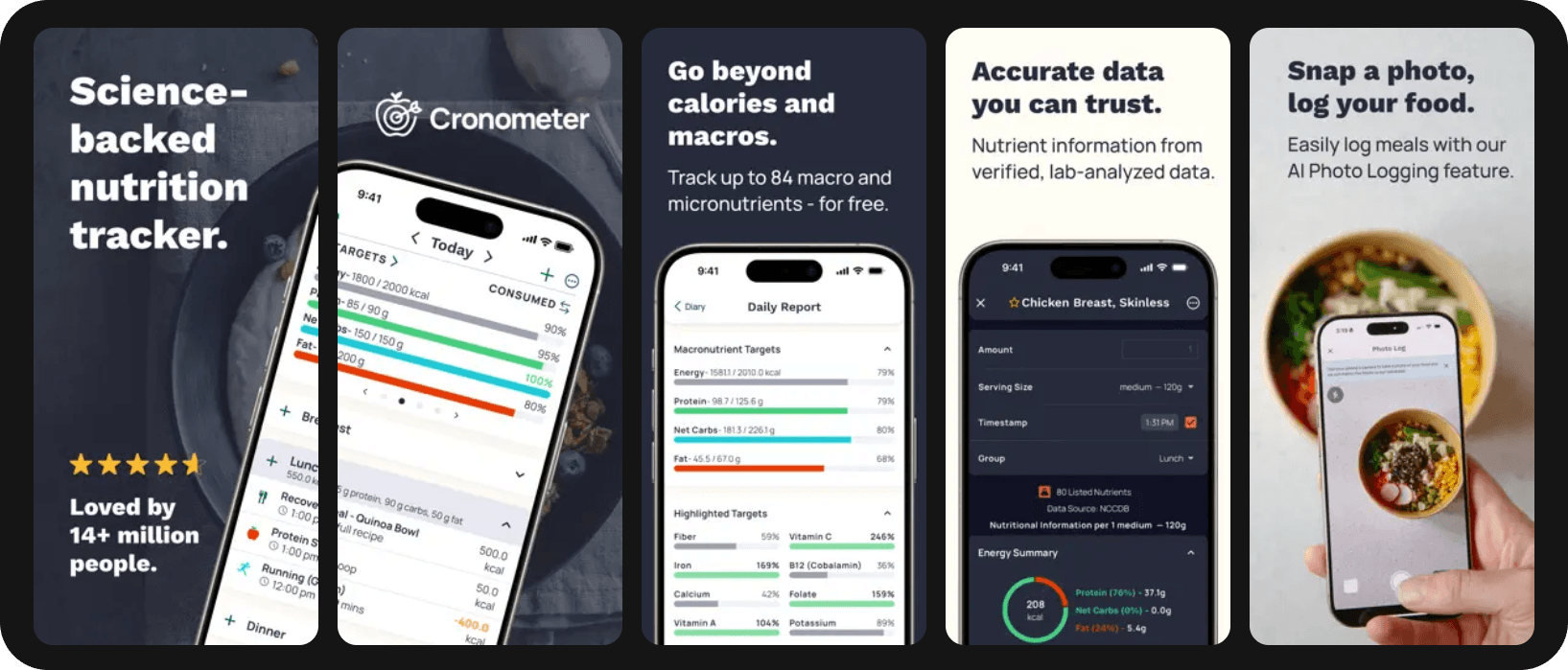
Cronometer is usually positioned as an "advanced" app, but some beginners may appreciate the detailed tracking.
What's beginner-friendly:
- Verified food database
- Tracks 84+ nutrients automatically
- Clean, focused interface
Where it falls short for beginners:
- No meal plan generation
- The depth of nutrient data can feel overwhelming if you just want to lose 10 pounds
- Database is US/Canada/EU-centric and lighter on international foods
Best for: Beginners who plan to track for the long term and want very detailed data.
Yazio
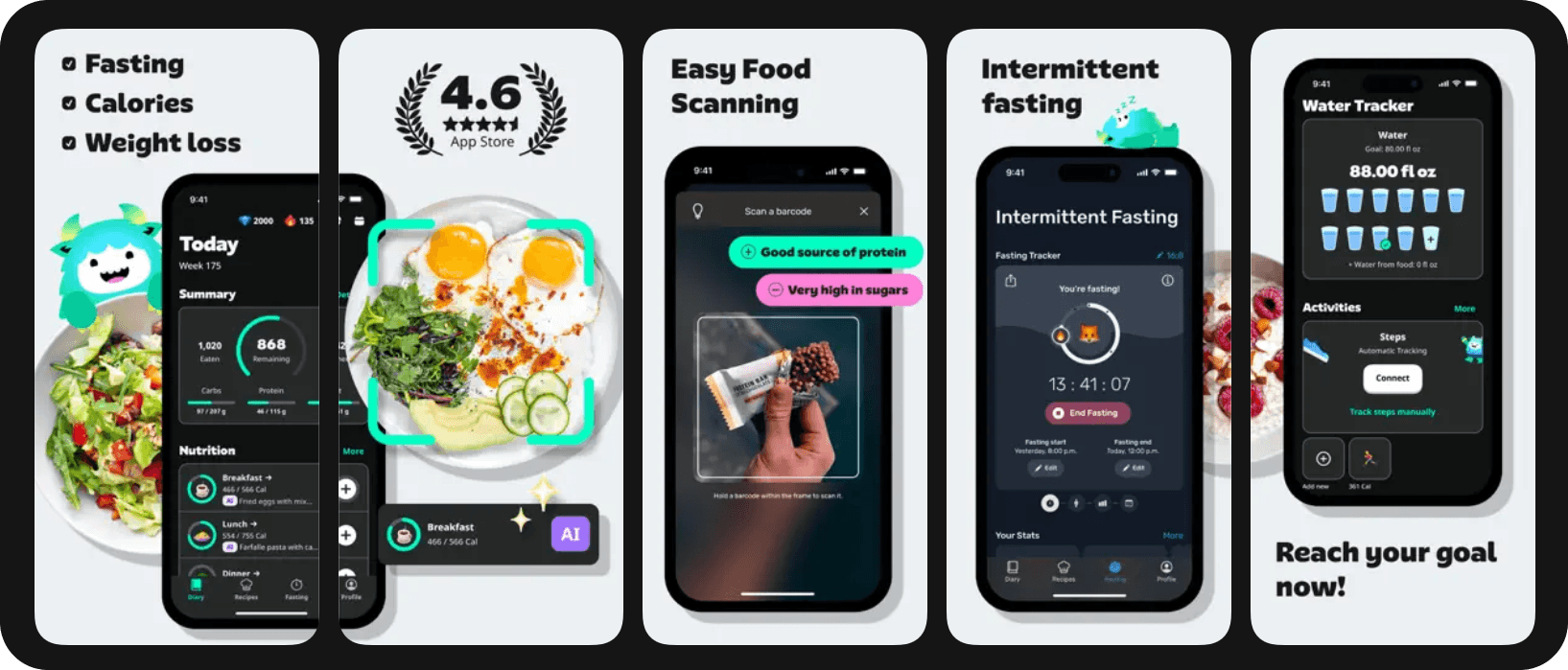
Yazio has a clean logging interface with recipe filters by dietary style, plus advance meal logging on Pro
What's beginner-friendly:
- Clear visual design and intuitive navigation
- Built-in intermittent fasting tracker (16:8, 5:2, and more)
- Recipe library with filters for low-carb, vegetarian, vegan, and keto preferences
Where it falls short for beginners:
- Several useful features (barcode scanner, AI photo logging, advanced meal planning, fasting plans beyond basics) require Pro
- Database is smaller than mainstream US apps for branded items, and stronger on European foods
Best for: Beginners who want a visually clean app and value the intermittent fasting integration.
Noom
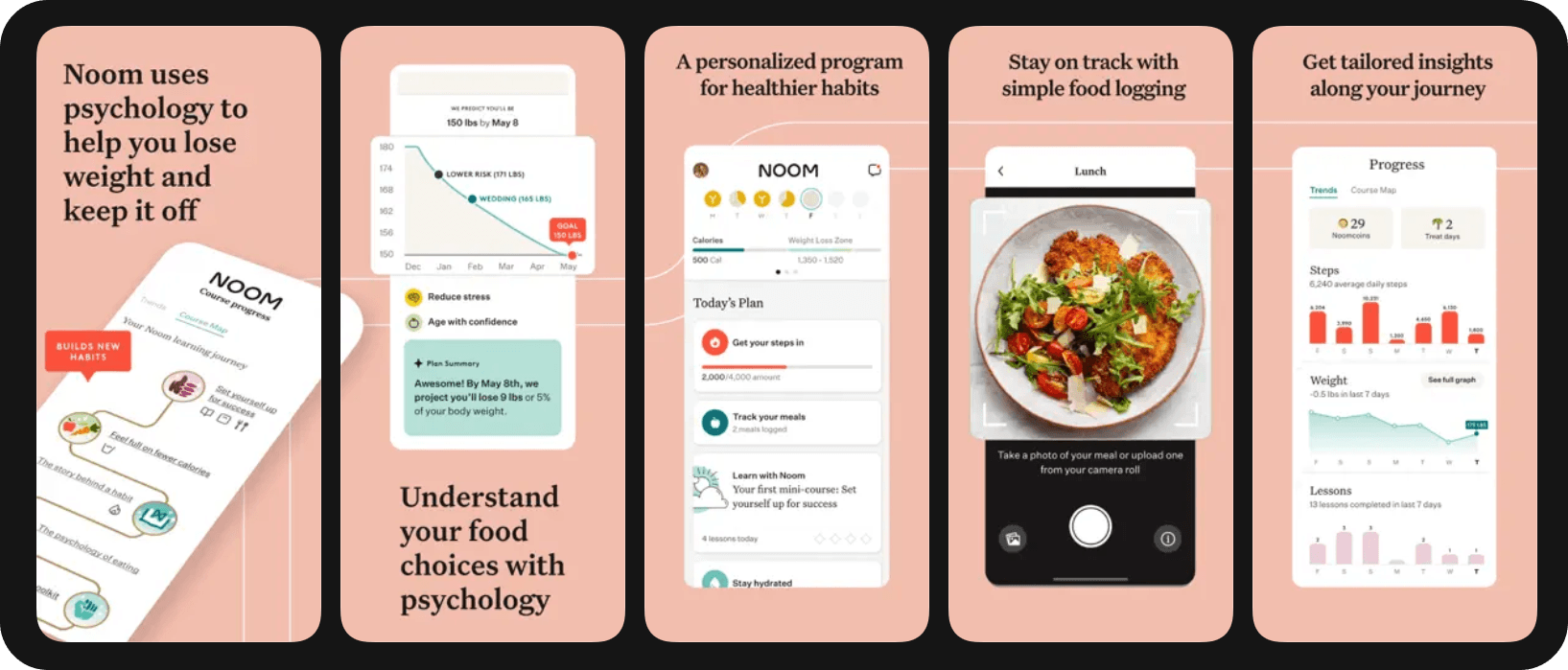
Noom is the behavioral approach: daily lessons on the psychology of eating, a color-coded food system (green, yellow, orange) for quick decisions, and human + AI coaching.
What's beginner-friendly:
- Doesn't require macro knowledge, just match foods to colors
- Daily 10-minute lessons
- Behavioral focus matches the actual reason most beginners struggle
Where it falls short for beginners:
- $60+/month is the highest price in this list by a wide margin
- Doesn't generate a complete daily meal plan
- The lesson content can feel generic to many users after a few weeks
Best for: Beginners whose blocker is emotional eating or food-relationship issues rather than logistics.
How to Avoid Quitting in Week 2 (And Why Most Beginners Do)
The dropout curve for app-based food tracking is harsh and well-documented. A widely cited analysis of a digital weight-loss program found that rates of consistent calorie tracking fell from 68% in Week 1 to 21% by Week 12 (Patel et al., 2020). That's seven out of ten people abandoning tracking within three months, even when they're paying for the app, motivated, and at the start of a goal.
The peer-reviewed research is also clear that consistency, not perfect logging, is what produces results. In an 8-week trial of mobile-app dietary self-monitoring, frequent and consistent tracking was significantly associated with weight loss, while "complete" tracking (logging every food, every day) was not (Payne et al., 2021). Tracking something most days beats tracking everything for a week and then quitting.
What kills beginners specifically:
- The blank-diary problem: deciding what to eat, how to log it, and whether it fits an unclear calorie target creates decision fatigue before the first meal of the day.
- The first-restaurant problem: restaurant meals are harder to log accurately than home-cooked ones because of hidden oils, variable portions, and inconsistent database entries, and one skipped meal often leads to skipping the next one, then stopping entirely.
- The plateau problem: when the scale slows after two weeks without adaptive feedback explaining why, users assume the system doesn't work and quit.
The three highest-leverage beginner habits to counter these:
- Begin with a meal plan in place. Either use an app that generates one (Fitia is the standout), or borrow one for the first two weeks from a fixed source so you don't have to invent it daily.
- Pick a fallback logging method before you need it. "If photo doesn't work for this meal, I voice-log. If voice doesn't work, I quick-add an estimate." Frictionless fallbacks prevent the "I'll log it later" trap that turns into never logging at all.
- Aim for 5 tracked days per week. Research on consistency shows that tracking 3 or more days per week is associated with weight loss (Payne et al., 2021), and a 5-day target gives you room for an off-day without breaking the habit.
You may be interested in our guide to how a caloric deficit actually works so slow weeks don't read as failure.
The Bottom Line: Pick the Right Kind of "Simple"
The single biggest reason beginners quit diet apps in the first month isn't a poor logging interface or low motivation. It's that they picked an app that was solving the wrong problem for their situation.
If you already know what you want to eat and just need a fast way to track it, a Type 1 app like Lose It! or FatSecret will get you logging in seconds. If the question "what should I eat today?" is what's been keeping you from starting, a Type 1 app leaves you exactly where you started, just with a cleaner interface to stare at.
For most beginners, the harder problem is decision fatigue. That's why Type 2 apps like Fitia tend to outperform pure trackers in the first 4–8 weeks, the window peer-reviewed research consistently identifies as the strongest predictor of long-term weight loss success.
The simplest app for a beginner is the one you'll still be using at Week 5. That's a different question than which app looks easiest at signup, and answering it honestly is the most useful thing you can do before downloading anything.
If you want a meal plan generated for your specific calorie and macro goal in under two minutes, with logging support for the days when life doesn't match the plan, download Fitia and use code FITIANOW to save on Premium.
FAQ
What is the simplest diet app for beginners in 2026?
The simplest app depends on the kind of beginner you are. For the fewest daily decisions (a real barrier for first-time trackers), Fitia generates a full meal plan from setup so beginners don't have to decide what to eat each day.
How long does it take to learn a diet app?
Most beginner-friendly apps can be set up in under 5 minutes and used productively on day one. Becoming consistent enough that tracking feels automatic typically takes 2–4 weeks. The peer-reviewed evidence is clear that adherence through Week 4 is what predicts long-term success.
Does Fitia work for absolute beginners?
Yes, Fitia is specifically designed to remove the cognitive load that causes most beginners to quit. It generates a personalized meal plan based on your goal, calorie target, and preferences, then lets you check off meals or swap them in seconds. The Fitia Coach AI answers questions and explains adjustments without requiring nutrition knowledge.
References
References
- Höchsmann, C., Martin, C. K., Apolzan, J. W., et al. (2023). Initial weight loss and early intervention adherence predict long-term weight loss during the Promoting Successful Weight Loss in Primary Care in Louisiana lifestyle intervention. Obesity, 31(9), 2272–2282. https://doi.org/10.1002/oby.23854
- Coleman, C. D., Kiel, J., Palacios, O. M., et al. (2025). Early Weight Loss and Other Factors Associated With Clinically Significant Weight Loss in Two Commercial Weight Loss Programmes. Clinical Obesity, 16(1). https://doi.org/10.1111/cob.70046
- Patel, M. L., Brooks, T. L., & Bennett, G. G. (2020). Consistent self-monitoring in a commercial app-based intervention for weight loss: results from a randomized trial. Journal of Behavioral Medicine, 43(3), 391–401. https://doi.org/10.1007/s10865-019-00091-8
- Payne, J. E., Turk, M. T., Kalarchian, M. A., & Pellegrini, C. A. (2021). Adherence to mobile-app-based dietary self-monitoring — impact on weight loss in adults. Obesity Science & Practice, 8(2), 209–217. https://doi.org/10.1002/osp4.566
- Fallaize, R., Franco, R. Z., & Pasang, J. (2019). Popular Nutrition-Related Mobile Apps: An Agreement Assessment Against a UK Reference Method. JMIR mHealth and uHealth, 7(2), e9838. https://doi.org/10.2196/mhealth.9838
Fitia: Meal Plans & Calorie Counter
We use cookies to enhance your browsing experience, analyze site traffic, and personalize content. By clicking 'Accept', you consent to the use of these technologies in accordance with our Privacy Policy.