Why your weight changes every day (and what the scale Is actually telling you)
Most of what the scale shows day to day isn't fat — it's water, glycogen, and sodium. Here's how to read your weight the right way.
- Published
- 8 min read
- 8 min read
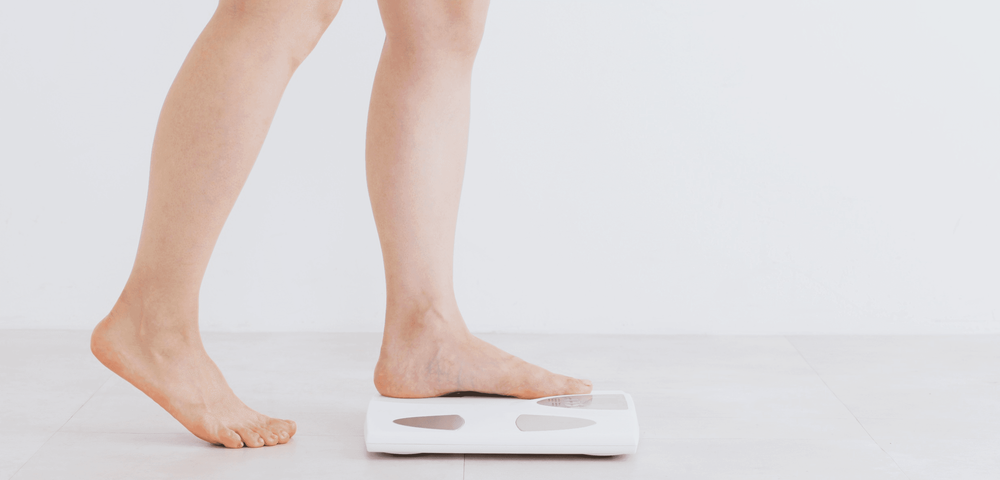
TL;DR Your daily weight isn't a fat-loss report card, it's a snapshot of water, glycogen, sodium, food in transit, hormones, and fat all at once. Daily swings of 1 to 4 pounds are normal and tell you nothing about whether your diet is working. The only reliable signal is the weekly average tracked over three to four weeks. Weigh every morning, log the number without reacting to it, and read the trend, not the day.
Table of Contents
- What actually makes your weight go up or down in a single day
- How do hormones affect daily weight fluctuations?
- What's the right way to read the scale for fat loss?
- What's the only weight-tracking habit that works long-term?
- Conclusion
Stepping on the scale every morning and reacting to each day's number in a vacuum is one of the fastest ways to wreck a perfectly good diet. Not because the number is wrong — it isn't — but because most of what it's measuring has nothing to do with fat.
Your body weight is just the sum of everything your body is carrying at that exact moment: fat, muscle, bone, organs, water inside and outside your cells, glycogen sitting in your muscles and liver, the food still moving through your gut, and the water hanging onto all of it. Fat is the slowest piece of that puzzle to change. The evidence-based target most researchers now point to is a loss of about 0.5 to 1 percent of body weight per week (Ruiz-Castellano et al., 2021) — which, on a daily scale, is almost invisible. Everything else, on the other hand, can swing several pounds in either direction within hours, and none of it means you gained or lost fat.
That's the whole problem. The number is real, but read in a vacuum, what it's measuring may not be what you think it is.
What actually makes your weight go up or down in a single day
A few things move the scale far more dramatically than fat ever could.
Sodium and water retention. Sodium is the main electrolyte in the fluid outside your cells, and one of its core jobs is keeping your body's water balance in check (Veniamakis et al., 2022). When you eat a salty meal, your body holds onto extra water to stay in balance. That can easily add 1 to 3 pounds overnight that have zero to do with calories or fat. It usually clears in a day or two as your kidneys flush the sodium out.
Glycogen (and the water it drags with it). Glycogen is how your body stores carbs in your muscles and liver. When stores are full, you're holding about 300 to 500 grams of it — and each gram brings roughly 3 grams of water along for the ride (Escalante et al., 2021). So fully topped-up glycogen versus depleted glycogen can mean a 2- to 4-pound difference on the scale, entirely from carbs and water, with no fat involved either way.
This is why the scale plummets in week one of a low-carb or low-calorie diet: you're burning through glycogen, and the water it was holding is leaving with it (Egan & Collins, 2021). It's also why the scale jumps the morning after a carb-heavy meal — your muscles are refilling glycogen, and the water comes back in.
👉 You may be interested in: Flexible Dieting: What Is It and How Can You Apply It?
Food still in your gut. Whatever you ate yesterday is still working its way through your digestive system. A big dinner can add 1 to 2 pounds to the next morning's weigh-in just because it's literally still inside you. That weight has no metabolic meaning. It exits within a day or two.
Hydration. How much you drank yesterday, whether you sweated through a workout, whether you had a glass of water before stepping on the scale — all of it changes the reading. A dehydrated morning shows a lower number. Nothing about your fat has changed.
Workouts and muscle inflammation. Hard training — especially anything with lots of eccentric work like heavy squats or downhill running — causes microscopic damage inside your muscle fibers. The repair process triggers swelling, a temporary rise in inflammatory markers, and localized fluid retention (Li et al., 2024). That can add half a pound to a pound and a half for a day or two after a heavy session. Totally normal. Totally temporary.
How do hormones affect daily weight fluctuations?
Hormones quietly run the show on water retention, and they create patterns worth knowing about, especially for women.
Cortisol — your main stress hormone — promotes water retention when it's elevated. Among its many effects, cortisol stimulates sodium and water retention as part of the body's response to stress (Menger et al., 2025). Bad sleep, high stress, overtraining, all of it can bump cortisol and add a pound or two to the scale with zero dietary cause.
The menstrual cycle creates a predictable monthly pattern. A 2023 study that actually measured weight changes across the cycle in 42 women found body weight was about 0.45 kg (around 1 pound) higher during menstruation compared to the first week of the cycle — and that bump came almost entirely from extracellular water, not fat (Kanellakis et al., 2023). It clears fast once the next cycle starts.
What's the right way to read the scale for fat loss?
Since daily weight is mostly noise, the only strategy that actually works is reading it as a trend.
Weekly average. Weigh yourself every morning under the same conditions (after waking, after the bathroom, before eating or drinking). Add the seven readings, divide by seven, and compare this week's average to last week's. That simple step strips out most of the water-weight noise and shows what's actually happening.
Four-week trend. For an even clearer picture, compare monthly averages. Realistic fat loss is around 0.5 to 1 percent of your body weight per week (Ruiz-Castellano et al., 2021), which is basically invisible on any single day's reading, but unmistakable over a month.
What "normal" fluctuation looks like. If you're weighing daily, swings of plus or minus 2 pounds inside a single week are completely normal, even when fat loss is happening on schedule. A reading 2 pounds higher than yesterday is not a sign your diet broke. It means you ate sodium, refilled glycogen, have food in transit, or are retaining water for any of the reasons above.
This is exactly where trend-based tracking apps shine. They smooth a line through the chaos, so each day's reading becomes a data point feeding the average instead of a verdict on whether you're winning or losing.
👉 You may be interested in: Caloric Deficit: What is it and How to Achieve it?
What's the only weight-tracking habit that works long-term?
The people who use the scale successfully over the long haul do one thing differently from everyone else: they decide ahead of time what counts as useful information.
A daily reading is useful as raw input for a weekly average. It is not useful as a standalone judgment on your diet, your discipline, or what you should eat today.
A study by Payne et al. (2021) tracking adults using a mobile app to log food found that the frequency and consistency of self-monitoring, not the precision of any single entry, were what predicted weight loss. In other words: showing up to log every day, even imperfectly, beats logging perfectly some days and not others. The same principle applies to weighing yourself. Consistency, treated as a trend, beats accuracy of any single number.
The practical setup is simple: weigh every morning under the same conditions, log the number without reacting to it, and look at the weekly average on Sunday. If the trend line is heading the right direction over three to four weeks, your plan is working. If it isn't, that's your cue to actually look into it.
This is exactly what Fitia is built for: logging meals, tracking weight, and smoothing the daily noise into a trend you can actually read. Download it now.
Conclusion
The number on the scale every morning is real, but you can't use a single daily measurement as proof of fat loss or gain. Daily swings of 1 to 4 pounds in either direction come from water, glycogen, sodium, hormones, and whatever's still in your gut. None of it tells you whether your diet is working.
The only signal worth reading from the scale is the weekly average, tracked over three to four weeks. Weigh every morning, log the number without reacting to it, and let the trend do the talking. That's the part actually worth paying attention to.
About the Author
 | Fiorella Ricardi is a licensed nutritionist from Universidad Científica del Sur, where she graduated in the top fifth of her class. She brings hands-on experience across clinical, public health, and food service nutrition. For the past two years, she has worked at Fitia as Operations Lead, focused on improving the accuracy of internal food entry data and ensuring users see correct, reliable nutritional insights inside the app. |
References
- Ruiz-Castellano, C., Espinar, S., Contreras, C., Mata, F., Aragon, A. A., & Martínez-Sanz, J. M. (2021). Achieving an Optimal Fat Loss Phase in Resistance-Trained Athletes: A Narrative Review. Nutrients, 13(9), 3255. https://doi.org/10.3390/nu13093255
- Veniamakis, E., Kaplanis, G., Voulgaris, P., & Nikolaidis, P. T. (2022). Effects of Sodium Intake on Health and Performance in Endurance and Ultra-Endurance Sports. International Journal of Environmental Research and Public Health, 19(6), 3651. https://doi.org/10.3390/ijerph19063651
- Escalante, G., Stevenson, S.W., Barakat, C. et al. Peak week recommendations for bodybuilders: an evidence based approach. BMC Sports Sci Med Rehabil 13, 68 (2021). https://doi.org/10.1186/s13102-021-00296-y
- Egan, A. M., & Collins, A. L. (2022). Dynamic changes in energy expenditure in response to underfeeding: a review. The Proceedings of the Nutrition Society, 81(2), 199–212. https://doi.org/10.1017/S0029665121003669
- Li, D. C. W., Rudloff, S., Langer, H. T., Norman, K., & Herpich, C. (2024). Age-Associated Differences in Recovery from Exercise-Induced Muscle Damage. Cells, 13(3), 255. https://doi.org/10.3390/cells13030255
- Menger MM, Histing T, Laschke MW, Ehnert S, Viergutz T, Fontana J. Cortisol stress response after musculoskeletal surgery: a narrative review. EFORT Open Rev. 2025 Apr 1;10(4):186-192. doi: 10.1530/EOR-2024-0126. PMID: 40167425; PMCID: PMC12002733.
- Kanellakis, S., Skoufas, E., Simitsopoulou, E., Migdanis, A., Migdanis, I., Prelorentzou, T., Louka, A., Moschonis, G., Bountouvi, E., & Androutsos, O. (2023). Changes in body weight and body composition during the menstrual cycle. American journal of human biology : the official journal of the Human Biology Council, 35(11), e23951. https://doi.org/10.1002/ajhb.23951
- Payne JE, Turk MT, Kalarchian MA, Pellegrini CA. Adherence to mobile-app-based dietary self-monitoring-Impact on weight loss in adults. Obes Sci Pract. 2021 Sep 28;8(3):279-288. doi: 10.1002/osp4.566. PMID: 35664248; PMCID: PMC9159560.
Related articles
 Fat Loss
Weight Loss Calorie Chart (2026): How Many Calories to Eat by Body Weight, Sex, and Activity
See how many calories to eat to lose weight, with simple charts by body weight and activity, plus why your target changes as you go.
Read article Fat Loss
Best Personalized Meal Planning App for Weight Loss in the US (2026): Comparing Apps That Plan Around Your Likes, Dislikes & Food Preferences
Compare Fitia, Eat This Much, Lifesum & Mealime on how deeply each one plans meals around your likes, dislikes, and dietary patterns for weight loss.
Read article Fat Loss
Best Calorie Deficit App to Diet Without Feeling Hungry in the US (2026): Satiety-Focused Reviews & Feature Comparison
Compare the best calorie deficit apps in the US for 2026. See which satiety features actually keep you full so you can stick to a deficit for months.
Read article